
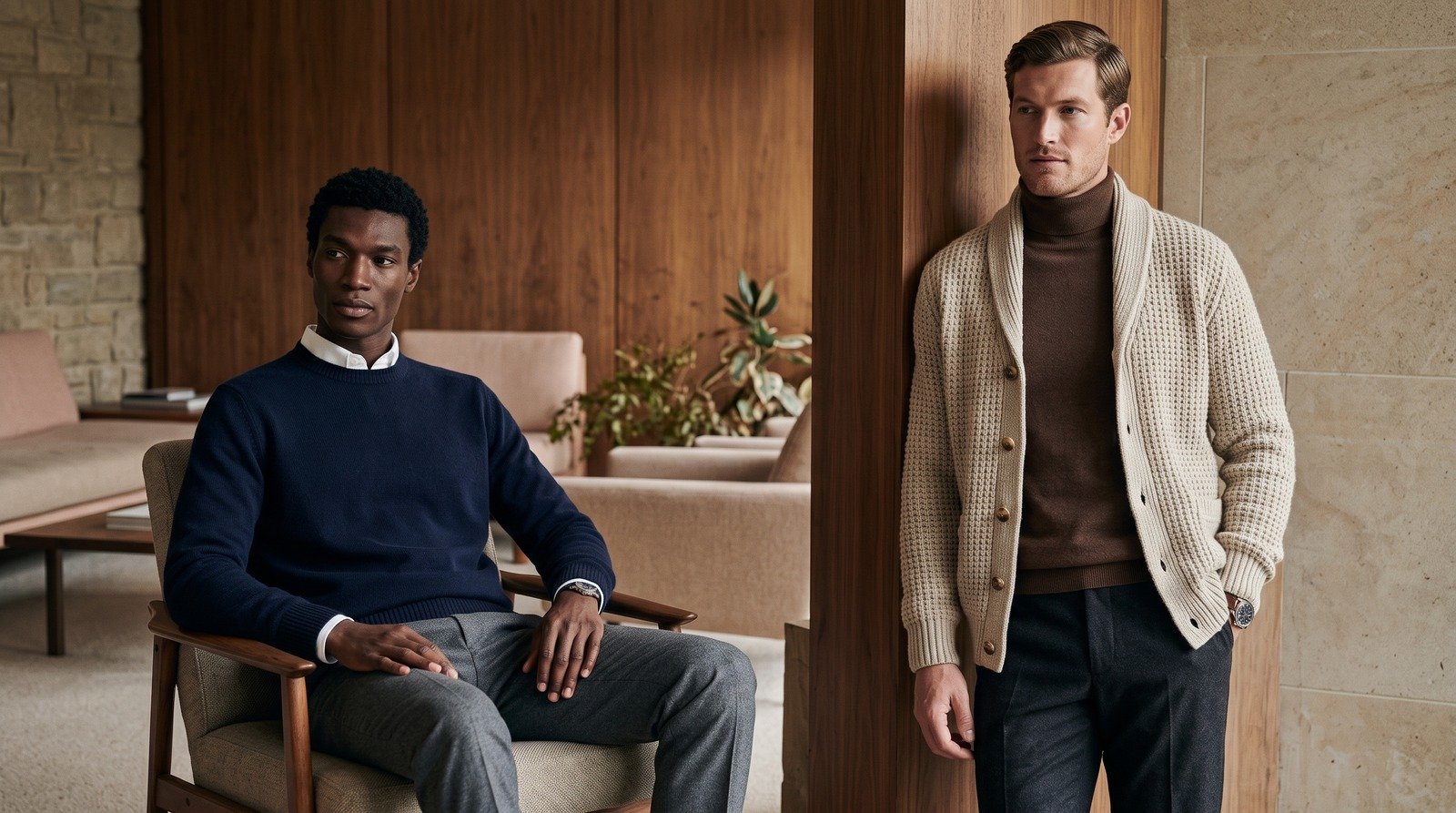
A refined men’s knitwear wardrobe should make dressing easier. A fine crewneck can sit beneath tailoring, a knitted polo can replace a casual shirt, and a cardigan provides warmth that is easy to adjust throughout the day.
The challenge is choosing pieces that perform different roles. Several similar sweaters may offer less flexibility than a smaller selection with varied necklines, weights and textures.
Begin with your routine, climate and existing trousers and jackets. Then build a collection that moves naturally between work, weekends and travel.
Refinement comes from how the clothes fit and work together. Good fibres matter, but so do proportion, construction and the ability to wear each piece repeatedly.

TL;DR
- Start with a versatile crewneck, then add shapes that serve different purposes.
- A knitted polo offers a useful bridge between casual clothing and tailoring.
- Cardigans provide adjustable warmth; roll-necks are particularly useful in cooler weather.
- Combine fine and midweight knits before adding very chunky designs.
- Choose fibres according to climate and maintenance preferences.
- Build around two or three connected neutral colours.
- Try knitwear with the shirts, jackets and coats you expect to wear.
- Inspect cuffs, seams and fabric recovery rather than judging softness alone.
- Expand gradually when you identify a clear gap.
Start With the Roles You Need
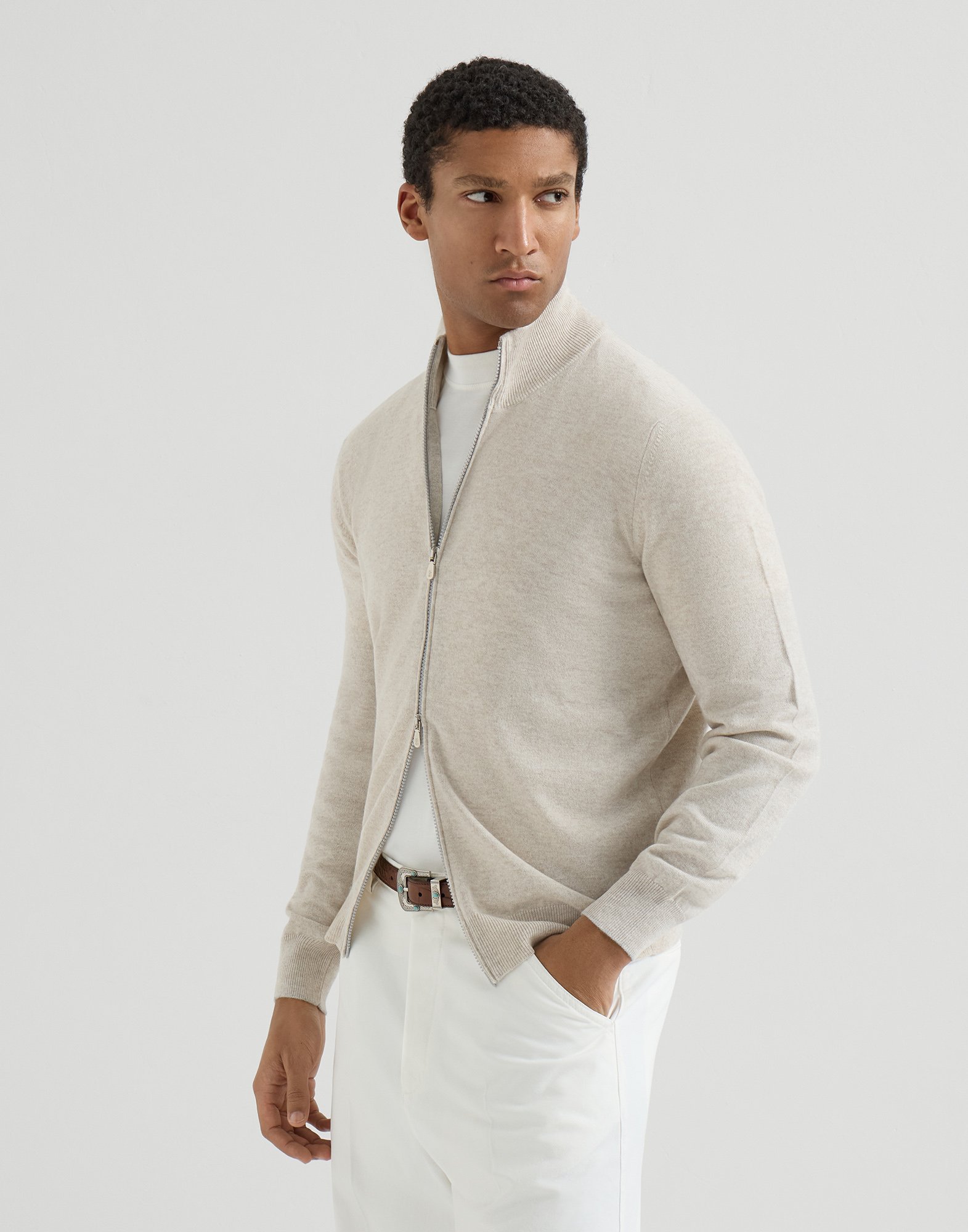
A useful men’s knitwear wardrobe does not require every neckline. It needs enough variety to support your actual week.
| Piece | Main Role | Useful Starting Colour |
|---|---|---|
| Fine Crewneck | Everyday layering and understated tailoring | Navy or charcoal |
| Knitted Polo | Smart-casual dressing | Taupe, brown or navy |
| Cardigan | Adjustable warmth over shirts and T-shirts | Grey or dark brown |
| Roll-Neck | Cool-weather alternative to a shirt | Charcoal, black or cream |
| Textured Sweater | Relaxed outfits with more visual interest | Ecru, olive or camel |
Treat this as a framework. In a warm climate, a lightweight polo may be more useful than a thick roll-neck. If you wear shirts daily, a cardigan or V-neck may deserve priority.
Make the Crewneck Your Foundation

The crewneck is often the most versatile first purchase. Its simple neckline accommodates a T-shirt underneath and works cleanly beneath an unstructured blazer or coat.
Choose a fine or moderate weight with enough room through the torso to move comfortably. Navy, charcoal and dark brown are easy to repeat across different outfits.
A white T-shirt can introduce a small contrast at the neck, but keep the visible edge deliberate. With a shirt, check that the collar sits comfortably rather than folding awkwardly beneath the ribbing.
For an everyday formula, combine a navy crewneck with grey trousers and leather shoes. Switch to straight jeans and sneakers for a more relaxed setting.
Add a Knitted Polo for Smart-Casual Dressing

A knitted polo gives the wardrobe a different neckline and a slightly more dressed appearance.
Fine wool, cotton and silk blends each produce a different result. Short sleeves suit warmer conditions, while long sleeves extend the piece into cooler weather.
Check the collar carefully. It should sit evenly, and the placket should remain flat when worn open. The hem should fall cleanly without gripping the waist.
Wear it with tailored trousers, chinos or dark denim. Beneath a blazer, choose a fine knit that allows the jacket’s sleeves and shoulders to settle naturally.
Use a Cardigan as an Adjustable Layer

A cardigan is useful when temperatures change during the day. It can remain open, fasten for warmth or be removed without disturbing a shirt collar.
Fine button-front designs work beneath jackets. Midweight cardigans can become the main upper layer, while shawl collars create a more substantial, relaxed silhouette.
Check that buttons close without pulling and that the front hangs evenly. Pocket placement also matters: heavy contents can distort knitted fabric.
A zip cardigan introduces a sportier character. Choose it if that suits your routine, but consider whether it duplicates a half-zip sweater you already own.
Choose a Roll-Neck or Textured Sweater Next
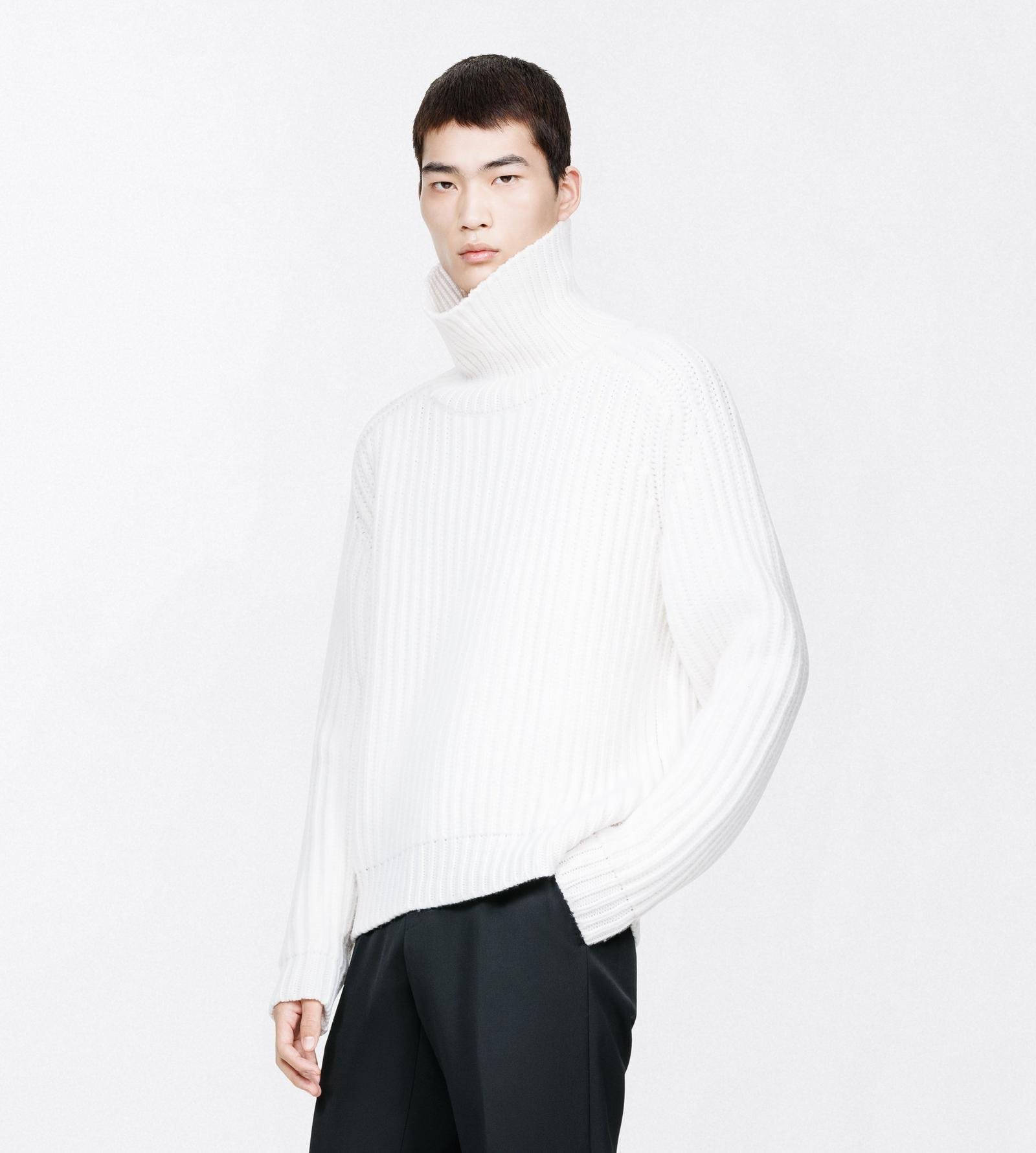
A roll-neck is particularly effective in cooler weather. Fine versions sit beneath tailoring, while heavier designs work best as visible layers.
The neck should feel comfortable when you turn your head. Avoid choosing one so tight that it requires constant adjustment.
If neck coverage does not appeal, add texture instead. A cable, ribbed or seed-stitch sweater gives simple trousers more character.
Choose one distinctive construction before buying several. Texture has greater impact when the rest of the outfit remains relatively clean.
Match Fibres to Your Climate

| Fibre | Useful Qualities | Best Application |
|---|---|---|
| Merino Wool | Fine texture and adaptable warmth | Crewnecks, polos and layering pieces |
| Cashmere | Softness and lightweight insulation | Refined sweaters and cardigans |
| Lambswool | Warmth and a more textured surface | Relaxed winter sweaters |
| Cotton | Breathability and defined texture | Warm-weather and transitional knitwear |
| Wool-Silk | Smoothness with a refined drape | Fine polos and smart layers |
| Cashmere-Silk | Soft, lightweight handle | Delicate layering pieces |
| Blended Yarns | Can improve resilience or recovery | Frequently worn garments |
Read the complete composition. A blend may be practical, but its proportions should support the qualities you expect.
For warmer climates, prioritise lighter knits and removable layers. A wardrobe dominated by heavy cashmere may offer limited everyday use outside strongly air-conditioned interiors or winter travel.
Combine Different Weights

Fine-gauge knitwear is useful beneath tailoring. Midweight pieces have more presence and often work best on their own.
Chunky knits introduce substantial volume. Before buying, check whether your coats can accommodate them and whether indoor temperatures make them comfortable.
Weight is separate from fibre. Cashmere can be knitted into a substantial sweater, while wool can be made into a very fine layer.
A balanced starting collection might include two fine pieces, one midweight cardigan and one textured sweater. Adjust that balance to your climate.
Get the Fit Right

A refined fit follows the body without restricting it.
Check the shoulders, chest and hem rather than relying entirely on the size label. A regular crewneck should fall cleanly, while a deliberately relaxed design may use dropped shoulders and a wider body.
Sleeves should reach the wrist without excessive bunching. The hem should sit securely without pulling tightly around the waist.
Try each piece in its intended outfit. A polo worn alone needs a different balance from a sweater layered over a shirt.
Also inspect recovery: gently stretch a cuff or hem and see whether it returns to shape. Look for even knitting, flat seams and secure buttonholes.
Build a Connected Colour Palette

Begin with the trousers and jackets you wear most.
| Existing Wardrobe | Knitwear Colours to Consider |
|---|---|
| Navy and grey tailoring | Cream, charcoal, taupe and burgundy |
| Blue denim and brown footwear | Ecru, navy, olive and chocolate |
| Black trousers and minimal outerwear | Grey, black, cream and dark brown |
| Beige and stone trousers | Navy, chocolate, muted green and charcoal |
Choose two or three core shades, then introduce one accent colour.
You do not need every piece in a different colour. A navy crewneck and navy cardigan can both be useful if their weights and functions differ.
Maintain What You Buy

Follow each garment’s care label. Fold knitwear rather than hanging it when recommended, particularly heavier pieces that may stretch.
Allow garments to rest between wears, address pills gently and avoid overfilling cardigan pockets. Wash using the method specified for the exact piece, then dry and store it accordingly.
Repair small holes or loose seams early. Maintenance helps preserve both the fabric and the proportions that made the garment useful.
Shop the Edit
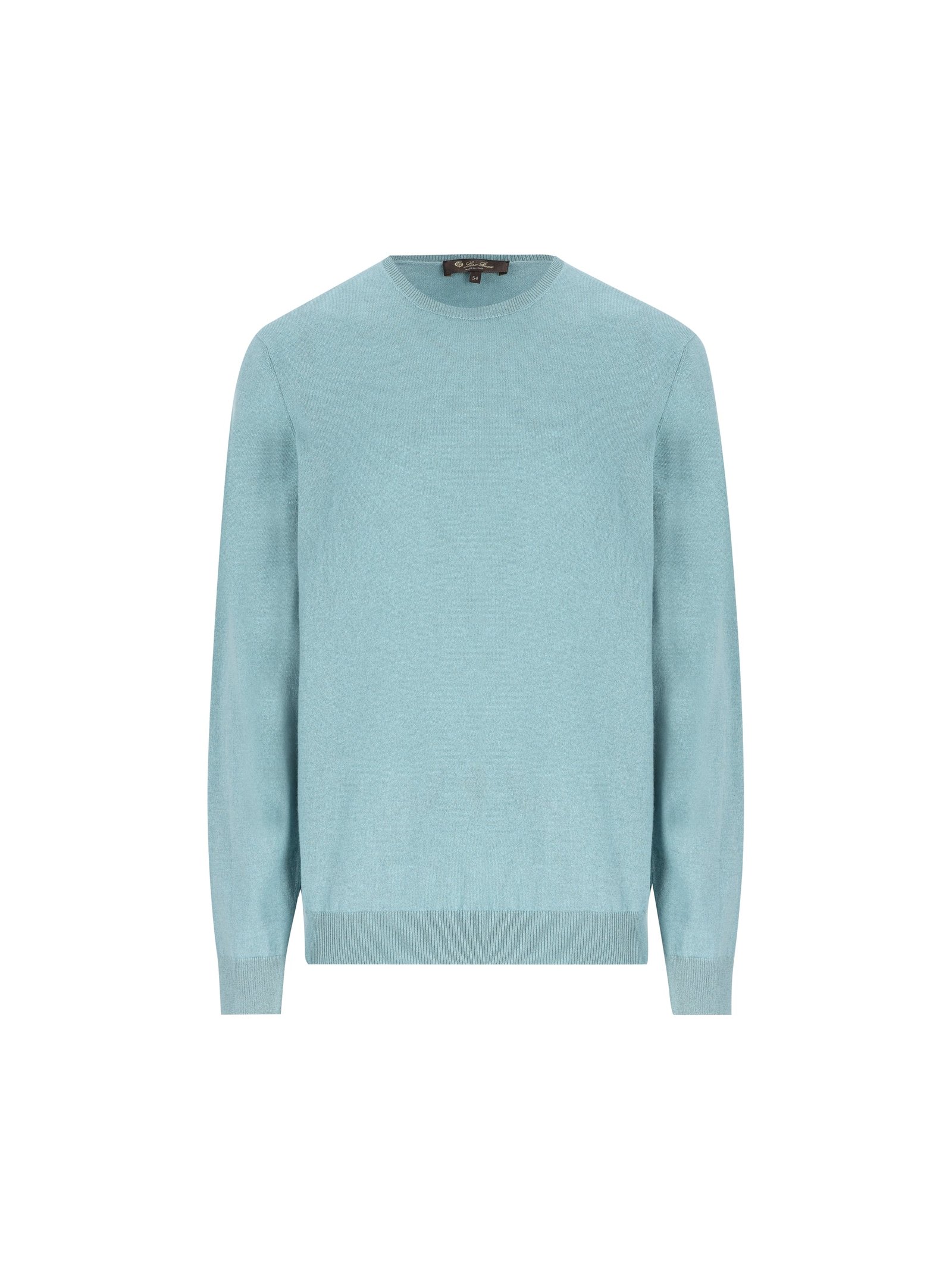
Loro Piana Sergio Crewneck
A pure-cashmere crewneck with restrained ribbed trims for versatile everyday layering.
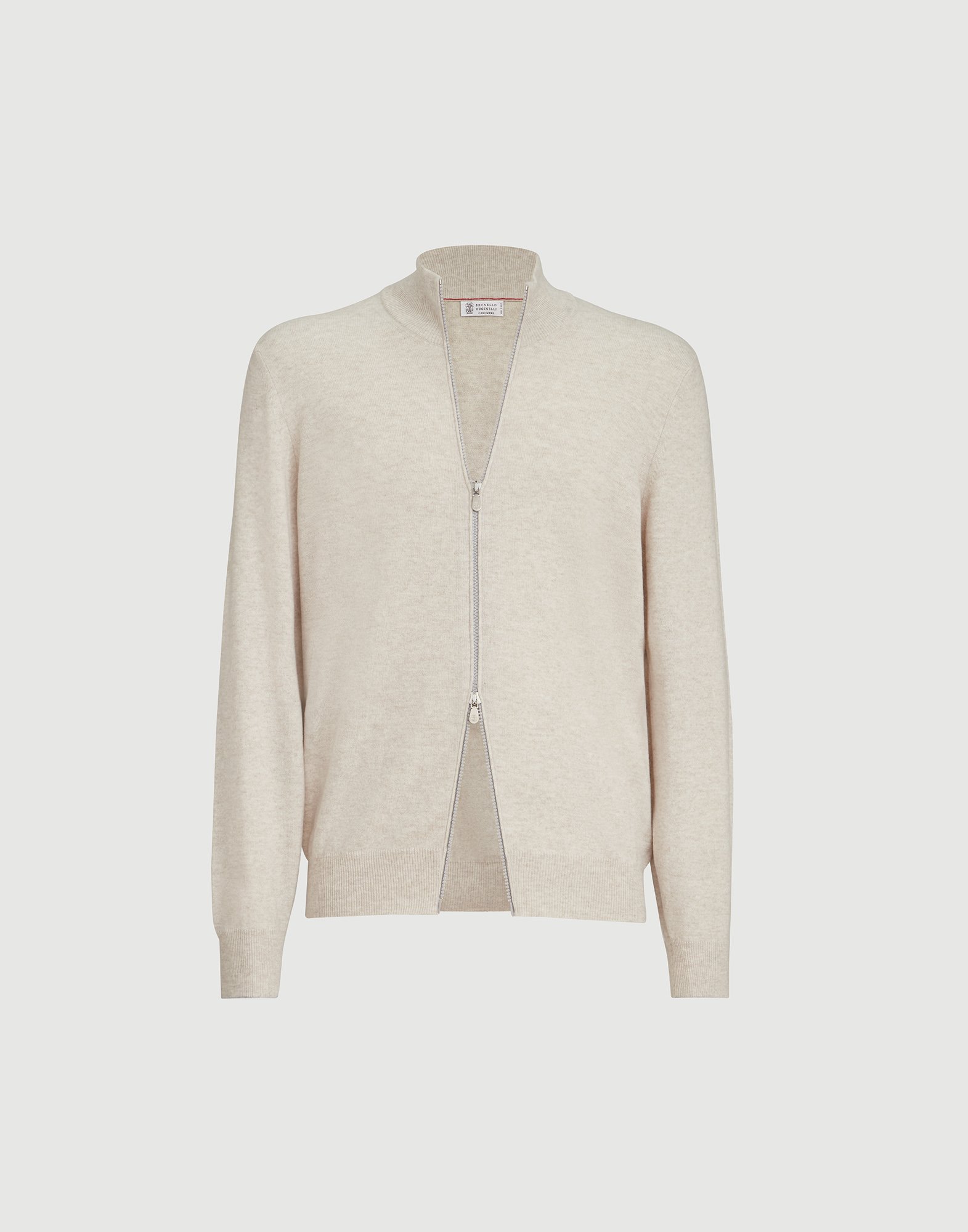
Brunello Cucinelli Cashmere Cardigan
A pure-cashmere cardigan to add adjustable warmth to shirts, T-shirts and relaxed tailoring.

ZEGNA Vellus Aureum Polo Shirt
A fine-wool, long-sleeved polo with a button placket for understated smart-casual dressing.
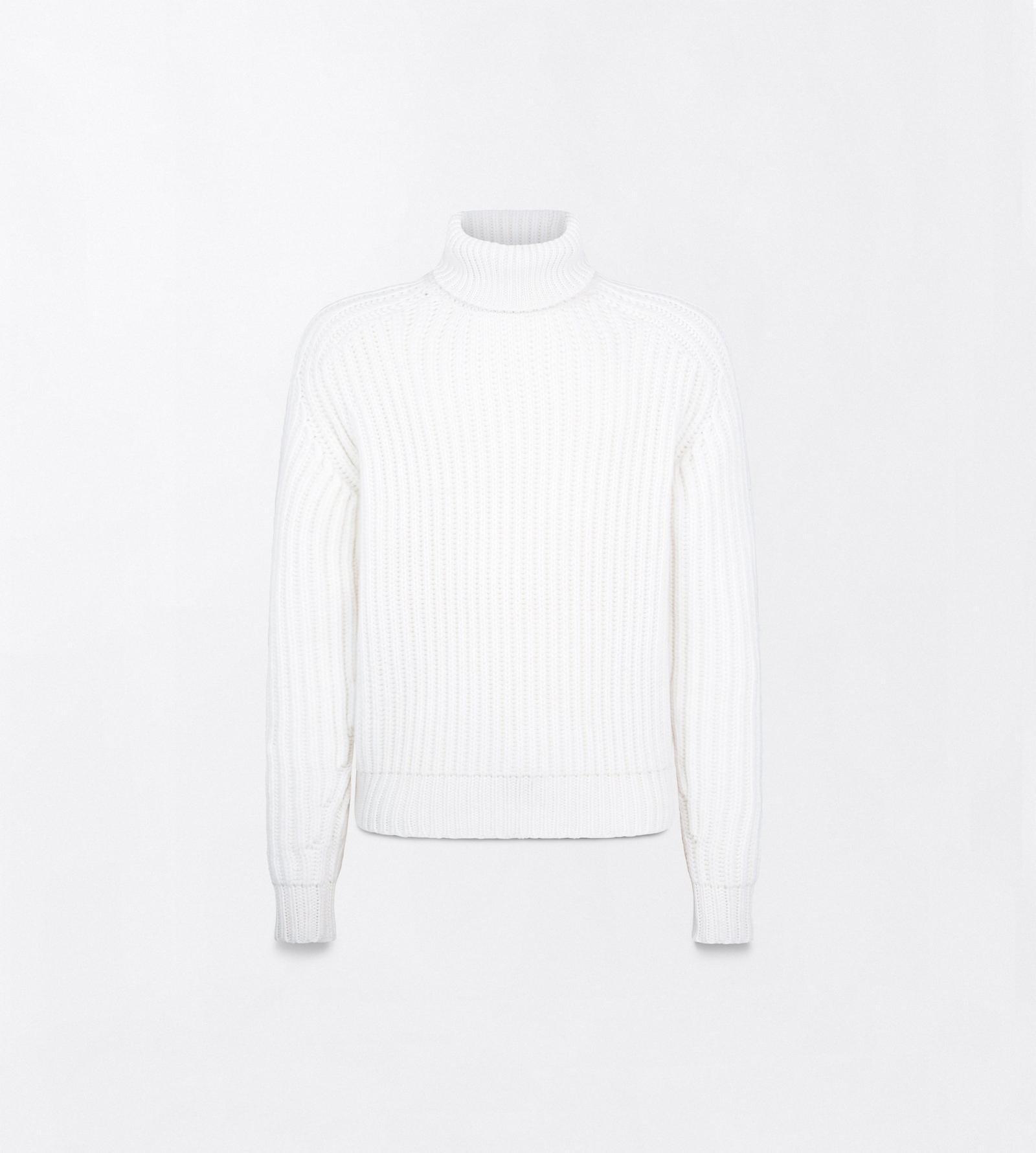
TOM FORD Pure Cashmere Roll Neck Sweater
A cashmere roll-neck for cooler-weather outfits built around tailoring and simple outerwear.
Availability, colours and sizing vary by market. Check each garment’s composition, measurements and care instructions.
Pros and Cons
| Pros | Cons |
|---|---|
| Works across casual and tailored outfits | Delicate fibres require careful maintenance |
| Different necklines provide useful variety | Similar purchases can duplicate existing pieces |
| Fine knits layer easily | Chunky designs may not fit beneath close-cut coats |
| Connected colours simplify dressing | Some fabrics pill in areas exposed to friction |
| Quality pieces can often be maintained and repaired | Softness alone does not establish quality |
Final Verdict

Build a men’s knitwear wardrobe around distinct roles.
Start with a fine crewneck, then add a knitted polo and a cardigan according to your routine. Introduce a roll-neck or textured sweater when you need greater warmth or variety.
Choose fibres and weights for the conditions in which you will actually wear them. Keep colours connected and assess every piece with your existing trousers, jackets and coats.
A small collection with clear purpose will provide more outfit options than repeated versions of the same sweater. The result should feel comfortable, coherent and easy to wear throughout the week.
