
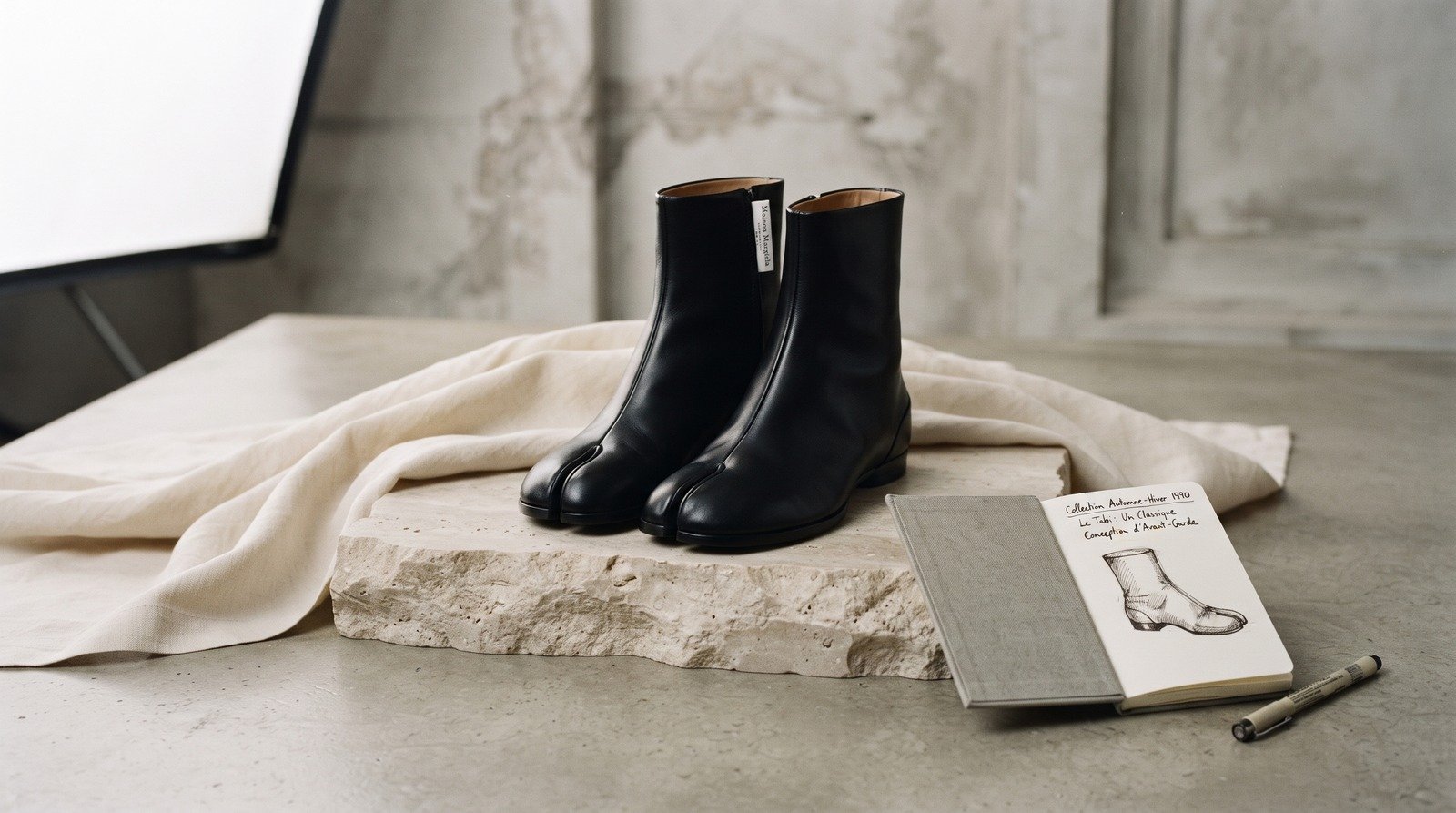
Few designer shoes are identifiable from the outline of the toe alone.
Maison Margiela Tabi shoes replace the conventional rounded or pointed toe with a deliberate division between the big toe and the rest of the foot. The result is familiar, strange and immediately recognisable.
The original heeled ankle boot remains the definitive version, but Tabi now describes a much broader family. Ballerinas make the design easier to wear, loafers bring it into tailored wardrobes, and Mary Janes give the split toe a more delicate frame. Sneakers, pumps, sandals and experimental collector editions take the idea in still other directions.
Choosing your first pair therefore involves more than accepting the unusual shape. You need to decide how visible you want the Tabi code to be, which construction suits your feet and whether you want an everyday shoe or a fashion statement.
TL;DR
- The Tabi debuted at Maison Margiela’s first show, presented in 1988 for Spring/Summer 1989.
- Its split toe was inspired by traditional Japanese tabi socks and later rubber-soled jika-tabi footwear.
- The classic heeled ankle boot is the most historically significant version.
- Ballerinas and flat Mary Janes are usually easier starting points for everyday wear.
- Loafers work particularly well with tailoring and wider trousers.
- The split must align comfortably between the big toe and second toe.
- Sizing varies by style, material and heel height, so trying the shoes in person is strongly recommended.
- Tabi socks are necessary for most closed styles.
- Black leather is the safest first choice because it lets the silhouette remain the central feature.
- Leather soles and soft nappa uppers require proactive care.
The Tabi’s Japanese Origin
Margiela did not invent split-toe footwear. The idea has a much longer history in Japan.
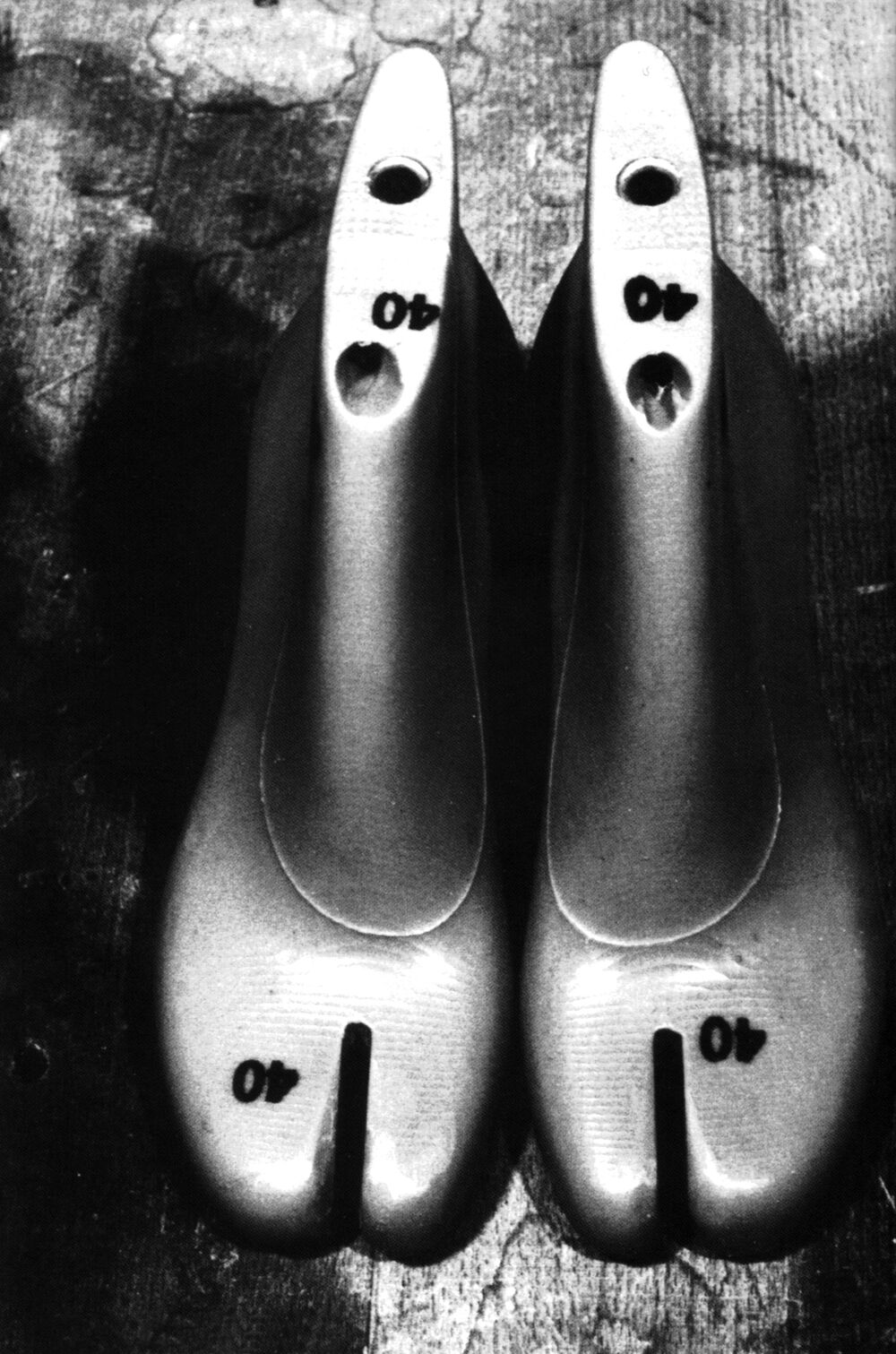
Traditional tabi are socks constructed with a separate section for the big toe, allowing them to be worn with thong-style footwear such as zori and geta. The design was later adapted into the jika-tabi, a more robust outdoor shoe with a rubber sole used by workers.
Martin Margiela translated this functional division into high fashion. Rather than reproducing the Japanese shoe literally, he applied its recognisable toe to a fitted leather ankle boot with a cylindrical heel.
This history should be described with precision. Tabi footwear belongs to a Japanese design tradition; Maison Margiela’s contribution was to reinterpret that tradition within late-twentieth-century European fashion.
That distinction gives the shoe more depth than the simplified claim that Margiela “invented” the split toe.
The Red Footprints That Introduced the Tabi
The first Tabi boots appeared during Maison Margiela’s debut show, presented in 1988 for the Spring/Summer 1989 season.
The models stepped into red paint before walking across a white fabric runway. Their boots left split-toed impressions behind them, making a detail that could have been difficult to see into the show’s defining image.
Maison Margiela’s official Tabi history explains that the flat source material was transformed into a heeled boot and dipped in paint specifically to reveal its unusual footprint.
The presentation captured several ideas central to the house: process made visible, beauty found in imperfection and a familiar object made unfamiliar.
Those footprints also gave the Tabi a graphic identity. Even when the shoe itself was no longer visible, the mark it left behind communicated the design.
Why the Tabi Became a Fashion Icon
Many unusual runway shoes generate attention for one season. The Tabi endured because its concept is strong enough to survive continuous reinterpretation.
The design succeeds on several levels:
- It is instantly recognisable. The split toe functions like a logo without relying on printed branding.
- It changes familiar shoes. A ballerina, loafer or ankle boot becomes distinctly Margiela through one structural intervention.
- It divides opinion. The shape is elegant to some and unsettling to others, helping it resist visual indifference.
- It reflects the house’s philosophy. The shoe exposes and questions assumptions about how footwear should look.
- It can evolve. Heel heights, materials and categories change without erasing the central idea.
- It rewards fashion knowledge. Recognition often comes from understanding the design rather than seeing a conventional logo.
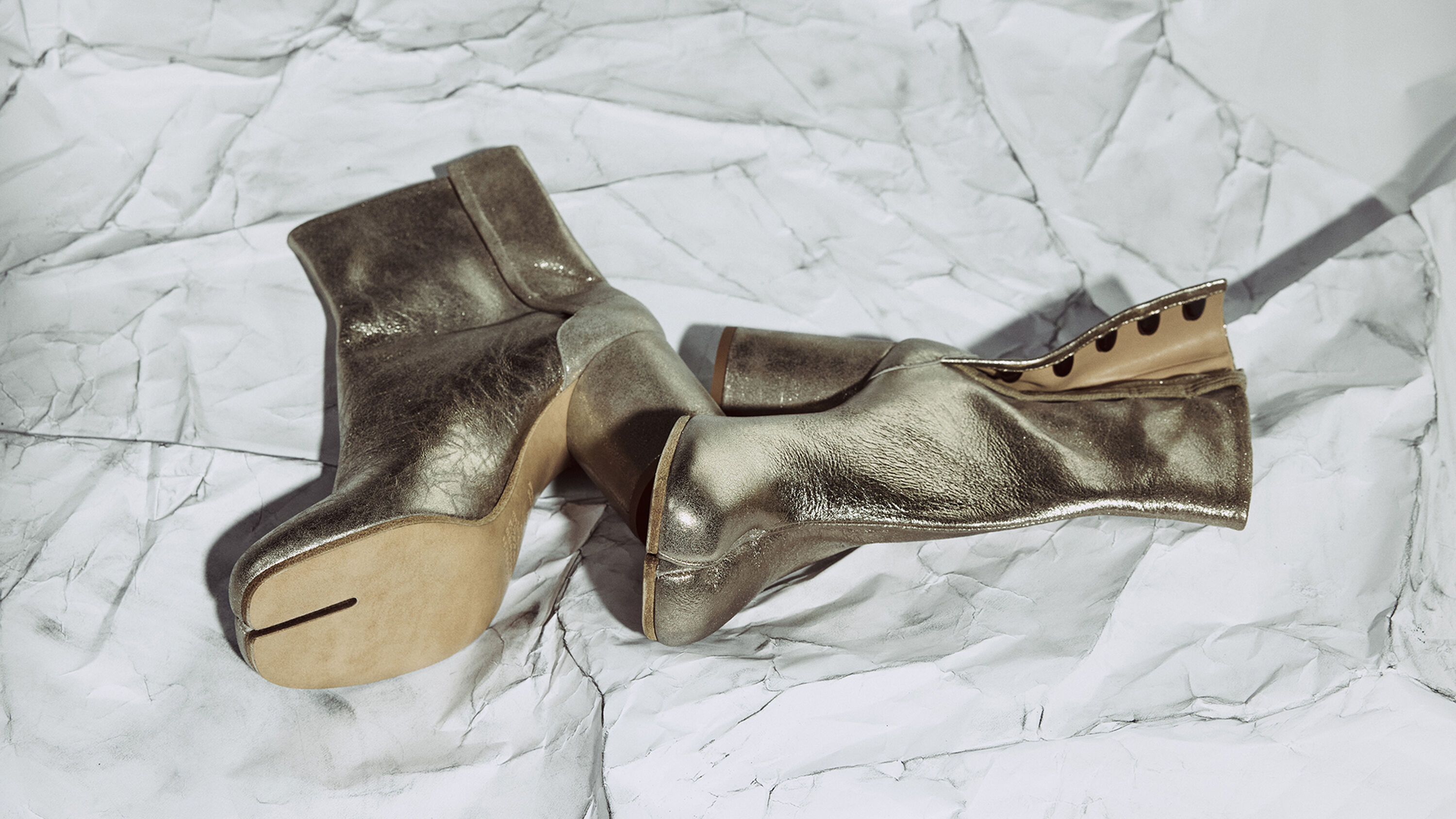
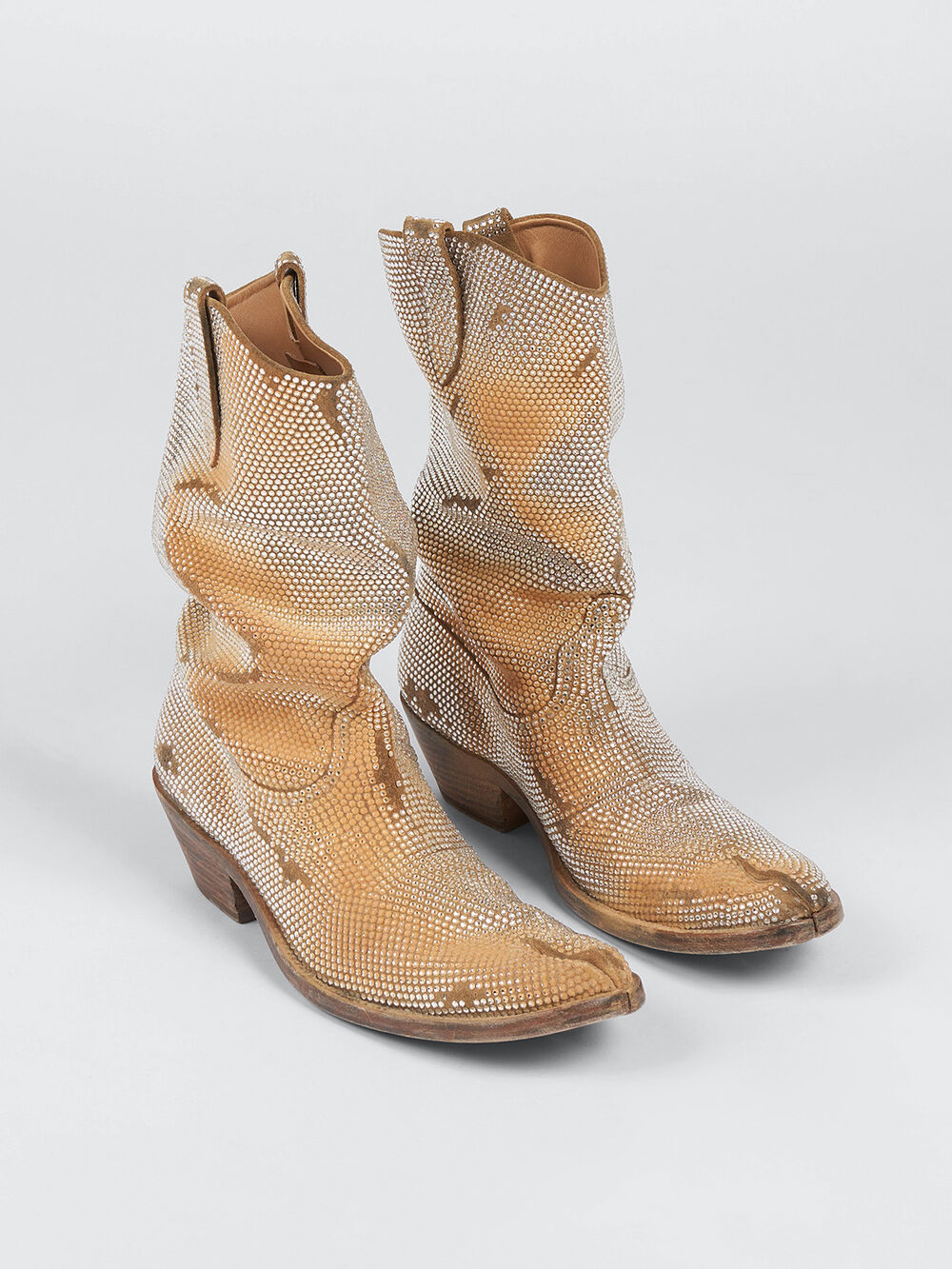
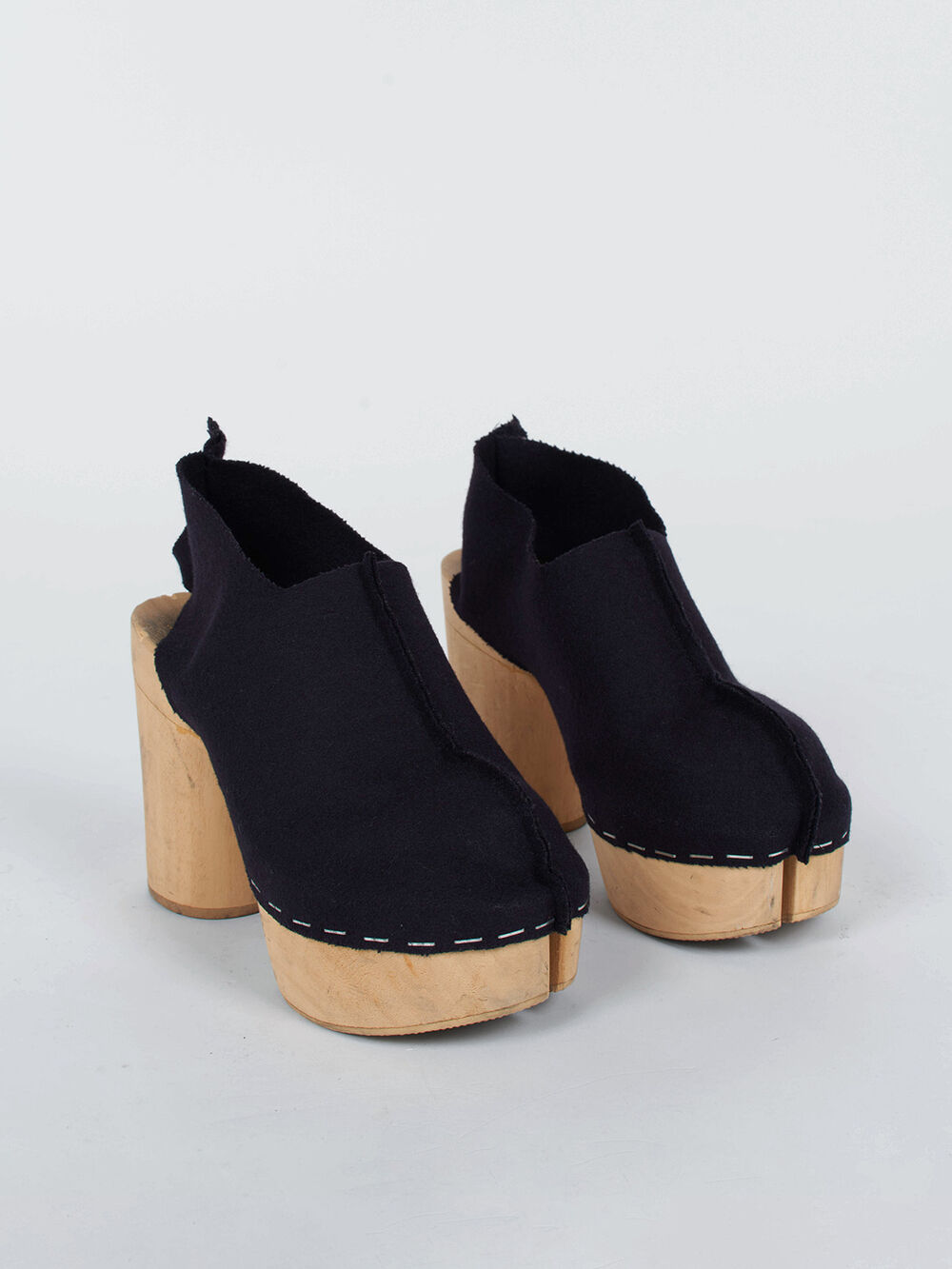
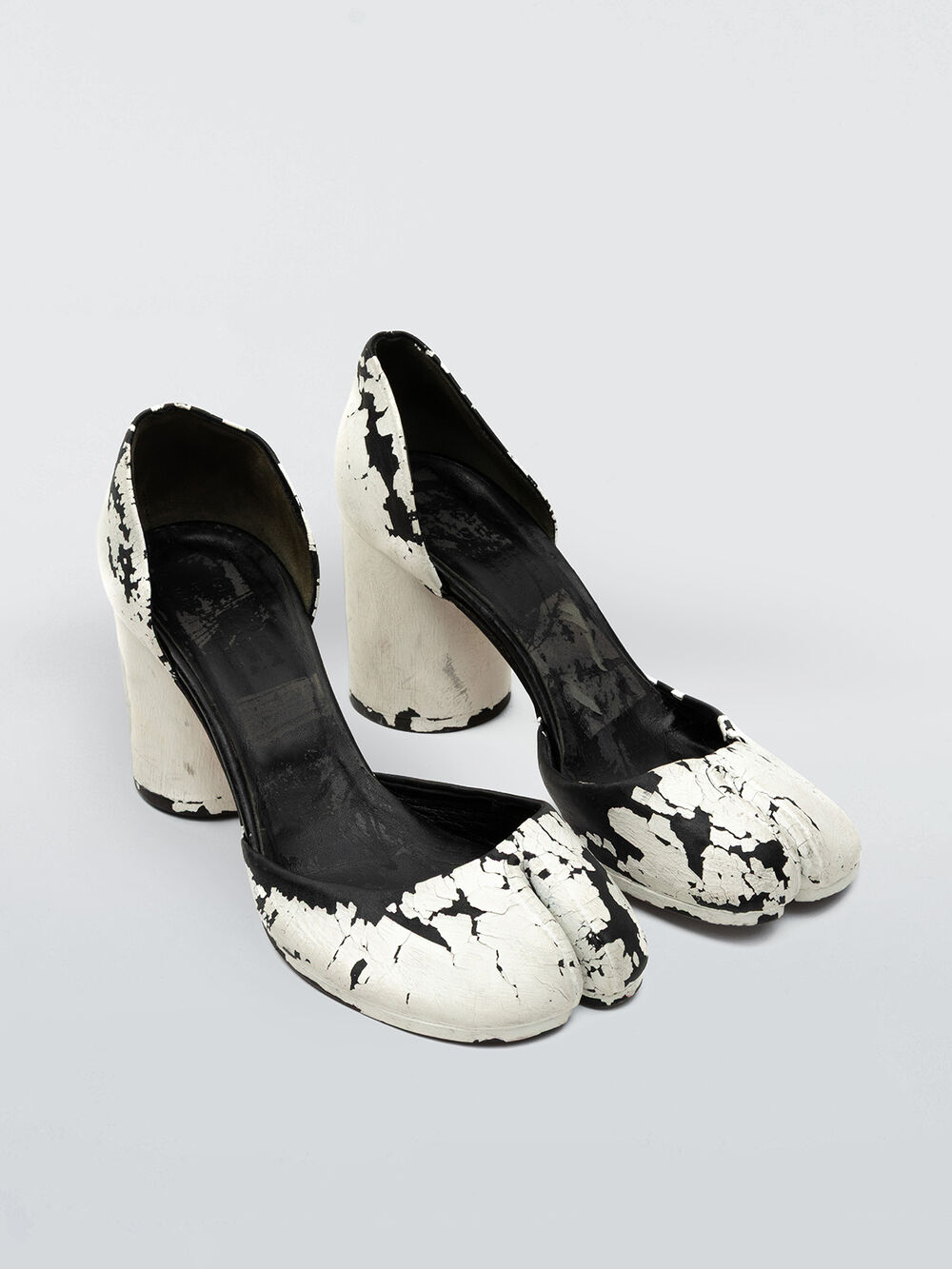
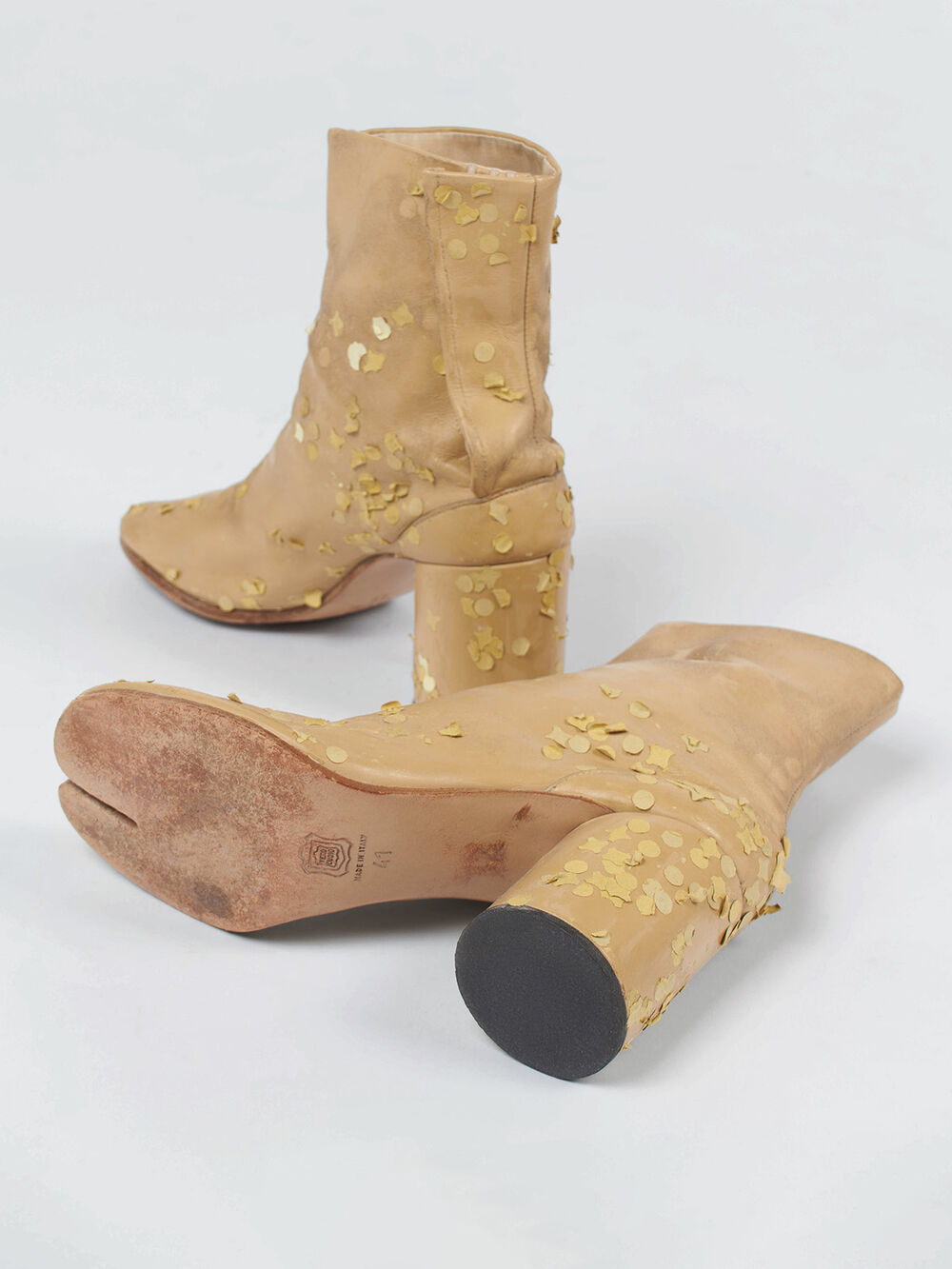
The house has used the Tabi in painted leather, suede, satin, denim, metallic finishes, distressed treatments and crystal-covered collector pieces. Its archive includes pumps, clogs, thigh-high boots, cowboy boots, sandals and derbies.
Maison Margiela also states that making a Tabi involves multiple specialised craftspeople, from preparing the base and wooden mould to stitching and final assembly. Each shoe is completed with the house’s single white stitch at the back. (The Tabi Film)
The Main Tabi Styles Explained
| Tabi Style | Character | Best For | Main Consideration |
|---|---|---|---|
| Heeled ankle boot | Original, sculptural and unmistakable | Collectors and statement dressing | Heel comfort and seasonal use |
| Flat ankle boot | Utilitarian and understated | Walking and casual wardrobes | Can feel visually substantial |
| Ballerina | Soft, minimal and increasingly mainstream | First-time buyers and everyday outfits | Limited support and delicate leather |
| Mary Jane | Feminine with a defined strap | Dresses, denim and tailored trousers | Strap position and instep comfort |
| Loafer | Polished and slightly masculine | Workwear and modern tailoring | Heavier construction may need breaking in |
| Pump | Formal and directional | Events and evening dressing | Split-toe pressure combined with heel height |
| Sneaker | Casual and experimental | Streetwear and low-maintenance styling | Less connected to the original boot |
| Sandal or mule | Open and expressive | Warm-weather statement dressing | The split toe becomes especially visible |
The Original Tabi Ankle Boot
The heeled ankle boot is the clearest expression of the design. Its fitted shaft, cylindrical heel and divided toe create a continuous sculptural line.
Choose it if the history of the Tabi is part of the appeal and you want the version most closely connected to Margiela’s debut. The classic black nappa design works with dresses, cropped trousers and denim, but it remains a noticeable fashion choice.
A lower heel is more practical for regular use. Higher versions create a sharper silhouette but increase pressure at the front of the foot.
The Tabi Ballerina
The ballerina reduces the design to its essential feature. A flat sole and low vamp make it approachable, while the divided toe prevents it from becoming an ordinary ballet flat.
This is one of the strongest first choices for someone who wants to wear Tabi shoes frequently. It works with straight jeans, wide trousers, midi skirts and simple dresses.
The trade-off is support. Like many soft ballet flats, it may offer less structure for extended walking than a loafer or boot.
The Tabi Mary Jane
The Mary Jane adds a strap across the foot, giving the flat or heeled shoe greater visual structure.
Maison Margiela currently offers both a flat brushed-calf version with a 2-centimetre heel and a soft nappa version with a 6-centimetre cylindrical heel. The flat style is the more versatile daily option; the heeled version feels more formal and recognisably connected to the original boot. (Tabi Mary-Janes, Heeled Tabi Mary-Janes)
The Tabi Loafer
The loafer places the split toe inside a familiar tailored silhouette. From a distance, it can appear like a conventional leather shoe; the distinction becomes clearer as the wearer moves.
This balance makes it particularly useful for understated wardrobes. Wear it with cropped tailoring, dark denim or wide trousers that reveal only the front of the shoe.
How Do Maison Margiela Tabi Shoes Fit?
There is no single sizing rule that works for every Tabi.
The most important issue is whether the division in the shoe aligns naturally with the space between your big toe and second toe. If that split sits too far forward or presses deeply into the foot, changing only the width will not necessarily solve the problem.
When trying a pair:
- Wear the type of Tabi socks you intend to use regularly.
- Stand and place your full weight on both feet.
- Check that the toe division is secure but not forceful.
- Walk on a clean surface and pay attention to heel movement.
- Confirm that the widest part of your foot aligns with the shoe.
- Test both feet, as natural differences in size may feel more obvious in a divided toe.
Soft nappa leather may relax with wear, but it should not be painfully tight when new. Brushed calfskin, patent leather and heavily structured loafers generally feel firmer.
Do not automatically size down to prevent heel slip. A shoe that is too short can force the toe division into an uncomfortable position. If possible, compare your normal size with a half-size above it.
Are Tabi Shoes Comfortable?

Comfort depends more on the specific style than on the split toe alone.
A flat ballerina feels very different from an 8-centimetre boot. The ballerina may be flexible but provide limited arch support; the boot may feel more secure around the foot but place greater pressure on the forefoot.
| Comfort Factor | What to Check |
|---|---|
| Toe split | Should sit between the toes without rubbing |
| Width | Avoid excessive pressure across the ball of the foot |
| Heel height | Lower heels are better for sustained walking |
| Sole | Leather soles may feel firm and slippery when new |
| Upper material | Nappa softens faster than structured calfskin |
| Foot strap | Mary Jane straps should secure the shoe without cutting into the instep |
| Socks | Closed styles work best with purpose-made split-toe socks |
People with bunions, significant toe sensitivity or very wide forefeet should try the shoes in person. The divided construction may not suit every foot shape.
For a first pair intended for frequent use, a low Mary Jane, loafer or flat boot is generally safer than a high-heeled ankle boot.
How to Style Tabi Shoes
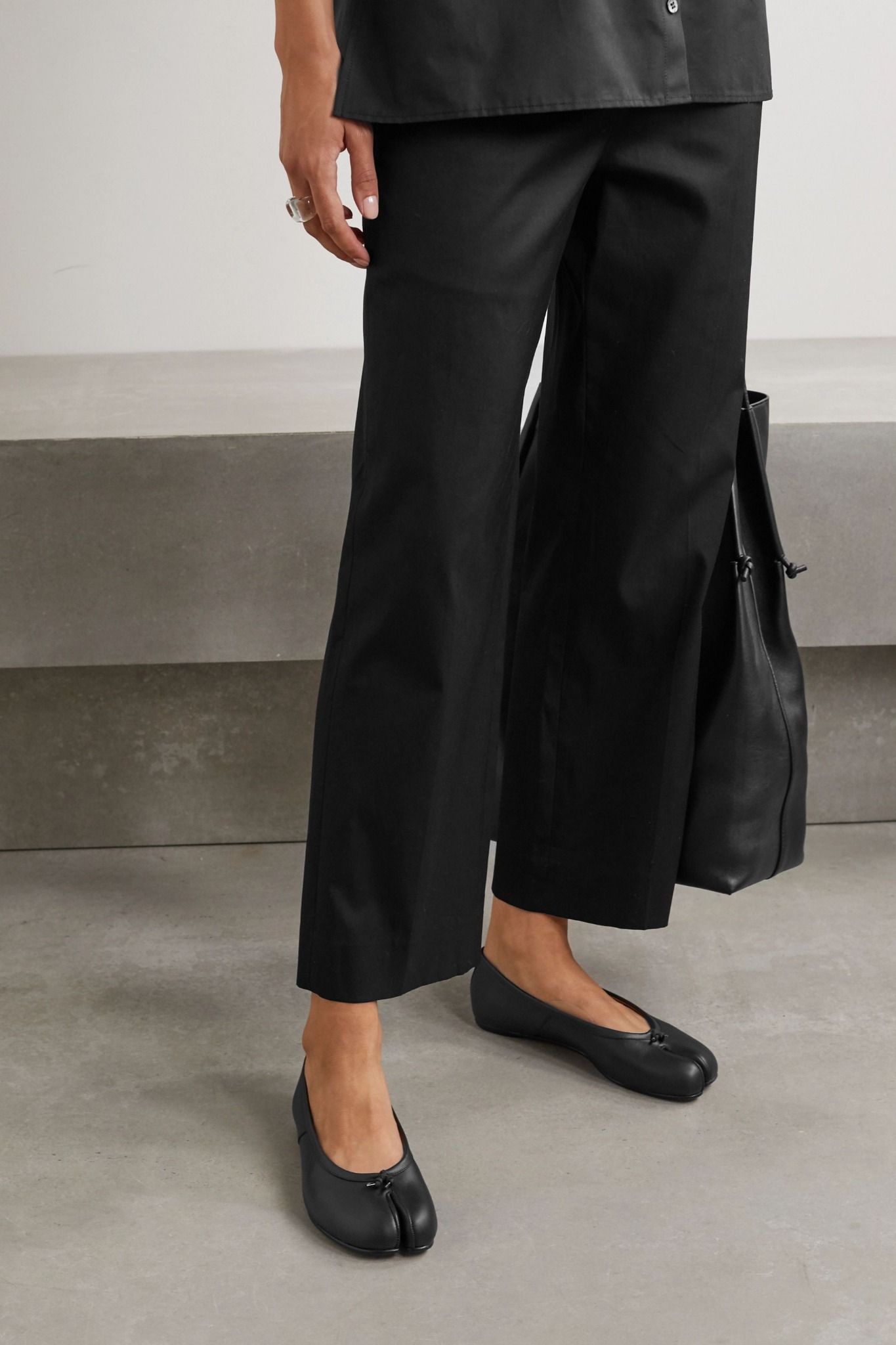
The easiest way to wear Tabi shoes is to treat them as the outfit’s single unconventional element.
With Denim
Straight or gently cropped jeans expose enough of the toe to make the design visible. Dark denim with black Tabi boots creates a cleaner line, while faded denim makes the shoes feel more casual.
Avoid hems that stop at an awkward point in the middle of a fitted boot shaft.
With Tailoring
Tabi loafers and ballerinas work particularly well with wide-leg or cropped trousers. Their unusual toe offsets the orderliness of a suit without requiring strong colour or excessive accessories.
A black loafer with charcoal, navy or cream tailoring is one of the most discreet ways to wear the design.
With Dresses and Skirts
Ballerinas and Mary Janes soften the conceptual character of the Tabi. A midi skirt creates a refined proportion, while a shorter hem makes the shoes more prominent.
Keep hosiery simple. Tonal Tabi socks or divided-toe tights maintain a continuous line.
With Minimal Clothing
The Tabi becomes more effective when the surrounding outfit is restrained. Black trousers, a white shirt, a plain knit or a long coat gives the eye space to register the shoe.
Combining split toes with multiple avant-garde garments can work, but it changes the result from versatile styling into a deliberate fashion statement.
Choosing Material and Colour
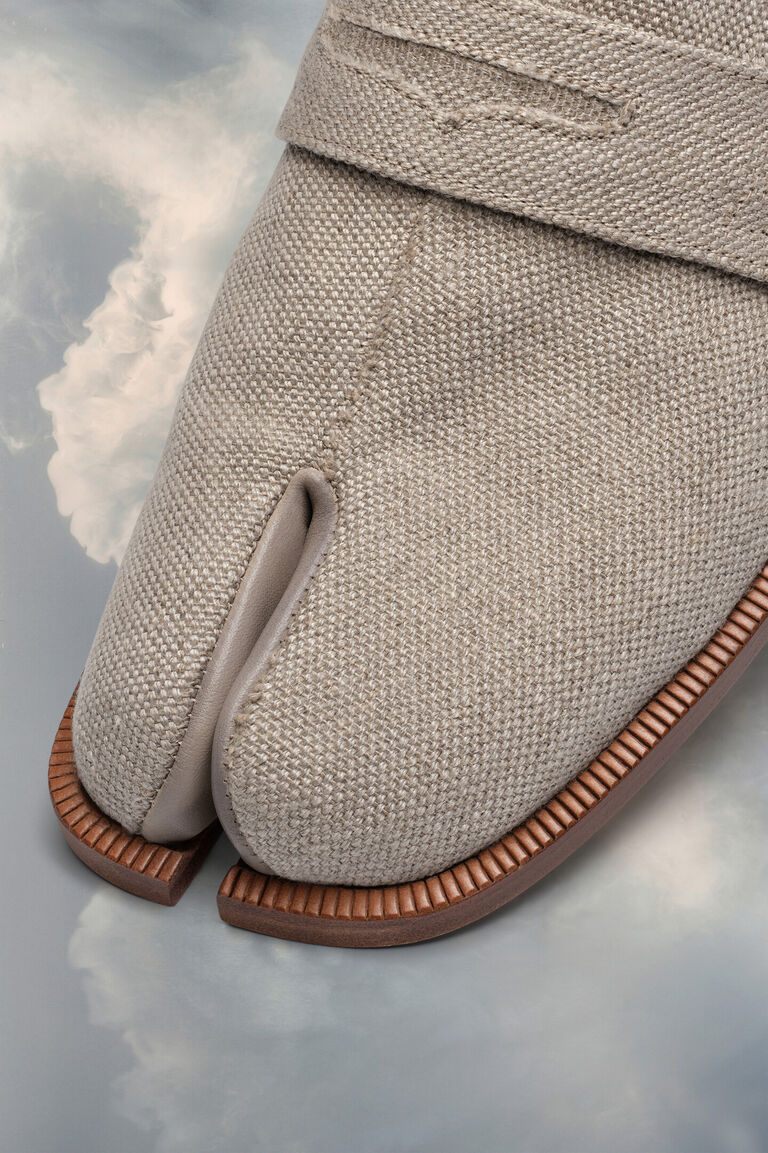
Black leather is the safest first purchase. It preserves the sculptural shape, works throughout the year and integrates with the largest range of clothing.
Brown softens the design and suits denim, olive, navy and warm neutrals. White or cream makes the split more visible and feels lighter, but marks and creasing are harder to disguise.
Metallic, painted, distressed and embellished Tabis are best treated as collector or occasion pieces.
| Material | Visual Effect | Practical Consideration |
|---|---|---|
| Nappa leather | Soft and glove-like | Scratches and creases relatively easily |
| Calfskin | Structured and polished | May require more breaking in |
| Brushed leather | Slightly aged and understated | Finish can vary intentionally |
| Patent leather | Sharp and graphic | Shows surface marks and may feel stiff |
| Suede | Softens the unusual silhouette | Sensitive to moisture and staining |
| Metallic leather | Strong statement | Finish may wear at flex points |
| Canvas or fabric | Casual and lighter | Less resistant to wet conditions |
How to Care for Tabi Shoes
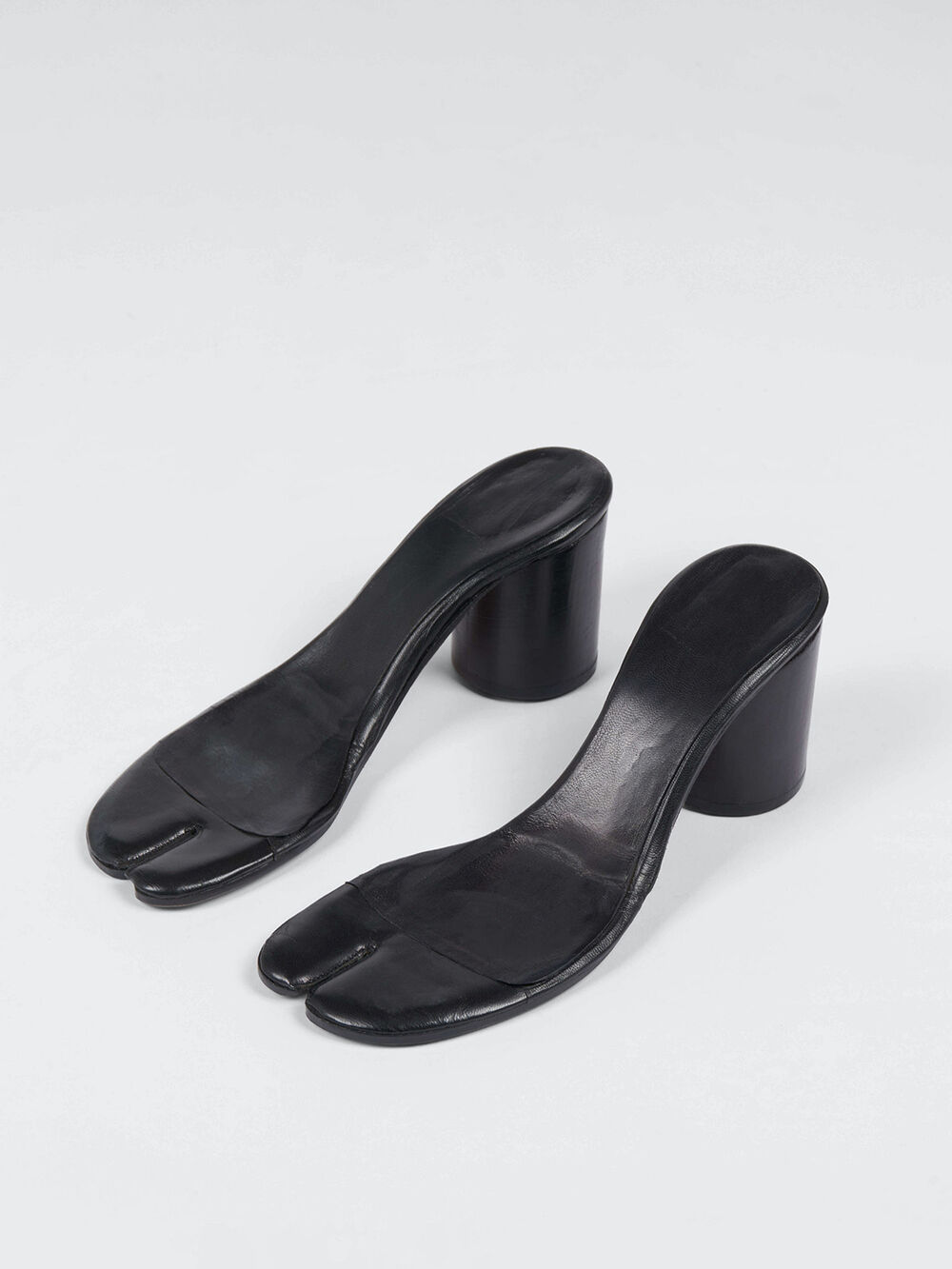
Protect the shoe before the damage becomes structural:
- Wipe smooth leather with a soft, dry cloth after wear.
- Use products formulated for the specific leather finish.
- Test conditioners on a concealed area.
- Keep nappa leather away from abrasive surfaces.
- Use a suede brush only on suede versions.
- Allow wet shoes to dry naturally, away from direct heat.
- Insert appropriate shoe forms without distorting the split toe.
- Store the pair in separate dust bags.
- Replace heel tips before the heel itself is damaged.
- Ask a skilled cobbler about adding thin sole protection if the shoe will be worn frequently outdoors.
Maison Margiela specifically recommends suitable vegetable-leather care products for its delicate nappa Mary Janes. Painted, cracked or intentionally distressed versions should be treated more cautiously because conventional polish may alter the intended finish. (Maison Margiela product care)
Shop the Edit
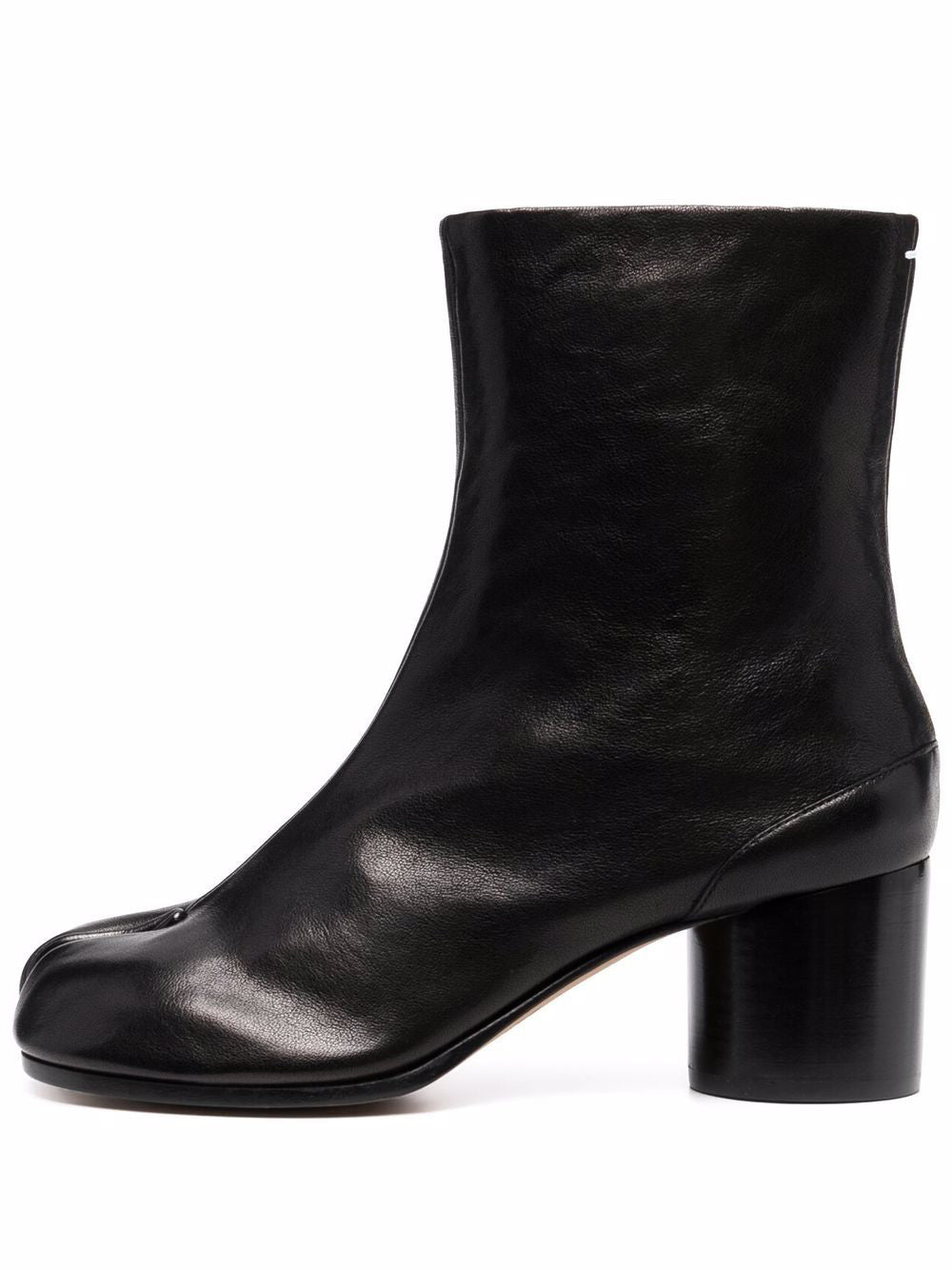
Tabi 60mm Ankle Boots
The definitive Tabi silhouette and the strongest heritage choice
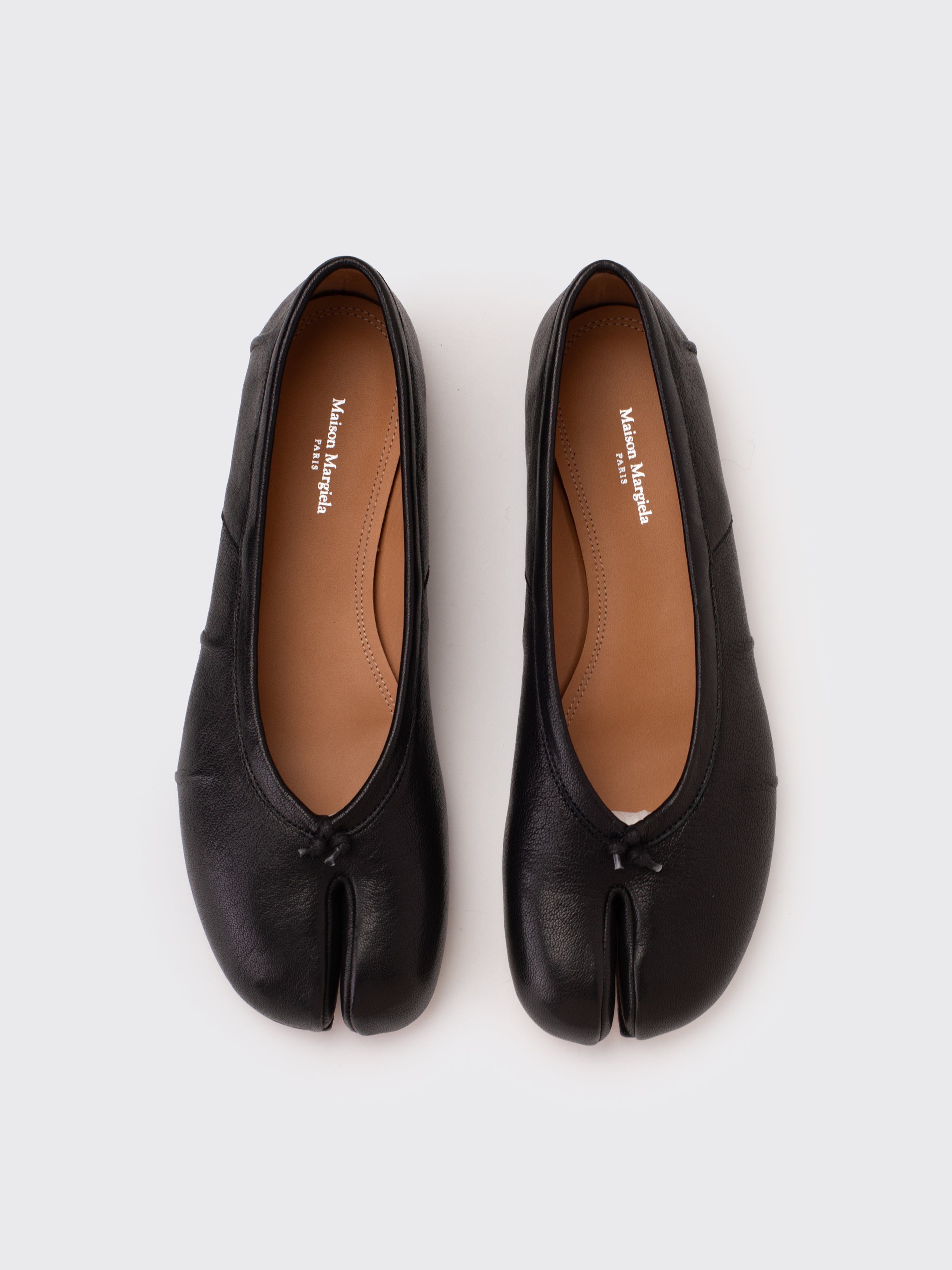

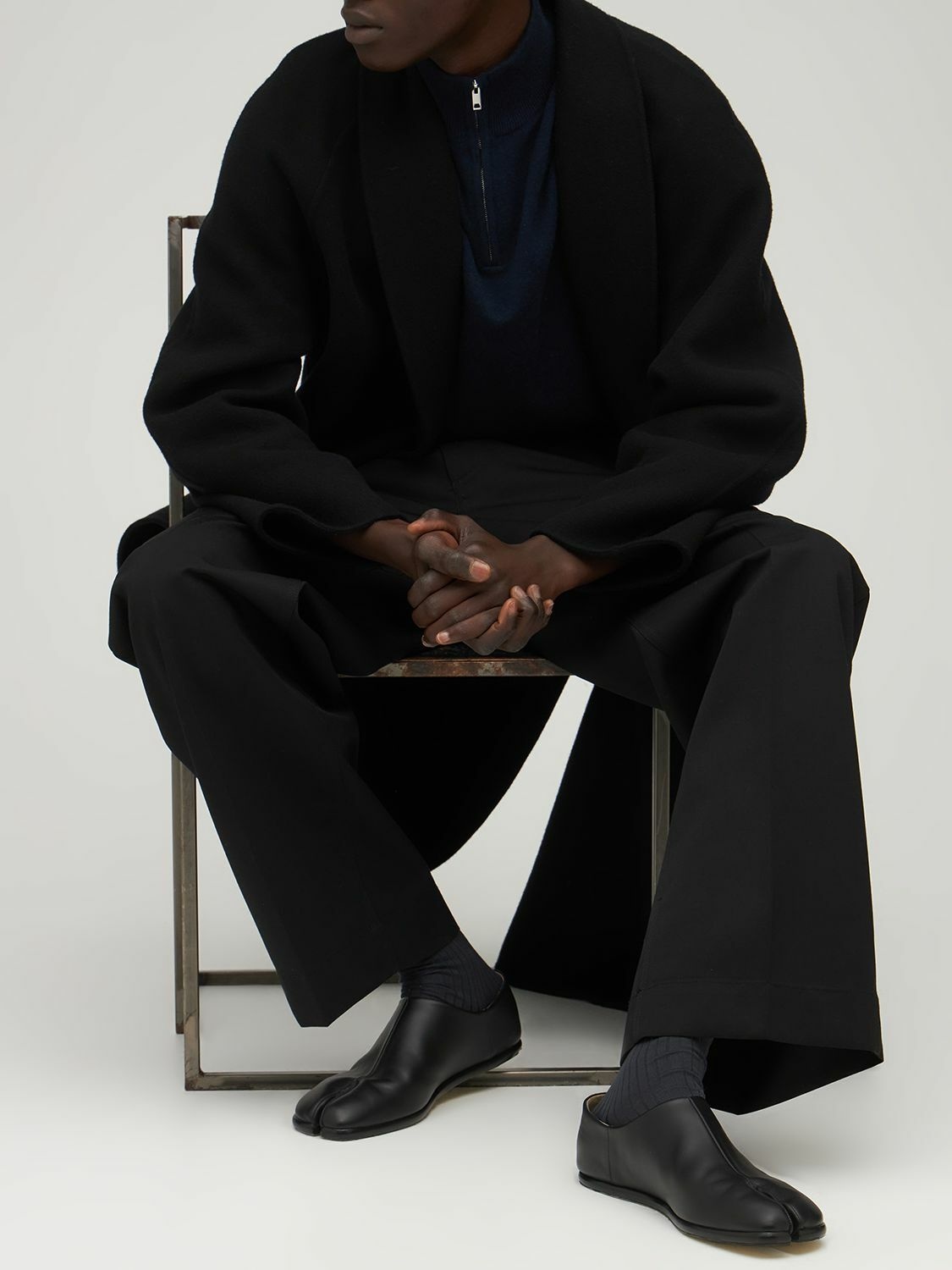
Tabi Leather Loafers
Polished wardrobes and a more understated split-toe look
Colours, materials, sizes and availability may vary by market.
Pros and Cons
| Pros | Cons |
|---|---|
| One of luxury fashion’s most recognisable shoe designs | The split toe remains visually divisive |
| Strong connection to Maison Margiela’s design history | Fit can be difficult to predict without trying them on |
| Available in boots, flats, loafers, pumps and sandals | Closed styles require Tabi socks |
| Distinctive without depending on a large logo | Soft nappa leather marks relatively easily |
| Black versions can work with surprisingly simple wardrobes | Leather soles may need protective work |
| Core silhouette has remained relevant for decades | High-heeled versions may not suit extended walking |
| Appeals to both collectors and everyday dressers | Some seasonal finishes can be difficult to maintain |
Final Verdict
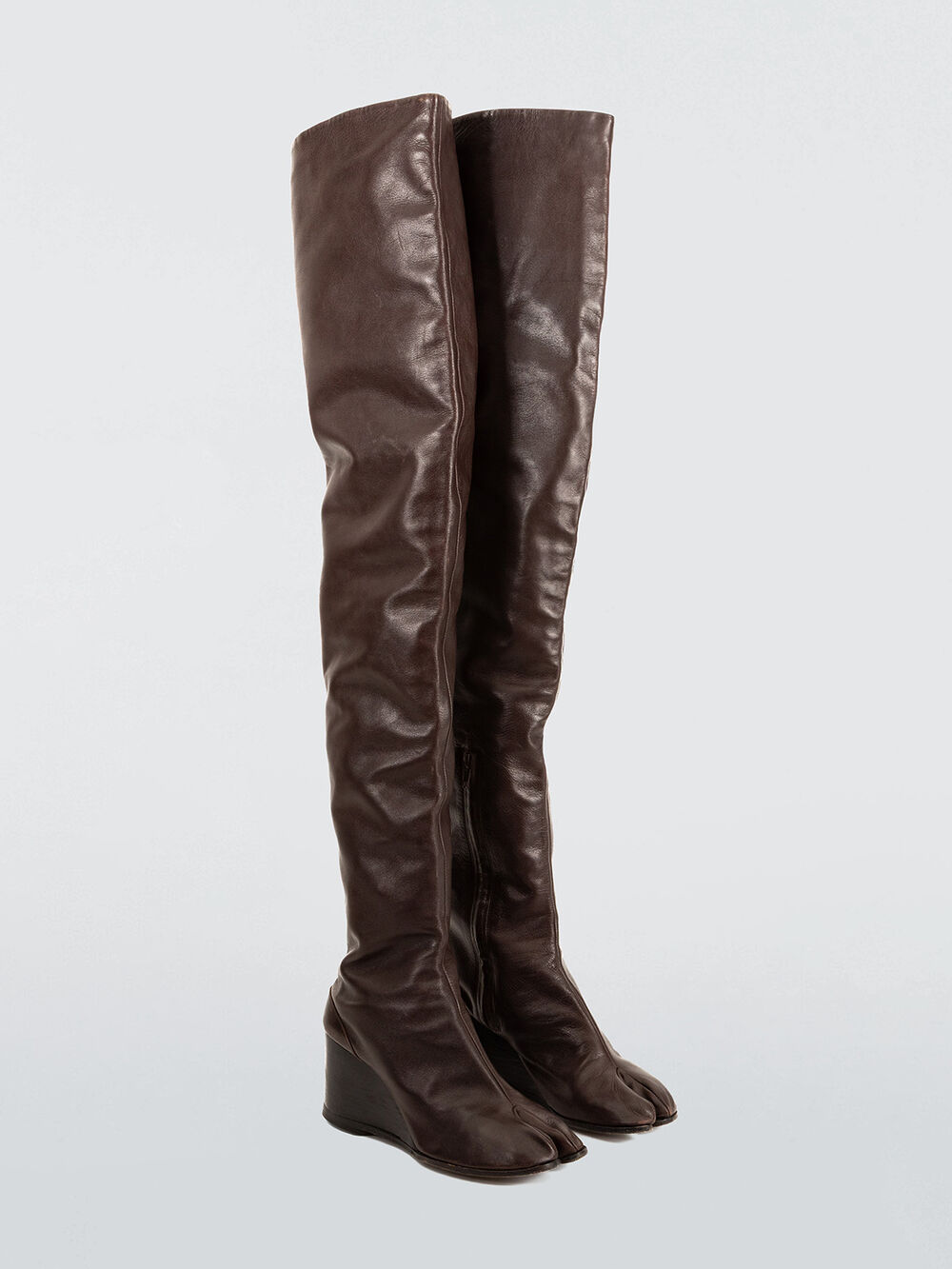
Maison Margiela Tabi shoes became icons because the split toe does more than decorate a conventional shoe. It changes the shoe’s structure, alters the shape of the foot and communicates the house’s philosophy without needing an obvious logo.
Choose the heeled ankle boot if you want the original design and its fashion history matters most. Choose the ballerina for the easiest everyday entry point, the Mary Jane for greater security or the loafer if your wardrobe is built around denim and tailoring.
For most first-time buyers, the strongest choice is a black leather Tabi with a flat or moderate heel. It retains the identity of the design while remaining practical enough to wear regularly.
The Tabi will never be completely neutral—and that is precisely why it has endured. It asks the wearer to become comfortable with a little visual discomfort, turning an ancient functional division into one of contemporary fashion’s most intelligent signatures.
