

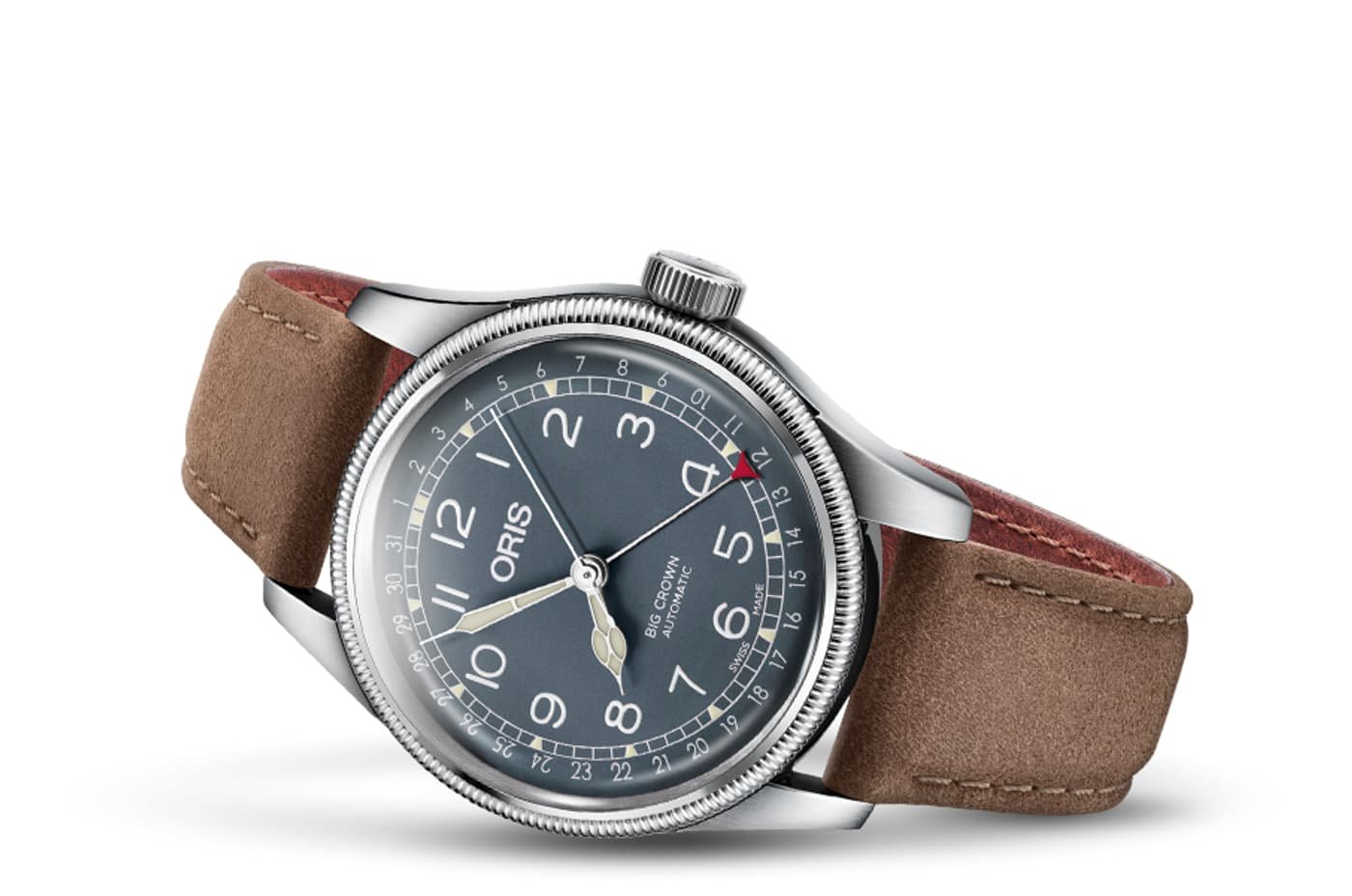
The quickest way to understand Oris is to compare two watches that tell the date differently. On the Big Crown, a central hand points to a number around the dial. On the Aquis, the date sits in a conventional window, leaving more visual space for the hands and markers. One makes the calendar part of the design; the other keeps it out of the way.
Founded in Hölstein in 1904, Oris still draws on its earlier designs. But this is also a brand where you can buy a diver with a five-day power reserve or a clean aviation watch with a standard date window. The right choice depends on whether you’re drawn to a particular design or need a watch that fits a particular routine.
For most buyers, the 39 mm Divers Date is the strongest first Oris. The Big Crown Pointer Date is the more distinctive choice, and the Aquis Calibre 400 earns its premium when you rotate watches often enough to appreciate the extra running time.
TL;DR
| Category | LxryNow Take |
|---|---|
| Best First Oris | Divers Date 39 mm |
| Most Distinctive Design | Big Crown Pointer Date |
| Best For A Watch Rotation | Aquis Date Calibre 400 |
| Best For A Clear Dial Without A Dive Bezel | ProPilot Date |
| Main Strength | Each collection has a clear purpose and a recognisable design |
| Main Drawback | Shorter reserves on the standard automatics; strap fit needs particular attention on the Aquis |
| Overall Verdict | Strongest when you buy for fit and the features you’ll use |
Design: Four Watches, Four Reasons To Buy
Big Crown Pointer Date: The Signature Design
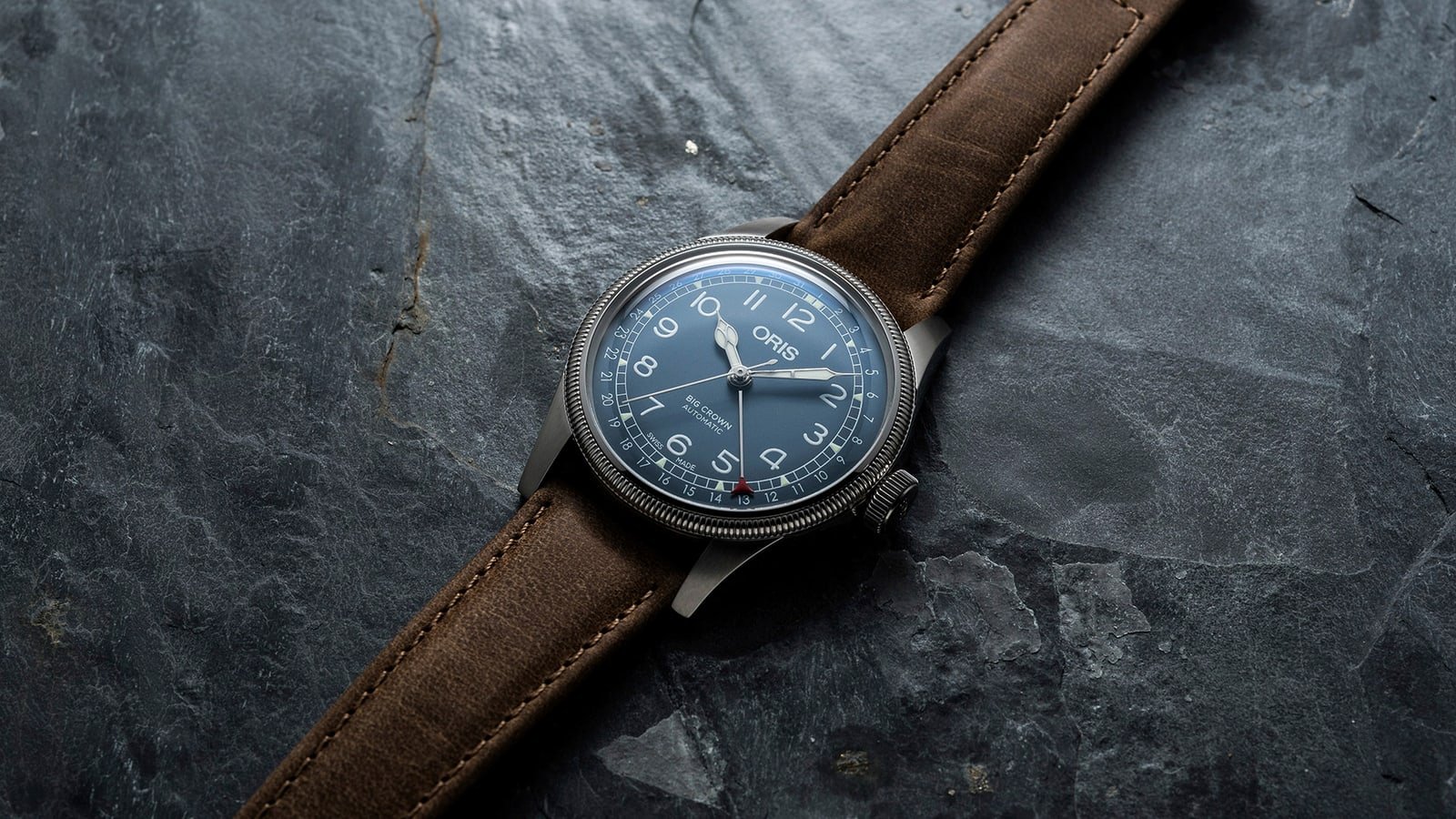
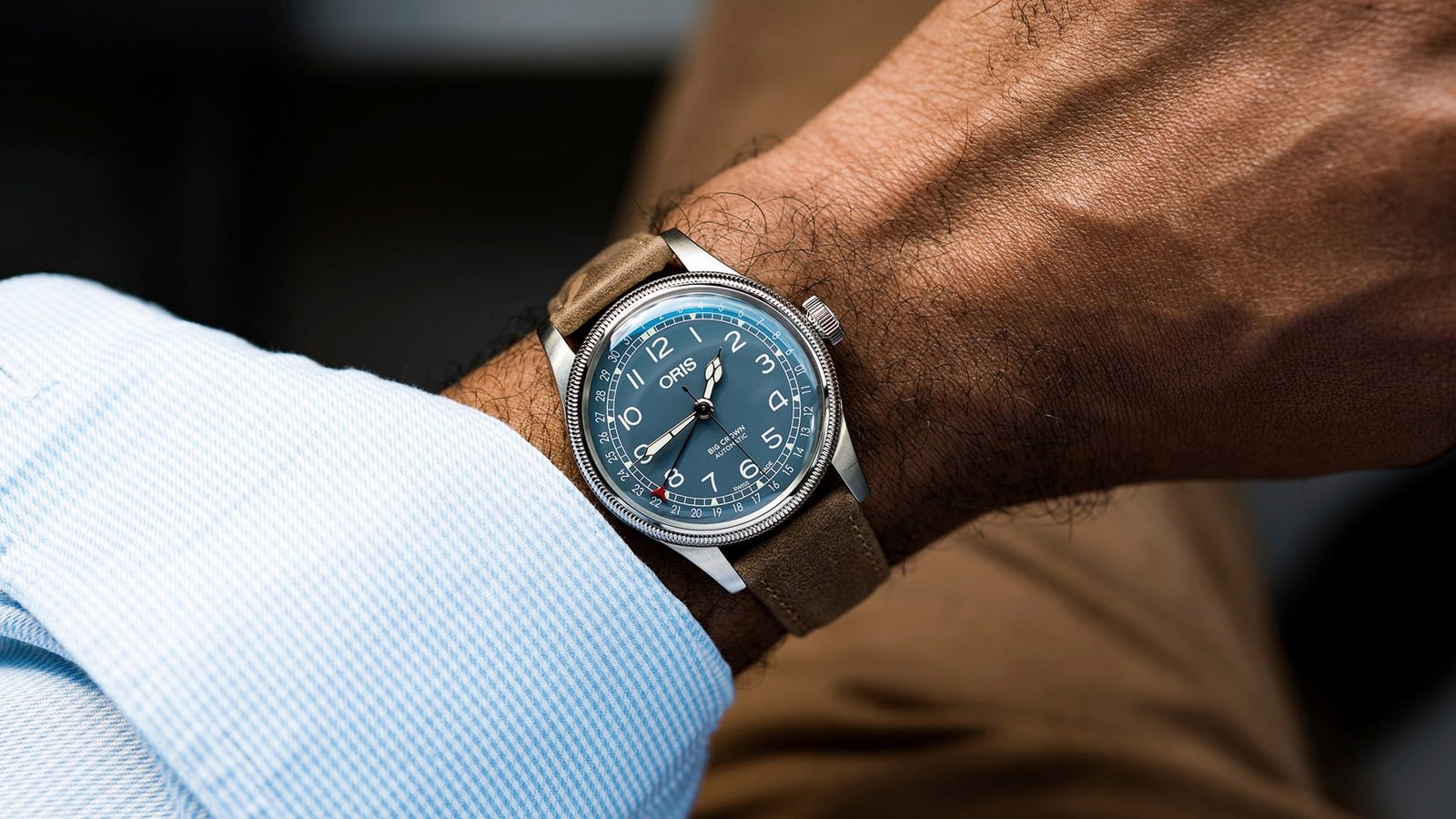
The Big Crown Pointer Date dates to 1938. The selected blue reference pairs an oversized crown with a central calendar hand that reads against the numbers around the dial. On leather, it has the character of an older pilot’s watch and works well with everyday tailoring.
The extra ring of numerals makes it busier than a date-window watch. If you rarely check the date, that may matter less than the fact that the pointer gives the watch a recognisable face. This is the Oris to buy when the dial itself is what draws you in.
Divers Date: The Best Starting Point
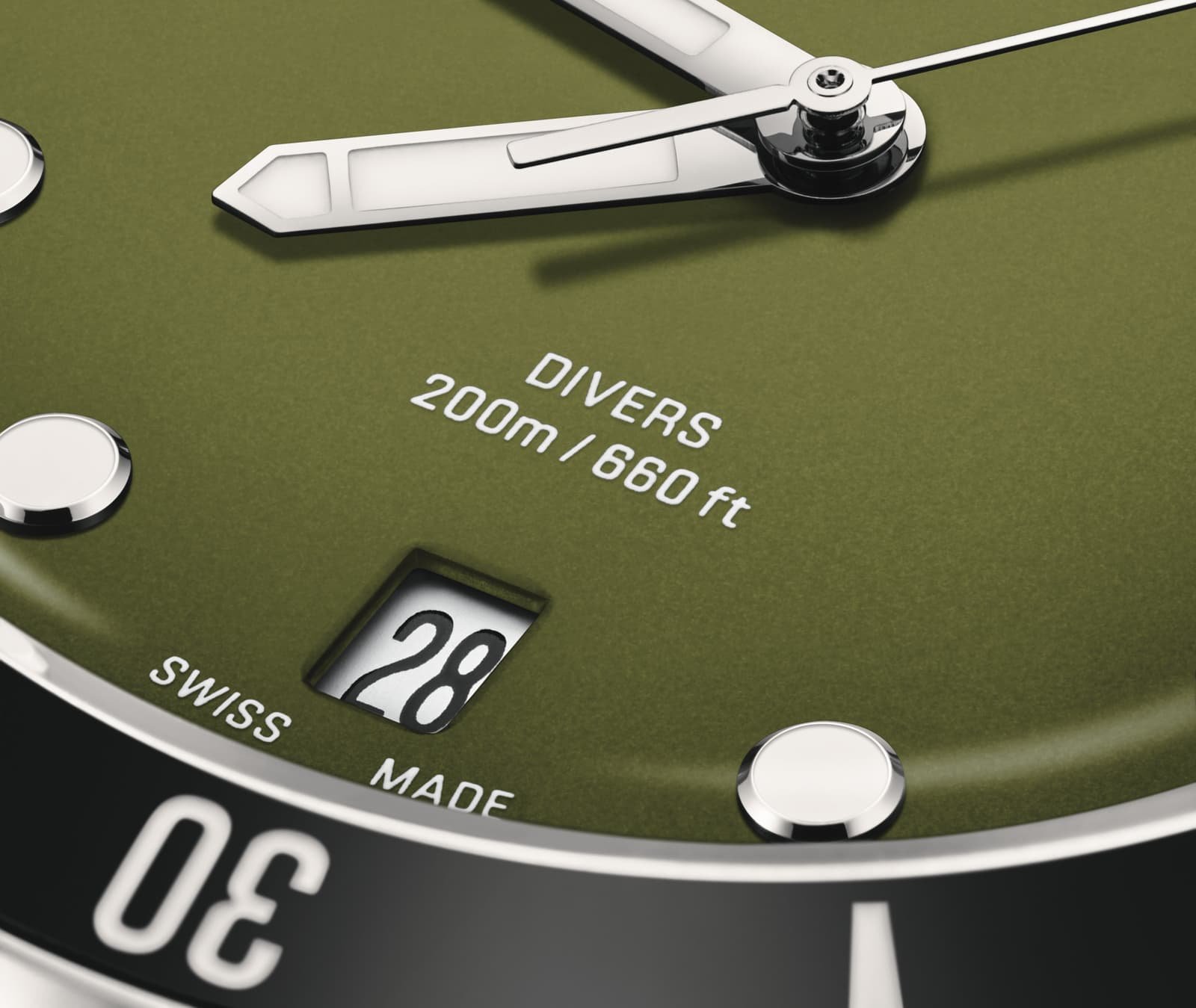
The selected Divers Date pairs an olive dial with a black ceramic bezel insert. Its 39 mm case, luminous hands and markers, and included rubber strap make it the most adaptable of the four. The olive is muted enough to sit comfortably with navy, denim and charcoal.
It also has a clearer buying case than a larger diver if you spend most of the week at a desk. You get a timing bezel and a sporty dial without committing to the broader stance of the Aquis.
Aquis Date Calibre 400: The Technical Choice
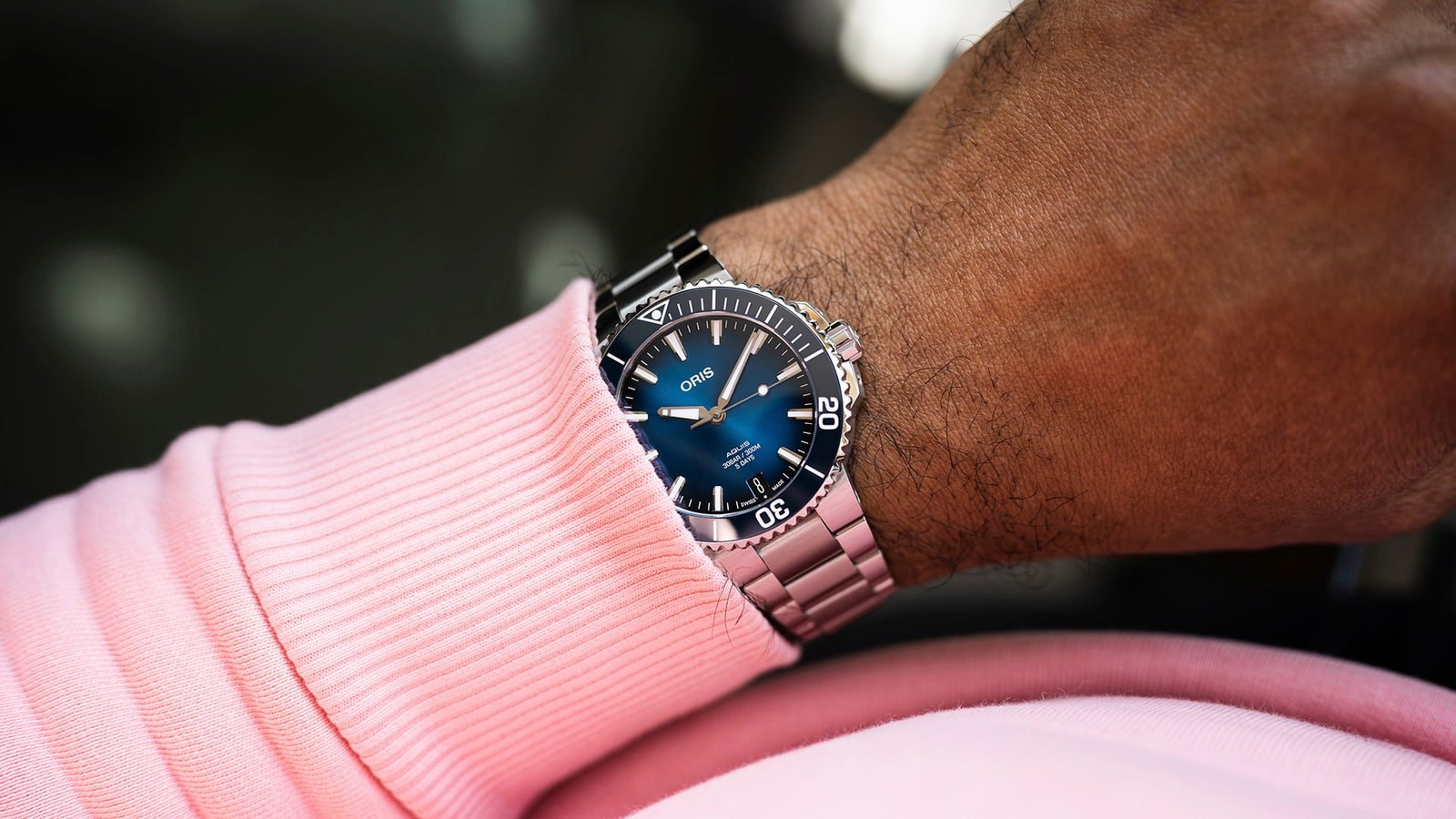
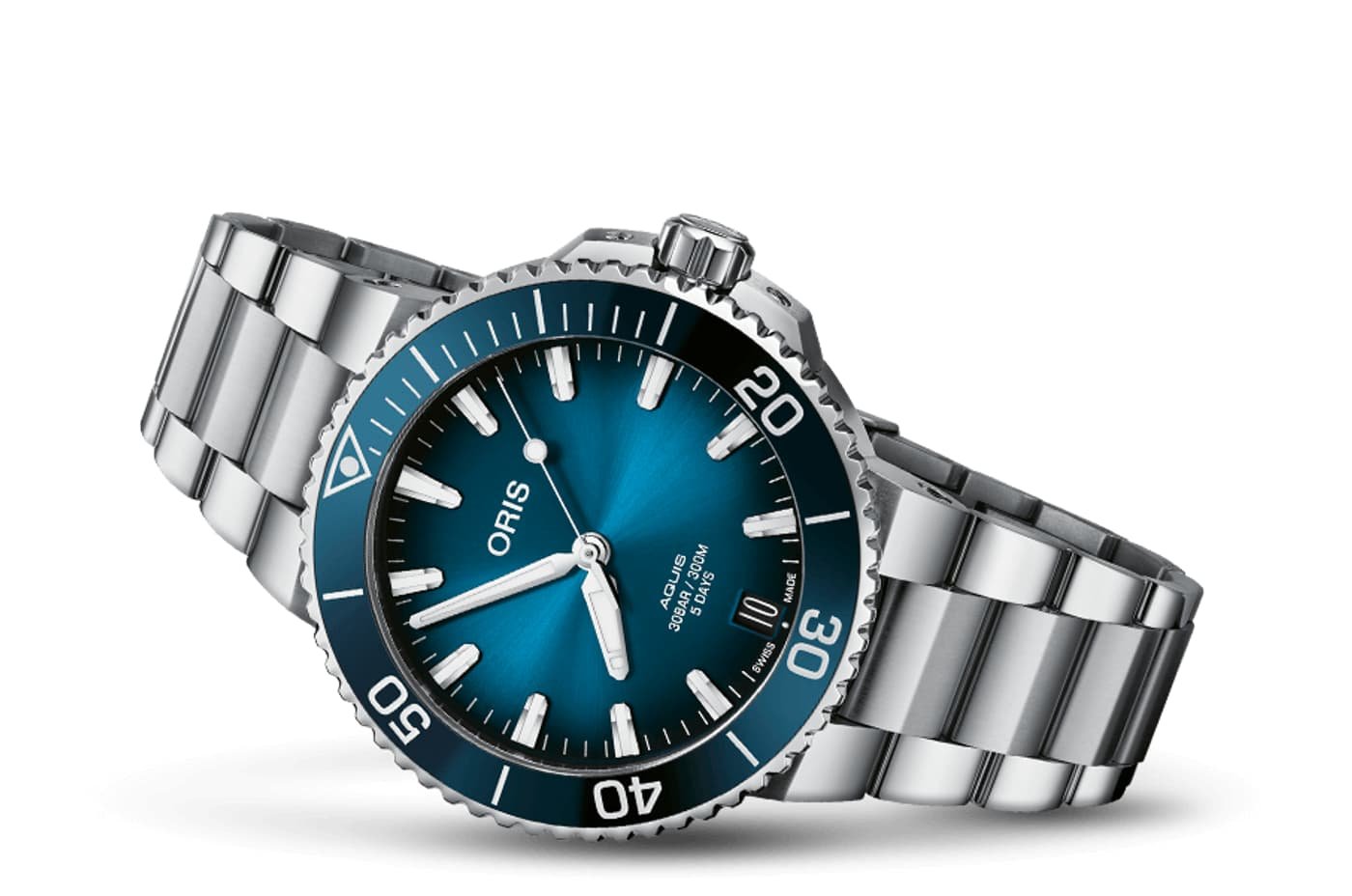
This blue 41.5 mm Aquis has a ceramic bezel insert, a screw-down crown and a steel bracelet with an extendable clasp. The case and bracelet meet closely, giving it a more substantial, integrated look than the Divers Date.
The case for spending more rests on Calibre 400 and the way the watch fits. If you like the Aquis silhouette but wear the same watch every day, compare a standard Aquis Date before paying for a reserve you may seldom use.
ProPilot Date: The Clearest Dial
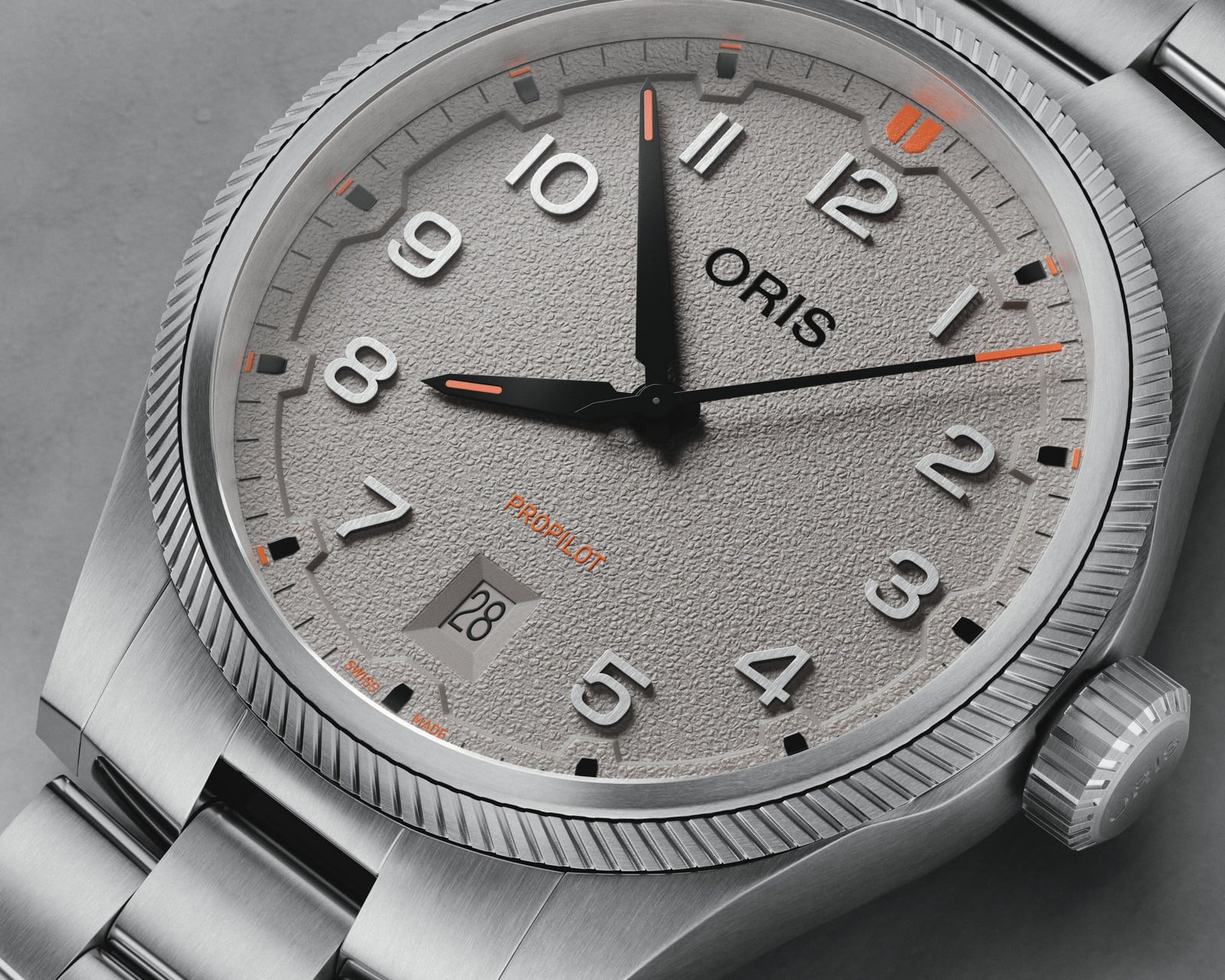
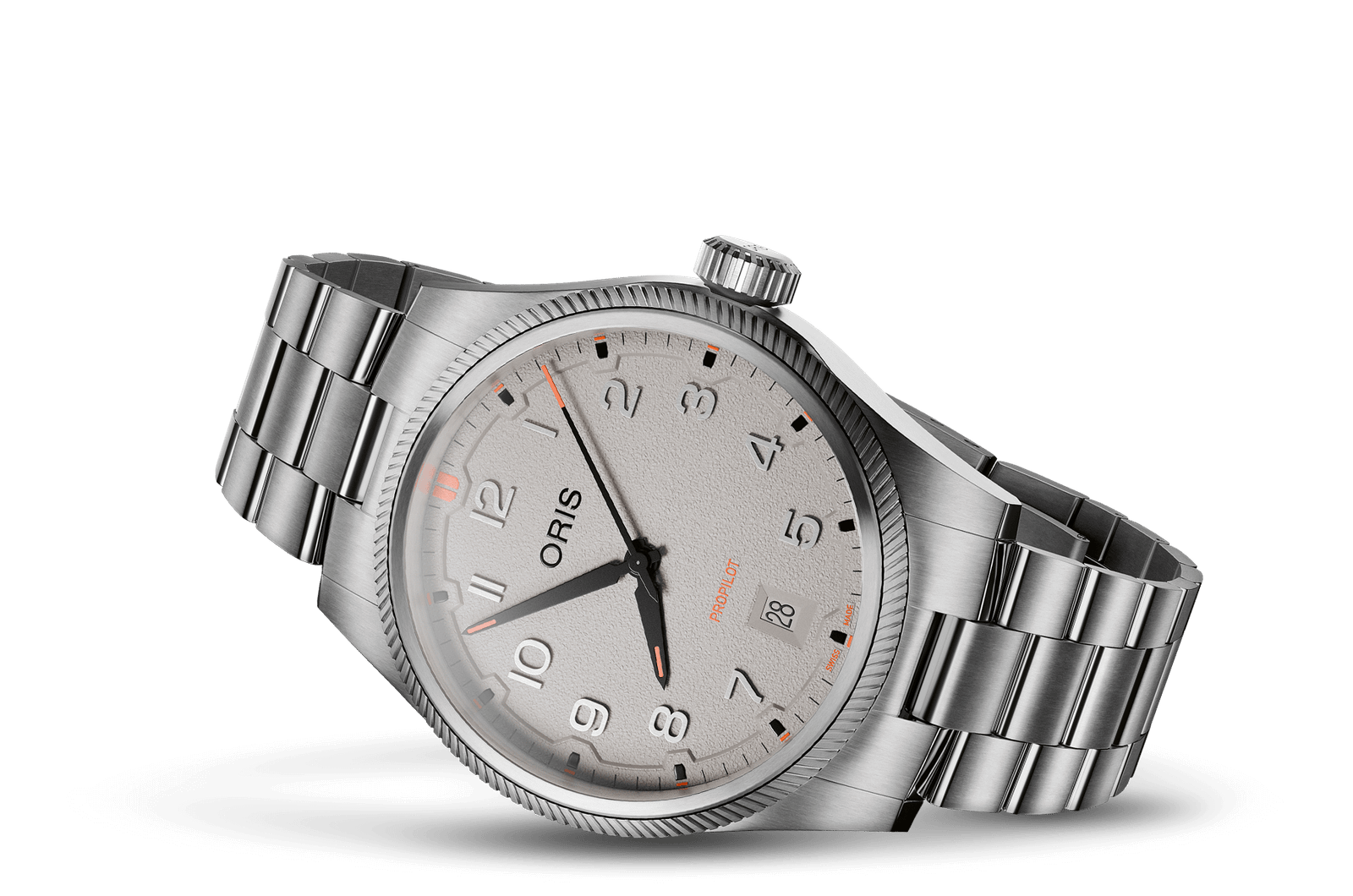
The grey 41 mm ProPilot Date is the pick for someone who wants an aviation watch with an easy-to-read dial and a conventional date window. The selected reference comes on steel, and its lack of a rotating dive bezel gives it a different look from the two divers.
A simple dial can still look large. Try this and the smaller Divers Date side by side if you like both: the ProPilot’s open face and the diver’s surrounding bezel change how much dial you see on the wrist.
Oris Collections Compared
| Model | Case Size | Movement | Power Reserve | Water Resistance |
|---|---|---|---|---|
| Big Crown Pointer Date | 40 mm | Calibre 754 automatic | 38 hours | 50 m |
| Divers Date | 39 mm | Calibre 733-1 automatic | 41 hours | 200 m |
| Aquis Date Calibre 400 | 41.5 mm | Calibre 400 automatic | 120 hours | 300 m |
| ProPilot Date | 41 mm | Calibre 733-1 automatic | 41 hours | 100 m |
Specifications apply to the exact references in Shop the Edit. Oris uses different movements and case sizes within these collections, so check the full reference before comparing listings.
Movements: When Five Days Makes A Difference

A 38- or 41-hour reserve is enough for many people who wear the same watch most days. Take it off on Friday evening, though, and you may be setting the time and date again on Monday. That is especially noticeable on the Big Crown if you enjoy keeping the pointer date correct.
The Aquis Calibre 400’s 120-hour reserve is easier to appreciate in a rotation. A sufficiently wound watch can sit for several days and still be running when you pick it up. Oris also highlights resistance to magnetism and recommends a ten-year service interval for this movement. That interval is a manufacturer recommendation; have the watch inspected sooner if it shows a problem or needs its water resistance checked.
The two 733-1 watches make the comparison simpler. Their listed reserve is the same, so choosing between them is largely a question of fit and function: a compact dive bezel and spare rubber strap, or a larger, less interrupted dial.
Materials, Fit And Comfort
All four references use stainless-steel cases and sapphire crystals. The two divers add ceramic bezel inserts, while the Big Crown’s leather strap makes its appearance less sporty. Those material choices are familiar; the more meaningful differences emerge when you try the watches on.
| If You Prefer | Try First | Check In Person |
|---|---|---|
| A compact sports watch | Divers Date | Whether the clasp sits centrally on your wrist |
| A traditional watch on leather | Big Crown Pointer Date | Whether the crown touches the back of your hand |
| A substantial diver on steel | Aquis Calibre 400 | First-link position, clasp length and compatible straps |
| A broad, readable dial | ProPilot Date | Whether the dial looks proportionate at arm’s length |
On the Aquis, check strap compatibility by reference. The shape of the case attachment matters as much as the stated width. If you like changing straps, look at the options available for the exact watch before buying.
If you wear fitted shirts, bring one to the fitting. Check whether the watch slips beneath the cuff and whether the clasp presses against your wrist when you rest your arm on a desk. Both tests tell you more about daily comfort than an empty wrist shot.
Everyday Practicality And Care
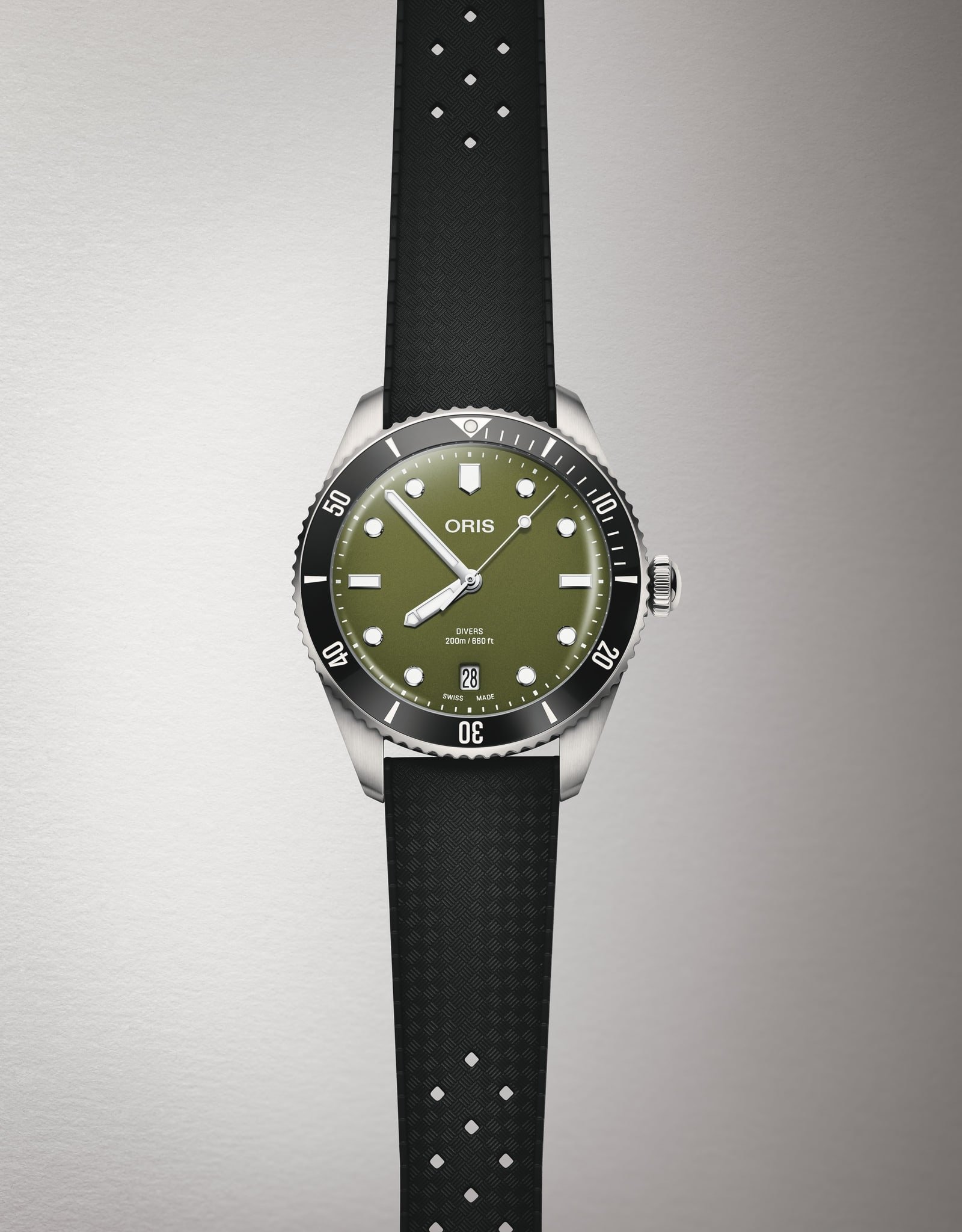
The Divers Date and Aquis make the most sense if you regularly want a timing bezel, whether for time in the water or simply tracking an interval on land. The ProPilot is the easier choice if you value a clear time display and don’t use a bezel. The Big Crown on leather is better suited to dry, everyday wear.
Follow the instructions for the exact reference before water exposure, especially if you’re buying pre-owned and don’t know when the seals were last checked. Keep leather away from prolonged moisture and use the supplied rubber or a compatible bracelet when appropriate.
The four listings show a two-year base warranty. Oris lists an extension to three years for the selected Big Crown, Divers Date and ProPilot through MyOris, and to ten years for the selected Aquis Calibre 400. Verify registration and remaining coverage before treating the extension as part of a pre-owned purchase.
How To Style Oris Watches
| Occasion | Recommended Model | Styling |
|---|---|---|
| Relaxed Office | Big Crown Pointer Date | Charcoal tailoring, pale shirt and leather shoes |
| Weekend In The City | Divers Date | Oxford shirt, dark denim and loafers |
| Casual Travel | ProPilot Date | Lightweight jacket, knit polo and straight trousers |
| Coastal Weekend | Aquis Calibre 400 | Linen shirt, casual shorts and minimal accessories |
The Big Crown is the easiest of the four to pair with a jacket, especially when the outfit already has some texture from wool or suede. The Divers Date is better when you want a watch that looks at home with both jeans and an unstructured blazer. The blue Aquis has the strongest wrist presence, so it works especially well with simple clothing.
Do Oris Watches Offer Good Value?
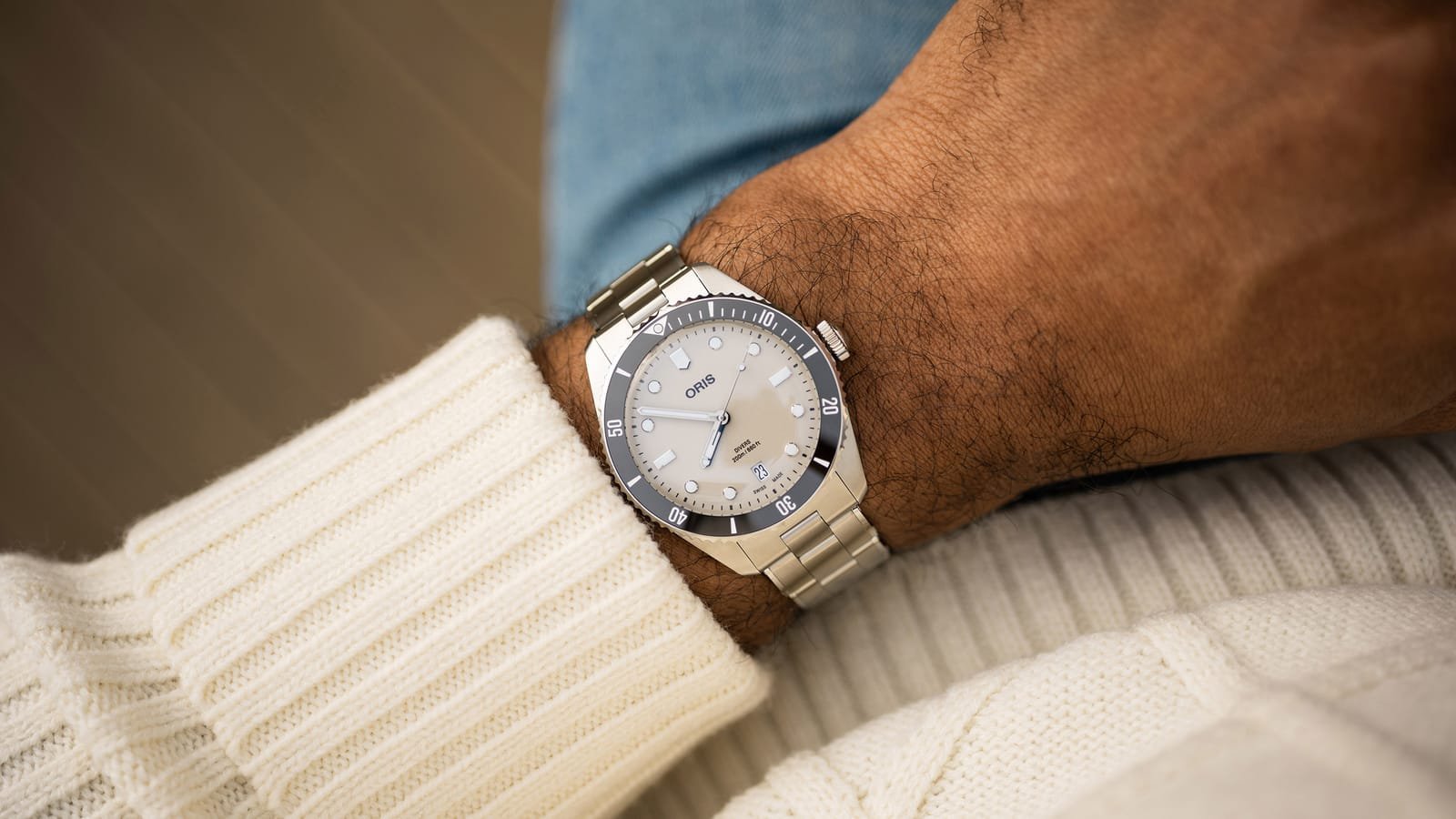
Oris’s U.S. listings show $2,200 for the selected Big Crown, $2,550 for the ProPilot, $2,800 for the Divers Date and $3,900 for the Aquis Calibre 400. These are reference prices; availability varies. The selected blue Big Crown and Aquis were listed as unavailable online when checked.
The Divers Date has the strongest case for someone buying one watch. Its size and two carrying options make it easy to build a routine around. The Big Crown makes equally good sense if you know you want the pointer display; a more capable diver won’t give you that dial.
The $1,100 difference between the selected Divers Date and Aquis is easiest to justify if you prefer the Aquis fit and will use the longer reserve. If you’re drawn mainly to the blue dial and ceramic bezel, compare a standard Aquis Date before deciding.
LxryNow Review Scorecard

| Category | Score | Assessment |
|---|---|---|
| Design | 9/10 | The pointer date and contrasting sports-watch designs give the range character |
| Movement Choice | 9/10 | Five-day options add a meaningful step up from the standard automatics |
| Materials And Finishing | 8/10 | Useful materials, including sapphire and ceramic on the selected divers |
| Comfort | 8/10 | The 39 mm diver is approachable; the Aquis needs a closer fitting |
| Everyday Practicality | 9/10 | Clear roles for timing, legibility and watch rotation |
| Versatility | 8/10 | Strong choices across the range, with different limits on each model |
| Value For Money | 8/10 | Best when the features justify the price for your routine |
| Overall | 8.4/10 | Mechanical watches with clear identities and useful differences |
Which Oris Watch Should You Choose?
| Your Priority | LxryNow Recommendation |
|---|---|
| One watch for most days | Divers Date 39 mm |
| The dial that feels most recognisably Oris | Big Crown Pointer Date |
| A modern diver you can leave off for several days | Aquis Date Calibre 400 |
| Legibility without the look of a dive watch | ProPilot Date |
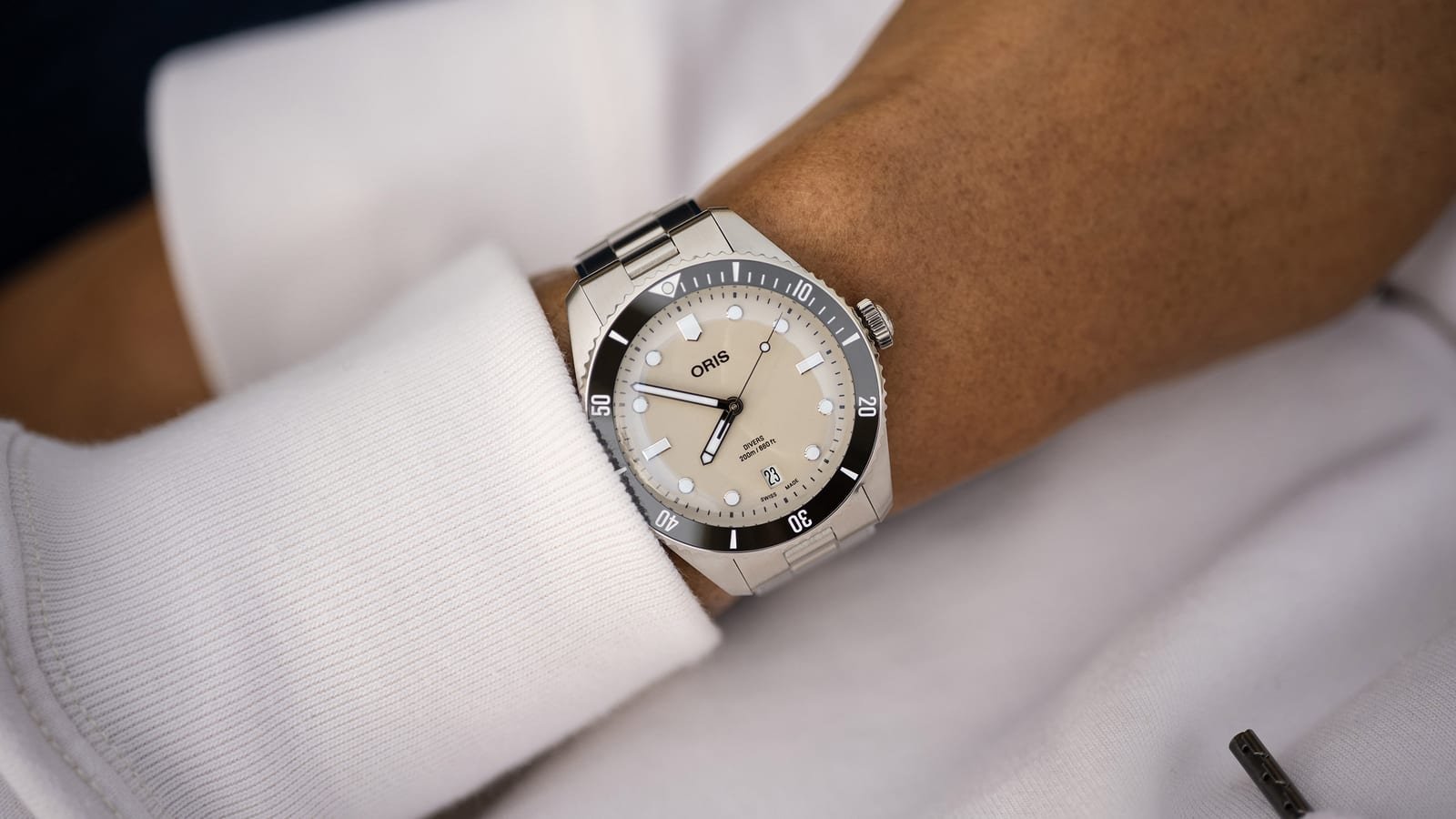
If you’re between the Big Crown and Divers Date, try them with the clothes you wear most often. If you’re between the two divers, try them with the bracelet sized. The better fit is likely to matter more often than the difference in water-resistance ratings.
Shop The Edit
Big Crown Pointer Date — 01 754 7741 4065-07 5 20 63
Inky blue dial and a distinctive pointer calendar

Divers Date — 01 733 7795 4057-Set
Compact olive diver with a bracelet and spare rubber strap
Aquis Date Calibre 400 — 01 400 7769 4135-07 8 22 09PEB
Blue ceramic-bezel diver with a five-day reserve
ProPilot Date — 01 733 7805 4163-07 8 20 04LC
Clear grey dial with an aviation-inspired case
Pros And Cons
| Pros | Cons |
|---|---|
| Big Crown offers a distinctive calendar design | Pointer date adds visual detail to an already numbered dial |
| Divers Date combines moderate dimensions with a useful timing bezel | Standard automatics may stop over a weekend off the wrist |
| Calibre 400 adds a meaningful reserve for a rotation | Its premium is harder to justify if you wear the watch daily |
| ProPilot gives buyers a clear sports dial without a dive bezel | The open 41 mm dial can look broad on a narrow wrist |
| MyOris offers movement-specific warranty extensions | Coverage depends on registration and the exact reference |
Final Verdict
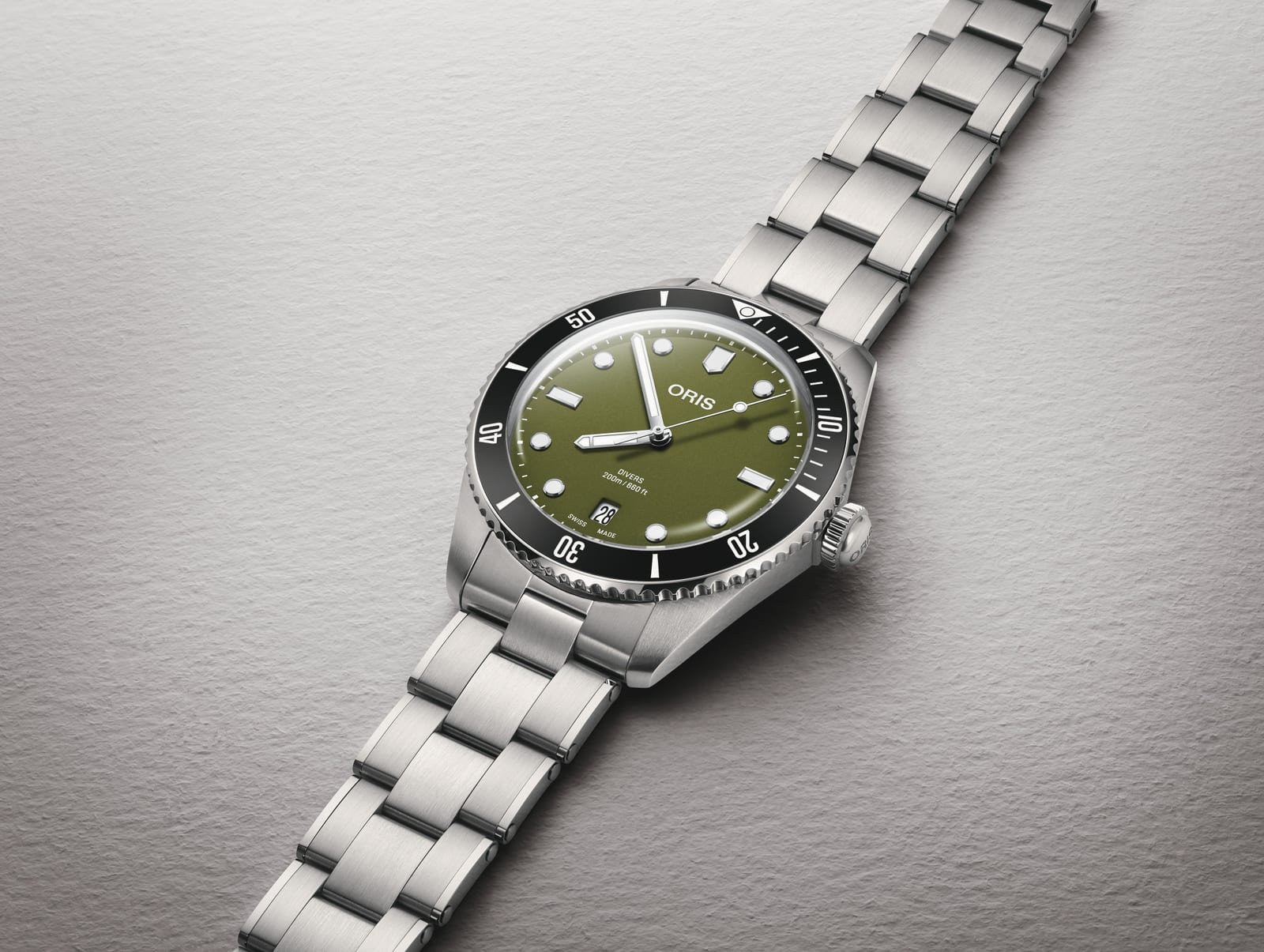
The Divers Date 39 mm is the Oris we’d recommend first. It has enough character to stand on its own and proportions that suit more settings than a larger dive watch. Choose the Big Crown Pointer Date if the calendar is what made you want an Oris in the first place; it’s the design you’re least likely to find yourself comparing on specifications alone.
The Aquis Calibre 400 makes sense when you want the modern diver’s shape and a watch that keeps running through several days off the wrist. The ProPilot Date serves a simpler purpose: a clear dial you can read at a glance, without a dive bezel.
LxryNow Verdict: Start with the Divers Date for everyday wear, or choose the Big Crown for the design that best expresses Oris’s character.
Overall Score: 8.4/10
