
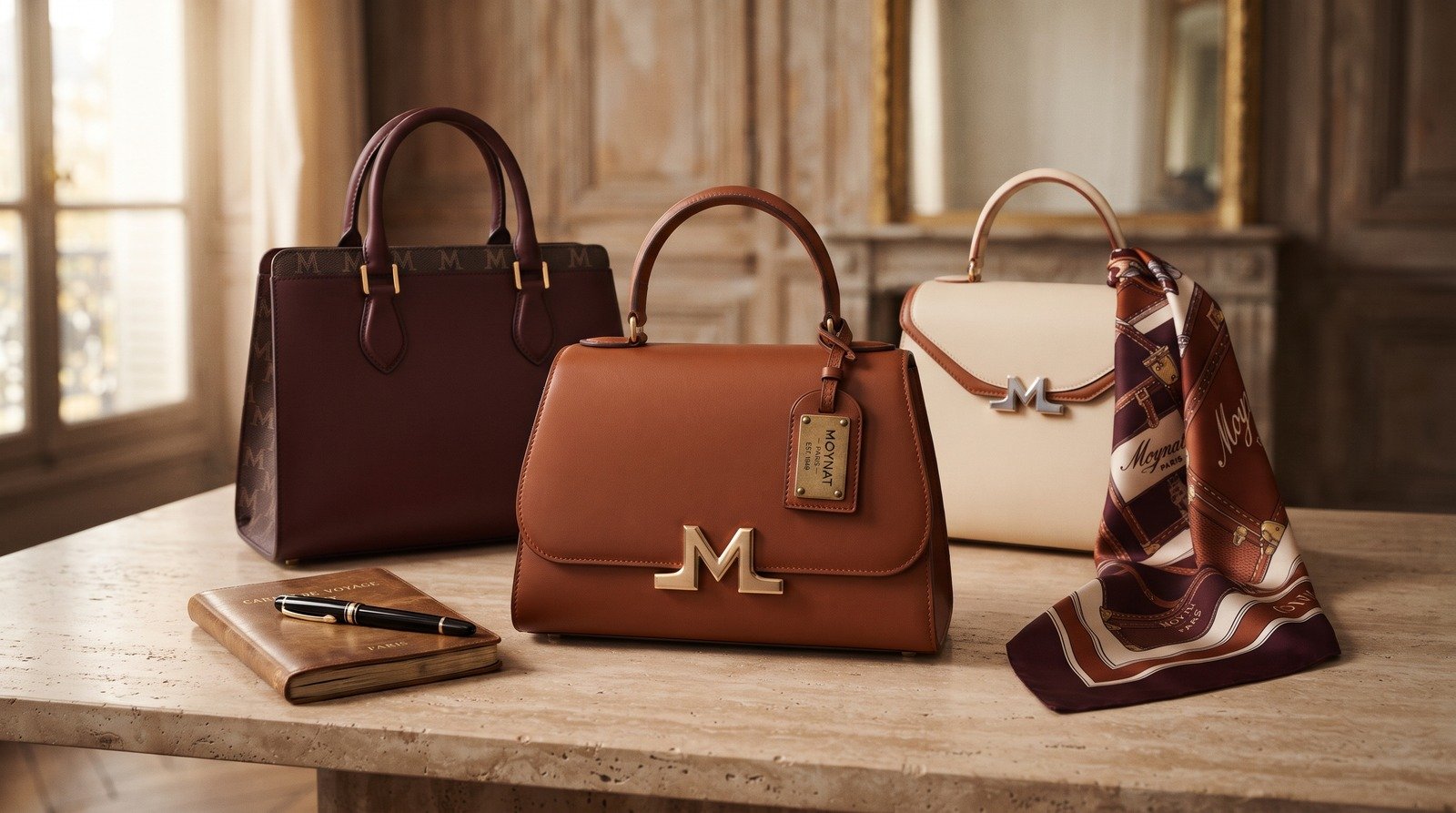
Moynat occupies an unusual position in luxury leather goods. The Parisian house has a history stretching back to the nineteenth century, yet its handbags remain far less visible than the industry’s most recognisable status symbols.
That discretion is central to the attraction.
A Moynat bag rarely relies on oversized hardware or an immediately familiar logo. Recognition comes through curved construction, carefully finished leather and details adapted from the house’s trunk-making archive. The result is luxury that communicates most clearly to people who already understand it.
The Réjane remains the historical reference point, while the Gabrielle is the clearest expression of the contemporary collection. The Duo BB offers a more relaxed everyday alternative, and the Mignon translates archival curves into a compact statement piece.
For a first purchase, the Gabrielle PM offers the strongest balance of history, structure and versatility. The Duo BB is the better choice for practicality, while collectors interested in earlier Moynat design may be drawn to the Réjane through boutiques or the pre-owned market.

TL;DR
- Moynat began as a Parisian trunk-making house in 1849.
- Its bags are known for refined leatherwork, architectural curves and discreet branding.
- The Réjane is the house’s most historically significant handbag.
- The Gabrielle is the strongest current Moynat signature.
- The Duo BB offers greater everyday capacity and a more relaxed silhouette.
- The Mignon is a compact design inspired by historic minaudières and limousine trunks.
- Monogram-canvas styles provide a lighter, more casual entry into the brand.
- Limited distribution contributes to the house’s under-the-radar reputation.
- Buy according to function and design preference rather than assumed resale performance.
Why Moynat Remains Under the Radar

Moynat does not operate through the same level of global visibility as many luxury handbag houses. Its boutique network is selective, its marketing tends to be restrained and its designs rarely depend on instantly recognisable seasonal campaigns.
This can make the brand less familiar to casual shoppers, but more compelling to buyers who want a handbag that does not appear everywhere.
| Moynat Characteristic | What It Means for the Buyer |
|---|---|
| Selective distribution | Fewer opportunities to see and try the bags in person |
| Discreet branding | Bags integrate easily into a refined wardrobe |
| Trunk-making heritage | Curves, locks and construction have a functional foundation |
| Limited mainstream exposure | Designs feel less familiar than major status bags |
| Detailed leatherwork | Shape and finishing matter more than obvious logos |
| Smaller resale audience | Buy primarily for personal use, not guaranteed appreciation |
Being under the radar does not mean being unknown. Moynat is appreciated by leather-goods collectors and shoppers who prefer design knowledge to overt recognition. The brand’s appeal lies in discovering details gradually rather than identifying the bag from across a room.
A Trunk-Making House Founded in 1849

Moynat was established in Paris in 1849 with a specialisation in travel trunks. Founder Pauline Moynat became associated with practical innovations including the English Trunk, which used lightweight construction and a water-resistant gutta-percha coating.
The first store opened on Avenue de l’Opéra in 1869. During the early twentieth century, artist and designer Henri Rapin developed the house’s repeating M monogram, which was painted onto trunk canvas and later became an important visual signature. LVMH: Moynat History
This heritage explains why modern Moynat bags frequently have controlled curves, structured bases and specialised closures. The references are not simply decorative. They translate the engineering of luggage into smaller objects designed for daily use.
Moynat’s history is also notable because a woman helped establish the house at a time when luxury trunk-making was overwhelmingly associated with men. Pauline Moynat’s name continues to give the maison a distinctive place within French leather-goods history.
Réjane: The Historical Moynat Icon

The Réjane is the bag most closely associated with Moynat’s historical identity. It was created in honour of celebrated French stage actress Gabrielle Réjane around the beginning of the twentieth century, making it an unusually early example of a handbag connected to a public figure.
Its design combines a structured body with an arched flap and sculptural metal clasp. The profile feels formal, but the rounded edges prevent it from appearing severe.
The Réjane works best for someone who appreciates:
- Traditional top-handle construction
- Distinctive hardware without large branding
- Compact, compartmentalised interiors
- Polished day-to-evening styling
- Handbags with a historical narrative
Smaller versions suit occasions and light daily use, while larger sizes are more practical for work. However, the structure limits flexibility: the bag will not accommodate overpacking as easily as a soft tote.
Availability can vary because the current Moynat collection gives greater visibility to newer families. Buyers searching for a specific Réjane size, leather or colour may need to contact a boutique or explore reputable pre-owned specialists.
Gabrielle: The Strongest Contemporary Signature

The Gabrielle is the most convincing first Moynat bag for many buyers. It is structured enough to communicate the house’s craftsmanship but simple enough to work with contemporary wardrobes.
Its defining feature is the metallic M-shaped twist closure. Curved stitching across the front references the rounded profile of Moynat’s historic Limousine Trunk. The official collection includes handbag and clutch interpretations in materials such as Carat and Dream calf leather. Moynat Gabrielle Collection
The Gabrielle BB feels compact and polished, making it suitable for weekends, lunches and evening use. The Gabrielle PM offers a more practical balance for regular daytime wear.
Choose black, taupe, burgundy or another deep neutral if this will be your primary designer bag. A brighter colour can be beautiful because the clean front panel gives saturated leather room to stand out, but it will naturally be less adaptable.
The closure creates visual identity without overwhelming the design. That balance makes the Gabrielle recognisable to informed luxury shoppers while remaining discreet in most settings.
Duo BB: The Practical Everyday Choice

The Duo BB is designed for buyers who admire Moynat’s materials but do not need a formal top-handle bag.
Its open tote construction makes the interior easier to access, while two-tone leather gives the simple silhouette more depth. Moynat describes the smaller Duo as suitable for essentials including a wallet, smartphone and water bottle, with a concealed magnetic closure helping to keep the exterior clean. Moynat Duo BB
This is the most approachable option for commuting, shopping and travel. It is less rigid than the Gabrielle and easier to integrate into casual outfits.
The trade-off is security. A magnetic closure does not provide the same protection as a fully zipped bag, and an open tote benefits from using internal pouches for smaller items.
Choose the Duo BB if practicality matters more than collecting the house’s most emblematic hardware.
Mignon: The Compact Statement Bag

The Mignon offers a more playful interpretation of Moynat’s archive. Its curved shape takes inspiration from early-twentieth-century limousine trunks and from minaudières produced by Pauline Moynat in the nineteenth century.
Its small proportions make the silhouette feel almost architectural. This is a bag to choose for design impact rather than maximum capacity.
The Mignon is most appropriate for:
- Evening occasions
- Lunches and events
- Minimal daily essentials
- Buyers who already own a practical work bag
- Shoppers who want a distinctive colour
Before buying, test it with your actual phone, cardholder, keys and compact. Curved interiors often hold less than their external dimensions suggest.
M Canvas and the Hobo: The Casual Side of Moynat

Moynat’s M canvas offers a more visible connection to the house’s heritage. The repeating pattern developed from Henri Rapin’s early-twentieth-century monogram and now appears across totes, travel bags, camera bags and smaller accessories.
Canvas designs are generally lighter and more relaxed than full-leather top-handle bags. They are particularly suitable for travel, weekends and buyers who appreciate vintage luggage graphics.
The Hobo combines the monogram canvas with a leather handle, zip closure and adjustable strap, allowing it to be carried on the shoulder or across the body.
Choose canvas when low weight and casual versatility matter. Select full leather if you want Moynat’s construction and edge finishing to remain the focus.
Which Moynat Bag Should You Choose?

| If You Want… | Best Choice | Why |
|---|---|---|
| The strongest current house signature | Gabrielle PM | Balances heritage hardware with everyday capacity |
| A compact day-to-evening bag | Gabrielle BB | Polished without being overly formal |
| Moynat’s key historical design | Réjane | Offers the richest connection to the house’s handbag history |
| A practical daily tote | Duo BB | Lighter, simpler and easier to access |
| A small statement piece | Mignon | Distinctive curved shape and expressive colours |
| A casual monogram bag | M Canvas Hobo | Lightweight with shoulder and crossbody versatility |
For a first Moynat bag, prioritise a shape that fits your actual routine. The most historically important design is not automatically the one you will use most frequently.
Consider Leather, Colour and Hardware

Smooth calf leather gives structured bags a formal, refined appearance but may show scratches and pressure marks more readily. Textured leather is generally more forgiving for frequent use.
Neutral colours maximise versatility, although Moynat’s relatively quiet designs can carry brighter shades without appearing overly decorative. A red, yellow or green Mignon can function as the central element of an otherwise simple outfit.
Inspect the hardware carefully when shopping pre-owned. Moynat closures are important to the visual identity of several designs, so wear, looseness or replacement components can affect both appearance and function.
LVMH describes Moynat’s prototype development as a hand-executed process involving repeated adjustments between designers and leather-goods specialists. This focus helps explain why construction details are central to the brand’s proposition. LVMH: Moynat Craftsmanship
Shop the Edit

Moynat Gabrielle PM
The strongest first purchase for heritage, structure and daily versatility


Colours, materials, sizes and availability may vary by market.
Pros and Cons of Moynat Bags
| Pros | Cons |
|---|---|
| Long Parisian trunk-making history | Limited boutique distribution |
| Distinctive construction without excessive branding | Difficult to compare every style in person |
| Specialised closures and refined leather finishing | Structured designs may have restricted capacity |
| Less commonly seen than mainstream luxury bags | Smaller resale audience than better-known houses |
| Strong options for both leather and canvas | Certain historical designs can be difficult to find |
| Designs feel connected to a coherent archive | Brand recognition may be too discreet for some buyers |
Final Verdict

Moynat is most compelling for shoppers who value leatherwork, history and discretion more than immediate brand recognition.
The Réjane is the historical icon and remains essential to understanding the house. The Gabrielle, however, is the most convincing contemporary purchase. Its curved stitching, M-shaped lock and practical top-handle format communicate Moynat’s trunk-making identity without feeling archival.
Choose the Duo BB if you need an easier everyday bag, the Mignon if you want a compact statement piece or the M Canvas Hobo if your wardrobe is more casual.
Moynat’s relative obscurity is not something the house needs to overcome. It is part of what makes these bags appealing. They offer the pleasure of an informed choice—a luxury object recognised through proportion, leather and construction rather than visibility alone.
