
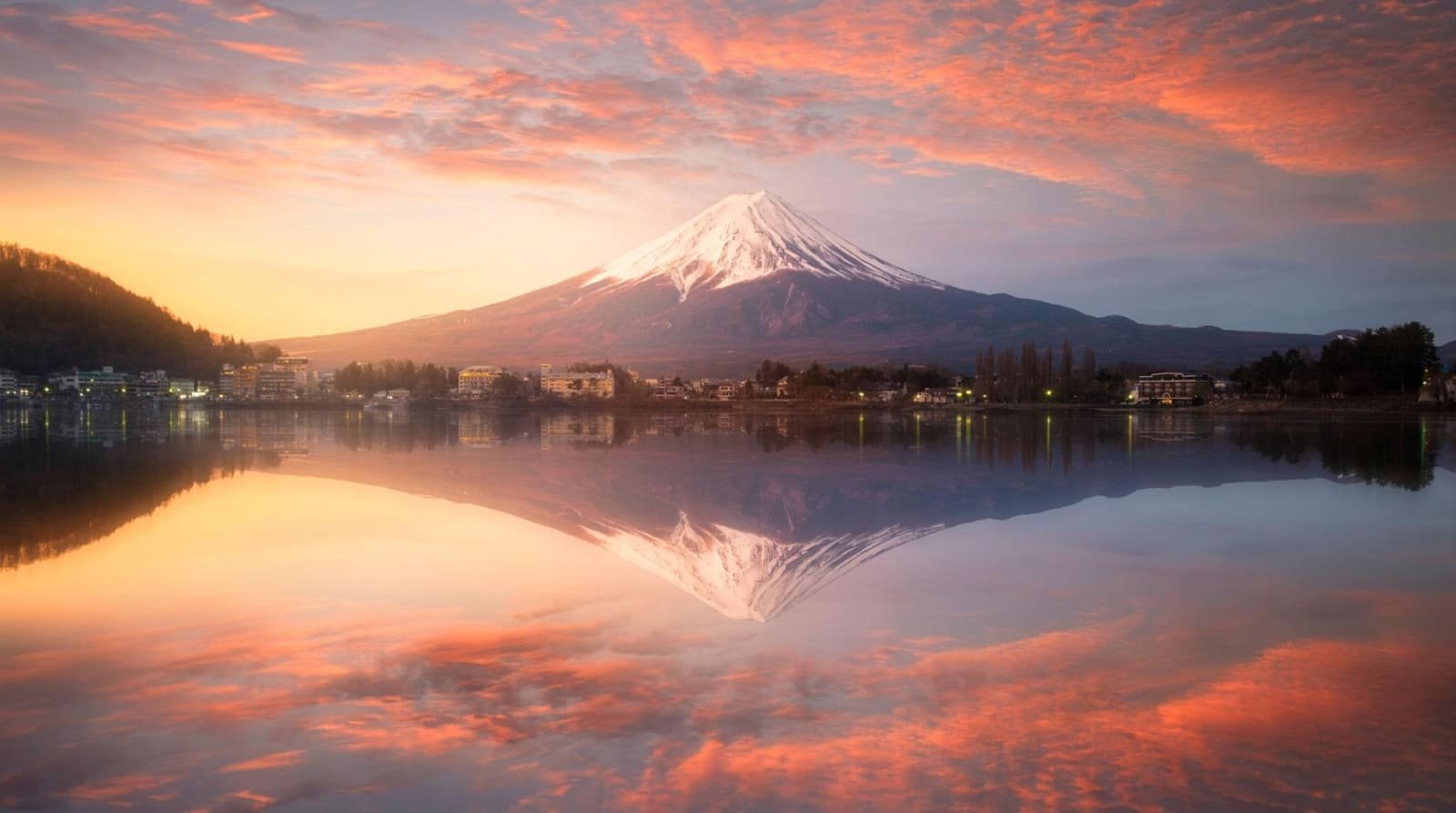
Mount Fuji is one of the world’s most recognisable natural landmarks, yet visiting it is less straightforward than its familiar silhouette suggests. The mountain can disappear behind clouds, traffic from Tokyo can consume valuable hours and many day tours attempt to include too many stops.
When conditions cooperate, however, the experience is exceptional. Seeing the 3,776-metre volcano rise above Lake Kawaguchiko, rural villages or autumn forests creates a sense of scale that photographs rarely capture.
This Mount Fuji review focuses primarily on sightseeing rather than summit climbing. It examines the views, surrounding attractions, transport and tour options that determine whether a Mount Fuji day trip feels extraordinary or frustrating.

Mount Fuji at a Glance

| Detail | LxryNow Assessment |
|---|---|
| Location | Yamanashi and Shizuoka prefectures, Japan |
| Best Base | Lake Kawaguchiko for first-time visitors |
| Best For | Landscapes, photography, nature and cultural scenery |
| Suggested Visit | Full-day tour or one-night stay |
| Best Viewing Conditions | Clear winter days and early mornings |
| Typical Tokyo Day Trip | Approximately 10–12 hours |
| Main Limitation | Visibility is never guaranteed |
| Private Tour Value | High for flexibility and comfort |
| Overall Score | 8.8/10 |
What Makes Mount Fuji Special?

Mount Fuji is Japan’s tallest mountain, but height alone does not explain its importance. Its almost symmetrical volcanic form has shaped Japanese art, poetry, pilgrimage and religious practice for centuries.
The experience is also unusual because there is no single Mount Fuji attraction. The mountain is the centre of a broader landscape that includes the Fuji Five Lakes, shrines, forests, springs, villages and elevated viewpoints.
Its power lies in anticipation. The mountain may appear briefly between clouds, dominate the horizon for several hours or remain hidden for the entire day. That unpredictability can make a clear view feel genuinely memorable, but it also means expectations must be managed carefully.
The Best Mount Fuji Viewpoints

The right viewpoint matters as much as the weather.
- Lake Kawaguchiko: The most practical first choice, with accessible lakeside views, seasonal flowers and the possibility of a reflection when the water is calm.
- Oishi Park: Particularly attractive when flowers introduce colour into the foreground.
- Chureito Pagoda: Creates one of Japan’s most famous compositions, although reaching the viewpoint requires climbing a substantial number of steps.
- Oshino Hakkai: Combines spring-fed ponds and traditional scenery, but its central paths can become crowded.
- Lake Yamanakako: Offers wide, relatively open views and often feels less compressed than the most popular Kawaguchiko stops.
- Mount Fuji Panoramic Ropeway: Provides an elevated perspective over Lake Kawaguchiko, subject to weather and queues.
- Mount Fuji Fifth Station: Places visitors on the mountain itself, but access is seasonal and the summit view is less classically composed than those from the lakes.
A refined itinerary should include two complementary viewpoints rather than racing between every famous location.
Lake Kawaguchiko Experience

Lake Kawaguchiko is the most dependable base for a first Mount Fuji visit. Its northern shore provides expansive mountain views, while nearby parks, museums, cafés and hotels make it possible to enjoy the area even when visibility deteriorates.
The lake changes character throughout the day. Early morning can offer calm water and quieter paths, while afternoon light may soften the mountain’s details. During cherry-blossom and autumn-foliage periods, the scenery becomes particularly photogenic but considerably busier.
A rushed coach stop rarely reveals the lake at its best. Allow time to walk beside the water, wait for changing clouds and appreciate the wider landscape instead of treating Mount Fuji as a photograph to collect.
Oshino Hakkai and Cultural Stops

Oshino Hakkai consists of clear ponds fed by water filtered through Mount Fuji’s volcanic geology. Traditional-style buildings, bridges and views toward the mountain create a picturesque setting.
The area is undeniably commercial and can feel crowded during the middle of the day. Nevertheless, it provides useful cultural and geological context, especially for travellers visiting Mount Fuji for the first time.
Shrines such as Kitaguchi Hongu Fuji Sengen Jinja offer a quieter alternative. Their forested approaches reveal the mountain’s spiritual significance and provide substance when cloud prevents a clear panoramic view.
Weather and Mount Fuji Visibility

Visibility is the central risk of any Mount Fuji visit. A clear forecast in Tokyo does not guarantee an unobstructed mountain, and conditions can change during the journey.
Winter generally offers the crispest long-distance views because the air is cooler and less humid. Early mornings are usually preferable throughout the year. The rainy season from early June into July tends to bring more cloud, while summer heat can create haze even on otherwise pleasant days.
Treat a clear summit as the ideal outcome rather than a contractual part of the excursion. A flexible private tour provides an advantage because the route can be adjusted toward whichever side of the mountain has better conditions.
Best Time to Visit Mount Fuji

| Season | Experience | Main Consideration |
|---|---|---|
| Spring | Cherry blossoms and residual snow | Peak blossom dates vary and attract crowds |
| Summer | Green landscapes and official climbing season | Humidity and clouds may reduce visibility |
| Autumn | Colourful foliage and increasingly crisp air | Popular viewpoints become busy |
| Winter | Clearest views and a defined snow cap | Cold conditions and shorter daylight hours |
For sightseeing, late autumn and winter offer the strongest balance of visibility and visual drama. Spring is beautiful when blossoms align with a clear view, but that combination cannot be guaranteed.
Summer is the principal climbing period rather than the most reliable sightseeing season.
Visiting Versus Climbing Mount Fuji

Viewing and climbing Mount Fuji are entirely different experiences. A sightseeing trip emphasises landscapes, lakes and cultural sites. Climbing involves altitude, rapidly changing weather, steep terrain and a long ascent followed by a demanding descent.
Official trails generally open only during a limited summer season. Access rules, fees, reservations and operating dates can change, while climbing outside the official season is dangerous because huts, first-aid stations and other services are closed.
The summit should not be approached as an extension of a casual Tokyo excursion. Travellers intending to climb need appropriate fitness, equipment, accommodation planning and current official guidance.
For most luxury travellers, a lakeside stay with a private driver, mountain-view room and onsen experience will be more comfortable and visually rewarding.
Getting to Mount Fuji from Tokyo

Mount Fuji is possible as a day trip from Tokyo, but the journey is long enough that transport influences the entire experience.
Highway buses provide a relatively direct route to Kawaguchiko, while rail journeys are comfortable but may require connections. Group tours simplify logistics, although fixed schedules reduce the ability to respond to cloud or traffic.
A private vehicle is the strongest option for travellers prioritising comfort and flexibility. It allows earlier departure, hotel pickup, additional luggage space and the freedom to shorten an overcrowded stop.
Tokyo traffic can add considerable time to the return journey. Avoid planning a fixed evening reservation immediately after the tour.
Travellers building a broader itinerary can explore LxryNow’s guide to luxury things to do in Tokyo before deciding whether to allocate one full day or an overnight stay to Mount Fuji.
Day Trip or Overnight Stay?

A Tokyo day trip is practical for travellers with limited time. It can cover Lake Kawaguchiko, Oshino Hakkai and one additional viewpoint, but much of the day will be spent travelling.
An overnight stay creates a more composed experience. It offers a second opportunity to see the mountain if the first afternoon is cloudy, while sunrise and early-morning conditions are often more rewarding.
A high-end ryokan with a Mount Fuji view and private or reservable onsen transforms the visit from sightseeing into a destination experience. For couples and slow-travel itineraries, staying overnight is the superior choice.
Crowds, Comfort and Visitor Experience

Mount Fuji’s most famous locations can become congested with coaches, cars and visitors waiting for the same photograph. Chureito Pagoda, Oshino Hakkai and major Kawaguchiko viewpoints are particularly vulnerable.
Comfort depends heavily on itinerary design. Early departure, weekday travel and fewer stops create a calmer day. Comfortable footwear remains necessary because even sightseeing itineraries include steps and uneven paths.
Facilities are generally strongest around Kawaguchiko and established attractions. More secluded viewpoints provide tranquillity but fewer cafés, toilets and indoor alternatives.
Is Mount Fuji Worth Visiting?

Yes. Mount Fuji is worth visiting for its visual scale, cultural significance and the beauty of the Fuji Five Lakes region.
It is best for travellers who can accept weather uncertainty and dedicate a full day—or preferably one night—to the experience. Visitors expecting guaranteed visibility or a quick photographic stop may find the journey disproportionate when clouds intervene.
The region remains worthwhile without a perfect view if the itinerary includes lakes, shrines, villages or an onsen. A tour focused exclusively on seeing the summit carries considerably more risk.
LxryNow Review Scorecard

| Category | Score | Assessment |
|---|---|---|
| Natural Beauty | 10/10 | One of Japan’s defining landscapes |
| Cultural Significance | 9.5/10 | Deeply connected to Japanese identity and spirituality |
| Photography | 9.5/10 | Exceptional when visibility is clear |
| Accessibility | 8/10 | Reachable from Tokyo but requires substantial travel |
| Visitor Comfort | 8.5/10 | Strongest with private transport or an overnight stay |
| Crowd Management | 7.5/10 | Famous viewpoints can feel heavily congested |
| Reliability | 7/10 | Mountain visibility is never guaranteed |
| Tour Value | 8.5/10 | High when the itinerary remains flexible |
| Overall | 8.8/10 | A remarkable but weather-dependent experience |
Which Mount Fuji Experience Should You Choose?

| Visitor Type | Recommended Experience |
|---|---|
| First-time visitor | Full-day Fuji Five Lakes sightseeing tour |
| Couple or family | Private vehicle with a flexible itinerary |
| Luxury traveller | Overnight ryokan and private onsen stay |
| Time-limited visitor | Group tour from Tokyo |
| Landscape photographer | Overnight stay with early-morning viewpoints |
| Active traveller | Seasonal climb with proper preparation |
| Culture-focused visitor | Lakes, Sengen shrine and Oshino Hakkai |
Book the Experience

Private Tour to Mount Fuji and Hakone
Best for a personalised itinerary with private transportation.

Mount Fuji Private Tour from Tokyo with English-Speaking Driver
Best for flexible sightseeing around the Fuji Five Lakes.

Mount Fuji Full-Day Sightseeing Tour from Tokyo
Best for value-conscious travellers who prefer organised group transport.

Mount Fuji and Hakone Private Tour
Best for combining Fuji viewpoints with Hakone scenery.
Prices, itineraries and availability vary by date. Confirm whether attraction fees, meals and Fifth Station access are included before booking.
Pros and Cons
| Pros | Cons |
|---|---|
| Extraordinary natural and cultural significance | Visibility is unpredictable |
| Multiple lakes, shrines and viewpoints | Long journey from central Tokyo |
| Beautiful in every season | Popular locations can become crowded |
| Excellent private-tour potential | Group itineraries may feel rushed |
| Suitable for sightseeing or active travel | Traffic can delay the return journey |
| Exceptional overnight ryokan options | The best accommodation requires advance booking |
Final Verdict

Mount Fuji deserves its iconic status. Its form is immediately recognisable, but the surrounding lakes, forests and sacred sites give the experience greater depth than a distant view from Tokyo.
The principal limitation is uncertainty. No tour can guarantee clear skies, and an ambitious schedule can turn a beautiful landscape into a sequence of hurried stops.
Choose a flexible itinerary, begin early and make Lake Kawaguchiko the centre of the day. When time permits, an overnight stay provides the most comfortable and complete interpretation of the region.
LxryNow Verdict: An essential Japanese landscape that rewards flexibility, early starts and slower travel—preferably through a private day tour or a carefully chosen overnight stay.
Overall Score: 8.8/10
