
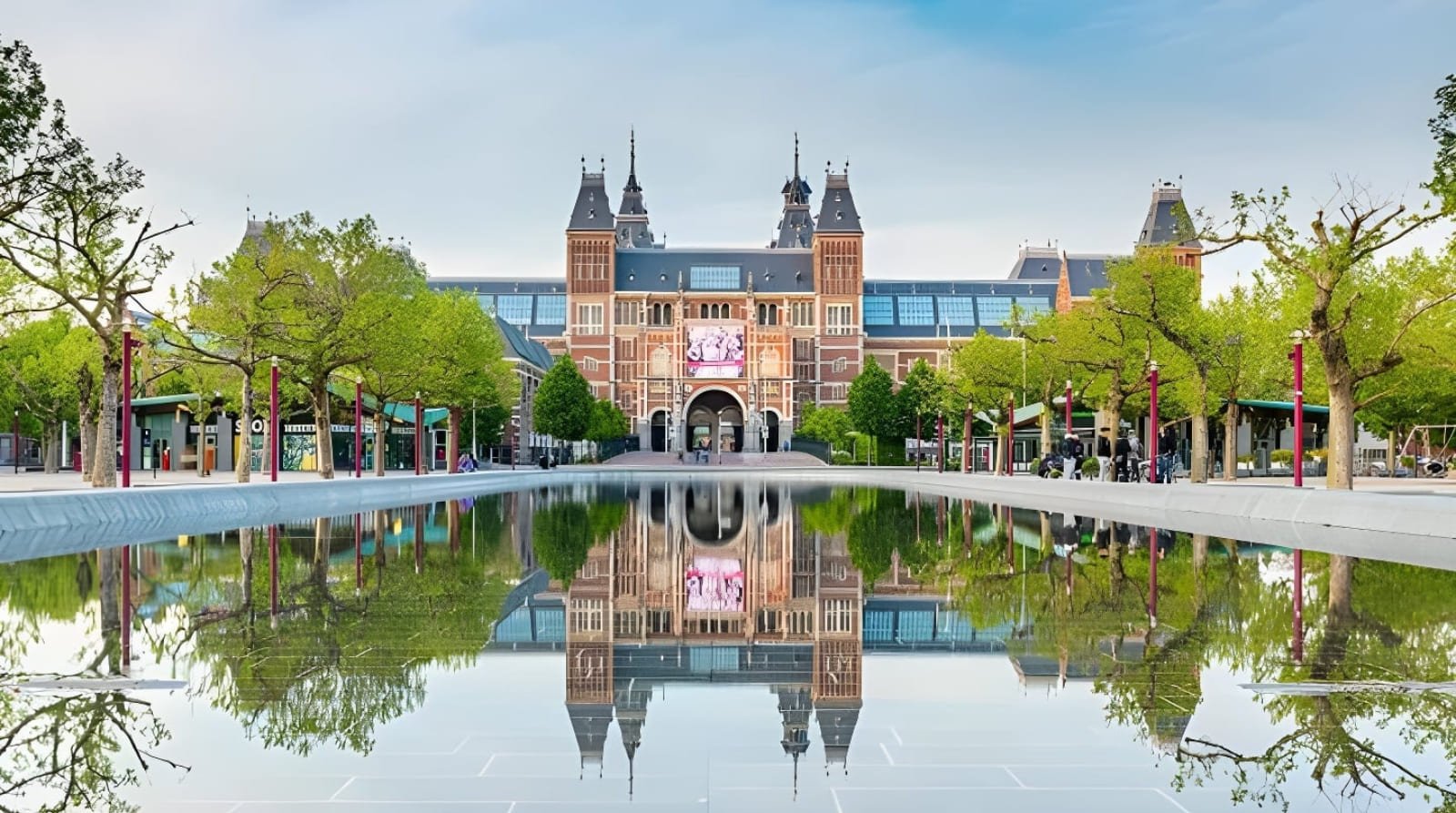
Rijksmuseum at a Glance

| Detail | What to Know |
|---|---|
| Location | Museumstraat 1, Amsterdam |
| Best For | Dutch masters, decorative arts and national history |
| Signature Work | Rembrandt’s The Night Watch |
| Recommended Visit | 3–4 hours |
| Best Time | Opening time or after 3:00 p.m. |
| Opening Hours | Daily, 9:00 a.m.–5:00 p.m. |
| Photography | Allowed without flash or tripods |
| Overall Score | 9.3/10 |
The Rijksmuseum is the Netherlands’ national museum and one of Amsterdam’s defining cultural attractions. Across approximately 80 galleries, thousands of objects trace Dutch art and history from the Middle Ages to the 20th century.
Rembrandt and Vermeer may draw the largest crowds, but the museum’s value extends well beyond paintings. Delftware, ship models, furniture, sculpture, jewelry, weaponry and Asian art make the collection unusually varied.
What Makes the Rijksmuseum Distinctive?

Many major European museums developed from royal collections. The Rijksmuseum feels different: its galleries construct a broad narrative of Dutch identity, combining celebrated art with objects connected to trade, domestic life, naval power, religion and colonial history.
The chronological presentation makes relationships between art and society easier to understand. Paintings appear alongside furniture, silverwork, ceramics and historic artifacts from the same periods.
The building, designed by Pierre Cuypers and opened in 1885, reinforces this sense of ceremony. Stained glass, decorative murals and vaulted passages make the museum itself part of the experience.
Essential Rijksmuseum Highlights

First-time visitors should prioritize:
- Rembrandt’s The Night Watch
- Vermeer’s The Milkmaid
- Vermeer’s The Little Street
- Rembrandt’s The Jewish Bride
- Frans Hals’ The Merry Drinker
- Jan Steen’s The Merry Family
- The Cuypers Library
- The Dolls’ Houses
- The Delftware collection
- The Asian Pavilion
Most famous paintings are concentrated around the Gallery of Honour, making the principal highlights relatively easy to locate. However, visitors who remain only in this area miss much of what gives the Rijksmuseum its depth.
Rembrandt and The Night Watch

The Night Watch occupies a commanding position at the end of the Gallery of Honour. Its theatrical lighting, animated composition and monumental scale explain why it has become the museum’s defining masterpiece.
Crowds gather quickly, particularly between late morning and early afternoon. Arriving close to opening offers the best chance to examine it without a dense line of visitors in front.
The painting has also been the focus of an extensive research and conservation project. This scientific work can affect how it is presented, but it adds an unusual opportunity to observe how a major masterpiece is studied and preserved.
Vermeer and the Gallery of Honour

The Gallery of Honour is the museum’s most concentrated display of Dutch Golden Age painting. Its side galleries feature Rembrandt, Vermeer, Frans Hals and Jan Steen, culminating in The Night Watch.
Vermeer’s paintings are smaller and quieter than Rembrandt’s vast group portrait. The Milkmaid rewards close observation through its controlled light, tactile surfaces and restrained domestic scene. The Little Street transforms an ordinary Amsterdam setting into something intimate and carefully ordered.
Although this is the museum’s busiest area, the clear layout makes it one of Europe’s most satisfying introductions to a national school of painting.
Decorative Arts and Historic Objects

The decorative arts galleries broaden the experience considerably. Elaborate Delftware, maritime models, furniture, glass, textiles and silver reveal how wealth and design shaped Dutch domestic life.
The 17th-century dolls’ houses are particularly memorable. Far from children’s toys, they were expensive display objects commissioned by affluent collectors and furnished with remarkable precision.
The maritime collection documents the Netherlands’ development as a trading and naval power. Its ship models and navigational objects are visually compelling, though their historical context also raises important questions about colonial expansion, exploitation and the sources of Dutch prosperity.
The Asian Pavilion

Located in a separate structure surrounded by water, the Asian Pavilion offers a calmer atmosphere than the central galleries. Its collection includes sculpture, ceramics and decorative objects from China, Japan, India, Indonesia and other parts of Asia.
The pavilion is relatively compact, making it easy to include in a three-hour visit. It also provides an important counterpoint to the museum’s predominantly Dutch narrative, particularly when considering the commercial and colonial connections represented elsewhere.
Because many visitors head directly toward the Gallery of Honour, this is one of the best places to find a quieter, more contemplative museum experience.
The Cuypers Library

The Cuypers Library is the largest and oldest art-historical library in the Netherlands. Its multi-level bookcases, decorative ironwork and skylit reading room create one of the museum’s most photogenic interiors.
Visitors normally view the space from an upper passage rather than entering the working reading area. It only requires a short detour, yet it is surprisingly easy to miss when following the busiest museum route.
The library illustrates why the Rijksmuseum should be appreciated architecturally as well as curatorially. The building’s interior details often rival the objects displayed within it.
Crowds and the Visitor Experience

The Rijksmuseum handles large visitor numbers more comfortably than many historic museums. Galleries are spacious, navigation is supported by a useful museum app, and the central atrium provides a clear point for reorientation.
Congestion is concentrated around The Night Watch, Vermeer’s paintings and temporary exhibitions. Beyond these areas, it is usually possible to find quieter rooms even on a busy day.
The museum’s size is the greater challenge. Trying to cover every floor can reduce an exceptional collection to a tiring checklist. A focused itinerary—Golden Age painting followed by two or three specialist departments—creates a more rewarding visit.
Tickets, Opening Hours and Arrival

The Rijksmuseum is open daily from 9:00 a.m. until 5:00 p.m. All visitors, including museum-card holders and those eligible for free admission, generally need to reserve a timed starting slot.
Tickets should be arranged in advance during weekends, school holidays and peak travel periods. Temporary exhibitions may require a separate supplement or dedicated reservation.
The museum is located on Museumplein and is easily reached by tram, bicycle, taxi or on foot from central Amsterdam. The entrance sits beneath the building in the atrium rather than at the top of the exterior steps.
How Long Should You Spend?

Allow approximately three hours for a first visit. This provides enough time for the Gallery of Honour, several Rembrandt and Vermeer works, decorative arts, the Cuypers Library and one quieter department.
Four hours suits visitors with a serious interest in Dutch history or applied arts. A shorter 90-minute visit is possible, but it should remain tightly focused on the Gallery of Honour and nearby highlights.
Avoid combining the Rijksmuseum and Van Gogh Museum without a substantial break. For additional cultural and private-tour ideas, explore our guide to luxury things to do in Amsterdam.
Photography, Cloakroom and Accessibility

Personal photography is generally permitted, but flash, lighting equipment, selfie sticks and tripods are not allowed. Temporary exhibitions may introduce additional restrictions.
Large bags, backpacks and umbrellas must be left in the complimentary cloakroom. Small handbags are normally permitted, though traveling lightly makes movement through crowded galleries easier.
The museum is wheelchair accessible, with lifts serving every floor. Accessible toilets, wheelchairs and folding stools are available, while registered assistance dogs are permitted. Visitors with specific requirements should still review arrangements before arrival because some routes through the historic building are less direct.
Dining and Museum Facilities

The museum’s café in the atrium is convenient for coffee, lunch or a restorative break during a longer visit. It can become crowded around midday, so an earlier or later stop is more comfortable.
RIJKS, the museum’s associated restaurant, offers a more polished dining experience inspired by Dutch ingredients and the international influences surrounding the country’s history. Reservations are sensible, and dining there should be treated as a separate experience rather than a quick museum break.
The museum shop carries books, prints, design objects and collection-inspired gifts without forcing visitors through an overly commercial exit route.
Is the Rijksmuseum Worth Visiting?

Yes. The Rijksmuseum is essential for first-time visitors who want to understand Dutch art, history and visual culture. Its Rembrandt and Vermeer holdings alone justify admission, while the decorative arts and historic collections give the museum unusual range.
Its principal weakness is scale. Casual visitors may experience museum fatigue, while those interested mainly in modern art may prefer the nearby Stedelijk Museum.
Nevertheless, the Rijksmuseum succeeds as both a collection and a carefully structured national narrative. It feels grand without being impenetrable and scholarly without sacrificing visual impact.
LxryNow Review Scorecard

| Category | Score | Assessment |
|---|---|---|
| Collection Quality | 9.8/10 | Exceptional Dutch art with impressive historical breadth |
| Signature Masterpieces | 10/10 | Rembrandt and Vermeer provide world-class highlights |
| Architecture | 9.5/10 | A richly decorated landmark with memorable interiors |
| Interpretation | 9/10 | Strong displays supported by an excellent museum app |
| Visitor Experience | 9/10 | Spacious, organized and more manageable than many peers |
| Crowd Management | 8/10 | Busy around the major paintings but calmer elsewhere |
| Accessibility | 9/10 | Extensive facilities throughout the building |
| Guided Tour Value | 9.5/10 | Historical context adds significantly to the collection |
| Dining and Facilities | 9/10 | Well-designed amenities and strong dining options |
| Overall Score | 9.3/10 | One of Europe’s most complete national museums |
Which Rijksmuseum Experience Should You Choose?

Choose standard timed admission if you enjoy independent museum visits. The free Rijksmuseum app offers navigation and multimedia tours, making it one of the better self-guided options in Amsterdam.
A small-group tour is ideal for first-time visitors who want the principal masterpieces explained within their historical context. Private tours offer greater flexibility and are better suited to collectors, families or travelers with specialist interests.
A combined Rijksmuseum and Van Gogh Museum tour is convenient when time is limited, though it provides less depth and creates a demanding half-day of concentrated art viewing.
Book the Experience

Rijksmuseum Amsterdam Guided Tour
A structured introduction to the Dutch masters and essential museum highlights.

Rijksmuseum and Van Gogh Museum Private Tour
Best for travelers who want to experience both Museumplein institutions with one guide.

Rijksmuseum Private Guided Tour with Reserved Admission
A personalized option for exploring the collection at a more flexible pace.

Rijksmuseum Dutch Masters and Hidden Stories Private Tour
Suited to returning visitors or travelers seeking detail beyond the headline paintings.
Tour duration, language and admission inclusions vary. Review the selected option carefully before booking.
Pros and Cons
| Pros | Cons |
|---|---|
| Exceptional Rembrandt and Vermeer collection | Major masterpieces attract dense crowds |
| Art, design and history presented together | Full collection is too large for one casual visit |
| Magnificent historic architecture | Temporary exhibitions may cost extra |
| Excellent app and self-guided resources | Complex layout requires occasional backtracking |
| Quieter specialist galleries reward exploration | Combining it with another museum can be exhausting |
Final Verdict

The Rijksmuseum is more than a setting for The Night Watch. Its greatest achievement is placing celebrated paintings within a broader story of Dutch creativity, wealth, domestic life, global trade and changing national identity.
The museum is large, but it rarely feels chaotic once visitors move beyond the Gallery of Honour. A selective route, three or four hours and either the museum app or a knowledgeable guide create an experience with both visual impact and intellectual depth.
LxryNow Verdict: A beautifully presented national collection that balances famous masterpieces with rewarding, quieter discoveries.
Overall Score: 9.3/10
