
Vatican Museums at a Glance

| Detail | What to Know |
|---|---|
| Location | Vatican City, accessible from central Rome |
| Best For | Renaissance art, classical sculpture and religious history |
| Signature Experience | Michelangelo’s Sistine Chapel |
| Recommended Visit | 3–4 hours |
| Best Time | Opening time or late afternoon |
| Dress Code | Shoulders and knees covered |
| Photography | Permitted in most areas without flash; prohibited in the Sistine Chapel |
| Overall Score | 9.2/10 |
The Vatican Museums are not a single museum but an immense network of galleries, courtyards, chapels and historic apartments. Their scale is both their greatest strength and their central challenge: visitors encounter extraordinary art, but often while moving through dense crowds and a complicated one-way route.
What Makes the Vatican Museums Distinctive?

Few cultural attractions offer this concentration of artistic and historical importance. The collection developed over centuries under successive popes, bringing together ancient Roman sculpture, Renaissance frescoes, religious masterpieces, tapestries, maps and decorative arts.
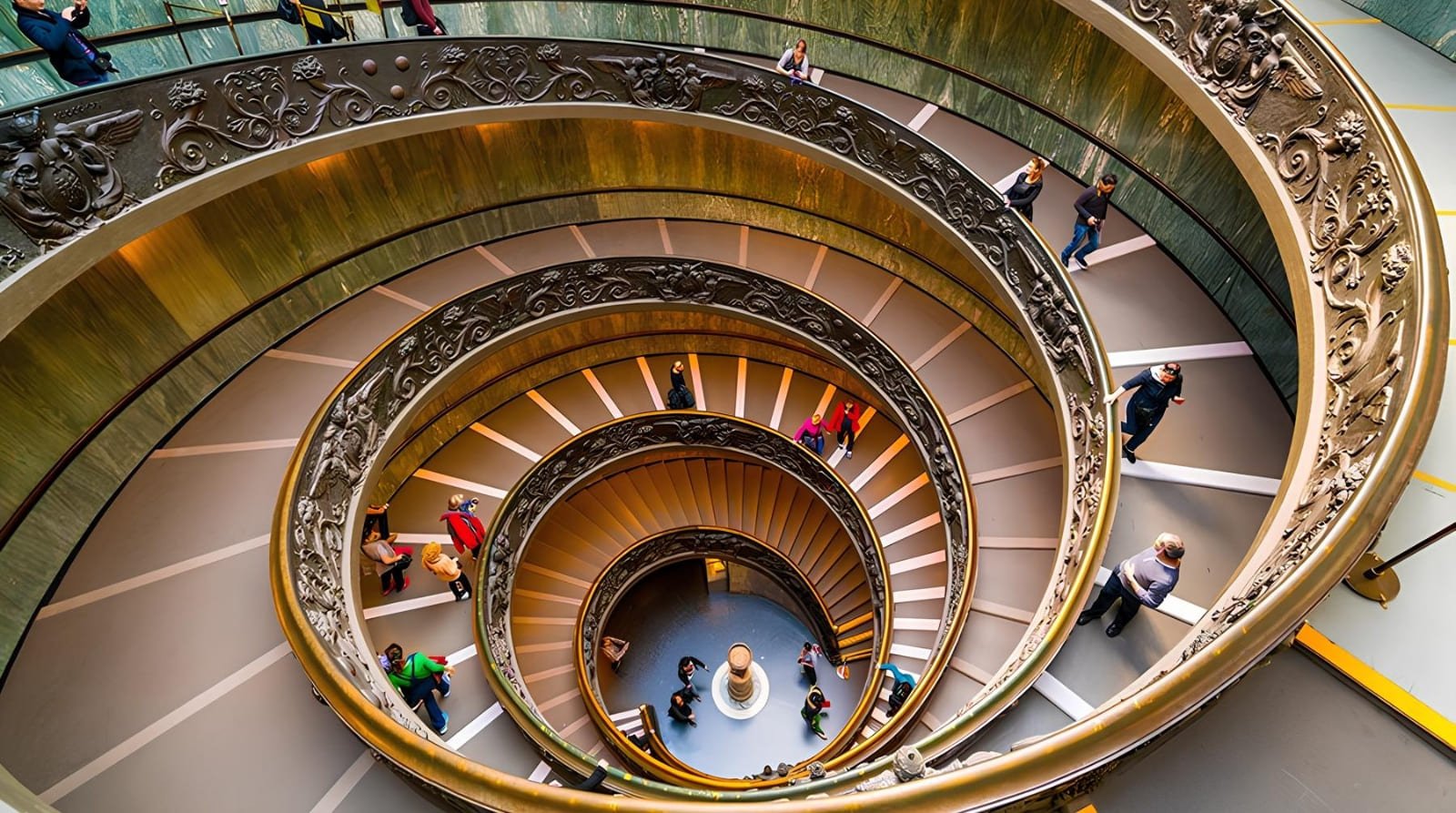
Even the connecting corridors feel palatial. Gilded ceilings, painted vaults and monumental doorways turn the building into part of the exhibition. Yet this richness can become overwhelming. A focused route or knowledgeable guide makes the experience substantially more rewarding than attempting to absorb every room.
Essential Vatican Museums Highlights

First-time visitors should prioritize:
- The Sistine Chapel
- The Raphael Rooms
- The Gallery of Maps
- The Gallery of Tapestries
- The Pio Clementino Museum
- The Pinacoteca Vaticana
- The Belvedere Courtyard
- The modern and contemporary art collection
The standard visitor route naturally leads toward the Sistine Chapel, but important collections sit away from the busiest path. The Pinacoteca, in particular, rewards visitors willing to allocate extra time beyond the headline attractions.
The Sistine Chapel

The Sistine Chapel is the culmination of most visits. Michelangelo’s ceiling and The Last Judgment dominate the room, while frescoes by Botticelli, Perugino, Ghirlandaio and other Renaissance artists line its walls.
The art is astonishing, but the atmosphere may not match romantic expectations. The chapel is frequently crowded, attendants enforce silence, and photography is strictly prohibited. Visitors may have limited space to stand and study the frescoes.
Learning about the principal scenes beforehand—or visiting with a guide who explains them before entering—is useful because spoken commentary is restricted inside the chapel.
The Raphael Rooms and Monumental Galleries

The Raphael Rooms are among the collection’s most intellectually rewarding spaces. The School of Athens is the best-known fresco, but the complete decorative program deserves attention. Its combination of theology, philosophy and Renaissance portraiture reveals considerably more with informed interpretation.
Nearby, the Gallery of Maps offers one of the museum’s most visually impressive passages. Detailed maps of the Italian peninsula line the walls beneath an elaborate vaulted ceiling. The Gallery of Tapestries adds another layer of scale and craftsmanship, although both corridors are usually busy.
Classical Sculpture and the Pinacoteca

The Pio Clementino Museum houses exceptional Greek and Roman sculpture, including the Laocoön Group and the Apollo Belvedere. These works influenced generations of European artists and remain essential even for visitors primarily interested in Renaissance painting.
The Pinacoteca provides a calmer contrast. Its galleries contain works by Giotto, Raphael, Leonardo da Vinci and Caravaggio, among others. Because it is not always included in rushed group itineraries, it can feel significantly less congested than the principal route to the Sistine Chapel.
Crowds and the Visitor Experience

Crowding is the museums’ largest weakness. Popular corridors can resemble a slow-moving procession, particularly during late morning and around major holidays. Timed entry reduces ticket queues but does not eliminate airport-style security or congestion inside.
Arriving for the earliest available admission generally creates the best conditions, though there is no reliably empty period. Late afternoon can also be more manageable, provided enough time remains before galleries begin closing.
The free-entry last Sunday of the month offers obvious value but is rarely the best choice for a relaxed or luxurious visit.
Tickets, Opening Hours and Arrival

The Vatican Museums generally open Monday through Saturday from 8:00 a.m. to 8:00 p.m., with final admission at 6:00 p.m. They also open on the last Sunday of most months with reduced hours. Closures and religious events can alter the calendar, so confirm the official schedule when planning.
Advance reservations are strongly recommended. Purchase from the official ticket office or a reputable tour provider, as unofficial sellers operate around the entrance.
The public entrance is on Viale Vaticano. Ottaviano and Cipro stations on Rome’s Metro Line A are the most convenient nearby stops.
How Long Should You Spend?

Allow at least three hours for the principal rooms and Sistine Chapel. Four hours provides a more balanced visit, including classical sculpture and the Pinacoteca. Art-focused travelers could spend most of a day here, though fatigue becomes a genuine concern.
Avoid scheduling another major museum immediately afterward. Instead, combine the visit with a leisurely lunch or a walk through Prati. For a broader upscale itinerary, see our guide to luxury things to do in Rome.
Dress Code, Photography and Accessibility

Clothing should cover shoulders and knees. Sleeveless tops, very short garments and hats may result in refused entry, making a light scarf or wrap useful during warmer months.
Non-flash photography is normally permitted throughout much of the collection, but all photography and filming are prohibited in the Sistine Chapel. Large luggage, oversized umbrellas, tripods and similar items must be deposited in the cloakroom.
Accessible routes and priority admission are available for eligible visitors, although historic architecture means alternative pathways may bypass certain areas. Contacting the museums before visiting is advisable when specific mobility arrangements are required.
Vatican Museums and St. Peter’s Basilica

The Vatican Museums and St. Peter’s Basilica are separate attractions with different entrances. Standard museum admission includes the Sistine Chapel but not a dedicated tour of the basilica.
Certain guided tours connect the Sistine Chapel with St. Peter’s through a group passage, saving a considerable walk and another security line. Access is not guaranteed, however, because religious services, papal events and operational restrictions can close the passage or basilica at short notice.
Are the Vatican Museums Worth Visiting?

Yes. The quality and historical importance of the collection make the Vatican Museums essential for most first-time visitors to Rome. The Sistine Chapel, Raphael Rooms and classical galleries justify the visit independently.
Nevertheless, expectations matter. This is not an intimate museum experience, and visitors who arrive without a route may spend too much time following crowds through secondary corridors. Reserved admission, an early start and either a private guide or carefully planned self-guided itinerary produce a far better experience.
LxryNow Review Scorecard

| Category | Score | Assessment |
|---|---|---|
| Collection Quality | 10/10 | An extraordinary concentration of Western art |
| Sistine Chapel | 10/10 | A defining masterpiece despite the crowds |
| Architecture | 9.5/10 | Palatial rooms are attractions in their own right |
| Historical Significance | 10/10 | Few museums carry comparable cultural weight |
| Interpretation | 8.5/10 | Most rewarding with preparation or a guide |
| Visitor Experience | 8/10 | Impressive but physically and mentally demanding |
| Crowd Management | 6.5/10 | Congestion regularly affects major galleries |
| Accessibility | 8/10 | Assistance is available, with some route limitations |
| Guided Tour Value | 9.5/10 | Expert context transforms the collection |
| Overall Score | 9.2/10 | Essential, provided the visit is planned carefully |
Which Vatican Museums Experience Should You Choose?

Choose standard reserved admission if you already understand the major works and prefer setting your own pace.
A small-group tour is the best compromise for most first-time visitors, balancing expert interpretation with reasonable value. Private tours are preferable for a luxury experience, specialist interests, family groups or travelers who want greater control over pacing.
Early-access experiences can improve the atmosphere, but “skip-the-line” normally refers to the ticket queue—not mandatory security screening or every interior bottleneck.
Book the Experience

Vatican Museums, Sistine Chapel and St. Peter’s Basilica Guided Tour
A comprehensive introduction for first-time visitors.

Vatican Museums and Sistine Chapel Skip-the-Line Group Tour
A practical option for travelers who prefer a structured group visit.

Vatican VIP Private Tour with Sistine Chapel and Basilica
Best suited to travelers seeking flexibility and personalized interpretation.

Early Morning Vatican, Sistine Chapel and St. Peter’s Tour
An appealing choice for experiencing the collection earlier in the day.
Tour routes and access to St. Peter’s Basilica may change during religious events. Review the exact inclusions before booking.
Pros and Cons
| Pros | Cons |
|---|---|
| World-class collection spanning many centuries | Heavy crowds along the primary route |
| Sistine Chapel and Raphael Rooms | Large scale can feel overwhelming |
| Magnificent architecture and decoration | Timed admission does not bypass security |
| Excellent private and small-group tours | Limited opportunity for quiet contemplation |
| Several quieter galleries beyond the main route | Long visit requires substantial walking |
Final Verdict

The Vatican Museums deliver one of Europe’s most culturally significant museum experiences. Their artistic depth is extraordinary, extending far beyond Michelangelo’s famous chapel to Raphael’s frescoes, ancient sculpture, Renaissance painting and lavish papal interiors.
The crowds and rigid visitor flow prevent the experience from feeling consistently serene. Thoughtful planning makes the decisive difference: reserve admission, arrive early, choose several priorities and consider a knowledgeable guide.
LxryNow Verdict: A magnificent but demanding museum that rewards preparation, selective pacing and expert interpretation.
Overall Score: 9.2/10
