
Royal Botanic Gardens Victoria at a Glance

| Detail | What to Know |
|---|---|
| Main Visitor Site | Melbourne Gardens, Birdwood Avenue |
| Second Location | Cranbourne Gardens |
| Best For | Scenic walks, botany, picnics and quiet city escapes |
| Recommended Visit | 2–3 hours |
| Admission | Free |
| Melbourne Gardens Hours | Daily, 7:30 a.m.–5:30 p.m. |
| Best Time | Morning or late afternoon |
| Overall Score | 9.0/10 |
Royal Botanic Gardens Victoria operates two distinct locations: Melbourne Gardens near the city centre and Cranbourne Gardens in Melbourne’s southeastern suburbs. This review focuses primarily on Melbourne Gardens, the historic 38-hectare landscape most travelers associate with the attraction.
Its appeal lies in the balance between botanical significance and everyday pleasure. Visitors can study rare plants, follow landscaped paths, picnic beside the lake or simply slow down beneath mature trees.
What Makes Melbourne Gardens Distinctive?

Melbourne Gardens feels carefully designed without appearing overly formal. Sweeping lawns, curved paths and concealed views create an experience that gradually unfolds rather than presenting everything at once.
Its living collection includes thousands of plant species from Australia and around the world. Distinctive areas range from fern-filled gullies to arid landscapes, tropical planting and ornamental lakeside gardens.
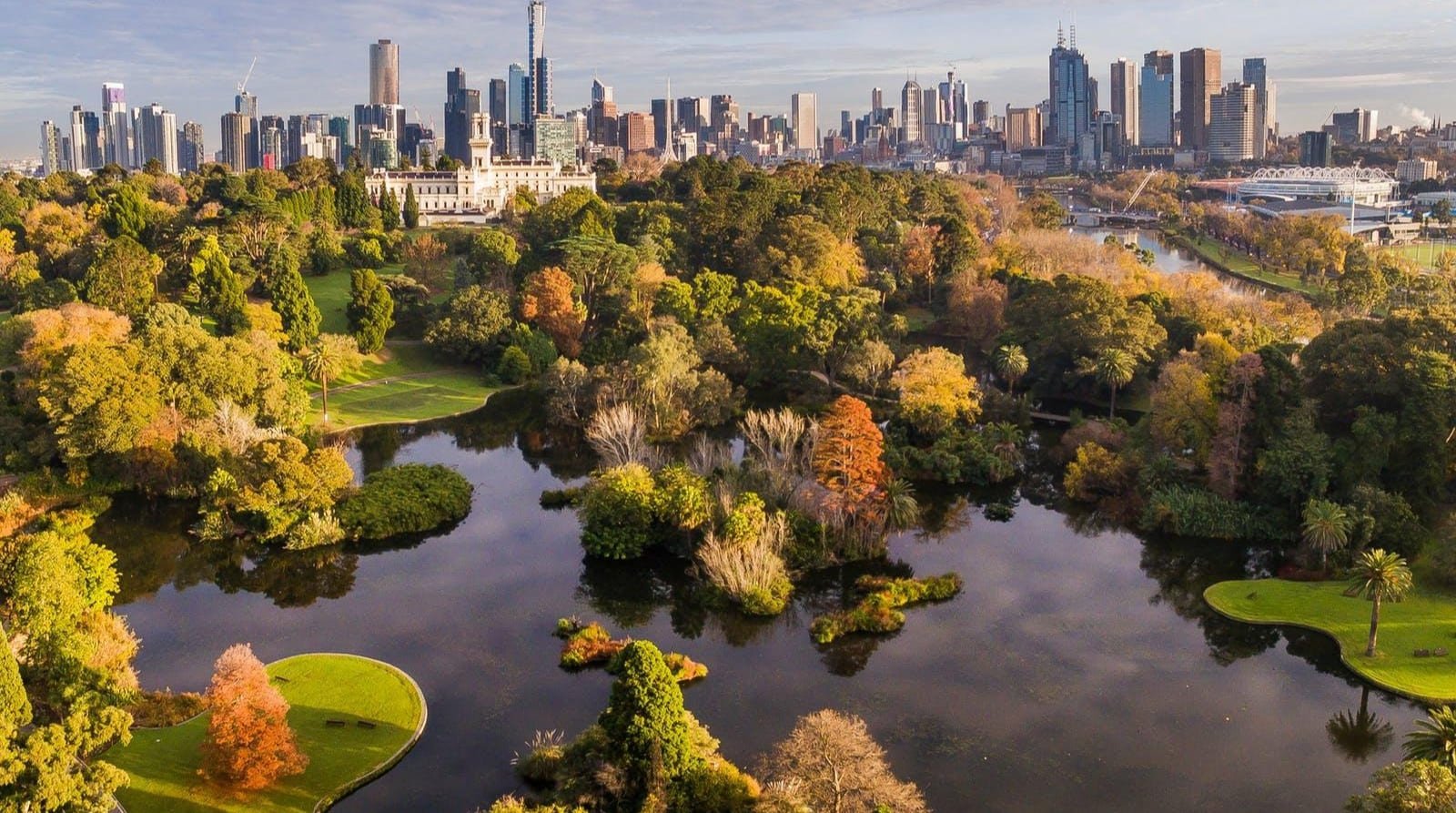
The skyline occasionally appears beyond the trees, reminding visitors that this quiet environment sits beside a major city. That contrast is one of its greatest strengths: the gardens feel removed from Melbourne without requiring a long journey.
Essential Melbourne Gardens Highlights

First-time visitors should prioritize:
- Ornamental Lake
- Guilfoyle’s Volcano
- Fern Gully
- The Australian Forest Walk
- The Herb Garden
- The Arid Garden
- The Ian Potter Foundation Children’s Garden
- The National Herbarium exterior
- The Melbourne Observatory precinct
- The Terrace and its surrounding lawns
The gardens reward unstructured wandering, but a loose route prevents visitors from overlooking Guilfoyle’s Volcano or spending the entire visit around the lake. Allow time for minor paths, which frequently lead to the most peaceful corners.
Ornamental Lake and Lakeside Walks

Ornamental Lake is the visual heart of Melbourne Gardens. Its islands, waterbirds, broad lawns and surrounding vegetation create the most recognizably picturesque section of the landscape.
A relaxed circuit reveals changing perspectives across the water, including occasional views toward Government House. Benches and shaded lawns make this a natural place to pause rather than simply pass through.
The lake is particularly appealing in the morning, when paths are quieter and reflections are clearer. Later in the day, it becomes livelier with picnickers, families and visitors using the gardens as a scenic route between nearby attractions.
Guilfoyle’s Volcano

Originally constructed as a reservoir, Guilfoyle’s Volcano has been transformed into one of the gardens’ most distinctive landscapes. Succulents, cacti and drought-tolerant plants surround a circular water feature, creating a striking contrast with the greener sections elsewhere.
The elevated position also provides views across the surrounding landscape and toward Melbourne’s skyline. Its sculptural planting makes it especially photogenic without feeling like a conventional flower display.
The route involves some sloping paths, but the change in elevation and vegetation makes the detour worthwhile.
Fern Gully and the Rainforest Landscape

Fern Gully provides the most immersive section of Melbourne Gardens. Dense foliage, tree ferns and shaded paths create a noticeably cooler microclimate, particularly welcome during warmer months.
The experience is quieter and more atmospheric than the open lawns. Rather than relying on seasonal flowers, its appeal comes from layers of green, filtered light and the enclosure created by mature vegetation.
Paths can remain damp after rain, so comfortable footwear is advisable. The gully is at its most evocative on overcast days, when the softer light intensifies its secluded character.
The Aboriginal Heritage Experience

The Aboriginal Heritage Walk is one of the most meaningful ways to experience Melbourne Gardens. Led by a First Peoples guide, it explores plants through their traditional uses, cultural significance and connection to Country.
The tour provides context that ordinary plant labels cannot. Depending on the experience, visitors may engage their senses through touch, smell or taste while learning about food, medicine, tools and ongoing cultural knowledge.
It also establishes that the gardens are not simply a colonial landscape. They occupy a culturally significant site connected to the peoples of the Kulin Nation and a much longer history of caring for land.
The Children’s Garden

The Ian Potter Foundation Children’s Garden is designed around nature-based exploration rather than conventional playground equipment. Children can follow winding paths, discover water features, explore plant tunnels and interact with different textures.
Its separate opening schedule should be checked before visiting. It generally operates Wednesday through Sunday and opens daily during Victorian school holidays, but maintenance periods may affect access.
Families could spend an hour here before continuing to the lake or main lawns. For travelers without children, the broader gardens offer more than enough space to maintain a calm atmosphere even during busy family periods.
Melbourne Gardens vs. Cranbourne Gardens

Melbourne Gardens offers historic landscaping, international plant collections and convenient access from central Melbourne. It is the better choice for first-time visitors or anyone with limited time.
Cranbourne Gardens presents a more contemporary interpretation of Australian plants. Its Australian Garden uses dramatic red earth, sculptural forms and native vegetation to explore the country’s different landscapes.
Cranbourne requires a dedicated journey and suits travelers with a strong interest in native flora, landscape architecture or botanical photography. Visiting both locations reveals the full scope of Royal Botanic Gardens Victoria, but they should not be scheduled on the same casual sightseeing route.
Atmosphere and Visitor Experience

The gardens are spacious enough to absorb substantial visitor numbers. Areas near the main gates, lake and cafés become busy, while secondary paths can remain peaceful even on weekends.
Wayfinding is generally straightforward, although winding paths mean the fastest route is not always obvious. An interactive map is useful when trying to reach a specific collection or exit.
Unlike a traditional ticketed attraction, there is no pressure to follow a prescribed sequence. This flexibility makes Melbourne Gardens particularly appealing between more structured museums, shopping appointments or city tours.
Best Time and Season to Visit

Spring brings fresh growth and flowering displays, while autumn introduces warmer color across the deciduous sections. Summer is well suited to picnics and long walks, though midday heat can make exposed areas less comfortable. Winter is quieter and gives the Fern Gully a particularly atmospheric quality.
Morning offers cooler temperatures, fewer visitors and better conditions for photography. Late afternoon is equally attractive when softer light reaches the lawns and lake.
Melbourne’s weather can change quickly. Carry water, sun protection and a light waterproof layer even when conditions initially appear settled.
How Long Should You Spend?

Allow two hours for the lake, Fern Gully, Guilfoyle’s Volcano and several major collections. Three hours provides a more leisurely experience with time for photography, refreshments or a guided activity.
A short one-hour walk is still worthwhile if you focus on the lake and nearby landscapes. Visitors with limited mobility can use the Explorer bus to gain an overview before deciding where to spend additional time.
The gardens pair naturally with the Shrine of Remembrance, National Gallery of Victoria or a Yarra River experience. For additional ideas, see our guide to luxury things to do in Melbourne.
Getting There and Accessibility

Melbourne Gardens is located south of the Yarra River beside the Shrine of Remembrance. Visitors can arrive by tram, bus, taxi or a pleasant walk from Southbank and the arts precinct.
Multiple gates surround the gardens, so choose an entrance based on the planned route. The Visitor Centre near Observatory Gate is a practical starting point for maps, advice and guided activities.
Many principal paths are accessible to wheelchairs and strollers, although gradients and natural surfaces vary. Wheelchairs may be available to borrow, while the Explorer bus is particularly helpful for visitors unable to cover the full landscape on foot.
Dining, Picnics and Facilities

Café facilities provide convenient refreshments, while the lawns make the gardens one of central Melbourne’s best picnic settings. Bringing a carefully prepared picnic creates a more relaxed experience than relying on the busiest midday service period.
Public toilets and drinking fountains are positioned around the site, though not every collection is close to facilities. The Visitor Centre and main café areas are therefore useful orientation points.
Visitors should take all rubbish with them or use designated bins, avoid feeding wildlife and respect restrictions protecting lawns and plant collections.
Are Royal Botanic Gardens Victoria Worth Visiting?

Yes. Melbourne Gardens is one of the city’s most rewarding free attractions, particularly for travelers seeking space between restaurants, museums and urban sightseeing.
It does not deliver the concentrated spectacle of a landmark building or observation deck. Its appeal is subtler: mature landscapes, botanical variety, water views and the ability to experience a quieter version of Melbourne.
The gardens are especially worthwhile in pleasant weather or when combined with the Aboriginal Heritage Walk. Visitors with only a few hours in Melbourne may prioritize more iconic attractions, but longer itineraries should make room for this restorative landscape.
LxryNow Review Scorecard

| Category | Score | Assessment |
|---|---|---|
| Landscape Design | 9.5/10 | Layered, picturesque and consistently engaging |
| Botanical Collection | 9.3/10 | Strong diversity across native and global plants |
| Atmosphere | 9.5/10 | Peaceful despite its central location |
| Cultural Interpretation | 9/10 | Particularly rewarding through the heritage walk |
| Visitor Experience | 9/10 | Flexible, relaxed and suitable for repeat visits |
| Accessibility | 8.5/10 | Good principal routes with some natural gradients |
| Family Appeal | 9/10 | Excellent dedicated children’s environment |
| Facilities | 8.5/10 | Useful amenities, though spread across a large site |
| Guided Experience Value | 9/10 | Tours add botanical and cultural context |
| Overall Score | 9.0/10 | An elegant and restorative Melbourne essential |
Which Gardens Experience Should You Choose?

Choose an independent walk if you want flexibility, photography time or a quiet picnic. The gardens are free, and the principal landscapes can be enjoyed without a guide.
The Explorer bus is the most practical option for visitors with limited time or mobility. It provides a concise overview and helps identify areas worth revisiting afterward.
The Aboriginal Heritage Walk offers the deepest cultural experience and is our preferred option for first-time international visitors. A river cruise provides a broader view of Melbourne’s waterside landscapes but offers less detailed botanical interpretation.
Book the Experience

Royal Botanic Gardens Melbourne: The Explorer Bus
A comfortable guided overview of the principal landscapes.

Royal Botanic Gardens Melbourne: Aboriginal Heritage Walk
The strongest choice for understanding plants, culture and connection to Country.

Royal Botanic Gardens, Melbourne Museum and Koorie Heritage Tour
A broader cultural itinerary combining several significant Melbourne sites.

River Gardens Melbourne Sightseeing Cruise
A relaxed alternative offering views of Melbourne’s riverfront greenery.
Schedules and inclusions can change seasonally. Review the selected experience carefully before booking.
Pros and Cons
| Pros | Cons |
|---|---|
| Free admission to an extensive botanical landscape | Rain and extreme heat can significantly affect the visit |
| Convenient location near central attractions | Large site requires considerable walking |
| Beautiful lake, lawns and specialist collections | Winding paths can make navigation indirect |
| Excellent guided cultural experience | Some attractions follow separate opening schedules |
| Suitable for couples, families and solo visitors | Less compelling for travelers uninterested in gardens |
Final Verdict

Royal Botanic Gardens Victoria offers a gentler form of luxury: time, space, mature landscapes and the freedom to explore without a tightly controlled itinerary.
Melbourne Gardens succeeds as both a serious botanical institution and an inviting public landscape. The lake and picturesque lawns provide immediate beauty, while Fern Gully, Guilfoyle’s Volcano and the Aboriginal Heritage Walk reveal greater depth.
LxryNow Verdict: A refined, restorative and culturally rewarding escape that deserves more than a hurried walk through the lawns.
Overall Score: 9.0/10
