
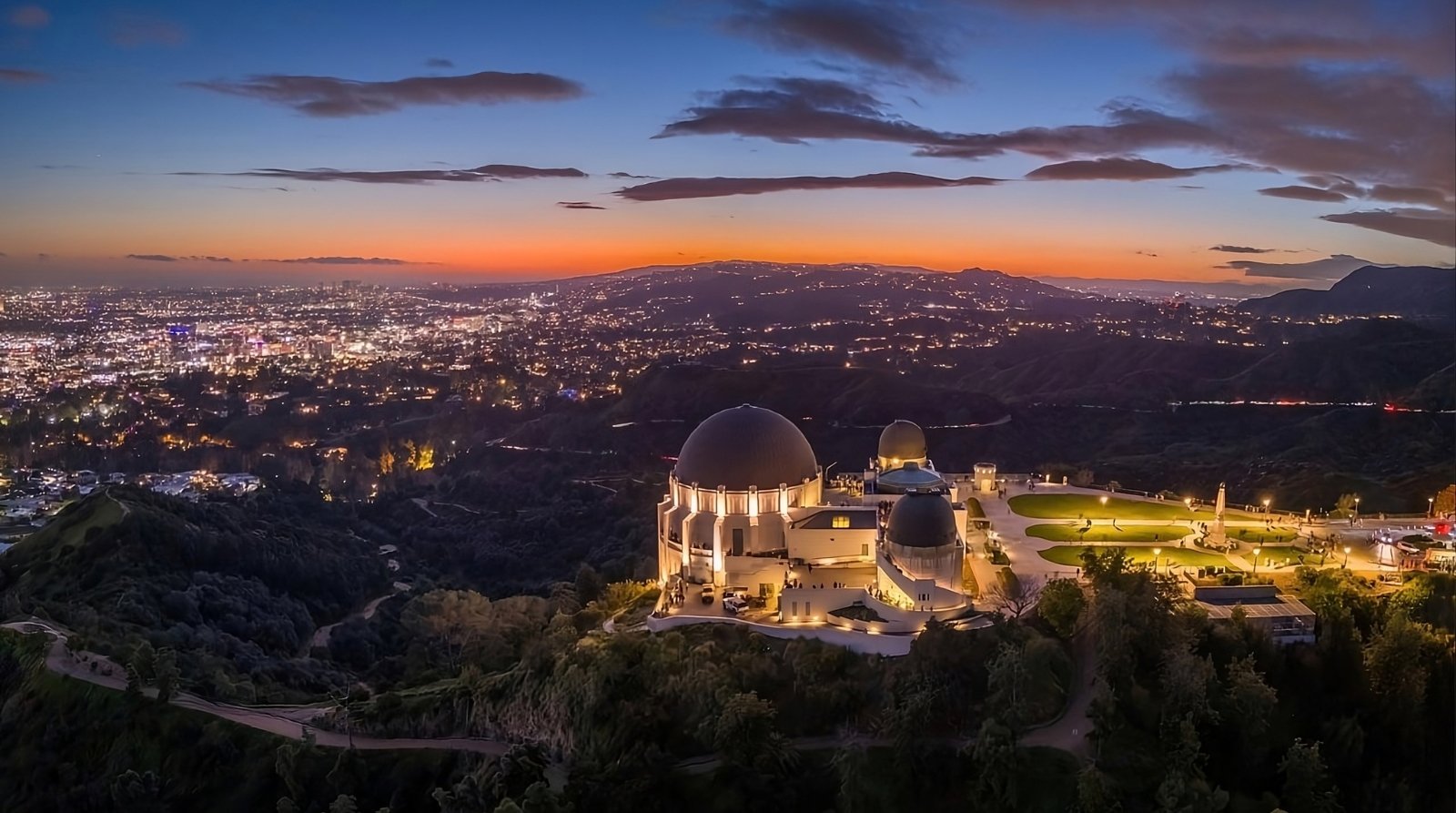
Perched above Los Angeles on the southern slope of Mount Hollywood, Griffith Observatory is part science museum, part architectural landmark, and part grandstand for one of California’s most cinematic city views.
Its combination of free admission, approachable astronomy exhibits, Art Deco character, and sweeping terraces makes it one of the city’s most rewarding attractions. The experience is not flawless—parking, traffic, and sunset crowds require patience—but few places reveal the scale and personality of Los Angeles quite so effectively.
TL;DR
Griffith Observatory is absolutely worth visiting, particularly for first-time visitors to Los Angeles. Admission to the building, exhibits, grounds, and public telescopes is free, while planetarium shows require a separate ticket.
Arrive well before sunset, use public transportation when possible, and allow two to three hours. The exhibits are interesting, but the defining experience is watching Los Angeles transform from a sunlit basin into a seemingly endless field of lights.
At a Glance
| Detail | Information |
|---|---|
| Location | Griffith Park, Los Angeles, California |
| Address | 2800 East Observatory Road |
| Admission | Free for the building, grounds, exhibits, and public telescopes |
| Planetarium | Separate paid ticket required |
| Typical building hours | Tuesday–Friday, noon–10 p.m.; weekends, 10 a.m.–10 p.m. |
| Closed | Mondays |
| Recommended visit | 2–3 hours |
| Best time | Late afternoon through early evening |
| Best for | City views, astronomy, architecture, families, photography |
| Main drawback | Traffic, parking, and sunset crowds |
Hours, programming, telescope availability, and access can change because of weather, special events, or maintenance.
What Makes Griffith Observatory Special?
Griffith Observatory succeeds because it does not feel like a conventional museum. Astronomy is presented in a building that remains connected to the sky, surrounding hills, and city below.
Visitors can study the solar system indoors, look through a public telescope, step onto a terrace for views of Downtown Los Angeles, and then turn toward the Hollywood Sign. The attraction feels educational without being overly academic and iconic without relying entirely on its film appearances.
Free admission also makes the observatory unusually accessible. You can visit briefly for the view or spend several hours exploring without needing to justify a substantial entrance fee.
Architecture and Atmosphere
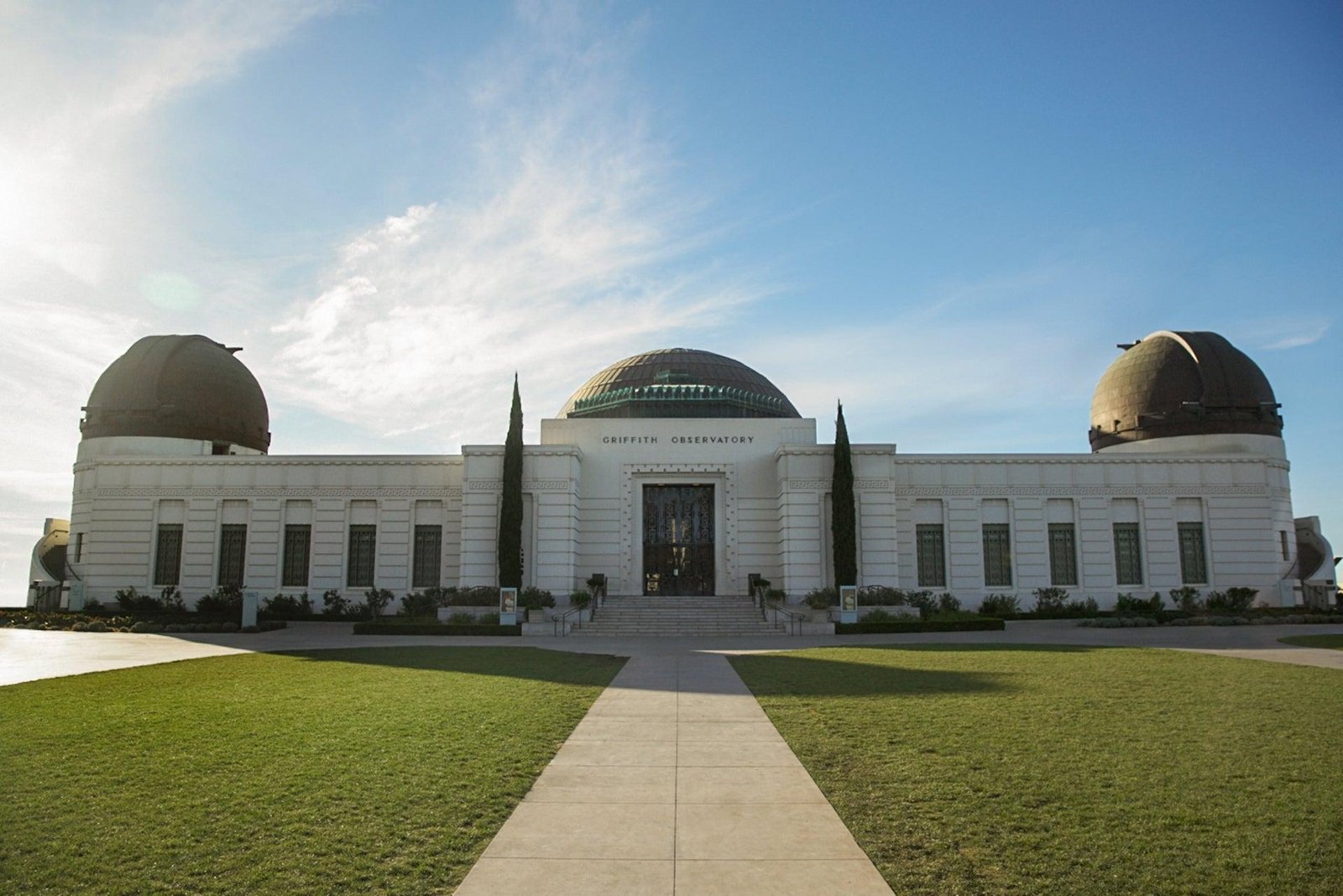
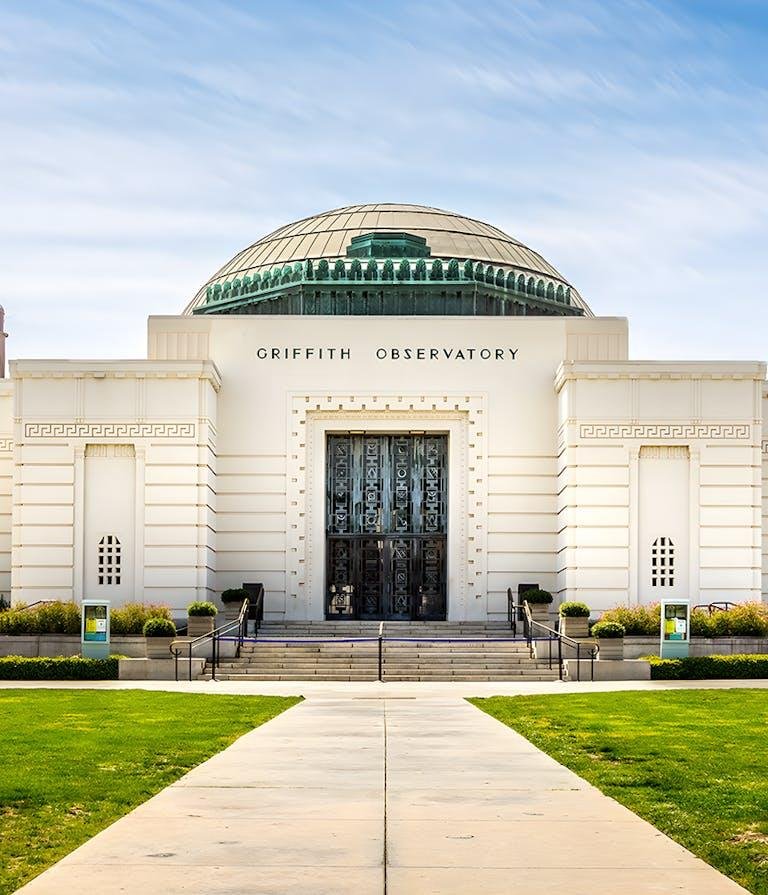
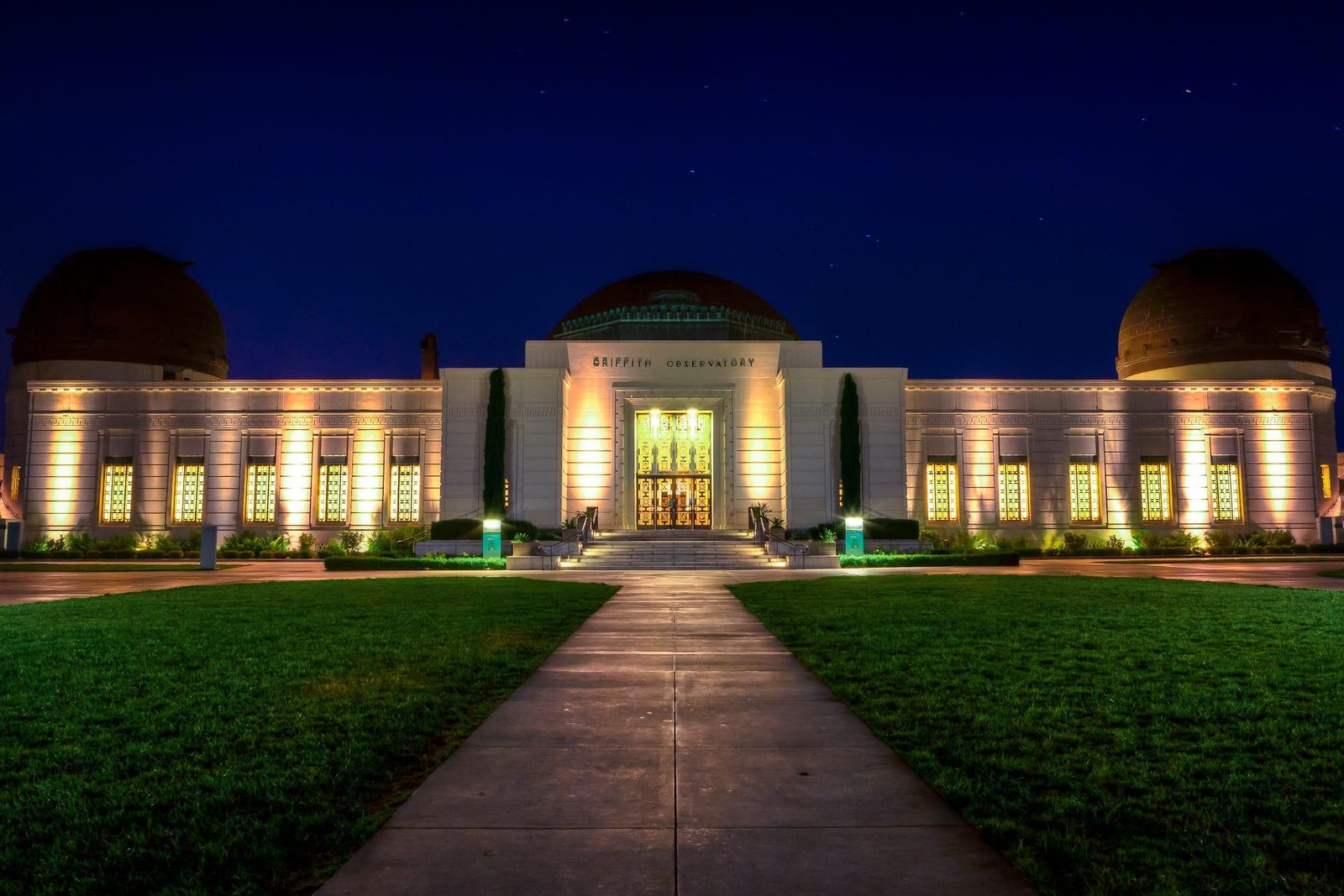
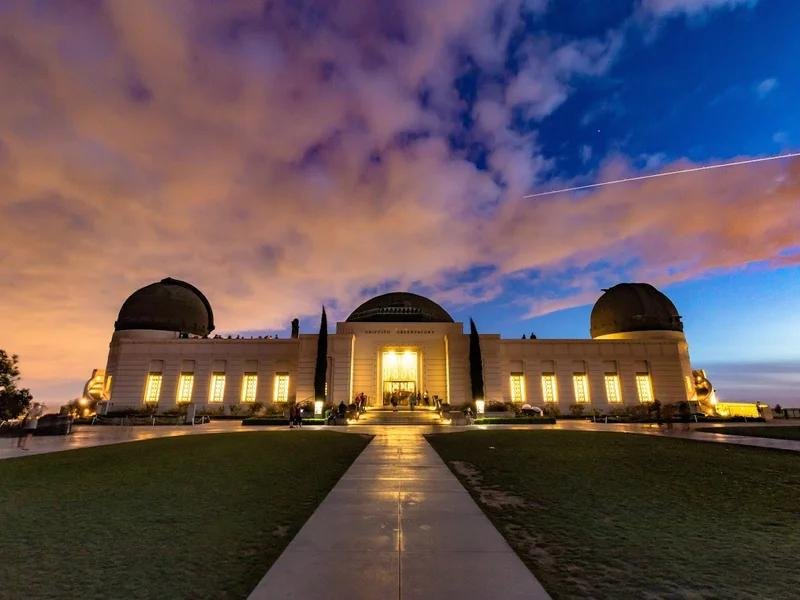
Opened in 1935, the observatory is one of Los Angeles’ finest civic landmarks. Its white façade, copper domes, restrained Art Deco details, and commanding hilltop position give it a sense of occasion long before you enter.
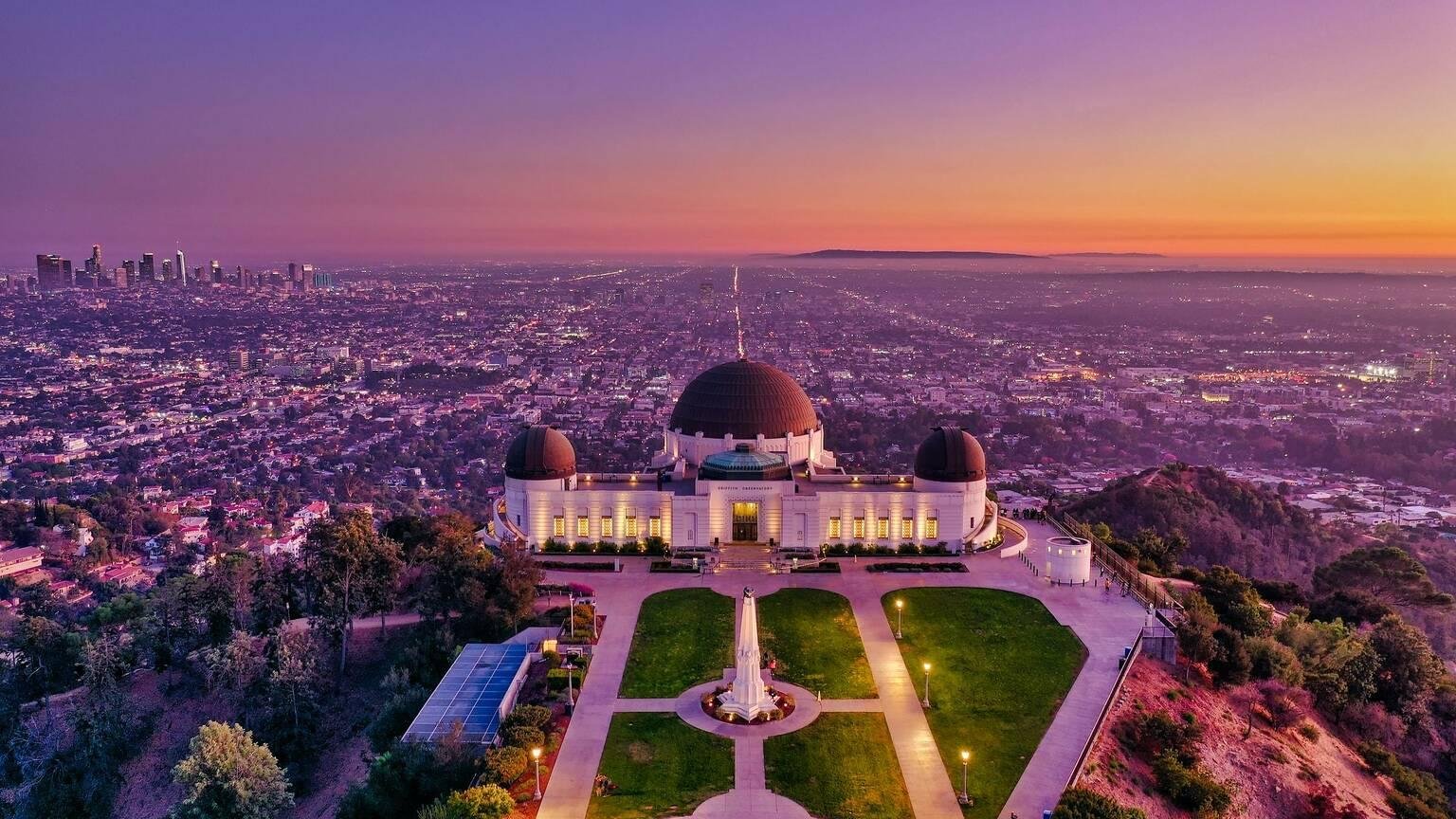
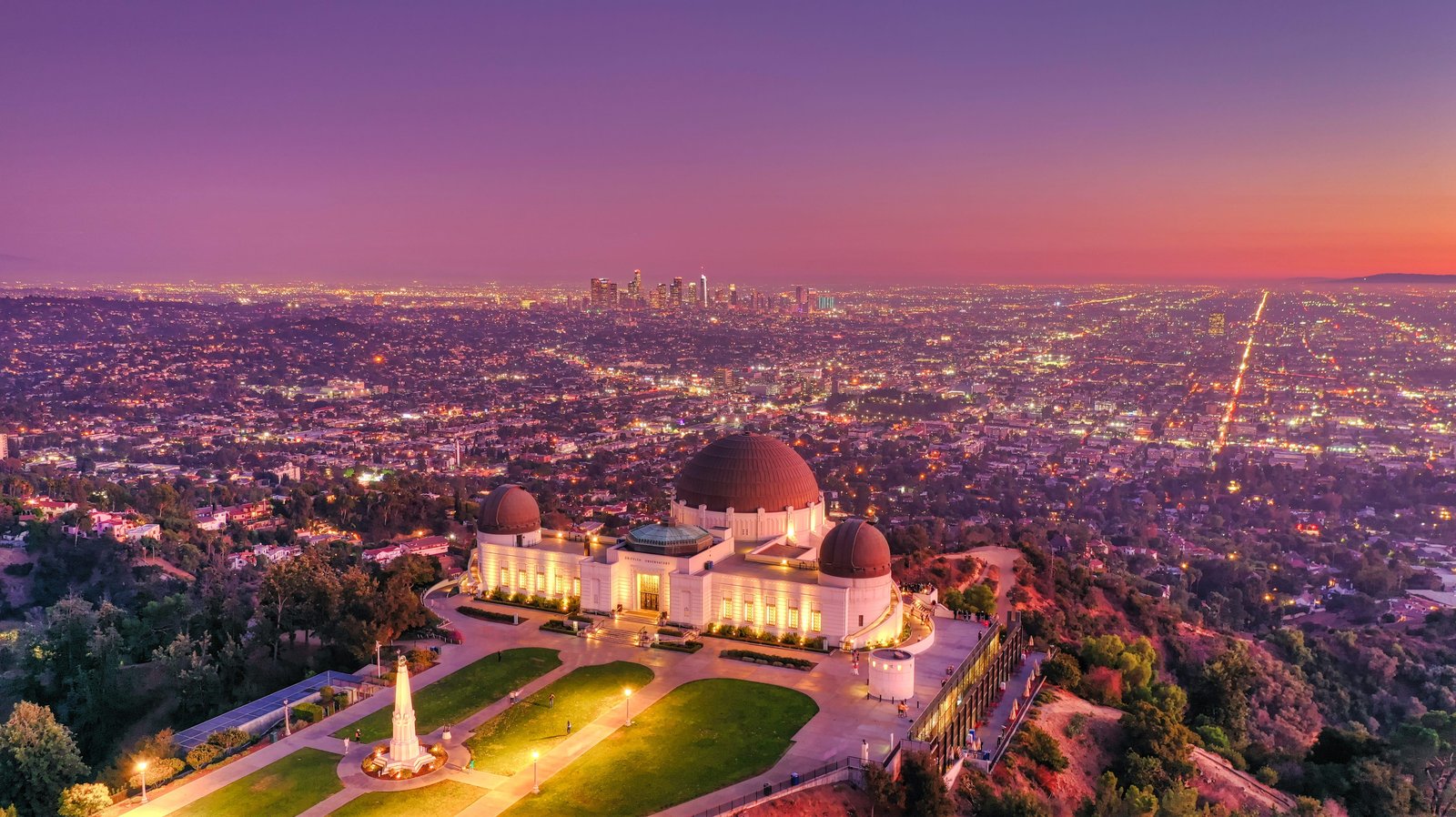
The building is especially beautiful during the final hour before sunset, when warm light brings definition to its geometric exterior. After dark, the illuminated observatory takes on a theatrical quality against the city lights.
The interior can feel busy and occasionally cramped, but its historic character has been carefully balanced with modern galleries and an expanded underground exhibition area.
Exhibits and Astronomy
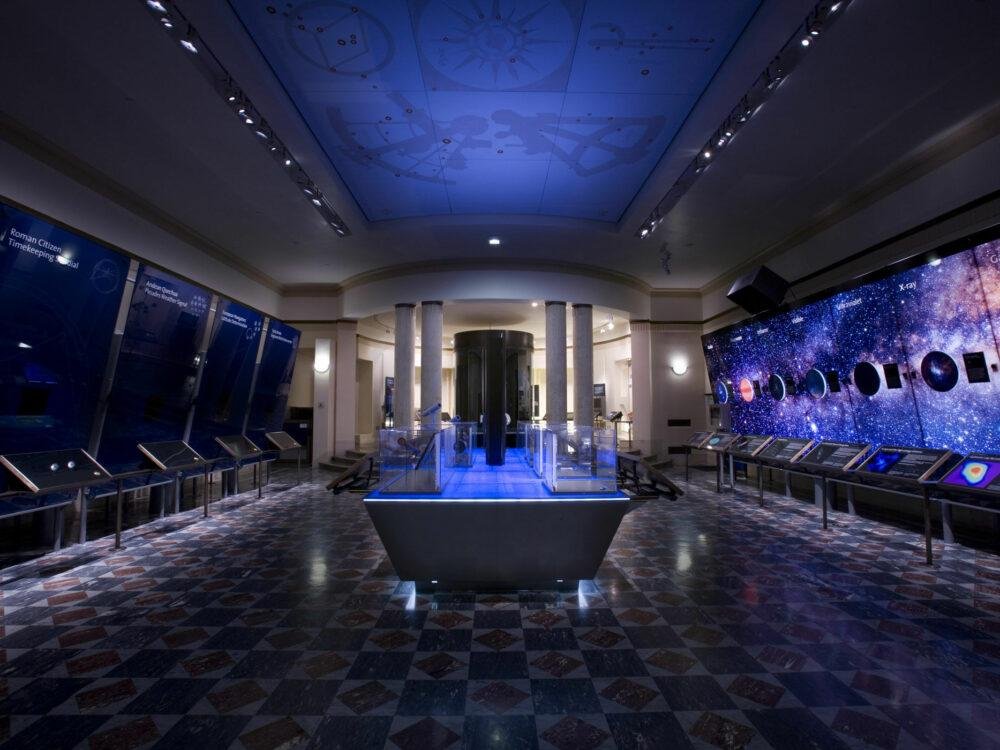
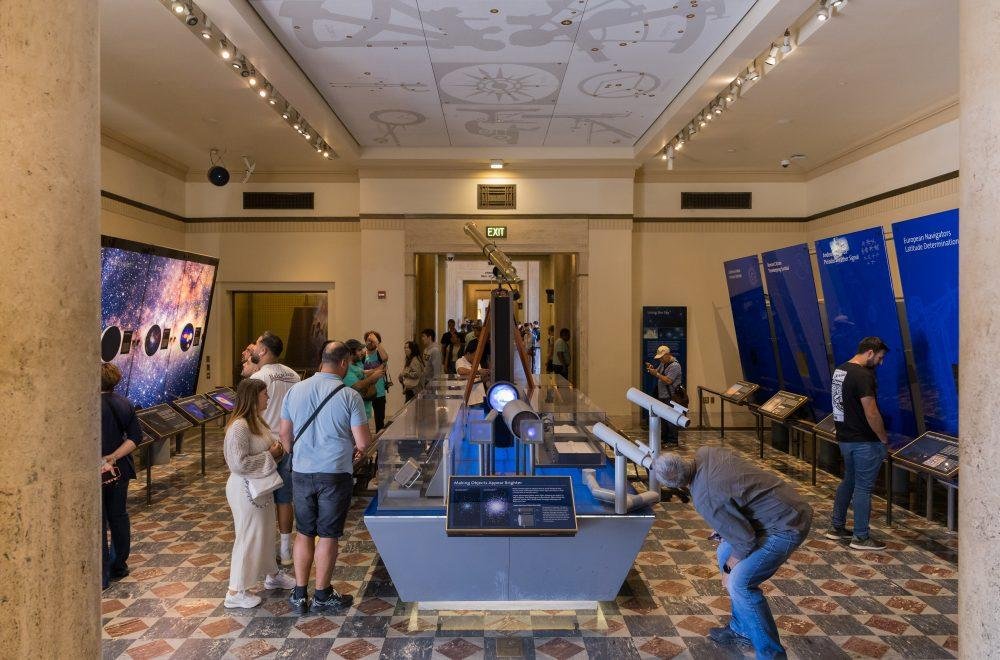
The observatory contains roughly 60 exhibits exploring planetary motion, light, gravity, the Moon, the Sun, and humanity’s relationship with the universe.
Highlights include the Foucault pendulum, demonstrations involving the Tesla coil, meteorite displays, scale models of the solar system, and instruments that let visitors observe the Sun safely during suitable conditions.
The presentation is strongest for casual visitors and families. Astronomy enthusiasts may find some exhibits introductory, but the collection remains engaging because many displays are interactive or connected to real observations.
Samuel Oschin Planetarium
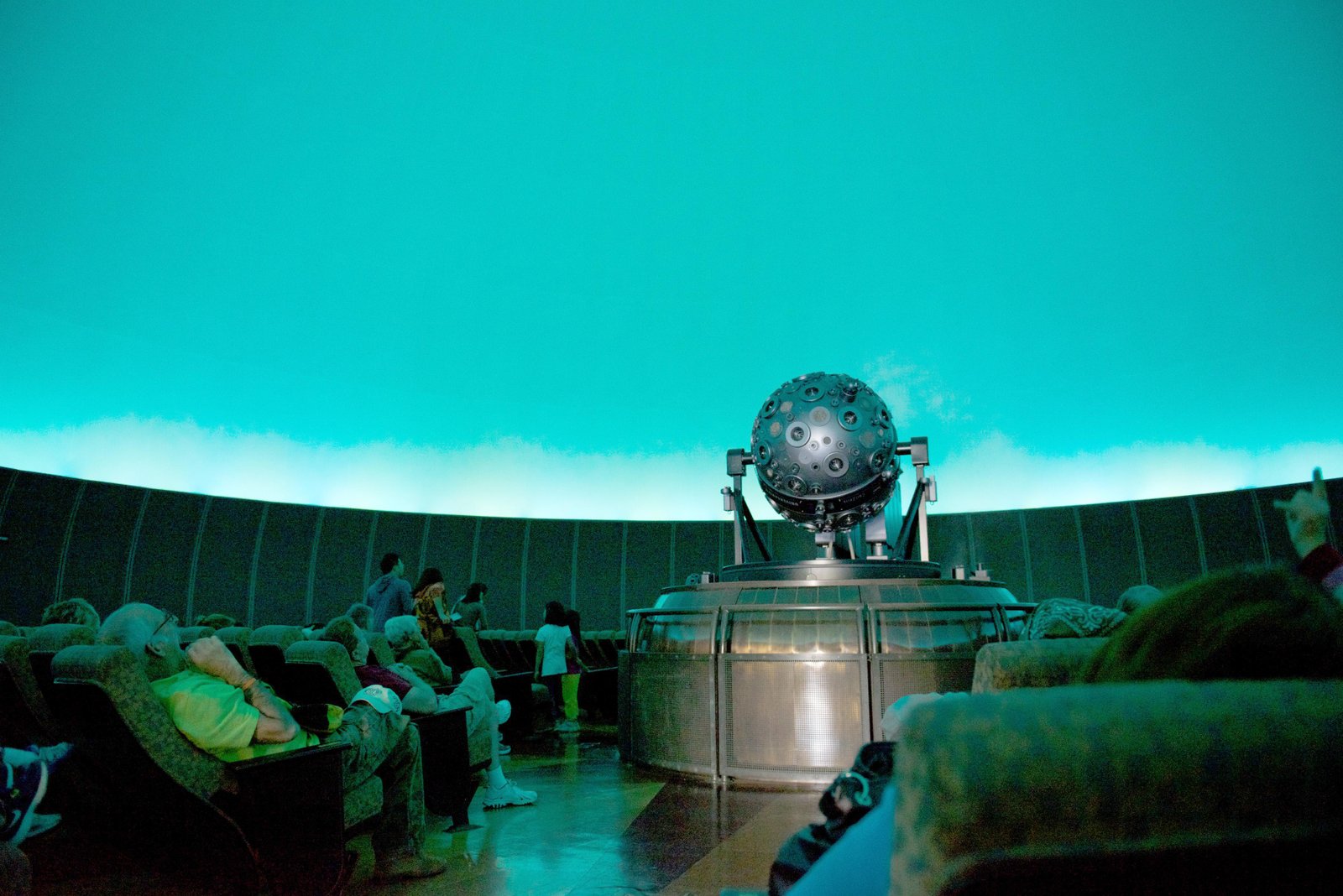
The Samuel Oschin Planetarium is the observatory’s principal paid experience and a worthwhile addition for visitors who enjoy immersive science presentations.
Shows combine live narration, astronomical imagery, and a sophisticated projection system beneath the domed ceiling. The production quality is excellent, although the educational style may appeal more to curious adults and older children than to visitors expecting pure spectacle.
Tickets are generally sold at the observatory rather than included with free admission. Popular performances can sell out, so securing a showtime soon after arriving is sensible.
Public Telescopes
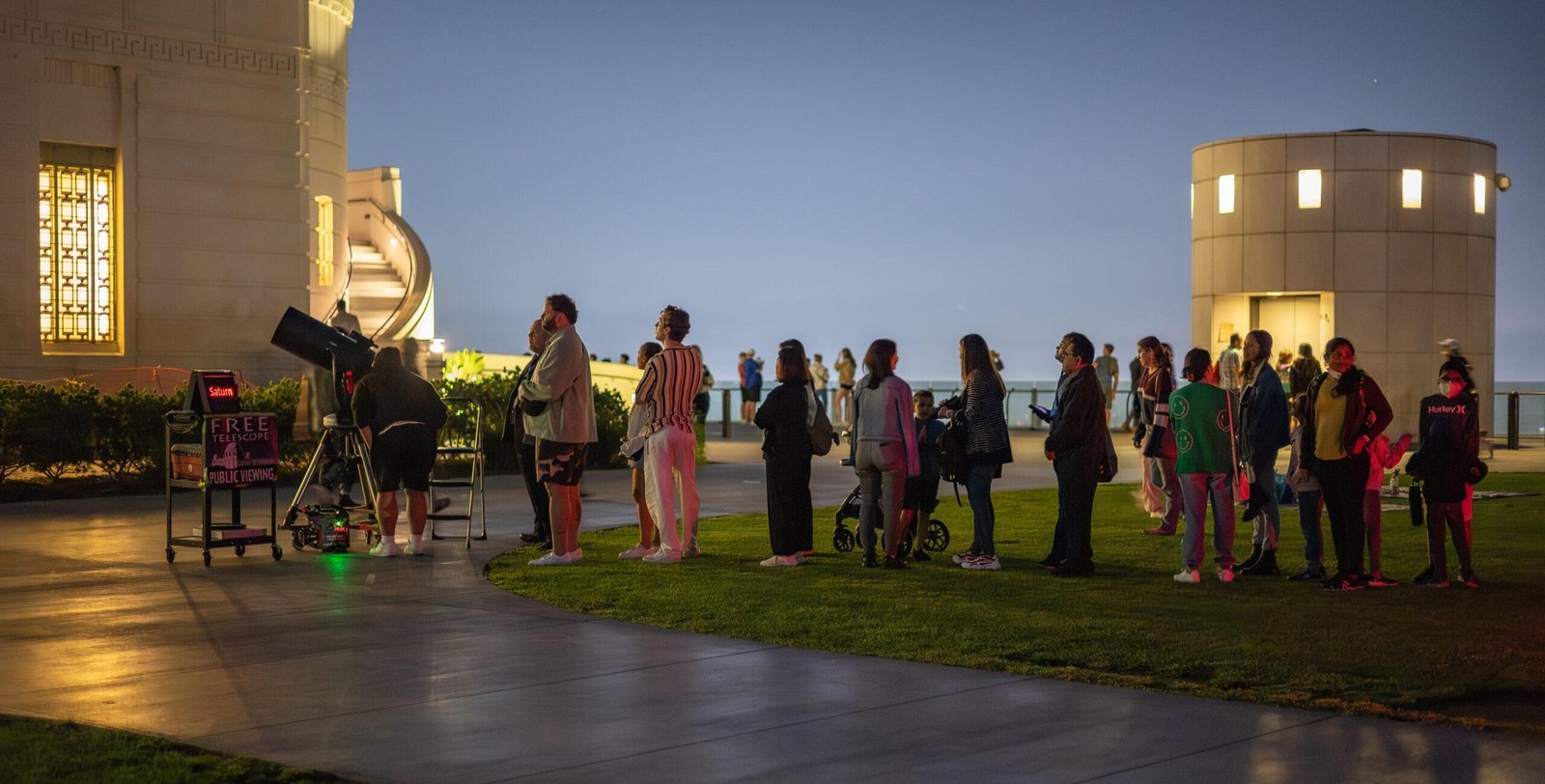
Free public telescope viewing is one of Griffith Observatory’s most memorable features. When weather and visibility permit, staff help visitors observe the Moon, planets, and other visible celestial objects.
The experience can be brief after waiting in line, particularly on clear weekend evenings. Even so, viewing the night sky through a telescope from above Los Angeles feels wonderfully appropriate.
Cloud cover, haze, and operational conditions can cancel or limit observations. Treat telescope access as a valuable bonus rather than the sole reason for visiting.
Views of Los Angeles and the Hollywood Sign
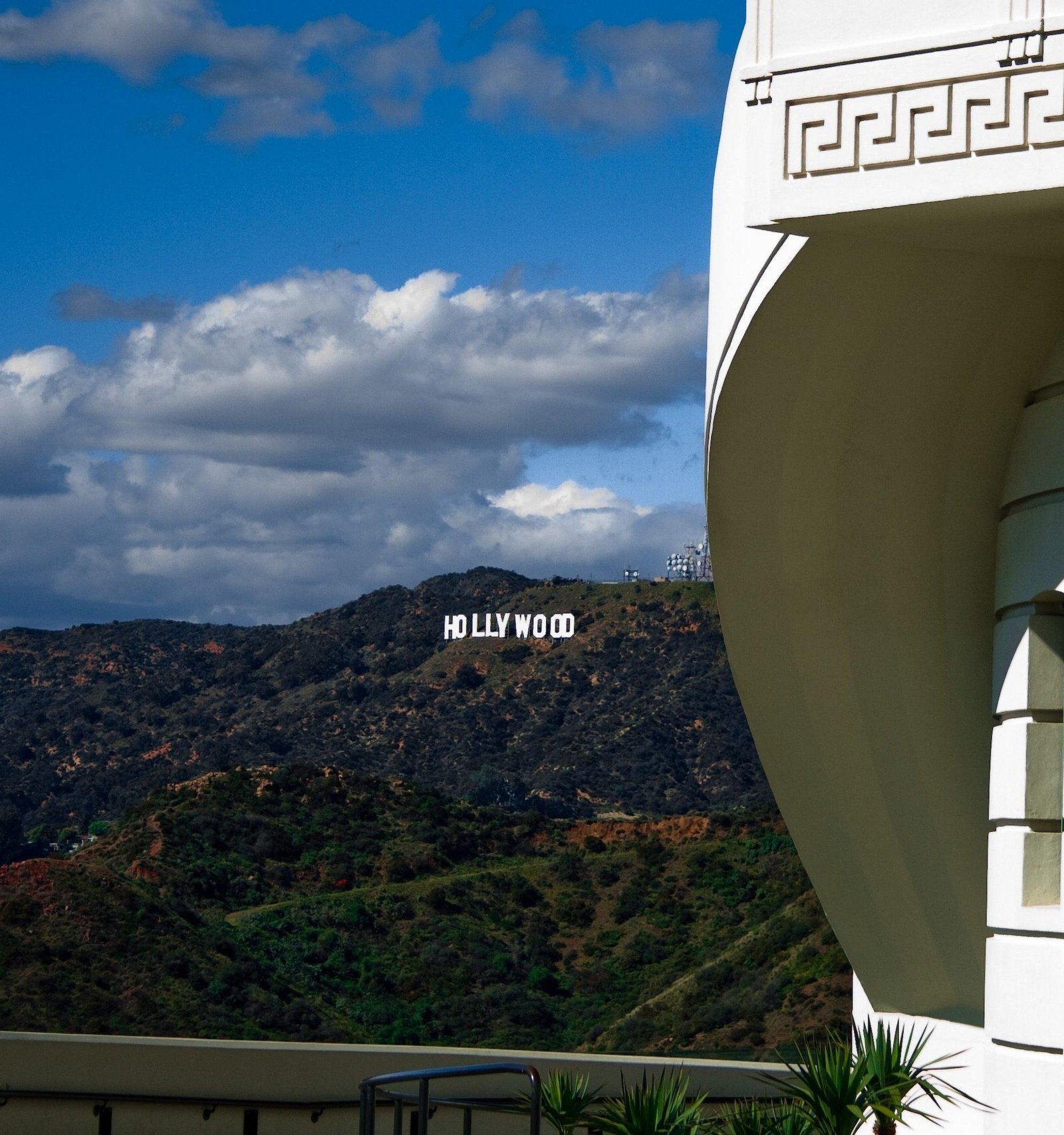
The terraces provide magnificent perspectives in several directions. Downtown Los Angeles rises to the southeast, while the city grid extends toward the horizon below. On a clear day, the enormous scale of the metropolitan area becomes strikingly apparent.
The Hollywood Sign is visible across the hills from viewpoints around the observatory. It is not exceptionally close, but the combination of the sign, rugged landscape, and observatory architecture creates classic Los Angeles photographs.
Haze can soften distant landmarks, especially during warmer periods. Clear winter days and mornings following rain tend to provide the sharpest visibility.
When Should You Visit?
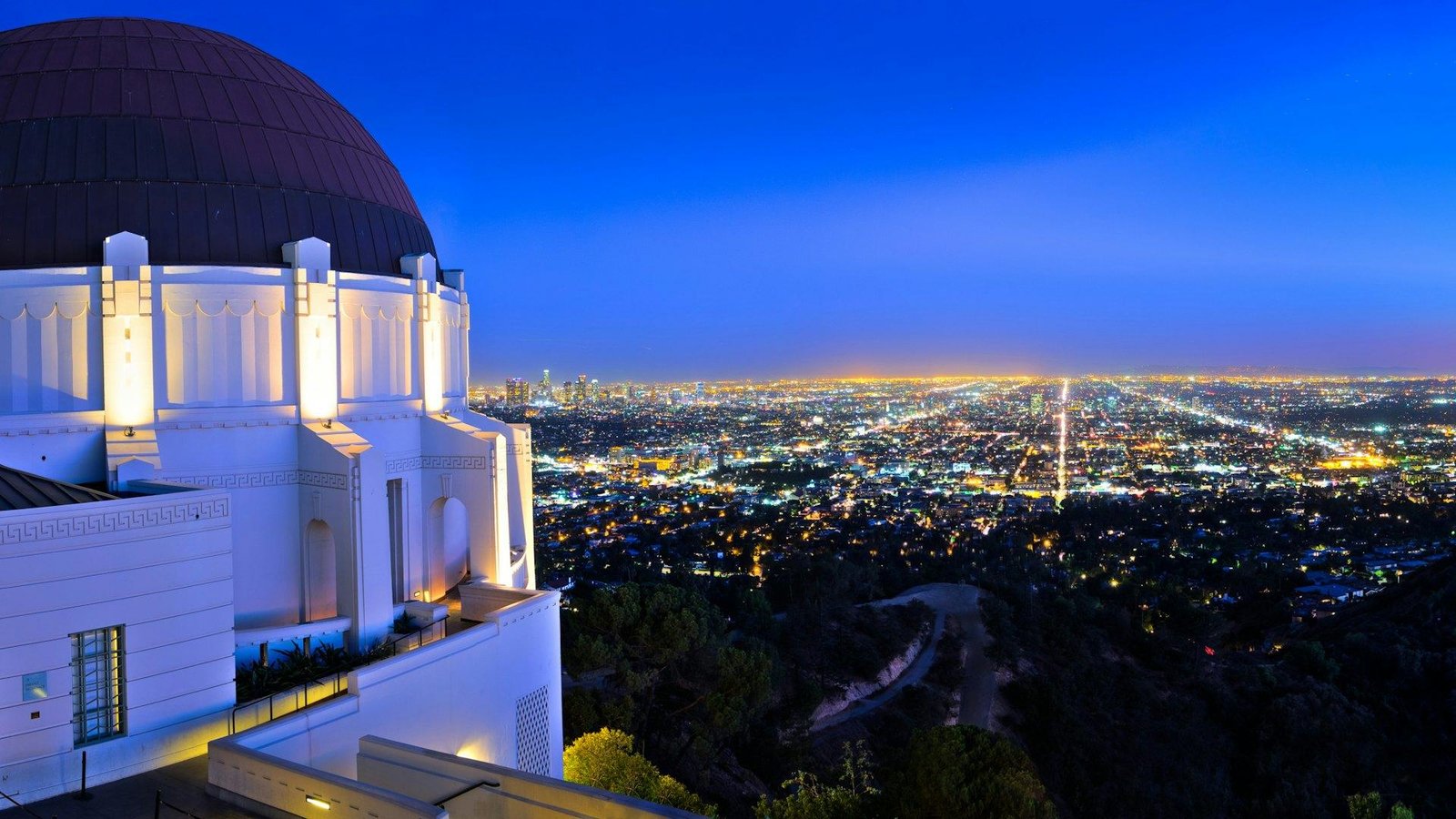
Late afternoon offers the best complete experience. Arriving two or three hours before sunset allows time to explore the galleries before watching the city change through golden hour, sunset, and blue hour.
Morning or early afternoon is preferable if avoiding crowds matters more than nighttime atmosphere. Weekdays are generally calmer than weekends.
Sunset is unquestionably beautiful, but it also produces the day’s greatest pressure on parking, terraces, and viewing areas. Arriving at the exact sunset time often means experiencing traffic while the best light disappears.
Parking and Transportation
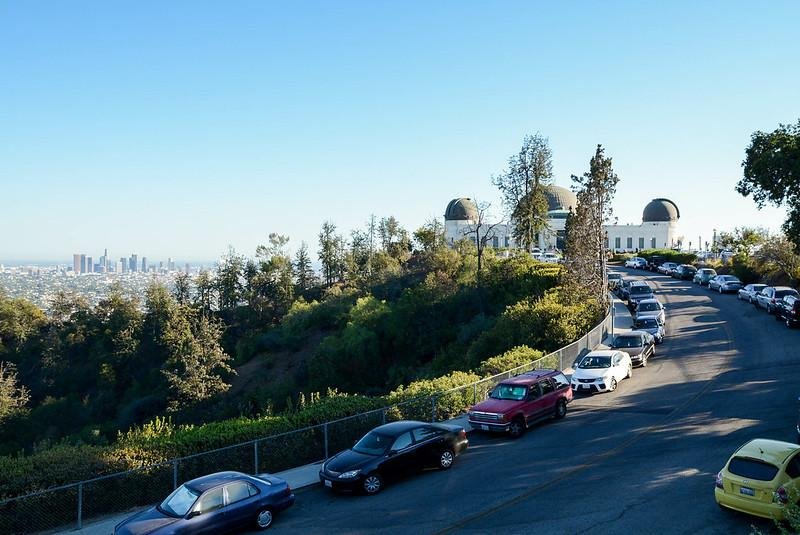
Transportation is the least elegant part of the visit. Paid parking is available near the observatory, while free spaces may be found farther downhill. Availability becomes limited during weekends, sunset hours, holidays, and events at the nearby Greek Theatre.
The DASH Observatory bus is often the most practical option. Rideshare services remove the need to park, although vehicles can still become trapped in uphill congestion.
If driving, allow generous extra time and avoid building a rigid dinner reservation around your departure. Walking uphill from a distant space may also be more demanding than expected in hot weather.
Accessibility and Families
The principal galleries, theaters, terraces, and visitor areas are served by accessible routes, ramps, and elevators. Designated accessible parking is available near the building, though spaces can fill during peak periods.
Families benefit from free admission and interactive displays, but younger children may lose interest during longer planetarium presentations. Evening crowds also make strollers more cumbersome inside popular galleries.
The terraces require close supervision of children, particularly when families are moving through dense sunset crowds.
How Long Do You Need?
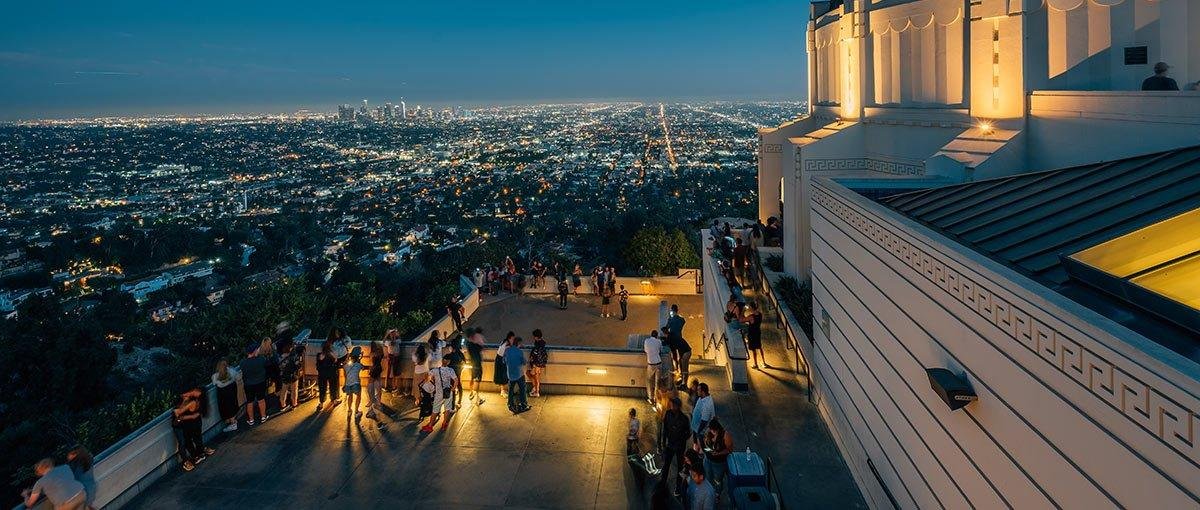
Allow two hours for the exhibits and terraces, or around three hours if adding a planetarium show and staying for sunset. Telescope queues may extend the visit further.
Griffith Observatory pairs naturally with hiking in Griffith Park, a Hollywood itinerary, or dinner in Los Feliz. For travelers planning a broader stay, our guide to luxury things to do in Los Angeles places the observatory alongside the city’s more polished cultural, dining, and private-tour experiences.
Is Griffith Observatory Worth Visiting?
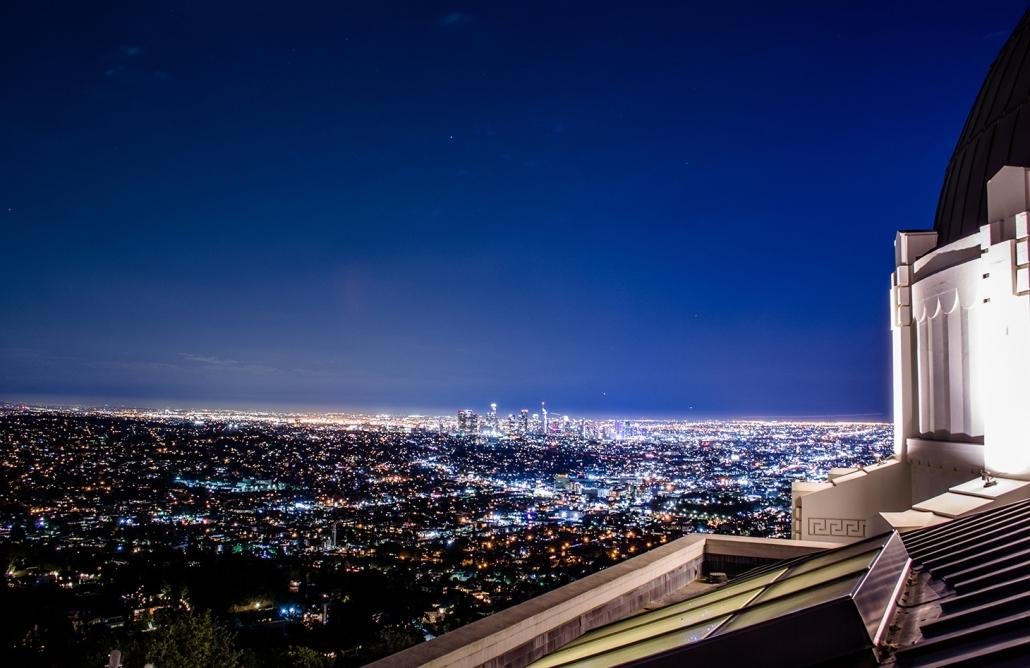
Yes. Griffith Observatory is one of the rare major attractions that works equally well as a museum, scenic viewpoint, historic landmark, and relaxed evening destination.
Its free admission represents exceptional value, particularly in an expensive city. The planetarium adds depth, but visitors can still have a complete experience without purchasing a ticket.
The strongest reservations concern access rather than quality. Crowds can diminish the atmosphere, and parking may feel disproportionately stressful. Arrive early and the observatory earns its reputation.
LxryNow Review Scorecard
| Category | Score | Assessment |
|---|---|---|
| Architecture | 9 | Distinguished Art Deco landmark in a dramatic setting |
| City Views | 10 | Among the finest panoramic viewpoints in Los Angeles |
| Astronomy Exhibits | 8 | Accessible, interactive, and engaging |
| Planetarium | 9 | Polished production with strong educational value |
| Telescope Experience | 9 | Memorable when weather and queues cooperate |
| Historical Significance | 9 | An enduring part of Los Angeles’ cultural identity |
| Crowd Management | 6 | Congestion can become frustrating at peak times |
| Accessibility | 9 | Strong accessible routes and facilities |
| Value | 10 | Outstanding free public attraction |
| Overall Visitor Experience | 9 | Rewarding, atmospheric, and distinctly Los Angeles |
Which Griffith Observatory Experience Should You Choose?
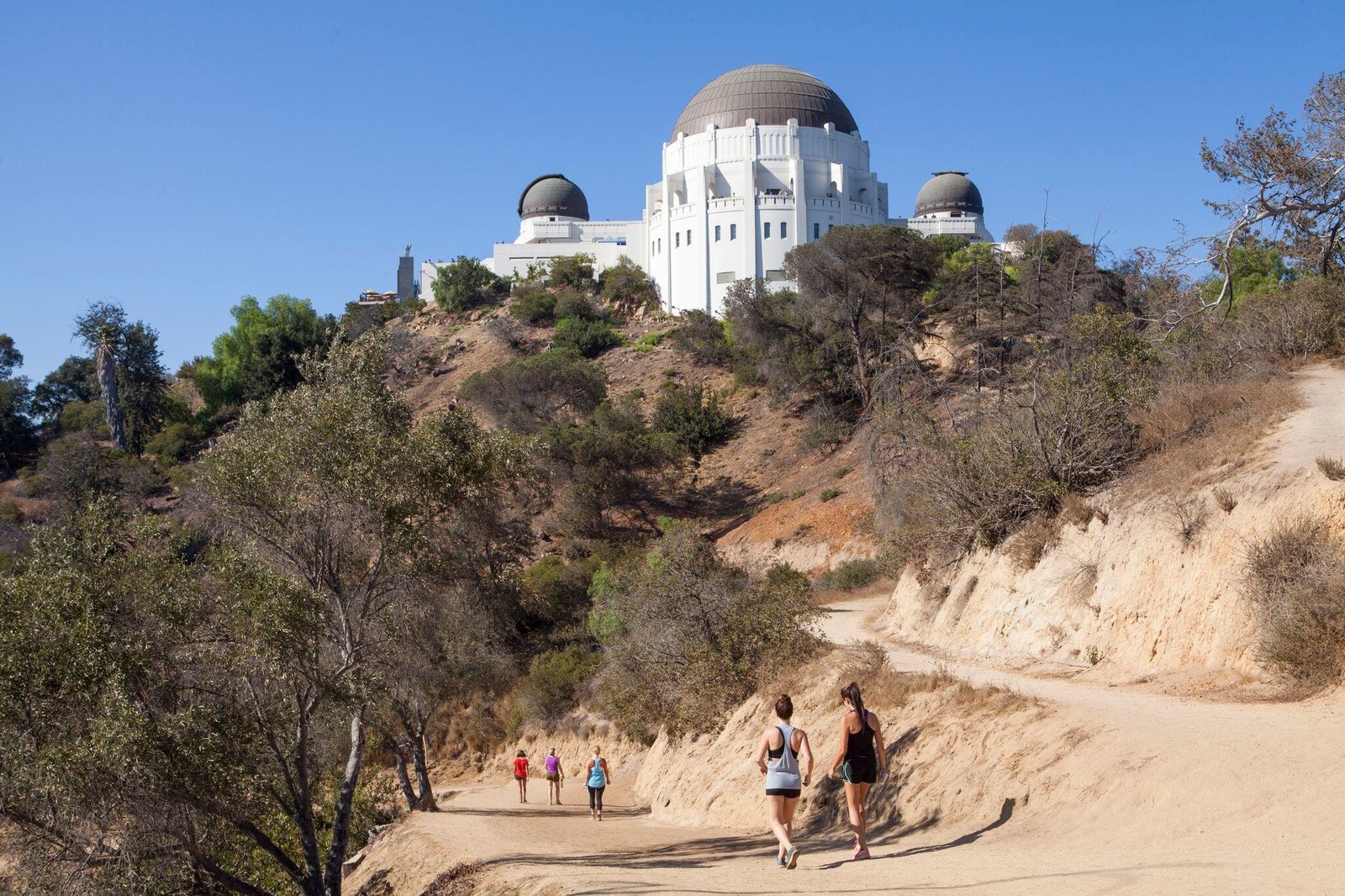
Choose an independent visit if you mainly want the exhibits, architecture, and sunset views. This is the best-value option and provides the most flexibility.
A guided observatory tour suits visitors who want context about the building, astronomy, and exhibits. Private tours offer a more personal pace, while guided hikes combine the observatory with Griffith Park’s landscape and elevated viewpoints.
Travelers with limited time may prefer a broader Los Angeles sightseeing tour that includes the observatory as one stop rather than dedicating half a day to Griffith Park.
Book the Experience
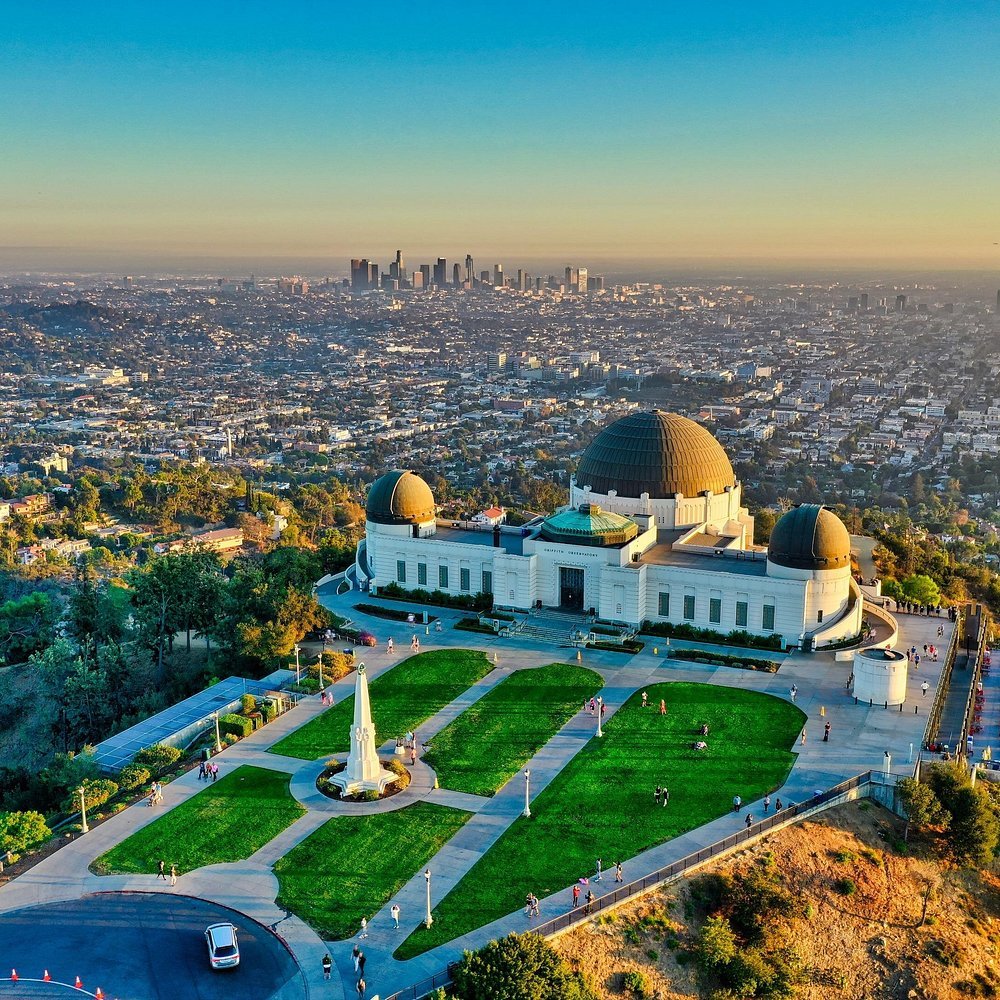
Griffith Observatory Insider Tour with Planetarium Option
A focused introduction to the observatory, led by a knowledgeable guide.
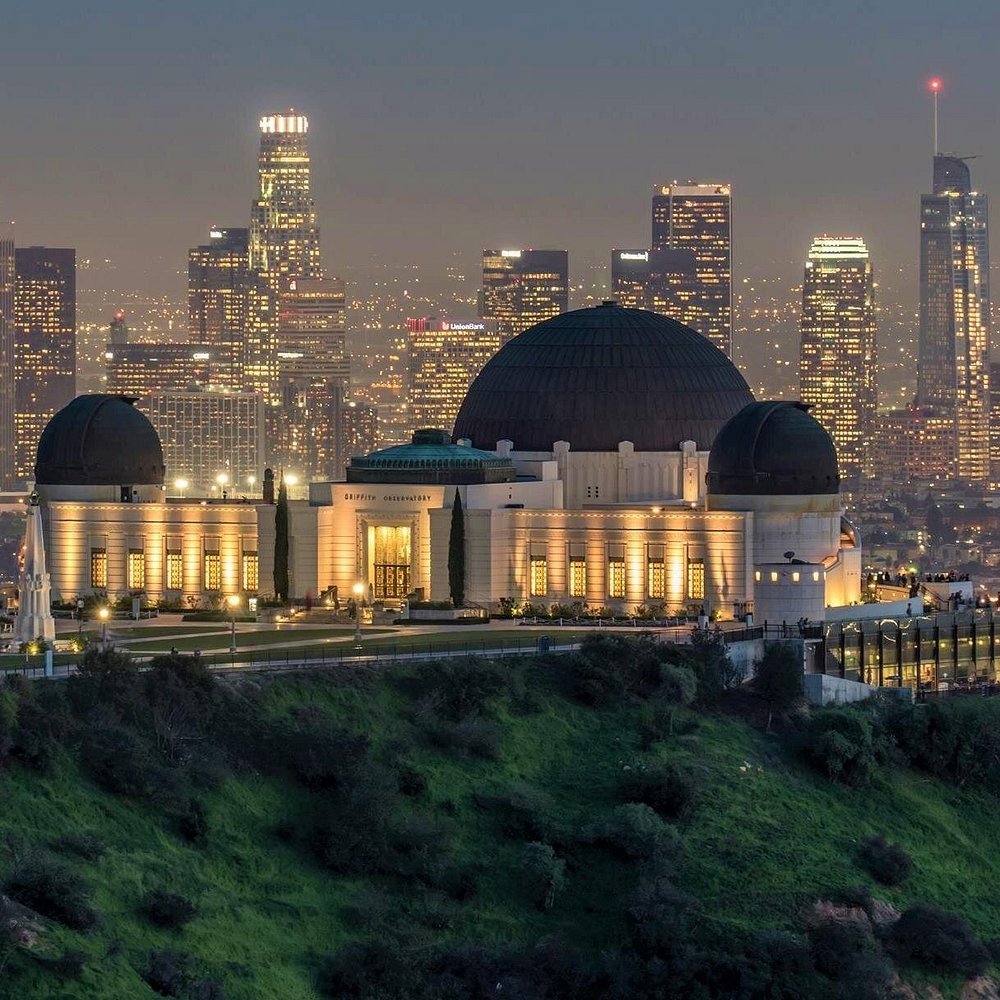
Private Tour of Griffith Observatory
Best for travelers seeking a personalized itinerary and greater opportunity to ask questions.
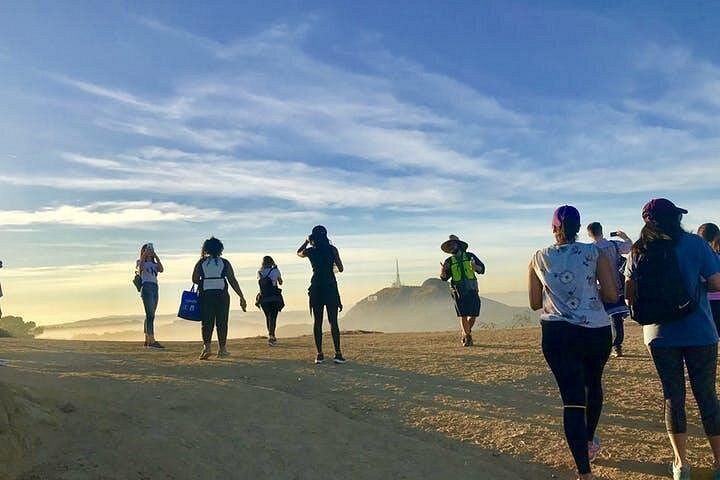
Hollywood Hills and Griffith Observatory Hiking Tour
Combines Griffith Park trails, elevated city views, and an observatory visit.
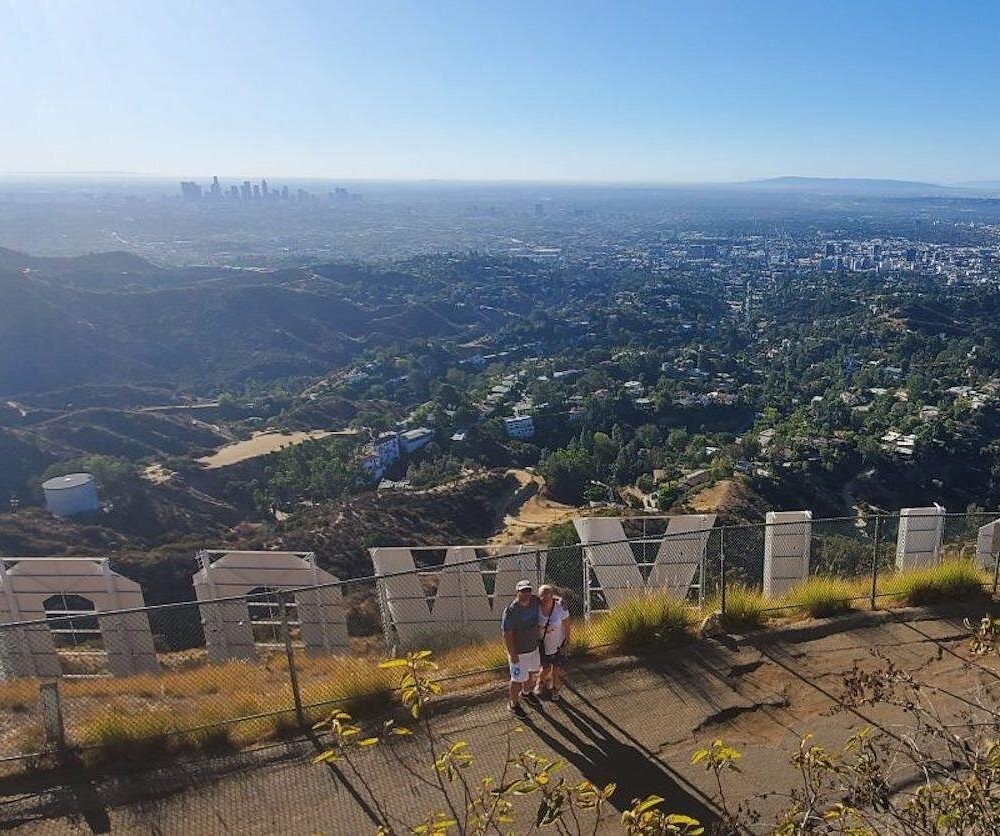
Hollywood Sign and Griffith Park Observatory Hiking Tour
A gentler outdoor option centered on scenery and major Los Angeles landmarks.
Check the current itinerary carefully before booking, as planetarium admission, transportation, parking, and interior access may not be included in every tour.
Pros and Cons
| Pros | Cons |
|---|---|
| Free admission to the building and exhibits | Parking and traffic can be frustrating |
| Exceptional skyline and Hollywood Sign views | Very crowded around sunset |
| Beautiful historic architecture | Telescope viewing depends on conditions |
| High-quality planetarium | Planetarium tickets cost extra |
| Excellent for adults and families | Some exhibits feel introductory |
| Rewarding during both day and night | Los Angeles haze can reduce visibility |
Final Verdict
LxryNow Verdict: Griffith Observatory is an essential Los Angeles experience that delivers far more than its free admission might suggest. Its astronomy exhibits are approachable, its architecture is iconic, and its terraces reveal the city at its most expansive and cinematic.
A quieter private observatory would be more luxurious in the conventional sense, but that misses the attraction’s appeal. Griffith Observatory is at its best as a democratic civic landmark where science, landscape, history, and spectacle meet above the city.
Visit on a weekday, arrive before the sunset rush, and stay until the lights of Los Angeles fill the basin below.
Overall Score: 8.9/10
