
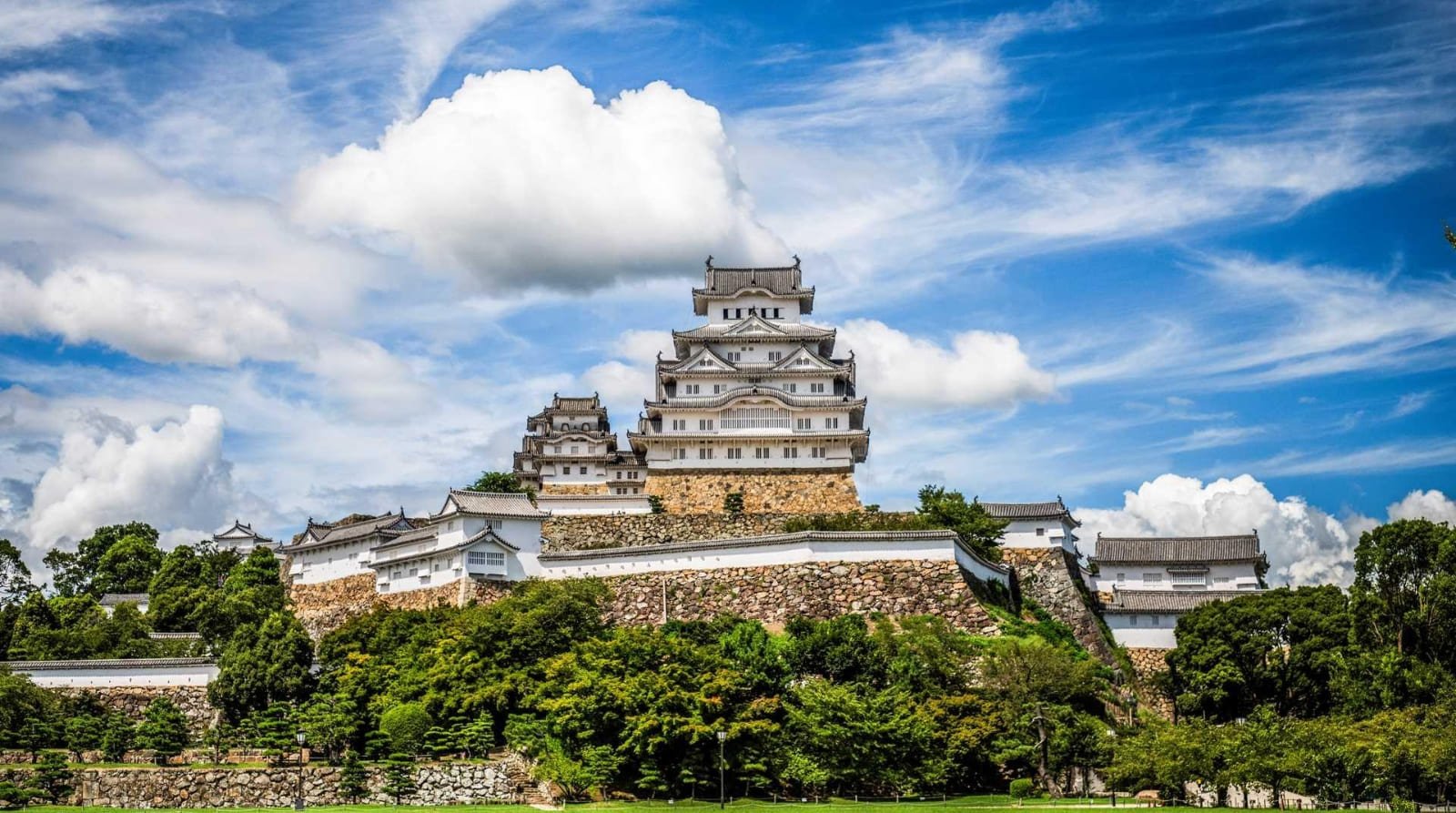
Himeji Castle appears almost too graceful to have been designed as a fortress. Its white plaster walls, layered roofs and elevated main keep create one of Japan’s most elegant architectural silhouettes.
Behind that refined exterior is a complex defensive system of gates, narrow passages, concealed positions and deliberately confusing routes. Inside, steep staircases lead through an original wooden keep that has survived for more than four centuries.
Crowds and accessibility limitations require planning, but Himeji remains one of Japan’s most complete and rewarding historic landmarks.
Himeji Castle at a Glance

| Detail | Information |
|---|---|
| Location | Himeji, Hyogo Prefecture, Japan |
| Alternative name | White Heron Castle |
| Main keep completed | 1609 |
| Designation | UNESCO World Heritage Site and National Treasure |
| Recommended visit | 2–3 hours |
| With Koko-en Garden | Approximately 3–4 hours |
| Nearest station | Himeji Station |
| Walk from station | Approximately 15–20 minutes |
| Accessibility | Grounds partly accessible; main keep highly restricted |
| Advance booking | Recommended during peak periods |
Why Is Himeji Castle So Important?

Himeji is widely considered Japan’s finest surviving feudal castle. Unlike numerous castles reconstructed with concrete during the 20th century, it retains an extensive collection of historic wooden structures.
The existing main keep was completed in the early 17th century. It survived fires, political change, earthquakes and the bombing of Himeji during the Second World War.
The castle became one of Japan’s first UNESCO World Heritage Sites in 1993. Its significance comes from both its architectural beauty and the completeness of its defensive complex, which includes subsidiary keeps, gates, corridors, walls and courtyards.
The White Heron Exterior

Himeji’s nickname, White Heron Castle, refers to its brilliant white finish and rooflines that appear like a bird spreading its wings. The plaster is not purely decorative; it also helped protect the timber structure against fire.
From the main lawn, the keep appears symmetrical and serene. Closer inspection reveals irregular roof levels, defensive openings and interconnected buildings designed to monitor approaching enemies.
The open lawn provides the classic photograph, but the castle changes considerably when viewed from its side courtyards and outer pathways. Morning generally produces the cleanest light on the white exterior.
The Defensive Route

The path toward the main keep demonstrates how carefully the castle was planned. Routes turn unexpectedly, passages narrow and the keep repeatedly disappears behind high walls.
This confusing layout was intended to slow attackers and expose them to defenders positioned above. Openings for arrows and firearms remain visible throughout the complex.
Modern visitors are directed through a simplified route, but the remaining gates and turns still communicate the castle’s defensive logic. A guide is particularly valuable here, as many architectural details are easy to pass without understanding their purpose.
Inside the Main Keep

The interior is surprisingly restrained. Dark wooden floors, massive pillars, weapon racks and small interpretive displays replace the decorative rooms some visitors may expect.
This relative emptiness allows the historic structure to remain the focus. The exposed timber, narrow windows and diminishing floor area reveal how the keep was constructed and defended.
Visitors must remove their shoes before entering and carry them in a provided bag. Wear clean socks and choose footwear that can be removed and replaced easily.
Staircases and Physical Demands

Reaching the upper floor requires climbing multiple steep wooden staircases. Some feel closer to ladders than modern stairs, and narrow landings can become congested.
There is no public elevator inside the historic keep. The complete route may be unsuitable for visitors with limited mobility, balance problems, joint conditions or discomfort in confined spaces.
Travel light and keep your hands available for the railings. On busy days, movement may be temporarily controlled between floors, creating waits inside the keep.
Views From the Upper Floor

The upper floor overlooks Himeji, with Otemae-dori extending in a straight line toward the railway station. Views over the castle roofs and courtyards also reveal how extensive the complex is.
The room is small, and its historic windows do not provide the unrestricted panorama of a modern observation deck. Photography can be difficult when the space is crowded.
The experience is nevertheless rewarding because the elevation clarifies the castle’s relationship with the surrounding town and landscape.
Nishi-no-Maru and Princess Sen

The western bailey, or Nishi-no-Maru, offers a quieter counterpoint to the central keep. Its long corridor contains rooms associated with Princess Sen, also known as Senhime.
These spaces feel more domestic than the fortress interior and provide attractive framed views of the white keep. The corridor also offers a better sense of how different areas of the castle were occupied.
Many visitors leave immediately after completing the main climb. Allow additional time for Nishi-no-Maru, particularly if the keep itself feels crowded.
Koko-en Garden

Koko-en is located beside the castle and consists of nine separate walled gardens. Ponds, waterfalls, bridges, pathways and carefully composed planting provide a calm contrast to Himeji’s military architecture.
The garden is considerably newer than the castle, but its landscaping evokes the atmosphere of the Edo period. Its character changes with spring blossoms, summer greenery and autumn color.
Allow approximately 45–60 minutes. A combined castle-and-garden ticket creates a more balanced visit than seeing the fortress alone.
Best Time to Visit

Arrive close to opening time. The grounds are usually calmer early in the morning, and entering the main keep before large tour groups significantly improves the experience.
Cherry-blossom season produces the castle’s most celebrated views but also its heaviest crowds. Weekends, Japanese public holidays and autumn foliage periods can also be busy.
Summer temperatures are another consideration. The main keep is not air-conditioned, and climbing its stairs in high heat can be demanding. Carry water for the exterior grounds and take breaks before entering.
Tickets and Visitor Information

The castle generally operates from morning until late afternoon, with final admission before closing. Hours and temporary restrictions can change, so verify the arrangements for your selected date.
Digital tickets are available and useful during popular travel periods. A combined ticket including Koko-en Garden is the best option for most first-time visitors.
Food is not permitted inside the main keep. Large luggage should be stored at Himeji Station, as bulky bags are impractical on the narrow stairs and in crowded corridors.
Accessibility and Visitor Comfort

Parts of the exterior grounds can be explored by visitors with mobility limitations, but the overall complex includes slopes, thresholds, stone steps and uneven surfaces.
The main keep is significantly more difficult. Its protected historic construction prevents the installation of a conventional visitor elevator, and wheelchair access is extremely limited.
Visitors who cannot complete the interior climb can still enjoy the castle’s exterior, open grounds and defensive architecture. Koko-en Garden may also provide a more comfortable complementary experience, although individual garden routes should be checked.
Visiting Himeji Castle From Osaka

Himeji is an easy day trip from Osaka. The Shinkansen from Shin-Osaka provides the fastest journey, while conventional JR services from Osaka Station offer a slower alternative.
The castle is visible from the north side of Himeji Station. Walking directly along Otemae-dori takes approximately 15–20 minutes, while local buses and taxis provide convenient alternatives.
Allow at least half a day for transport, the castle and Koko-en. Travelers wanting a broader Kansai itinerary can find more private excursions, cultural experiences and refined dining ideas in LxryNow’s guide to luxury things to do in Osaka.
Is a Guided Tour Worth It?

A guided tour adds meaningful value. Himeji’s beauty is immediately apparent, but its military design requires explanation.
A knowledgeable guide can identify defensive openings, misleading pathways, gate arrangements and structural details that independent visitors frequently overlook. The stories surrounding Princess Sen and the castle’s survival also become easier to separate from popular legend.
Independent exploration remains worthwhile, but architecture and history enthusiasts will gain more from a private or small-group tour.
Is Himeji Castle Worth Visiting?

Absolutely. Himeji Castle combines visual beauty with an unusually high degree of historical integrity. The surviving wooden interior makes it fundamentally different from castles rebuilt as modern museums.
The experience is not effortless. Crowds, shoe removal, steep staircases and sparse interiors may challenge visitors expecting a more comfortable attraction.
Even without climbing to the upper floor, the exterior complex is worth the journey. For travelers interested in Japanese architecture or history, Himeji should be considered a priority.
LxryNow Review Scorecard

| Category | Score | Assessment |
|---|---|---|
| Architecture | 10/10 | Elegant, complex and immediately recognizable |
| Historical Significance | 10/10 | One of Japan’s most important surviving castles |
| Preservation | 10/10 | Exceptional wooden structures and historic fabric |
| Interior Experience | 8/10 | Architecturally fascinating but sparsely furnished |
| Exterior Grounds | 10/10 | Defensive routes reward careful exploration |
| Interpretation | 8/10 | Much stronger with a guide |
| Crowd Management | 7/10 | Narrow staircases create congestion |
| Accessibility | 5/10 | The main keep is highly restrictive |
| Photography | 9/10 | Outstanding exterior views throughout the grounds |
| Day-Trip Value | 10/10 | An excellent excursion from Osaka |
Overall Score: 9.3/10
Which Himeji Castle Experience Should You Choose?

| Traveler | Best Choice |
|---|---|
| Independent visitor | Castle and Koko-en combined ticket |
| First-time visitor | Guided castle tour |
| Architecture enthusiast | Private history and culture tour |
| Based in Osaka | Half-day or full-day rail excursion |
| Slow traveler | Castle, garden and overnight stay |
| Limited mobility | Exterior grounds and accessible garden areas |
Book the Experience

Himeji Castle Digital Admission Ticket
Best for visitors arranging their own rail transportation and itinerary.

Private Himeji Castle History and Culture Tour
A focused experience covering the castle’s history, architecture and defensive design.

Himeji Half-Day Customized Tour
Suitable for combining the castle with selected attractions around Himeji.

Himeji Castle and Koko-en Private Day Tour
The most complete option for experiencing both the fortress and landscaped gardens.
Check whether admission, transportation and garden entry are included before booking.
Pros and Cons
| Pros | Cons |
|---|---|
| Exceptional surviving feudal architecture | Extremely steep interior stairs |
| Spectacular white exterior | No public elevator in the main keep |
| Strong historical integrity | Heavy seasonal crowds |
| Easy day trip from Osaka | Interior is sparsely furnished |
| Excellent photography opportunities | Shoe removal can slow entry |
| Koko-en adds a peaceful second experience | Summer visits can be hot |
Final Verdict

LxryNow Verdict: Himeji Castle justifies its reputation as Japan’s most magnificent surviving fortress. Its white exterior delivers the spectacle, while the wooden keep and defensive pathways provide the historical substance.
Arrive early, wear practical footwear and add Koko-en Garden. A guide is particularly worthwhile for understanding how the castle’s graceful architecture concealed a carefully engineered defensive system.
Overall Score: 9.3/10
