
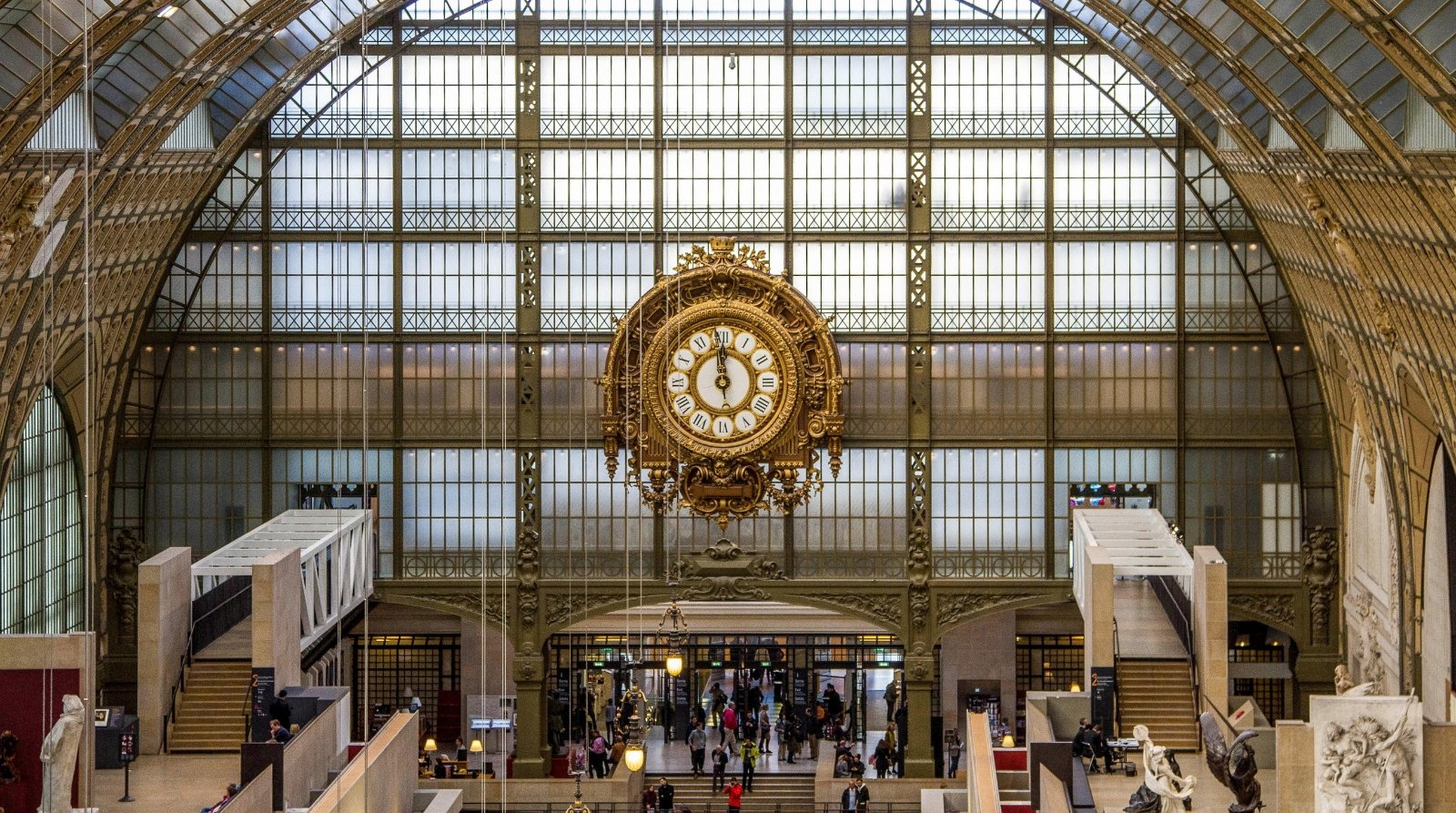
The Musée d’Orsay occupies one of the most beautiful museum spaces in Paris: a former railway station where monumental clocks, an arched glass roof, and a vast central nave frame an exceptional collection of 19th- and early 20th-century art.
This Musée d’Orsay review explores whether the museum deserves a place beside the Louvre on a Paris itinerary. The answer is largely yes. Its concentration of Impressionist and Post-Impressionist masterpieces makes the collection approachable, while the architecture turns even the movement between galleries into part of the experience.

TL;DR
The Musée d’Orsay is essential for visitors interested in Monet, Manet, Degas, Renoir, Cézanne, Gauguin, or Van Gogh. It is more manageable than the Louvre but still substantial enough to require at least two to three hours.
Book a timed ticket, arrive early or visit during the Thursday late opening, and begin with the upper-level Impressionist galleries before they become crowded. Do not overlook the sculptures, decorative arts, terrace, and enormous clock windows.
At a Glance
| Detail | Information |
|---|---|
| Location | 7th arrondissement, Paris, France |
| Address | Esplanade Valéry Giscard d’Estaing |
| Collection period | Primarily 1848–1914 |
| Standard hours | Tuesday–Sunday, 9:30 a.m.–6 p.m. |
| Late opening | Thursday until 9:45 p.m. |
| Closed | Monday, May 1, and December 25 |
| Recommended visit | 2–3 hours |
| Nearest transport | Musée d’Orsay RER station |
| Best for | Impressionism, sculpture, architecture, photography |
| Main drawback | Congestion in the most famous galleries |
The museum is undergoing major renovation work, so access routes and reservation requirements may change. Timed booking is particularly important during this period.
From Railway Station to Museum

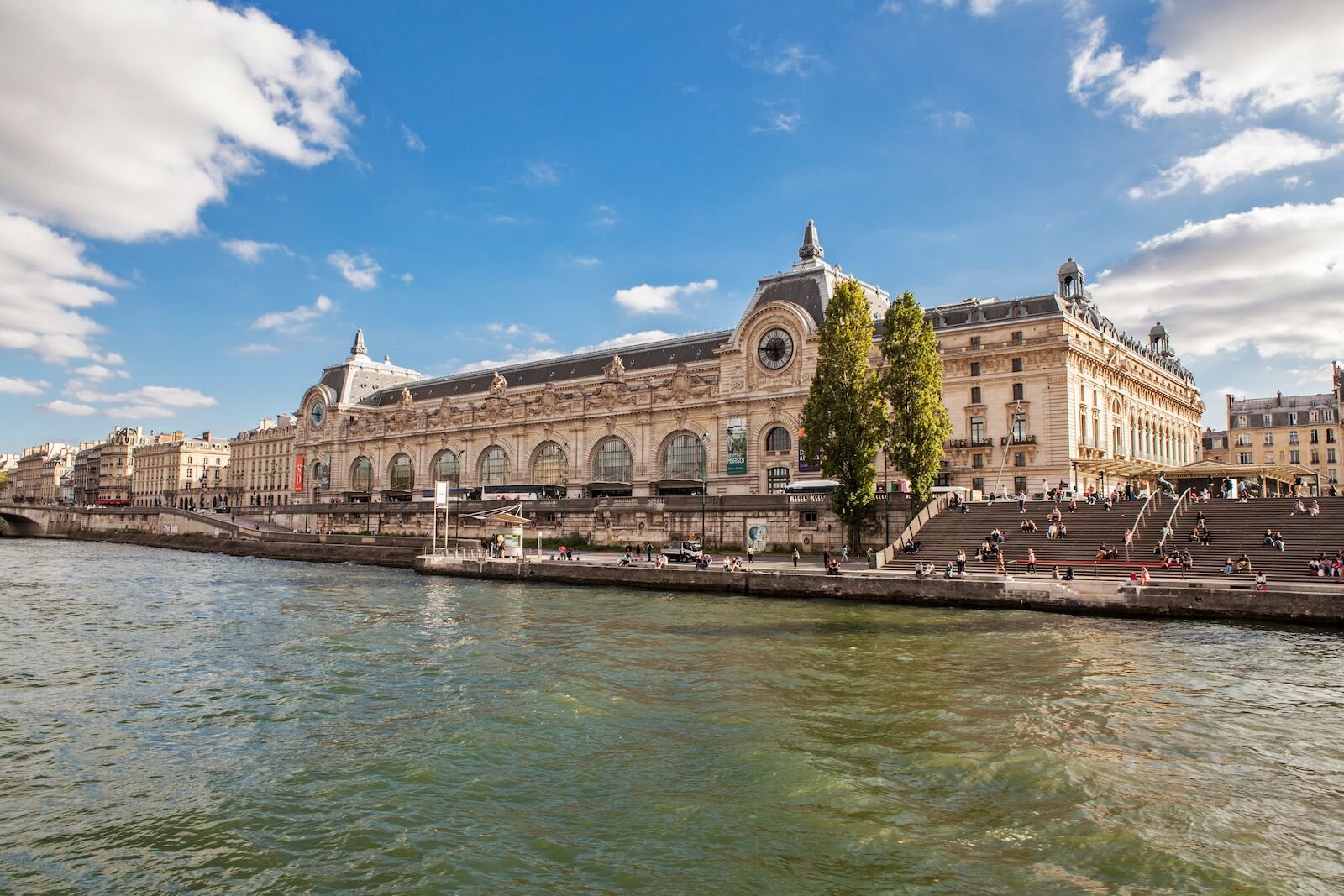
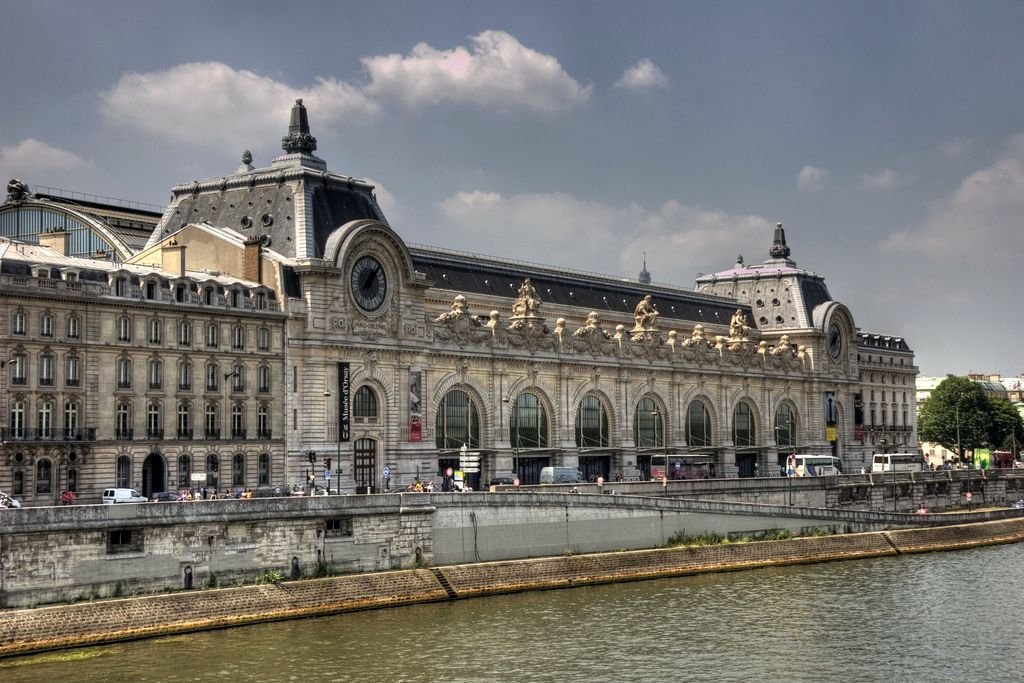
The building began as Gare d’Orsay, a railway station and hotel created for the 1900 Exposition Universelle. Its platforms eventually became unsuitable for longer modern trains, leaving the grand structure without its original purpose.
After facing an uncertain future, the station was converted into a museum and opened in 1986. This history explains the building’s unusual scale. The central nave retains the drama of a transport terminal, while galleries occupy terraces and rooms around its edges.
In 2026, the Musée d’Orsay celebrates its 40th anniversary as a museum—an appropriate moment to appreciate how successfully Paris transformed an obsolete station into a cultural landmark.
The Impressionist Collection

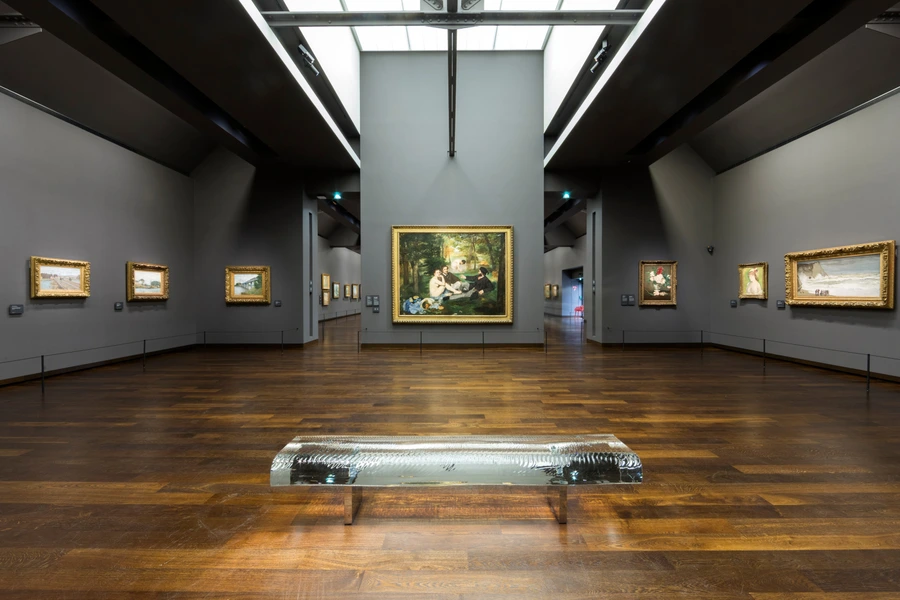
The upper galleries contain the museum’s defining collection. Works by Claude Monet, Pierre-Auguste Renoir, Edgar Degas, Camille Pissarro, Berthe Morisot, and Alfred Sisley reveal how Impressionism changed the representation of light, movement, leisure, and modern Paris.
Familiar masterpieces appear with surprising frequency. Renoir’s Bal du moulin de la Galette, Monet’s railway and landscape paintings, and Degas’ dancers are displayed within a broader narrative rather than treated as isolated trophies.
These rooms attract the largest crowds. Visiting them immediately after opening—or later during the Thursday evening session—creates a more rewarding encounter with the paintings.
Van Gogh, Cézanne, and Post-Impressionism

The Post-Impressionist galleries demonstrate how quickly artists moved beyond the Impressionist approach. Vincent van Gogh’s intense colour, Paul Cézanne’s structural compositions, Paul Gauguin’s symbolic imagery, and Georges Seurat’s methodical technique point toward the experiments of modern art.
Van Gogh’s works—including portraits, landscapes, and night scenes—are among the museum’s greatest draws. The paintings are powerful in person, although the galleries around them can become crowded with visitors taking photographs.
Cézanne rewards slower attention. His landscapes and still lifes may appear restrained beside Van Gogh, but their manipulation of perspective and form helped shape the next generation of artists.
Manet and the Birth of Modern Painting

Édouard Manet occupies a pivotal position within the collection. His subjects, direct compositions, and rejection of academic conventions helped prepare the ground for Impressionism, even though he did not formally exhibit with the group.
Major works such as Olympia and Le Déjeuner sur l’herbe retain their capacity to provoke. Seeing them within the social and artistic context of 19th-century Paris clarifies why they once appeared so radical.
The surrounding galleries connect Manet with Realism, academic painting, and other competing visions of modern life, giving the museum greater depth than an Impressionist highlights reel.
Sculpture in the Central Nave
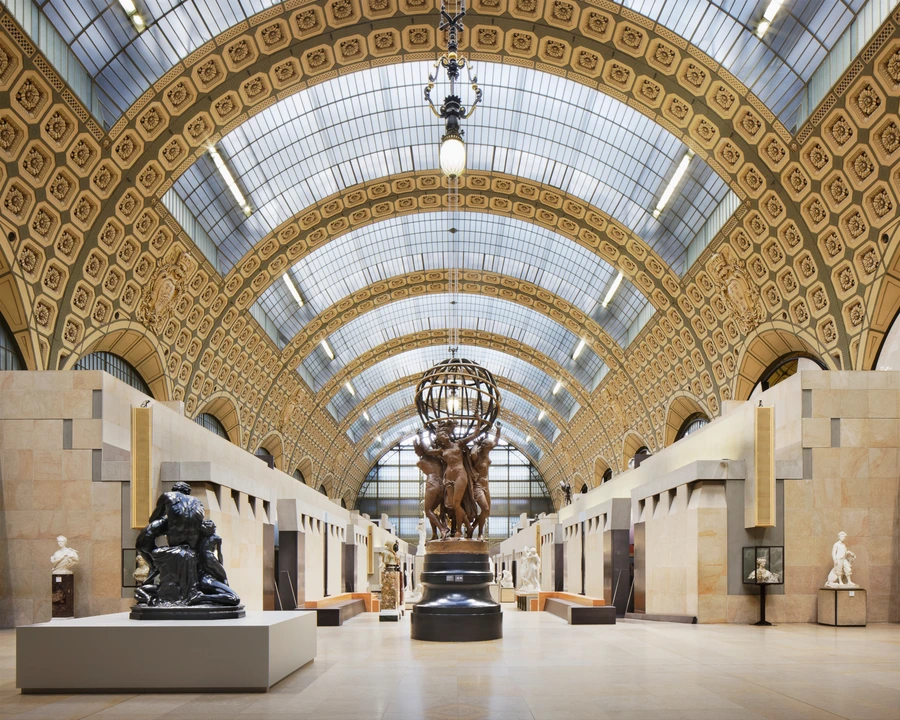
The sculpture-lined central nave is one of the museum’s most visually impressive spaces. Natural light from the glass roof falls across marble and bronze figures, while the former station’s immense proportions create long, symmetrical views.
The arrangement can feel more theatrical than intimate, but it provides an effective introduction to the scale and ambition of 19th-century sculpture.
Visitors rushing directly to Monet and Van Gogh often pass through too quickly. Walking the nave slowly reveals how effectively the museum balances individual artworks with the architecture surrounding them.
Decorative Arts and Art Nouveau

Furniture, glass, ceramics, and interior design broaden the museum beyond painting and sculpture. The Art Nouveau galleries are particularly worthwhile, showing how organic lines and floral forms moved across architecture and domestic objects.
The displays provide useful context for the transformation of European taste around the turn of the 20th century. They also offer a calmer experience than the headline painting galleries.
Visitors interested in fashion, interiors, or design should reserve time for this section rather than treating it as a corridor between more famous works.
The Musée d’Orsay Clock

The enormous clock windows remain visible reminders of the building’s railway history. From behind the clock face, visitors can look across the Seine toward the Louvre, the Tuileries, Montmartre, and the Paris skyline.
The silhouetted hands and Roman numerals create one of the museum’s most recognisable photographs. Predictably, the area can develop a queue as visitors wait for an unobstructed composition.
The clock is more than a social-media backdrop. It captures the central appeal of the Musée d’Orsay: industrial-era architecture transformed into an elegant setting for art.
Crowds and the Best Time to Visit
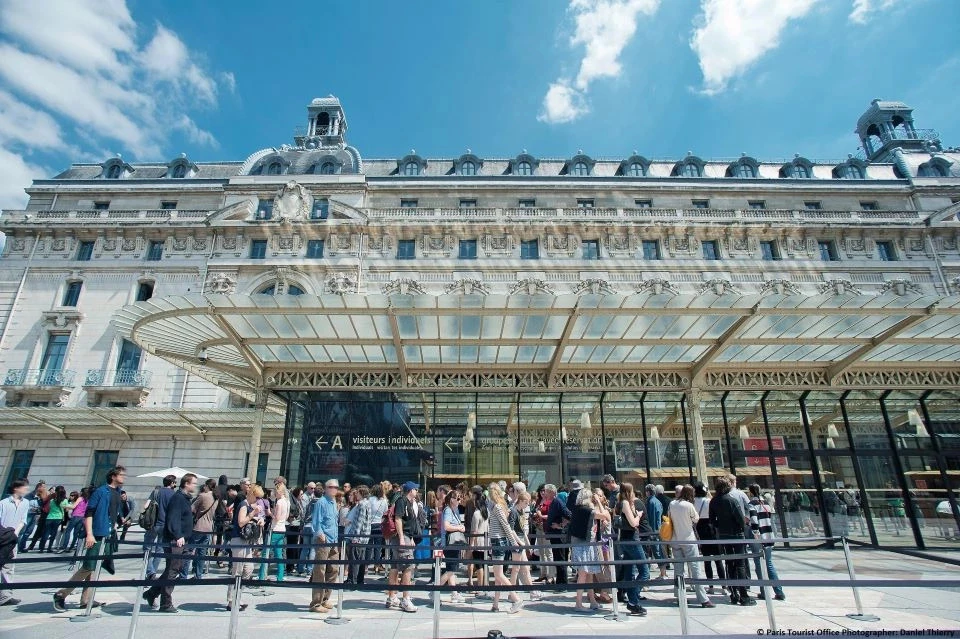
The museum is busiest during weekends, school holidays, major exhibitions, and the middle of the day. Timed tickets organise admission but do not guarantee empty galleries or completely remove security queues.
Arriving shortly before opening gives you the best chance of seeing the fifth-floor masterpieces in relative calm. Thursday evening is another strong option, particularly during the final hours.
The first Sunday of each month offers free admission with a mandatory reservation, but demand is high. Visitors prioritising atmosphere over savings may prefer a paid weekday visit.
Suggested Route Through the Museum

Begin by travelling to the upper floor and exploring the Impressionist and Post-Impressionist galleries before they become congested. Pause at the clock, then work downward through the collection.
Continue with Manet, Realism, and the changing artistic life of 19th-century Paris. Finish in the central nave, where sculpture and the station architecture provide a more spacious conclusion.
This reverse approach is less chronological, but it prioritises the museum’s most popular rooms while your attention is fresh and crowd levels are lower.
Accessibility and Families

Elevators and accessible routes connect the principal public levels, although the building’s size and current renovation work may make navigation slower than expected.
Visitors with disabilities and one accompanying person are eligible for free priority admission upon presentation of valid documentation. Priority access is available through the designated entrance.
Families can use child-focused audio content and shorter routes through the collection. Younger visitors may respond particularly well to Degas’ dancers, animal sculptures, Van Gogh’s colours, and the building’s giant clocks.
How Long Do You Need?

Allow two hours for a focused highlights visit and three hours for a more balanced exploration. Temporary exhibitions, a guided tour, or a café break can extend the experience to half a day.
Trying to see every room often creates museum fatigue. Choose several artistic movements or artists in advance, then leave time for unexpected discoveries.
The Musée d’Orsay also fits naturally into a broader cultural itinerary. Our guide to luxury things to do in Paris pairs it with private museum visits, refined dining, historic hotels, and experiences along the Seine.
Is the Musée d’Orsay Worth Visiting?

Yes. For many visitors, the Musée d’Orsay is more enjoyable than the Louvre because its scope is clearer, the collection is easier to navigate, and the building feels distinctive without overwhelming the art.
It is especially valuable for anyone interested in the transition from academic traditions to Impressionism and early modern art. Even casual visitors are likely to recognise enough masterpieces to remain engaged.
Crowds around the most famous paintings can diminish the experience, but careful timing and a selective route solve much of the problem.
LxryNow Review Scorecard
| Category | Score | Assessment |
|---|---|---|
| Collection Quality | 10 | An extraordinary concentration of major works |
| Impressionist Galleries | 10 | The museum’s essential and most celebrated experience |
| Architecture | 10 | A former station transformed with exceptional sensitivity |
| Gallery Layout | 8 | Generally manageable, though navigation can be uneven |
| Historical Context | 9 | Strong connections between art and modern Paris |
| Crowd Management | 7 | Famous rooms become congested at peak times |
| Accessibility | 9 | Good facilities and priority arrangements |
| Photography | 9 | Memorable interiors, clocks, and city views |
| Value | 9 | Substantial quality within a focused collection |
| Overall Score | 9.2/10 | One of Paris’ most rewarding cultural experiences |
Which Musée d’Orsay Experience Should You Choose?

Choose a standard timed ticket if you already know the artists you want to see and prefer an independent pace. An audio guide adds useful context without restricting your route.
A small-group tour works well for first-time visitors who want a structured introduction to Impressionism. It reduces the effort of navigating a large collection and explains relationships that are easy to miss.
Choose a private tour for deeper discussion, personalised artist selections, or a quieter experience. This option is particularly valuable for returning visitors and travellers with a strong interest in art history.
Book the Experience

Musée d’Orsay Guided Tour With Reserved Entry
A practical introduction to the museum’s principal artists and movements.
Book at Viator
Musée d’Orsay Masterpieces Guided Tour
A focused route through celebrated works for visitors with limited time.
Book at Viator
Private or Small-Group Musée d’Orsay Tour
Choose between a more intimate group or private format.
Book at Viator
Private Musée d’Orsay Tour With a Local Guide
Best for personalised interpretation and deeper discussion of Impressionism.
Book at ViatorCheck whether admission, temporary exhibitions, headsets, and post-tour independent museum access are included before booking.
Pros and Cons
| Pros | Cons |
|---|---|
| World-class Impressionist collection | Famous galleries become crowded |
| Magnificent former railway station | Renovation may affect access routes |
| More manageable than the Louvre | Navigation is occasionally confusing |
| Strong painting, sculpture, and design displays | Photography can interrupt the atmosphere |
| Excellent Seine and city views | Temporary exhibitions increase congestion |
| Suitable for focused two-hour visits | Trying to see everything causes fatigue |
Final Verdict
LxryNow Verdict: The Musée d’Orsay combines a coherent collection, immediately recognisable masterpieces, and architecture that would justify a visit even without the paintings.
Its scale strikes an appealing balance: substantial enough to support a serious art experience, yet focused enough to explore without surrendering an entire day. The Impressionist galleries deserve their reputation, but the sculptures, decorative arts, clocks, and station structure give the museum its full character.
Reserve a timed entry, begin upstairs, and avoid rushing from one famous painting to the next. The Musée d’Orsay rewards attention more than completion.
