
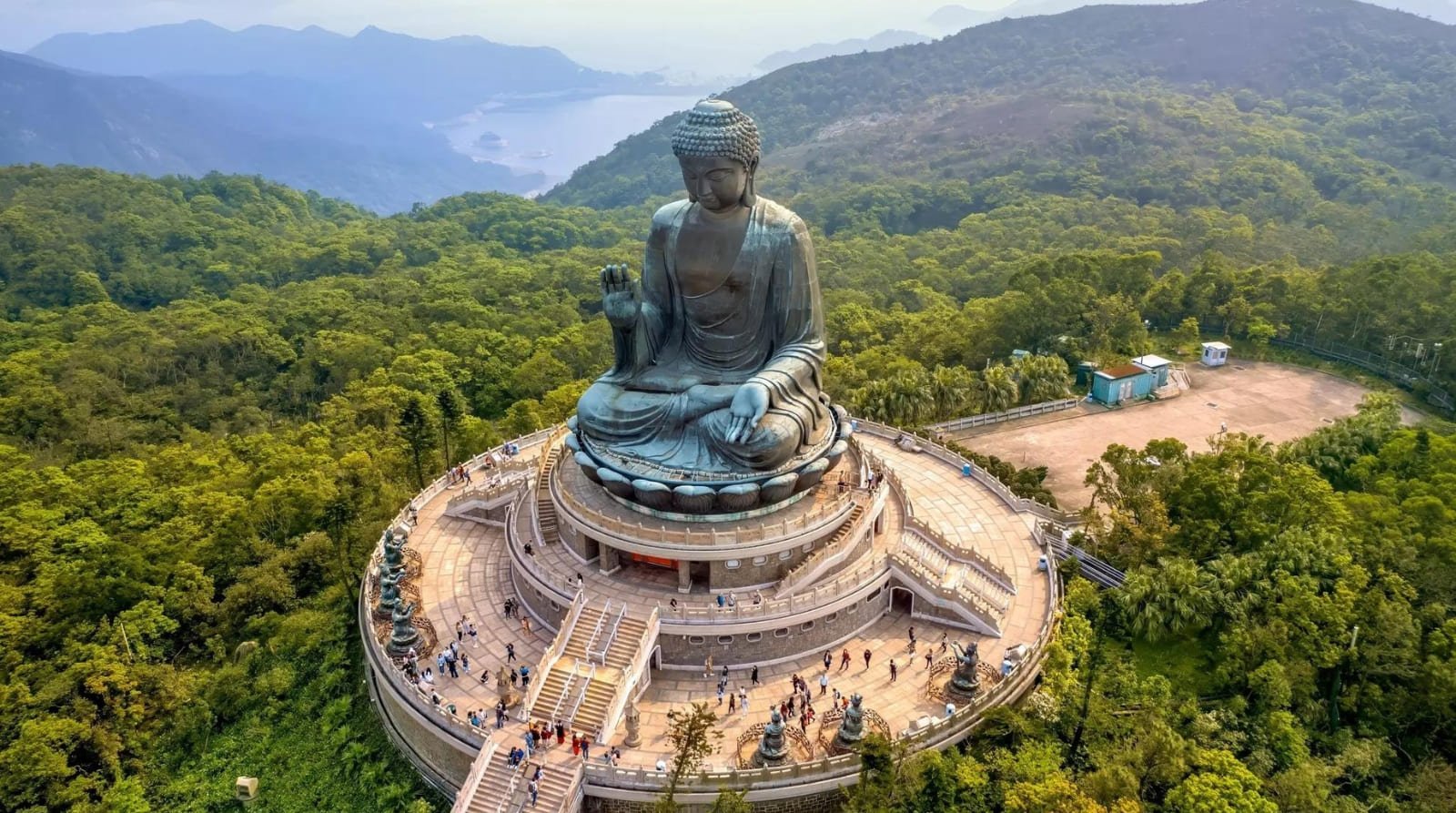
Tian Tan Buddha offers a very different vision of Hong Kong from the skyscrapers, shopping districts and Victoria Harbour skyline. Set among the wooded mountains of Lantau Island, the enormous bronze figure overlooks Po Lin Monastery and the Ngong Ping plateau.
The journey is part of the attraction. Many visitors arrive by the Ngong Ping 360 cable car, which crosses the hills from Tung Chung before revealing distant views of the statue.
Reaching the upper platform requires climbing 268 steps. The reward is a close view of the Buddha, surrounding bronze figures and mountains extending toward the South China Sea.
The setting can feel peaceful, but cable-car queues, tour groups and unpredictable weather influence the experience. Is Tian Tan Buddha worth dedicating most of a day to—or is the journey more memorable than the monument itself?

TL;DR
| Category | LxryNow Take |
|---|---|
| Best For | First-time visitors, photographers and cultural travellers |
| Best Overall Experience | Cable car, Buddha, monastery and Tai O |
| Recommended Duration | Four to six hours |
| Best Time to Visit | Weekday morning with clear weather |
| Admission | Outdoor Buddha platform is generally free |
| Main Strength | Impressive setting and scenic journey |
| Main Drawback | Weather, queues and 268-step climb |
| Best Premium Option | Private Lantau Island tour |
| Overall Verdict | One of Hong Kong’s strongest cultural day trips |
Tian Tan Buddha is worth visiting when combined with Po Lin Monastery and another Lantau Island experience. The statue alone can be seen relatively quickly, but the cable-car journey, mountain setting and nearby religious complex create a fuller visit.
What Makes Tian Tan Buddha Significant?

Completed in 1993, Tian Tan Buddha is a seated bronze representation of Shakyamuni Buddha. The statue rises approximately 34 metres above its base and weighs more than 200 tonnes.
Its raised right hand represents the removal of affliction, while the open left hand resting on the lap symbolises generosity. The Buddha faces north toward mainland China, an orientation that distinguishes it from many large Buddha statues traditionally facing south.
The pedestal was inspired by the circular altar of Beijing’s Temple of Heaven, explaining the name Tian Tan. The monument was conceived as a symbol of harmony between people, nature and faith.
Its significance is not limited to size. The location beside Po Lin Monastery places the statue within an active Buddhist complex rather than presenting it solely as an observation point.
The 268-Step Climb

The staircase begins near the monastery and climbs directly toward the statue. From below, the symmetrical steps create one of the site’s strongest photographic compositions.
The ascent is manageable for most reasonably active visitors, but humidity makes it more tiring than the number suggests. Landings provide opportunities to pause, look back and allow faster groups to pass.
At the top, visitors can walk around the pedestal for changing views of the Buddha, monastery and surrounding mountains. Six smaller bronze figures known as The Offering of the Six Devas face the Buddha while presenting flowers, incense, lamps, fruit, music and ointment.
The climb feels most rewarding when the sky is clear. Fog can create an atmospheric setting but may obscure the wider views.
Views and Photography

The upper platform provides a broad perspective across Lantau Island. Forested slopes surround the religious complex, creating a strong contrast with central Hong Kong’s urban density.
Morning generally offers softer light and more comfortable temperatures. The staircase works well as a leading line, while side angles from the platform capture the statue against the mountains.
Clouds and mist change quickly at Ngong Ping. Low cloud can partially or completely conceal the Buddha, while rain makes the exposed steps slippery.
Check the forecast before travelling, but remember that conditions on the elevated plateau may differ from those in Central or Kowloon.
Po Lin Monastery

Po Lin Monastery should not be treated as a secondary photo stop. Founded in the early 20th century, it remains one of Hong Kong’s best-known Buddhist institutions.
The complex includes richly decorated halls, incense-filled courtyards and the Grand Hall of Ten Thousand Buddhas. Visitors should dress respectfully, keep noise low and follow photography restrictions inside religious spaces.
Vegetarian meals are available within the complex, providing a convenient break before or after climbing the steps.
Tian Tan Buddha currently operates daily from approximately 10:00 a.m. to 5:30 p.m., while the monastery generally opens from 9:00 a.m. to 6:00 p.m. Hours can change during religious events or maintenance.
The Ngong Ping 360 Cable Car Experience

The Ngong Ping 360 cable car transforms transportation into part of the experience. The journey from Tung Chung takes approximately 25 minutes and crosses Tung Chung Bay, forested slopes and elevated terrain.
Standard cabins offer excellent views. Crystal cabins add a glass floor, while more premium cabin types provide additional space or enhanced visibility where available.
The main drawback is queuing. Waits can become substantial on weekends and public holidays, especially for the return journey. Advance tickets or tours with priority boarding can improve the experience.
Cable-car operations are sensitive to strong winds, thunderstorms and scheduled maintenance. Bus services remain the principal alternative when operations are suspended.
Crowds and Best Time to Visit

Weekday mornings provide the best balance of lighter crowds and comfortable temperatures. Arriving near the statue’s 10:00 a.m. opening allows time to explore before midday tour groups gather.
| Visiting Period | Crowd Level | LxryNow Recommendation |
|---|---|---|
| Weekday morning | Low to moderate | Best overall |
| Weekday afternoon | Moderate | Good outside summer |
| Weekend morning | Moderate to high | Arrive early |
| Weekend afternoon | High | Expect queues |
| Public holiday | Very high | Avoid when possible |
| Foggy or rainy day | Variable | Atmospheric but limited views |
October through early December often brings more comfortable conditions and clearer visibility. Summer visits can be hot, humid and stormy, making the climb more demanding.
Getting There and Recommended Duration

The most popular route begins with the MTR to Tung Chung, followed by the Ngong Ping 360 cable car. A public bus from Tung Chung is usually less expensive and remains useful when the cable car is unavailable.
Visitors can also reach Ngong Ping by bus from Mui Wo or travel with a private driver and guide. Private transport provides the easiest arrangement for families, older travellers and groups combining several Lantau attractions.
| Itinerary | Recommended Time |
|---|---|
| Buddha and monastery only | Two to three hours |
| Cable car, Buddha and monastery | Four hours |
| Buddha, monastery and Tai O | Six to eight hours |
| Full private Lantau tour | Full day |
Tian Tan Buddha works best within a broader island itinerary. LxryNow’s guide to luxury things to do in Hong Kong offers additional ideas for balancing cultural landmarks with private sightseeing and premium city experiences.
Comfort and Accessibility

Wear supportive shoes and carry water, especially during warmer months. The staircase is exposed to sun and rain, while the plateau can feel considerably cooler or windier than Tung Chung.
Ngong Ping Village and the monastery surroundings are largely level, but the principal visitor route to the Buddha requires 268 steps. Alternative vehicle access may be available for eligible visitors with mobility needs, subject to on-site arrangements.
Families should supervise children on the staircase and upper platform. Visitors who cannot climb can still see the statue from below and enjoy Po Lin Monastery, Ngong Ping Village and the surrounding scenery.
Is Tian Tan Buddha Worth Visiting?

Tian Tan Buddha is worth visiting for travellers who want to experience a quieter and more scenic side of Hong Kong.
The statue is impressive, but the full value comes from the combination of the cable-car journey, 268-step approach, Po Lin Monastery and Lantau landscape.
A visit becomes less persuasive during heavy fog, extreme heat or long holiday queues. Travelling several hours only to photograph the statue from below may also feel underwhelming.
Combine the Buddha with Tai O or another Lantau destination and allow enough time to explore the monastery without rushing.
LxryNow Review Scorecard

| Category | Score | Assessment |
|---|---|---|
| Cultural Significance | 9/10 | Important Buddhist monument beside an active monastery |
| Architecture and Design | 9/10 | Monumental scale with thoughtful symbolic details |
| Scenery | 9/10 | Beautiful mountain and coastal surroundings |
| Visitor Experience | 8/10 | Rewarding when weather and crowd levels cooperate |
| Accessibility | 6.5/10 | The 268 steps limit the principal experience |
| Comfort | 7.5/10 | Highly dependent on heat, rain and wind |
| Convenience | 7.5/10 | Easy by cable car but vulnerable to queues |
| Value | 8.5/10 | Free outdoor access with flexible transport options |
| Overall | 8.4/10 | A memorable cultural landmark within a strong Lantau day trip |
Which Tian Tan Buddha Experience Should You Choose?

| Experience | Best For | Recommendation |
|---|---|---|
| Independent Cable-Car Visit | Confident planners | Best value |
| Buddha and Tai O Tour | First-time visitors | Best overall |
| Private Lantau Tour | Couples and families | Best premium option |
| Bus-Based Island Tour | Travellers avoiding cable-car queues | Best practical alternative |
| Crystal Cabin Tour | Scenic sightseeing | Best visual journey |
An independent visit offers flexibility, but a guided Buddha and Tai O tour creates a more complete day. Private tours are strongest for travellers who value hotel pickup, adaptable pacing and fewer transport decisions.
Book the Experience

Lantau Island, Big Buddha, Cable Car and Tai O Tour
Combines the major Lantau highlights with transport and priority cable-car access.

Lantau Island Bus Tour: Big Buddha, Ngong Ping and Tai O
Provides a structured island itinerary with a cable-car ride and Tai O boat experience.

Private Lantau Island Tour With Transport and Guide
Covers the Buddha, monastery, cable car and Tai O with personalised guidance.

Private Big Buddha and Tai O Village Tour
Offers flexible pacing for families, couples and travellers seeking a quieter experience.
Availability, prices, inclusions, weather conditions and cable-car operations can change. Review the latest tour details before booking.
Pros and Cons
| Pros | Cons |
|---|---|
| Monumental and culturally significant statue | Requires climbing 268 steps |
| Beautiful mountain setting | Views depend heavily on weather |
| Po Lin Monastery adds depth | Cable-car queues can be long |
| Cable-car journey is memorable | Considerable travel from central Hong Kong |
| Outdoor Buddha platform is generally free | Limited shade on the staircase |
| Easy to combine with Tai O | Busy on weekends and holidays |
| Suitable for independent or guided visits | Cable-car service can be suspended |
Final Verdict

Tian Tan Buddha earns its reputation through more than size. The 268-step approach, bronze symbolism, Po Lin Monastery and surrounding mountains create one of Hong Kong’s most distinctive cultural experiences.
The journey requires commitment. Travelling from Central or Kowloon consumes much of the day, cable-car queues can be frustrating and poor weather may remove the panoramic views that define the setting.
Even so, the destination feels worthwhile when approached as a Lantau Island experience rather than a single monument. Ride the cable car, explore the monastery, climb at a comfortable pace and continue to Tai O if time allows.
A weekday morning offers the best conditions for most visitors. Choose a private or guided tour when convenient transport and efficient coordination matter more than independent flexibility.
LxryNow Verdict: A visually impressive and culturally rewarding Lantau landmark, best experienced with Po Lin Monastery, the cable-car journey and Tai O.
Overall Score: 8.4/10
