
TL;DR
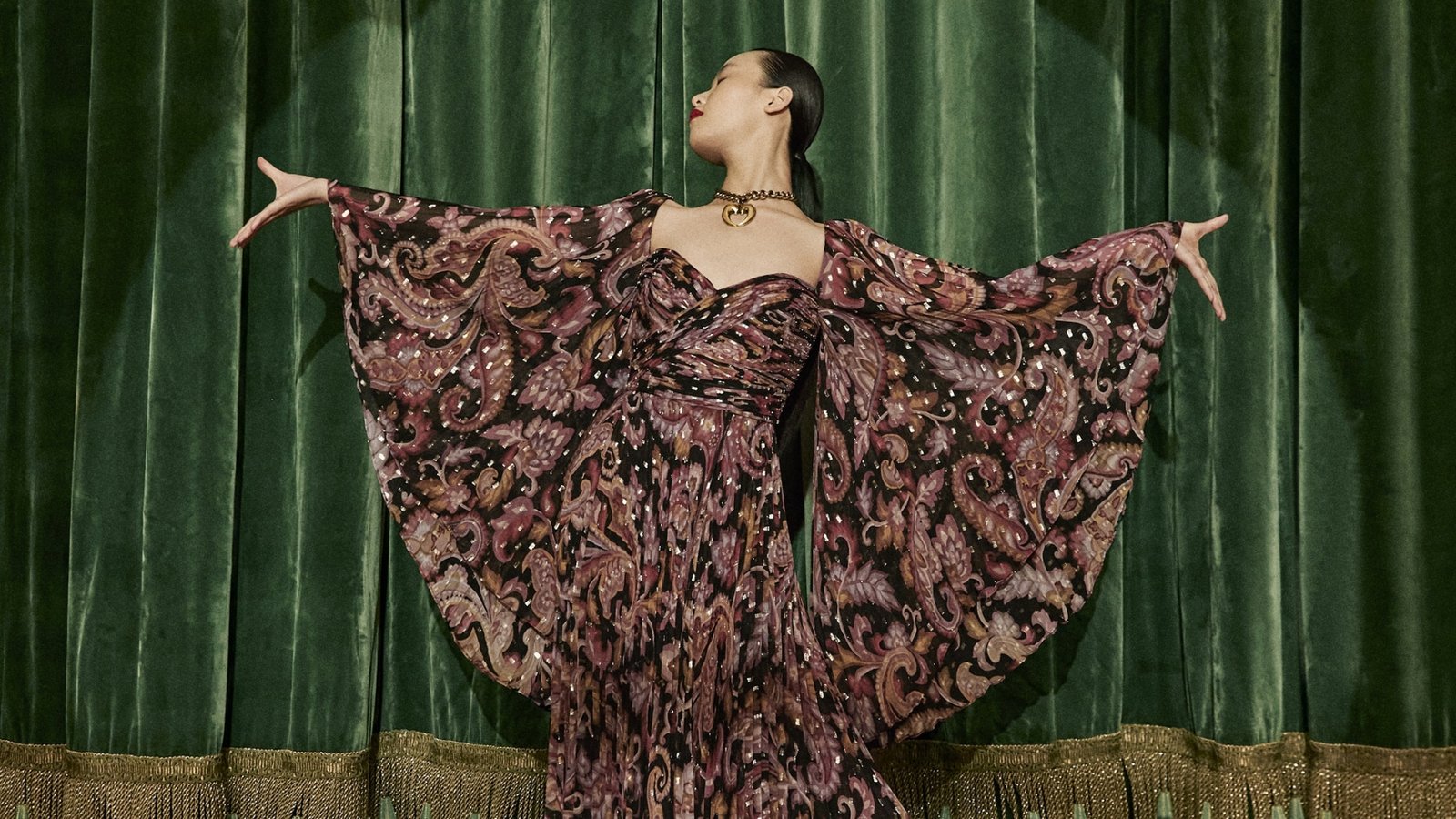
Etro’s paisley print occupies a rare place in fashion. It is immediately recognisable as part of the Italian house’s identity, yet it has never been restricted to a single season, colour palette, or product category. Paisley appears on Etro silk scarves, dresses, tailoring, shirts, bags, and home textiles, moving confidently between maximalist statements and quieter wardrobe accents.
Its longevity comes from more than repetition. Etro continually changes the scale, colour, placement, material, and mood of the motif. One season may present paisley in saturated jewel tones across fluid silk; another may reduce it to a tonal jacquard on tailoring or merge it with florals, stripes, checks, and animal patterns.
The result is a signature that remains familiar without becoming static—and a print that feels connected to history without looking trapped in it.
- Etro adopted paisley as a defining house code in the early 1980s.
- The motif has deeper Central Asian, Persian, Indian, and European textile associations.
- Etro changes paisley through colour, scale, fabric, and placement rather than treating it as a fixed logo.
- Its curved, botanical form works particularly well on flowing garments and tactile accessories.
- A paisley scarf or small accessory is the easiest entry point into the Etro aesthetic.
- Tonal paisley offers greater everyday versatility, while vivid versions work as statement pieces.
- The print remains relevant because it can express bohemianism, formality, romance, or eccentricity depending on its treatment.
Table of Contents
Paisley Has a History Larger Than Fashion
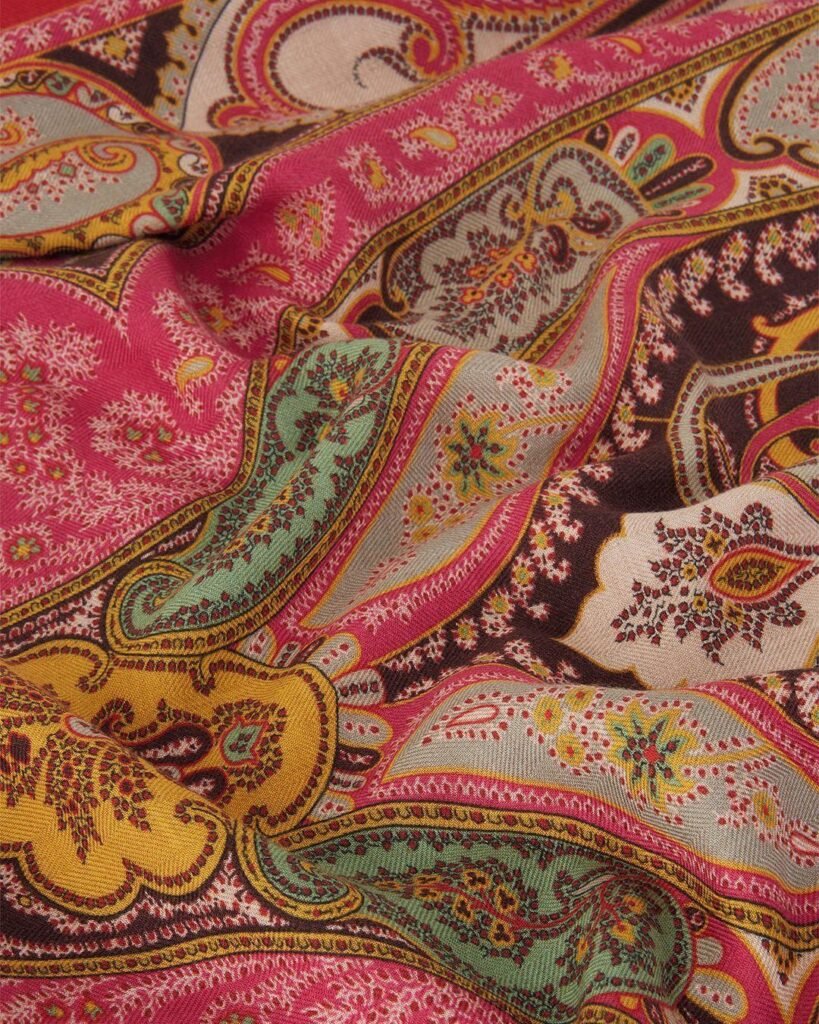
Paisley’s appeal begins with its long cultural history. The curved teardrop motif is frequently associated with the boteh, a decorative form found across Persian, Central Asian, and Indian textiles. Over centuries, it travelled through trade, shawl production, European collecting, and changing decorative traditions.
Etro describes the shape as originating in Central Asia and representing the date-palm blossom—a symbol associated with nourishment, prosperity, and fertility. The house adopted it as a signature capable of merging diverse cultural and artistic inspirations. Etro’s official brand history identifies paisley as its most recognisable symbol.
This layered history gives the print more visual depth than a temporary graphic trend. Paisley can evoke antique textiles, bohemian dressing, aristocratic shawls, 1960s counterculture, and modern Italian luxury, sometimes within the same outfit. Its meaning changes with the wearer and the material, allowing it to remain culturally familiar but visually flexible.
Etro Turned Paisley Into a House Signature
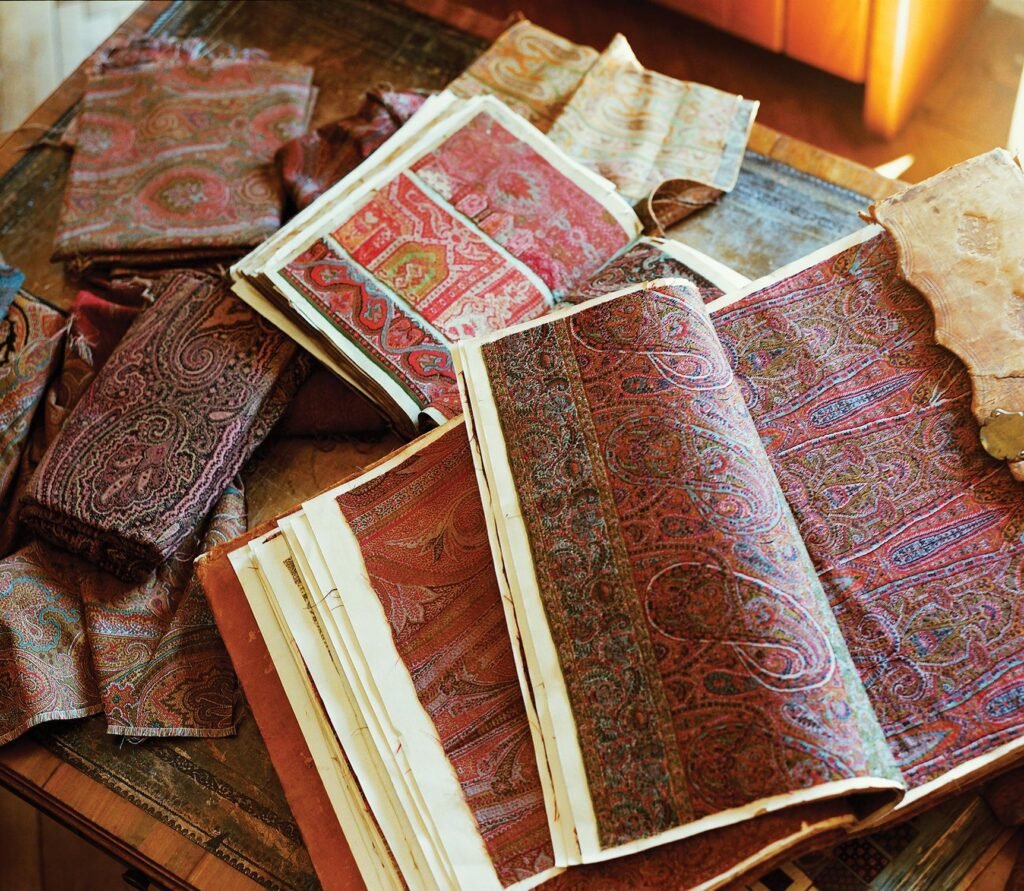
Gerolamo Etro established the company in 1968, initially focusing on fine fabrics and furnishing textiles. The house’s textile expertise became the foundation for its approach to fashion. In 1981, Etro introduced paisley into its creative vocabulary, developing the motif through numerous colours and interpretations.
Rather than using paisley as an occasional seasonal pattern, Etro treated it as an evolving house code. This is important: signatures become timeless when designers can reinterpret them without removing the elements that make them recognisable.
Etro’s paisley might appear enlarged and abstracted, densely layered into floral compositions, woven tonally into jacquard, or printed with extraordinary colour contrast. Yet the curved droplet shape remains visible beneath each transformation.
The house later applied the motif to Arnica, its durable paisley-patterned fabric used across bags and accessories. Etro recently marked four decades of Arnica with an exhibition celebrating the material’s craftsmanship and evolution. Etro’s “5 Threads, 40 Years” exhibition demonstrates how long the pattern has remained central to the brand.
Endless Colour Keeps the Motif Alive
Paisley is particularly responsive to colour. Its internal curves, borders, floral flourishes, and repeating shapes allow several shades to interact within one print. Etro uses this complexity to change the emotion of the pattern.
Burgundy, forest green, ochre, and navy give paisley an autumnal, heritage quality. Turquoise, pink, coral, and yellow make it feel energetic and resort-ready. Black and cream create a more graphic mood, while tonal jacquards allow the pattern to become subtle enough for office tailoring.
| Paisley Palette | Overall Mood | Best Styling Direction |
|---|---|---|
| Burgundy, olive, ochre | Heritage and autumnal | Suede boots, camel coats, dark denim |
| Blue, turquoise, green | Fresh and relaxed | White trousers, denim, silver jewellery |
| Pink, red, orange | Expressive and romantic | Neutral shoes and minimal accessories |
| Black, grey, ivory | Polished and understated | Tailoring, loafers, structured bags |
| Multicoloured jewel tones | Maximalist and luxurious | Simple silhouettes and one dominant print |
This colour adaptability prevents paisley from belonging to one decade. The shape remains constant, but its palette allows it to respond to changing fashion moods.
The Pattern Moves Beautifully Across Fabric
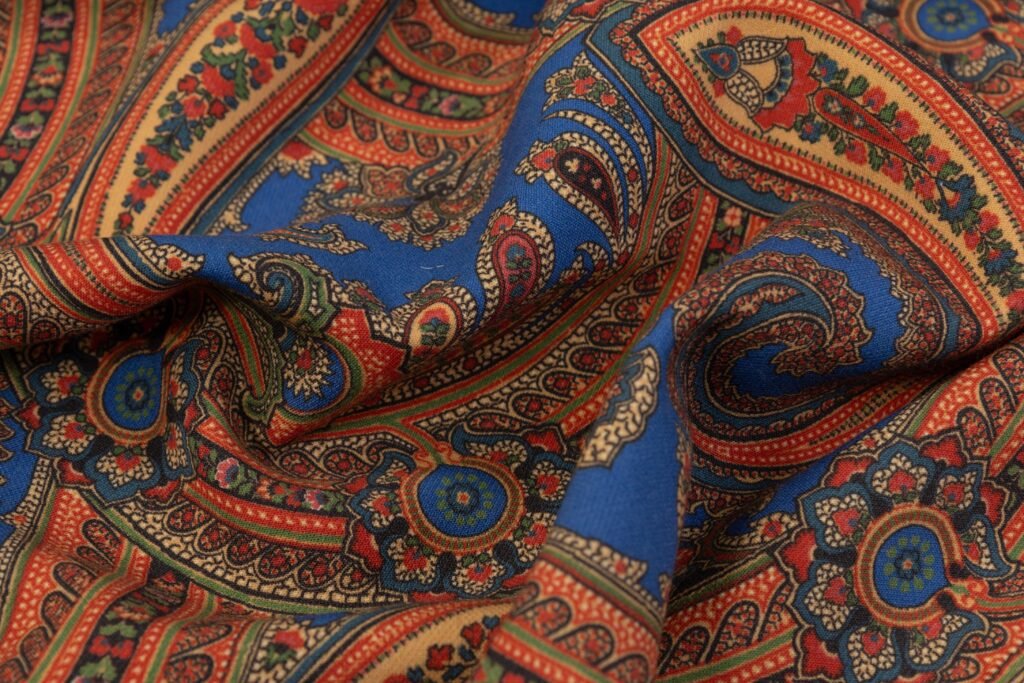
Paisley’s organic form is especially effective on materials that move. On silk dresses and scarves, the curved shapes shift with every fold, making the print appear less repetitive and more painterly. On wool and jacquard, the motif gains texture and depth. On cotton shirts, it becomes lighter and easier to wear.
This relationship between pattern and material is one of Etro’s strengths. The house does not merely place the same digital image onto every product. The density, finish, and scale are adjusted to suit the garment.
A flowing maxi dress can carry a large, expressive composition because its fabric provides space and movement. A tailored jacket benefits from smaller or tonal paisley that does not interrupt its structure. Scarves support intricate borders and medallion arrangements, while bags translate the pattern into something more durable and graphic.
The current Etro paisley silk scarf, for example, is made in Italy from pure silk and uses a long 70 × 170 cm format that allows the pattern to be folded, wrapped, and restyled in multiple ways.
Paisley Can Be Both Maximalist and Subtle
Etro is often associated with maximalism, but paisley does not always need to dominate an outfit. The print’s versatility depends on how much visual space it occupies.
An all-over silk dress is unmistakably expressive. A tonal paisley blazer is quieter, revealing its pattern primarily through light and texture. A scarf introduces colour near the face without requiring a fully printed outfit. A paisley bag can act almost like a neutral when its palette is built around brown, burgundy, navy, and beige.
| Level of Paisley | Best Piece | Styling Approach |
|---|---|---|
| Subtle | Tonal jacket or small accessory | Pair with similar shades |
| Moderate | Scarf, blouse, or shirt | Keep the lower half neutral |
| Statement | Midi or maxi dress | Use simple shoes and jewellery |
| Full maximalism | Printed suit or coordinated set | Repeat one colour across accessories |
This range allows different customers to participate in the Etro aesthetic. A minimalist may choose one silk scarf, while a committed maximalist may layer paisley with stripes, embroidery, and contrasting texture.
Etro Paisley Works Across Generations
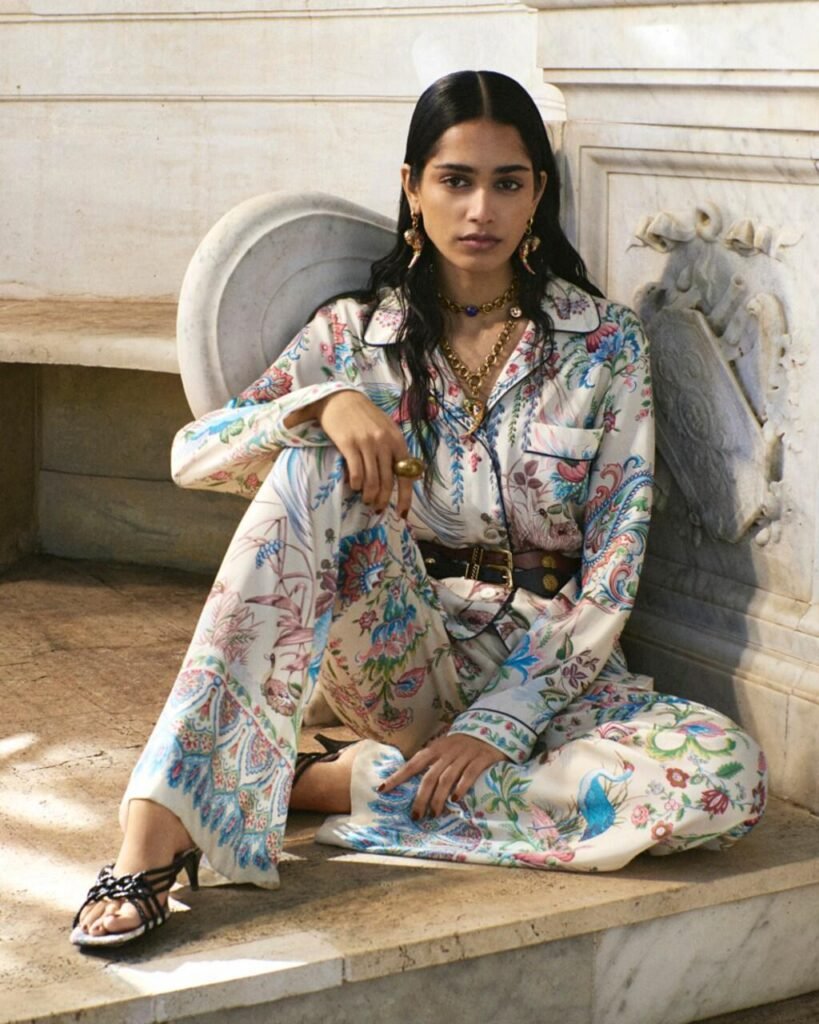
Many highly recognisable prints become strongly associated with the decade in which they peaked. Etro paisley avoids this because it does not depend on a single silhouette.
The same motif can appear on a traditional men’s shirt, a bohemian silk dress, a sharply tailored suit, a compact bag, or a relaxed scarf. Each product attracts a different wearer while maintaining a connection to the house.
Paisley also gains character with age. Unlike prints that depend on technological novelty or seasonal slogans, it can sit naturally beside vintage jewellery, worn denim, suede, leather, and heirloom accessories. An older Etro scarf rarely looks obsolete simply because its original season has passed.
That cross-generational potential is central to timelessness. Younger wearers may approach Etro through eclectic styling and pattern mixing, while established customers may value its textile quality, colour sophistication, and continuity.
It Balances Recognition With Individuality
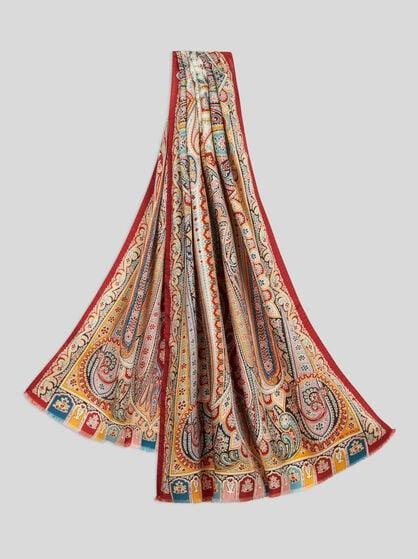
Logos provide instant brand recognition, but they usually communicate the same thing every time. Paisley is more personal. Two Etro pieces can be visibly connected while differing completely in colour, scale, material, and mood.
That variation allows the wearer to choose how recognisable the piece feels. Brown Arnica accessories offer a heritage Etro look, while a fluid paisley dress feels more artistic and expressive. Tonal tailoring may only reveal its identity on closer inspection.
Because the pattern is not locked into one fixed arrangement, it does not feel as uniform as an all-over monogram. Buyers can find an interpretation that reflects their own wardrobe rather than simply displaying the same brand symbol as everyone else.
This balance—familiar but not identical—is one reason Etro paisley remains collectible.
How to Wear Etro Paisley Today
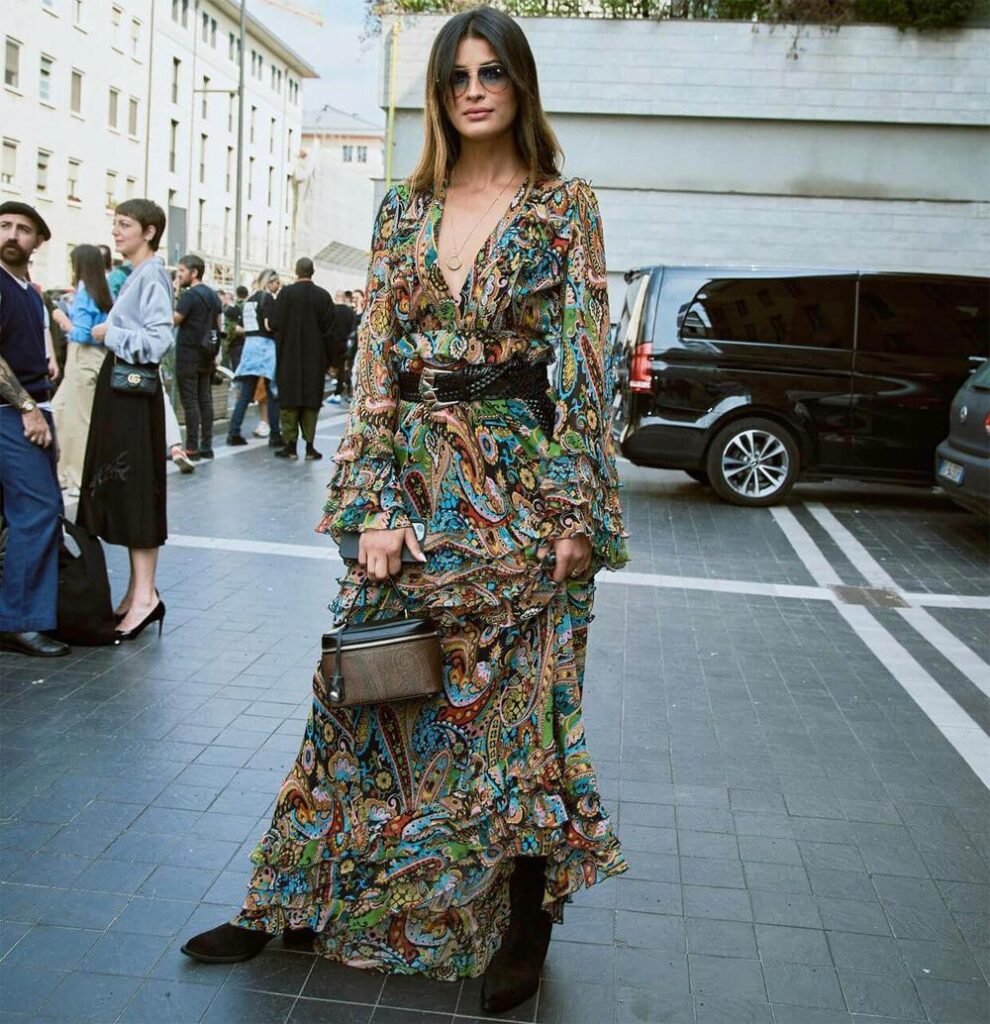
The easiest approach is to treat the print as the colour palette for the rest of the outfit. Select one or two shades from the paisley and repeat them through shoes, knitwear, or a bag.
For example, a blue-and-burgundy paisley dress can be grounded with burgundy boots or a navy coat. A multicoloured scarf becomes more sophisticated when worn with camel tailoring and dark denim. A paisley shirt can sit beneath a solid suit, revealing only part of the pattern.
Avoid adding unrelated colours unless you intentionally want a maximalist look. The print already contains movement and detail, so clean accessories often give it room to breathe.
For first-time buyers, the most useful options are:
- A silk scarf in colours already present in your wardrobe.
- A paisley shirt worn beneath neutral tailoring.
- A brown Arnica bag that functions like a patterned neutral.
- A midi dress with a clear base colour and uncomplicated silhouette.
Paisley should look expressive, not difficult. Start with one strong piece and build the outfit outward from its colours.
Shop the Edit
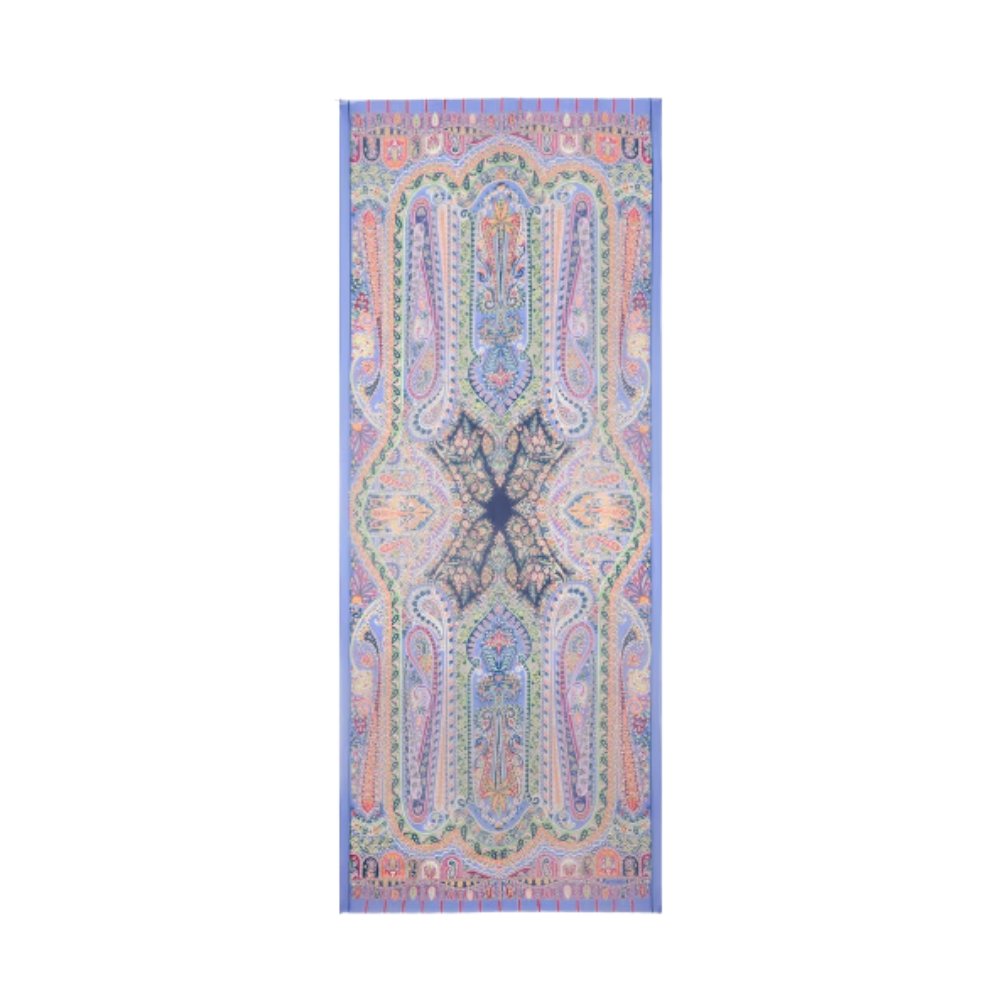
Paisley Silk Scarf
an easy introduction that works around the neck, over the shoulders, or tied to a bag
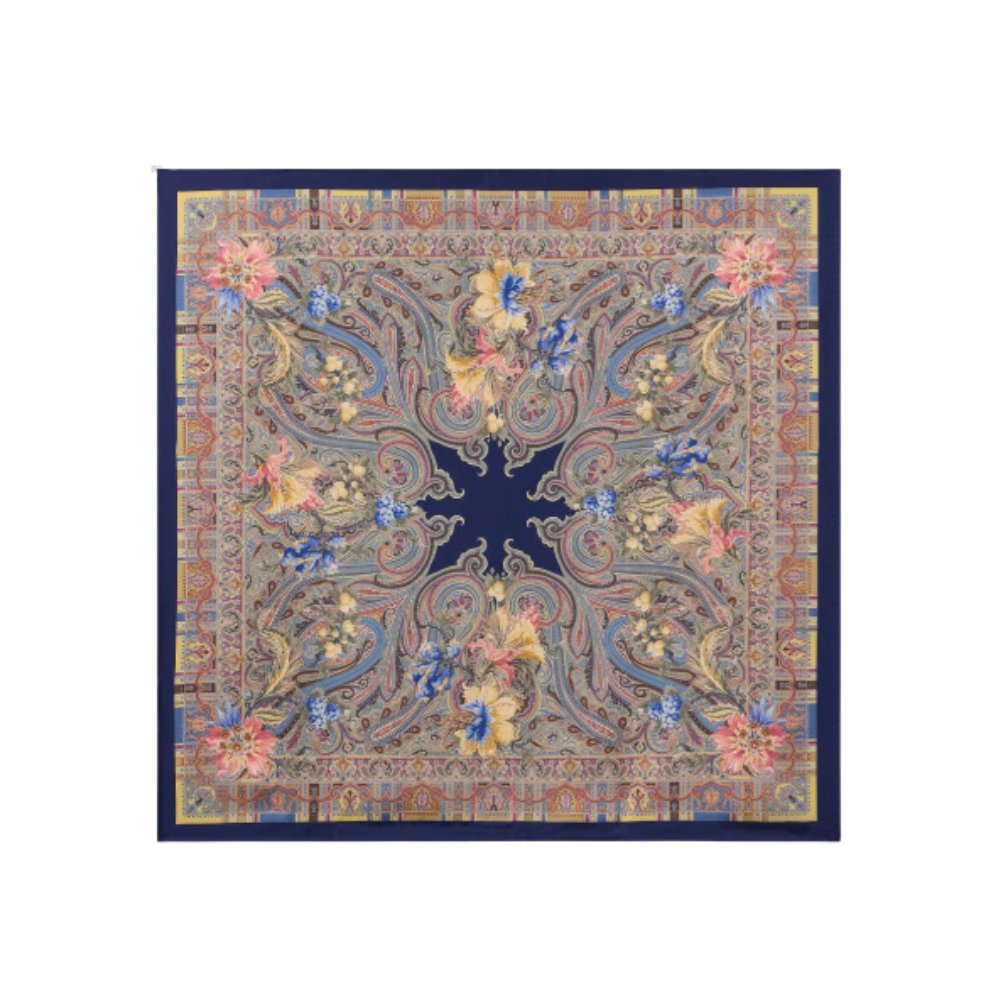
Silk Twill Scarf With Floral Paisley and Medallion Motif
a more structured square scarf for tailoring and classic coats
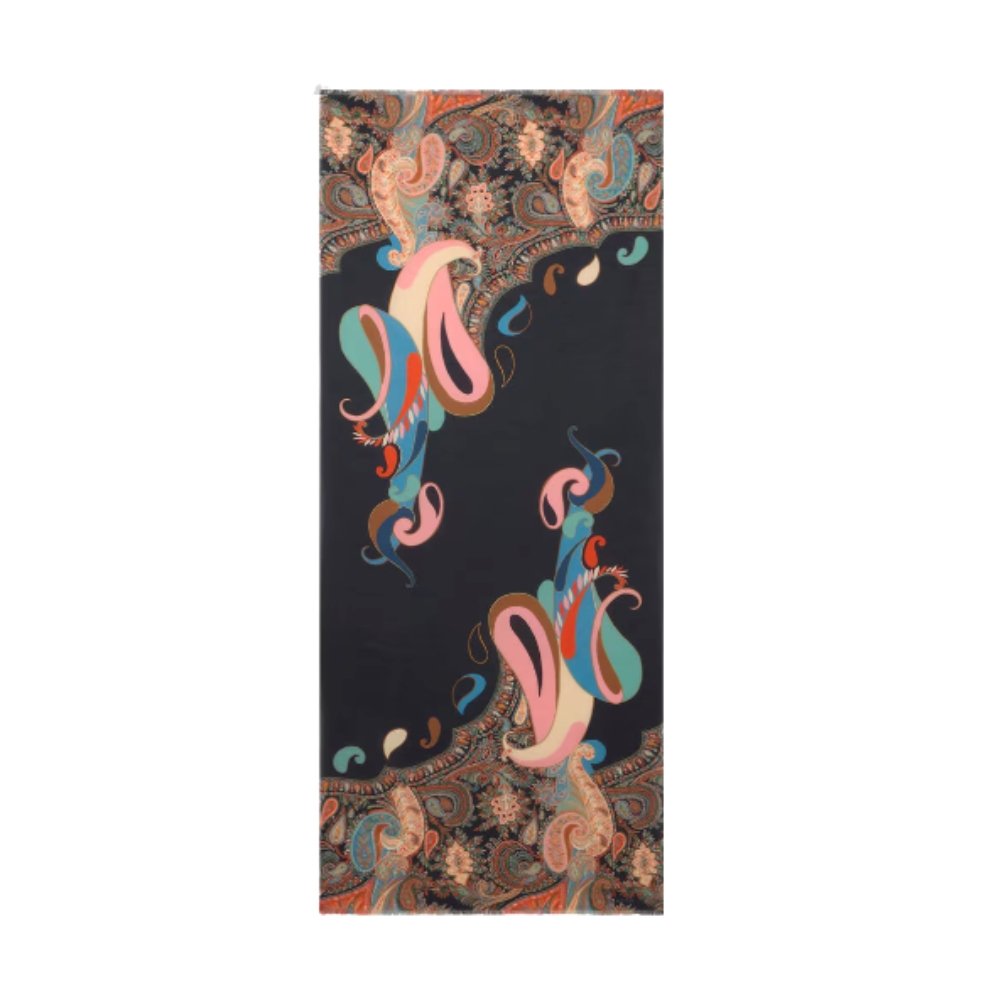
Cotton-Blend Jacquard Paisley Scarf
a softer, less formal alternative for denim, linen, and travel wardrobes
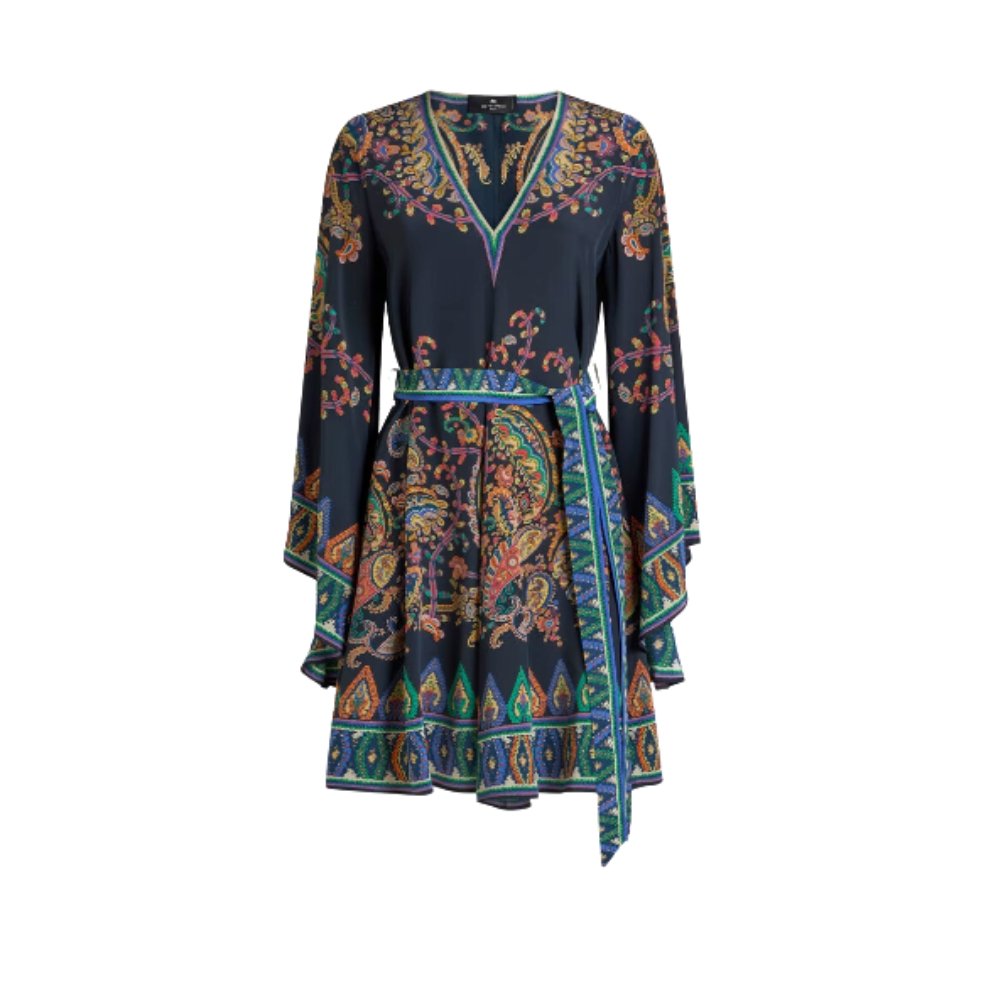
Silk Mini Dress With Floral Paisley Print
a complete Etro look that needs only restrained shoes and jewellery
Pros and Cons
| Pros | Cons |
|---|---|
| Strong connection to Etro’s textile heritage | Highly coloured versions may overwhelm minimalist wardrobes |
| Available in subtle and statement interpretations | Complex prints can be harder to coordinate |
| Works across clothing, scarves, bags, and interiors | Seasonal colourways may have varying versatility |
| Rich colour palettes disguise minor signs of wear | Printed garments can be more memorable, limiting repeated event wear |
| Less uniform than a fixed luxury monogram | Pattern placement may vary between individual pieces |
| Suitable for both vintage-inspired and contemporary styling | Delicate silk pieces require careful maintenance |
Final Verdict
Etro’s paisley prints never go out of style because the house treats paisley as a creative language rather than a fixed logo. The shape remains recognisable, but its colour, scale, material, and styling continually evolve.
The motif’s deep textile history gives it cultural weight, while Etro’s Italian craftsmanship and colour expertise keep it connected to contemporary fashion. It can be bohemian on a flowing dress, formal on jacquard tailoring, understated on a brown Arnica bag, or purely decorative on a silk scarf.
For a first purchase, choose a scarf or accessory in colours you already wear. For the fullest expression of the house, select a fluid paisley dress or coordinated piece that allows the pattern to take centre stage. Either way, Etro paisley offers something seasonal trends rarely can: recognition without uniformity and tradition without creative limitation.
