
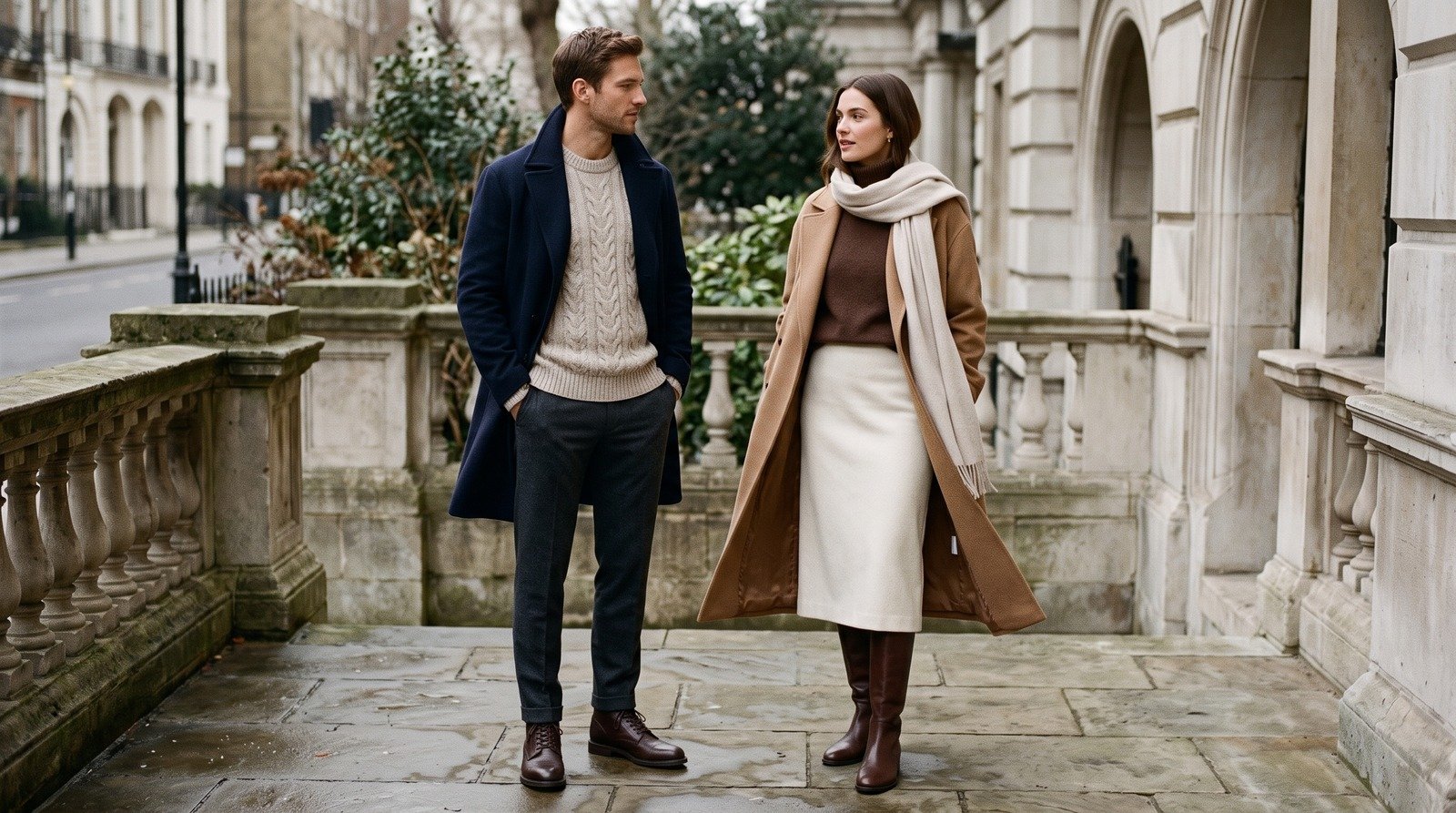
The most useful winter wardrobe ideas begin with how you spend your days. A short commute between heated buildings calls for different layers from hours of outdoor sightseeing.
Start with pieces that work together: a comfortable base layer, knitwear that fits beneath your coat, versatile trousers and footwear suited to the weather. Then introduce variety through texture, proportion and accessories.
A cream sweater can move from weekend denim to tailored trousers. A dark coat can finish both a knitted dress and an evening outfit. With a few reliable combinations, winter dressing becomes easier without feeling repetitive.
TL;DR
- Build around your climate, daily routine and time outdoors.
- Combine a close-fitting base, an insulating middle layer and suitable outerwear.
- Choose coats with enough room for the knitwear you actually wear.
- Use a small palette to make pieces easier to combine.
- Balance chunky textures with cleaner silhouettes.
- Match footwear to the conditions; warmth, water protection and grip are separate considerations.
Build a Winter Wardrobe Around Your Climate

Before buying another sweater, identify the conditions your wardrobe needs to handle.
| Winter Conditions | Useful Starting Point | What to Prioritize |
|---|---|---|
| Mild and mostly dry | Fine knit, trousers and a lighter coat | Removable layers |
| Cold city days | Base layer, knitwear and substantial outerwear | Coverage and comfortable layering |
| Wet and windy | Insulation beneath weather-protective outerwear | Documented rain and wind protection |
| Snow and icy surfaces | Insulated clothing and suitable winter boots | Dryness, warmth and appropriate traction |
| Mostly indoors | Light base, cardigan and removable coat | Comfort in heated spaces |
These are outfit starting points rather than temperature ratings. Wind, activity and individual comfort all affect what feels warm enough.
For winter travel, plan around the destination and your itinerary. A shopping trip with short walks needs a different packing list from a day spent exploring outdoors.
Layer for Warmth Without Excess Bulk
A flexible winter outfit usually has three parts:
- Base layer: A comfortable foundation, such as a fine merino top or thermal.
- Middle layer: A sweater, cardigan or other insulating piece.
- Outer layer: A coat or jacket appropriate for the conditions.
Keep the layers closest to the body relatively smooth. This helps sleeves move freely and reduces bunching beneath outerwear.
Try your coat on over your usual winter outfit. Fasten it, reach forward and sit down. Tightness across the shoulders or upper arms suggests the layers need more room.
For everyday use, choose middle layers you enjoy wearing indoors. A cardigan can be particularly useful when temperatures change throughout the day.
Start With a Coordinated Color Palette

The easiest winter wardrobe ideas rely on colors that already work together.
Choose two or three foundations—perhaps navy, charcoal and cream—then add a warmer neutral or an accent shade.
| Palette | Outfit Idea | Overall Effect |
|---|---|---|
| Camel, cream and chocolate | Camel coat, ivory knit, brown trousers | Warm and polished |
| Charcoal, black and silver-grey | Grey sweater, black trousers, charcoal coat | Restrained and contemporary |
| Navy, denim and ecru | Navy coat, ecru knit, dark jeans | Relaxed and versatile |
| Chocolate, burgundy and cream | Brown outerwear, burgundy knit, cream trousers | Rich and expressive |
| Olive, oatmeal and dark denim | Olive jacket, oatmeal sweater, indigo jeans | Casual and grounded |
Tonal dressing also works well. Combine different depths of grey or brown, using texture to distinguish the pieces.
If you prefer color, begin with a scarf or sweater that works beneath your main coat.
Everyday Winter Wardrobe Ideas
A reliable everyday formula combines one textured piece with simple supporting items.
Try a cable-knit sweater with straight-leg jeans, ankle boots and a tailored coat. Alternatively, wear a fine turtleneck beneath a cardigan with relaxed wool trousers.
Balance volume according to the silhouette you enjoy. A generous sweater can work with straight trousers; wide-leg trousers pair easily with a neater knit.
For men, a crewneck sweater, flannel trousers and an overcoat create an adaptable city outfit. An overshirt can replace the coat during milder weather.
Outfit formula: Textured knit + straight-leg denim + suitable boots + everyday coat.
Elegant Winter Outfits for Work

Workwear benefits from layers that retain their shape beneath a coat.
A fine-gauge sweater is often easier to accommodate under a blazer than chunky knitwear. Pair it with tailored trousers, then check that your outerwear fits comfortably over both.
A knitted midi dress offers another straightforward option. Add tights where needed and boots that sit smoothly beneath the hem.
For a more formal wardrobe, wear a fine crewneck over a collared shirt with a suit or separate trousers. Keep the shirt collar and cuffs neat.
Outfit formula: Fine knit + tailored trousers + leather boots + structured coat.
Winter Dresses and Skirts

Dresses and skirts can remain useful throughout winter with appropriate layers.
A knitted dress works with tights, tall boots and a long coat. Check that the fabric moves comfortably and that any base layer sits smoothly underneath.
For separates, pair a wool midi skirt with a fine turtleneck, or soften a satin skirt with knitwear. Ankle boots create a practical everyday finish; taller boots offer more coverage.
Compare the coat and dress hems together. Similar lengths create a continuous line, while a shorter jacket can emphasize the waist.
Outfit formula: Knitted midi dress + tights + tall boots + long coat.
Take Winter Layers Into the Evening

Elegant winter outfits can come from changing texture and accessories rather than the entire silhouette.
Try a fine black sweater with a satin skirt, heeled boots and a long coat. Velvet trousers with a simple knit offer another comfortable option.
For men, a dark fine-knit sweater with tailored trousers and a wool coat creates a polished dinner look where the dress code permits.
Choose one expressive detail: earrings, a textured bag or a rich burgundy accent. Keep the remaining pieces coordinated.
Outfit formula: Fine knit + satin skirt or velvet trousers + evening accessories + substantial outerwear.
Choose Footwear and Accessories With Purpose

Footwear can determine whether winter wardrobe ideas work beyond the mirror.
Smooth leather boots may suit dry city days, while suede needs more consideration around rain, slush and salt. For wet or snowy conditions, check the manufacturer’s stated protection and intended use.
A substantial-looking sole does not automatically establish grip on ice.
Scarves, gloves and hats add flexibility. Choose a scarf that fits comfortably around the coat collar and gloves suited to your daily routine.
Before buying, check:
- Can the boots accommodate your intended socks?
- Do trouser hems stay clear of wet ground?
- Can you fasten the coat comfortably over a scarf?
- Do the accessories work with more than one outfit?
Shop the Edit

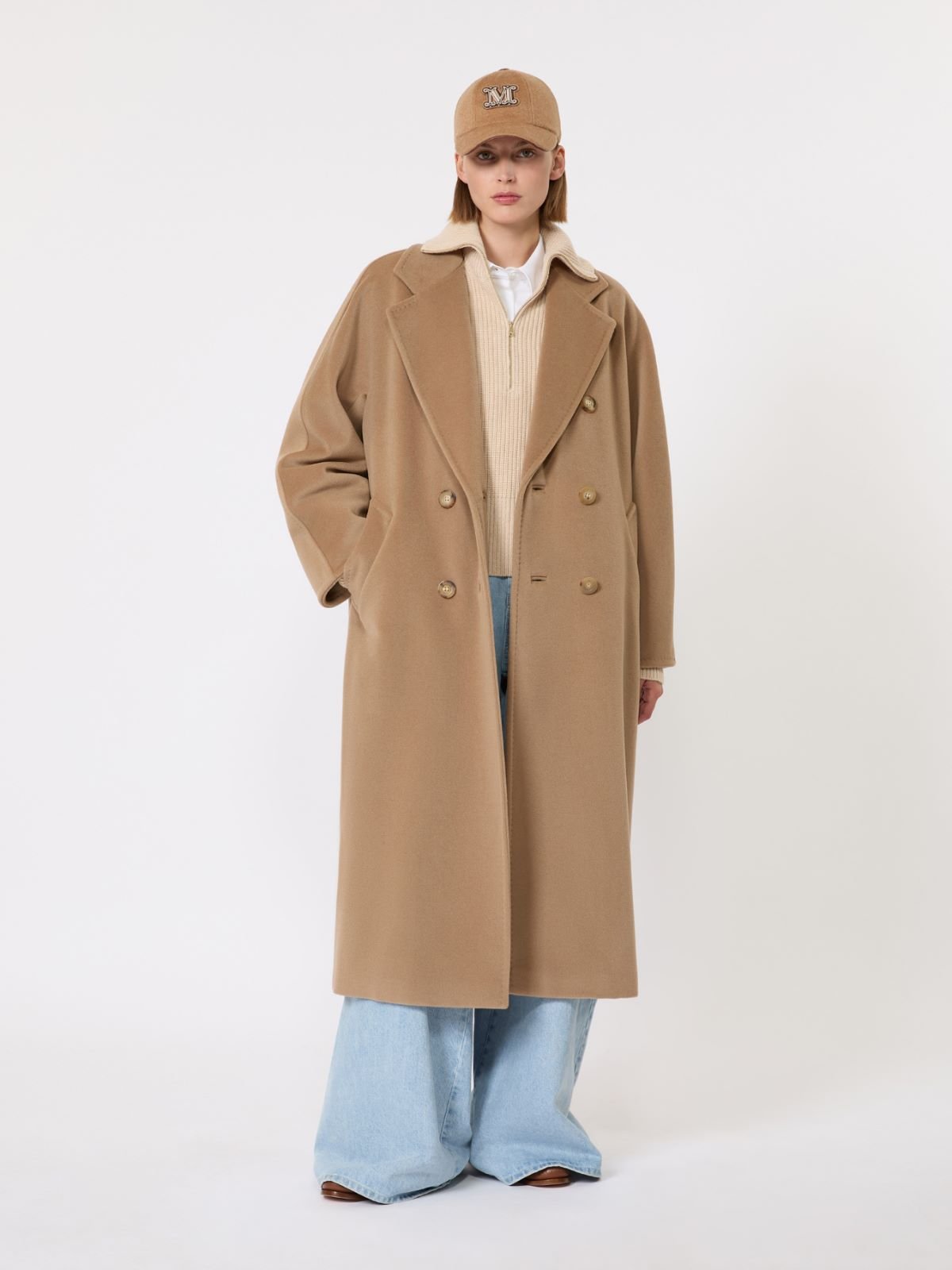
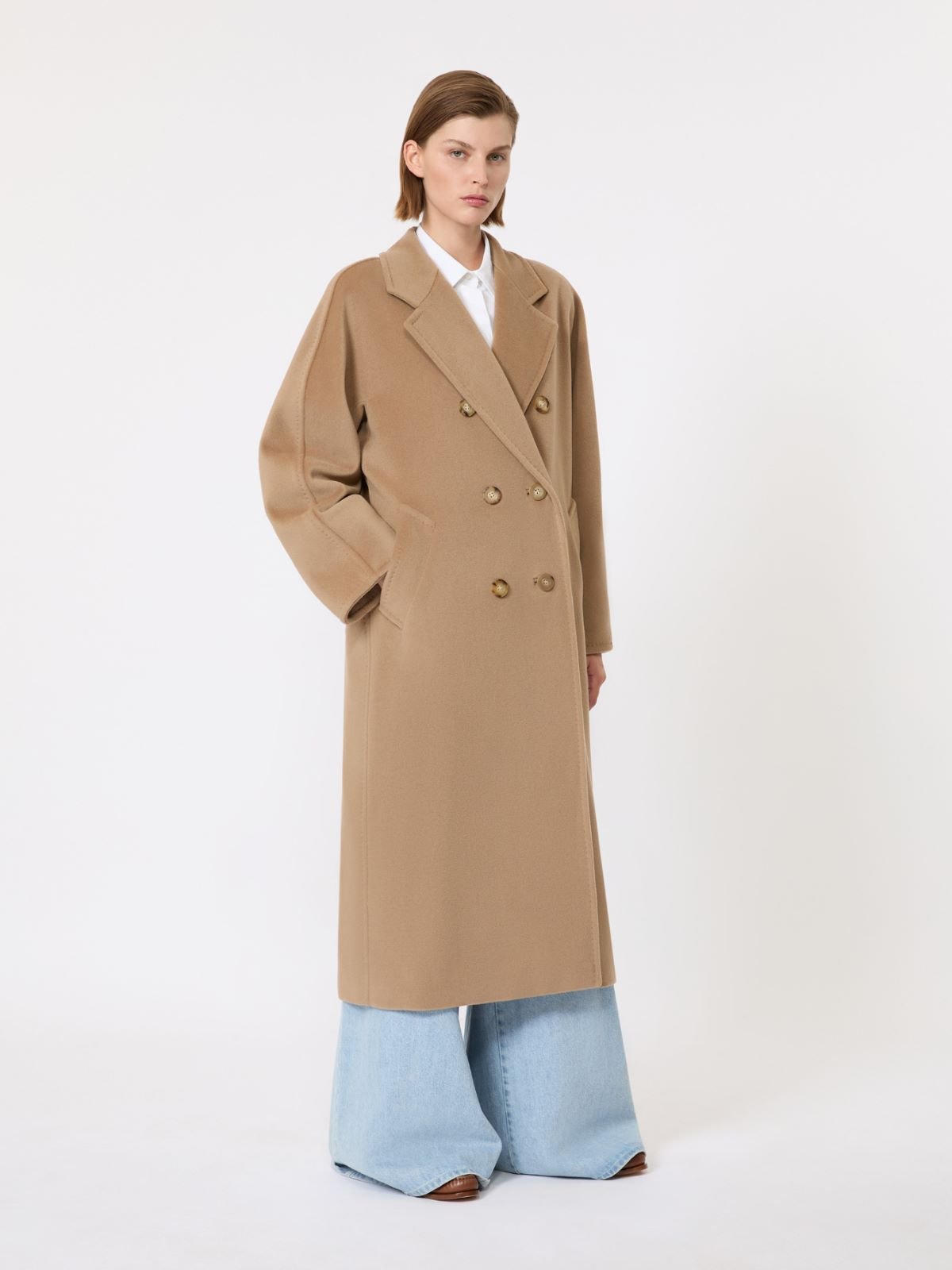
Max Mara 101801 Icon Coat in Camel
A wool-and-cashmere coat with an oversized kimono-sleeve cut and room to layer over a blazer.

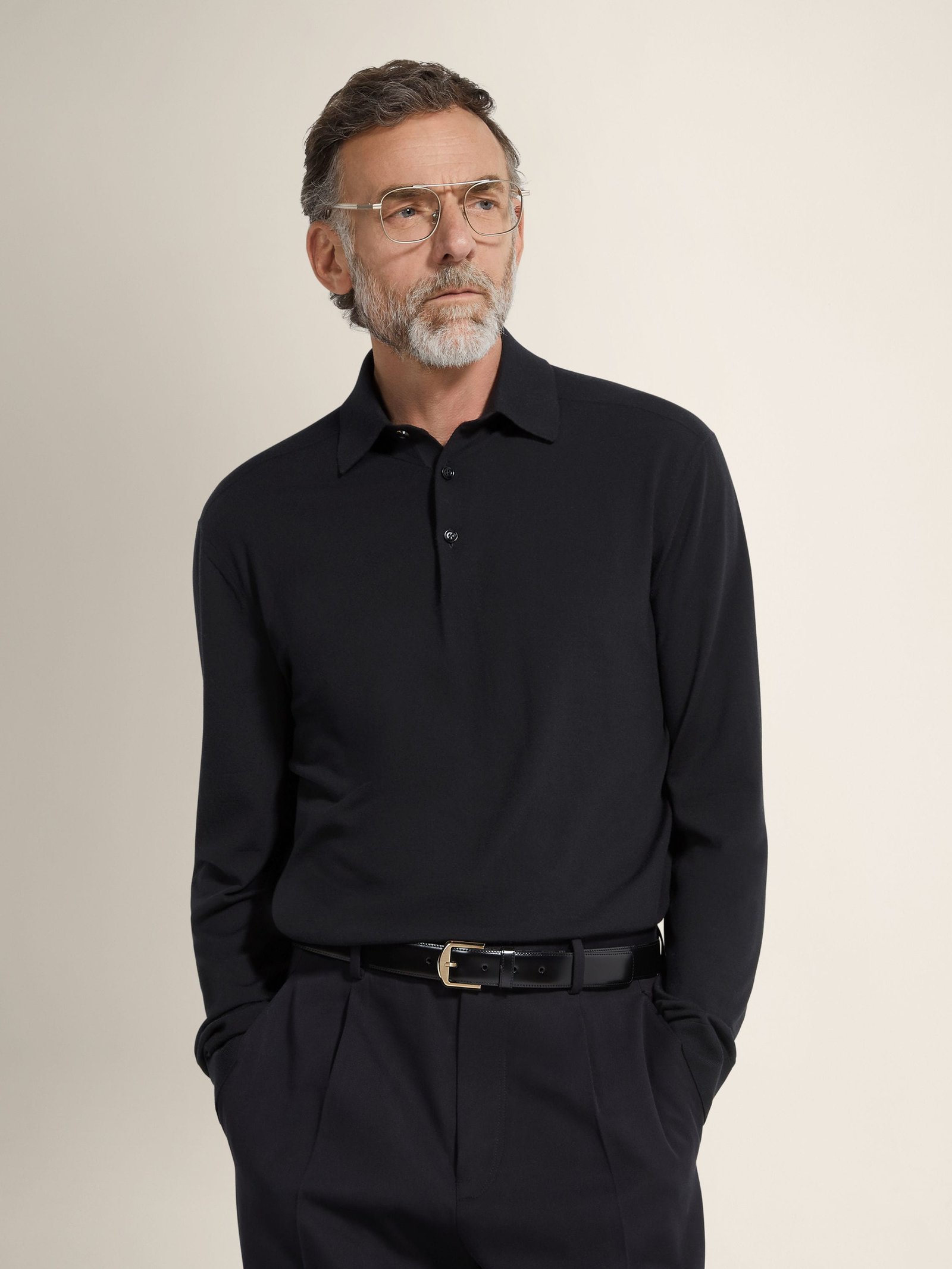
Toteme Fine Turtleneck in Charcoal
A fine, semi-sheer wool-and-silk turtleneck for layering beneath jackets or pairing with evening trousers.

Moncler Bady Hooded Short Down Jacket
A short, slim-fit nylon laqué down jacket for a more compact alternative to a long city coat.

Loro Piana Open Walk Ankle Boots in Light Mastic
Suede ankle boots with beaver-fur lining and rubber soles, best reserved here for dry-weather winter outfits.
Colors, sizes and availability vary by market.
Pros and Cons of a Coordinated Winter Wardrobe
| Pros | Cons |
|---|---|
| Makes everyday outfit planning easier | Different weather conditions may require additional outerwear |
| Allows familiar pieces to serve several occasions | Bulky layers need careful fit checks |
| Creates variety through texture and accessories | Delicate fabrics can require specialist care |
| Supports more focused shopping decisions | Winter footwear must balance appearance and conditions |
Final Verdict

The strongest winter wardrobe ideas combine warmth, flexibility and a clear sense of personal style.
Build around suitable outerwear, comfortable knitwear and dependable footwear. Use a coordinated palette to connect everyday, work and evening outfits, then vary texture and accessories.
Before adding another piece, check which outfit or weather need it will serve. That practical approach makes a winter wardrobe easier to wear—and more satisfying to build.
