
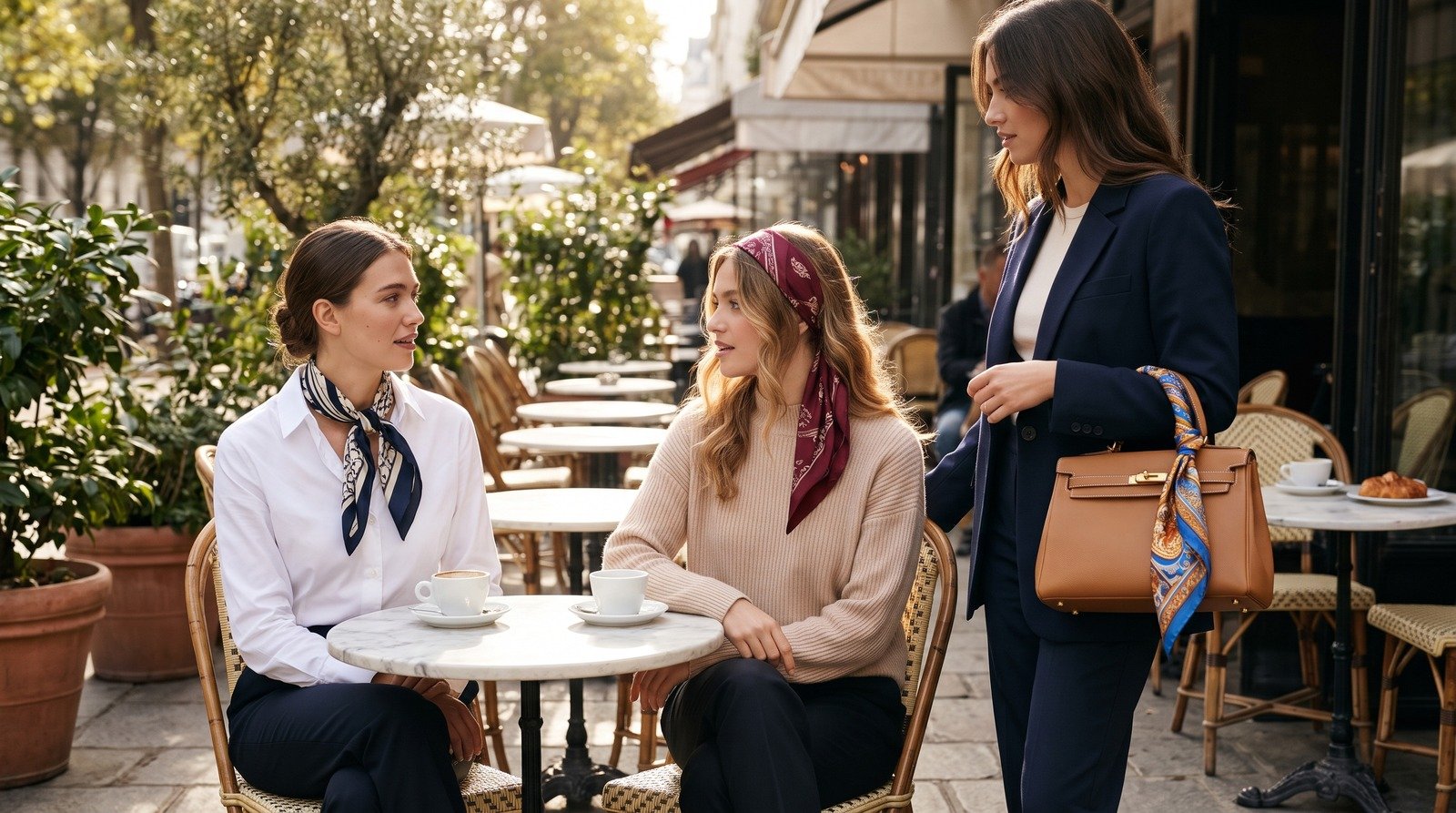
A silk scarf can change an outfit without requiring much else. Tie one beneath an open shirt collar, wear it with a crewneck sweater or let a larger square sit loosely inside a coat.
The useful starting point is how you want to wear it. A compact square makes a neat neckerchief. A narrow ribbon needs little folding, while a larger square gives you more options for draping and headwear.
Choose a scarf that connects with clothes you already own, then learn one or two ways to tie it comfortably. This silk scarf guide explains where to begin.
TL;DR
- Choose the size around your preferred styling method.
- A larger square offers versatility; a small square makes a compact neck knot.
- Look at the print folded as well as flat.
- Repeat one scarf color elsewhere in your outfit.
- Keep knots comfortable and avoid pulling tightly on delicate fabric.
- Follow the care label and untie the scarf before storing it.
Choose the Right Silk Scarf Size
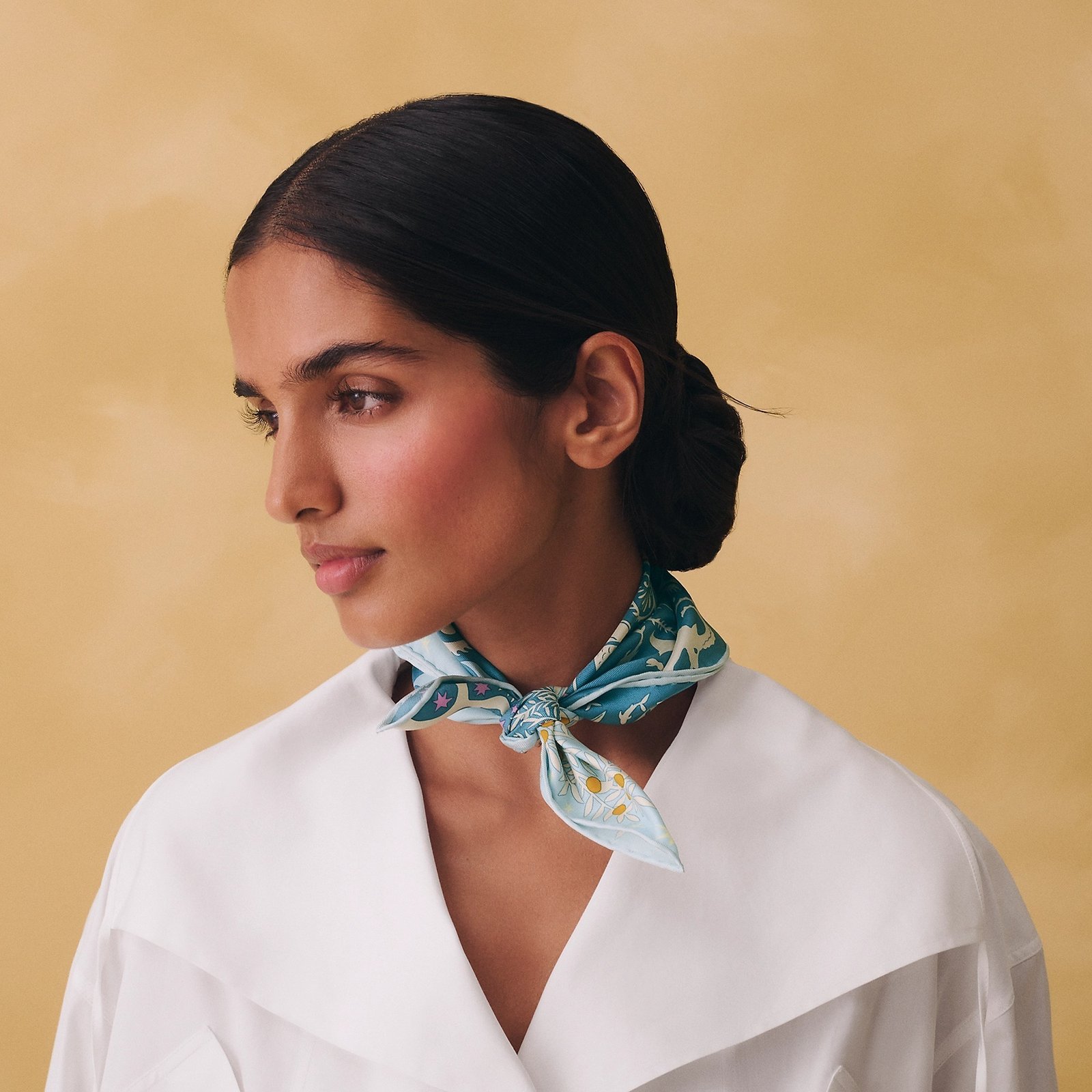
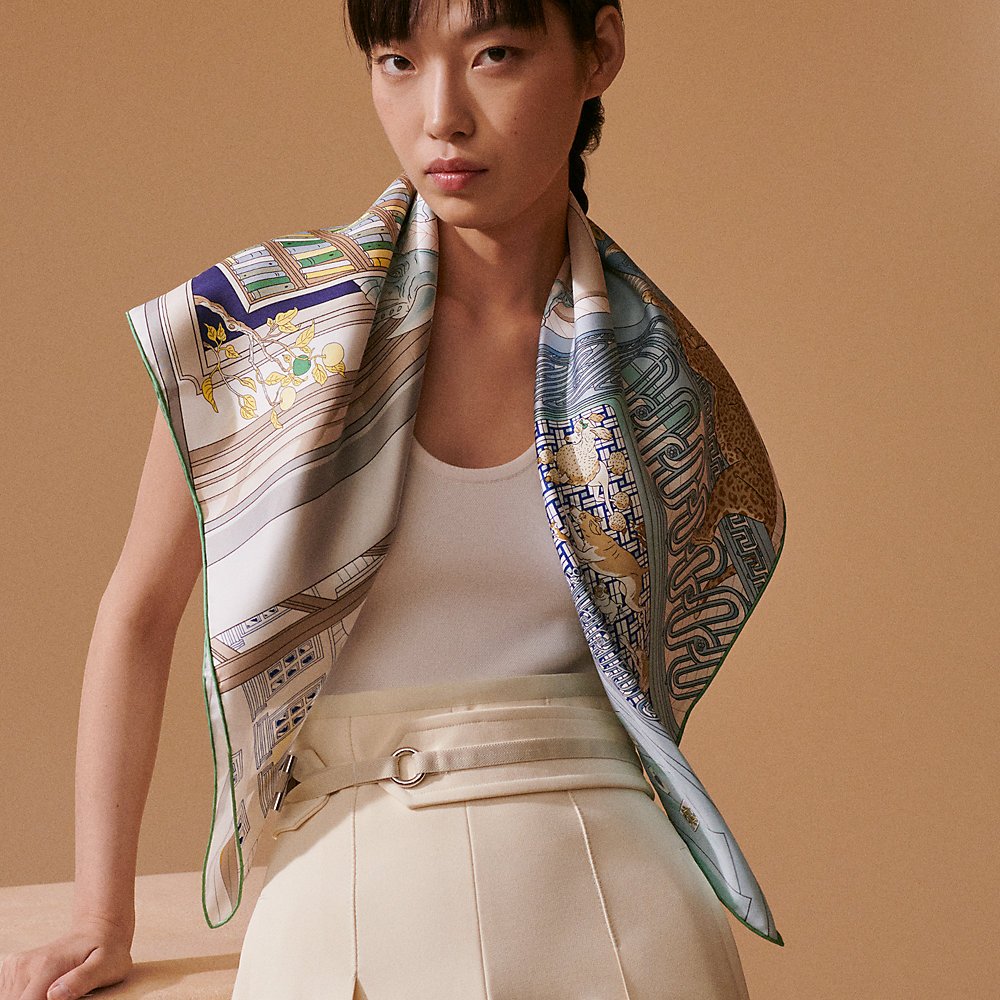
Size affects the knot, the length of the ends and how much fabric gathers around your neck. Measurements vary between brands, so use these as approximate categories.
| Scarf Format | Typical Dimensions | Best Starting Use |
|---|---|---|
| Small square | Around 45–55 cm square | Compact neck knot or ponytail accent |
| Medium square | Around 65–75 cm square | Neckerchief or folded neck band |
| Large square | Around 90 cm square | Neck styling, headscarf or loose drape |
| Narrow ribbon | Long and slim; dimensions vary | Small bow, hair tie or bag accent |
| Long rectangle | Length and width vary | Loose neckline styling or shoulder drape |
For a first silk scarf, a square around 70–90 cm gives you several options. Choose a smaller format if you want a little color at the neckline with minimal volume.
Before buying, try the fold you expect to use. A beautiful square may feel too bulky as a narrow neck band, particularly beneath a close-fitting collar.
Look Beyond the Print
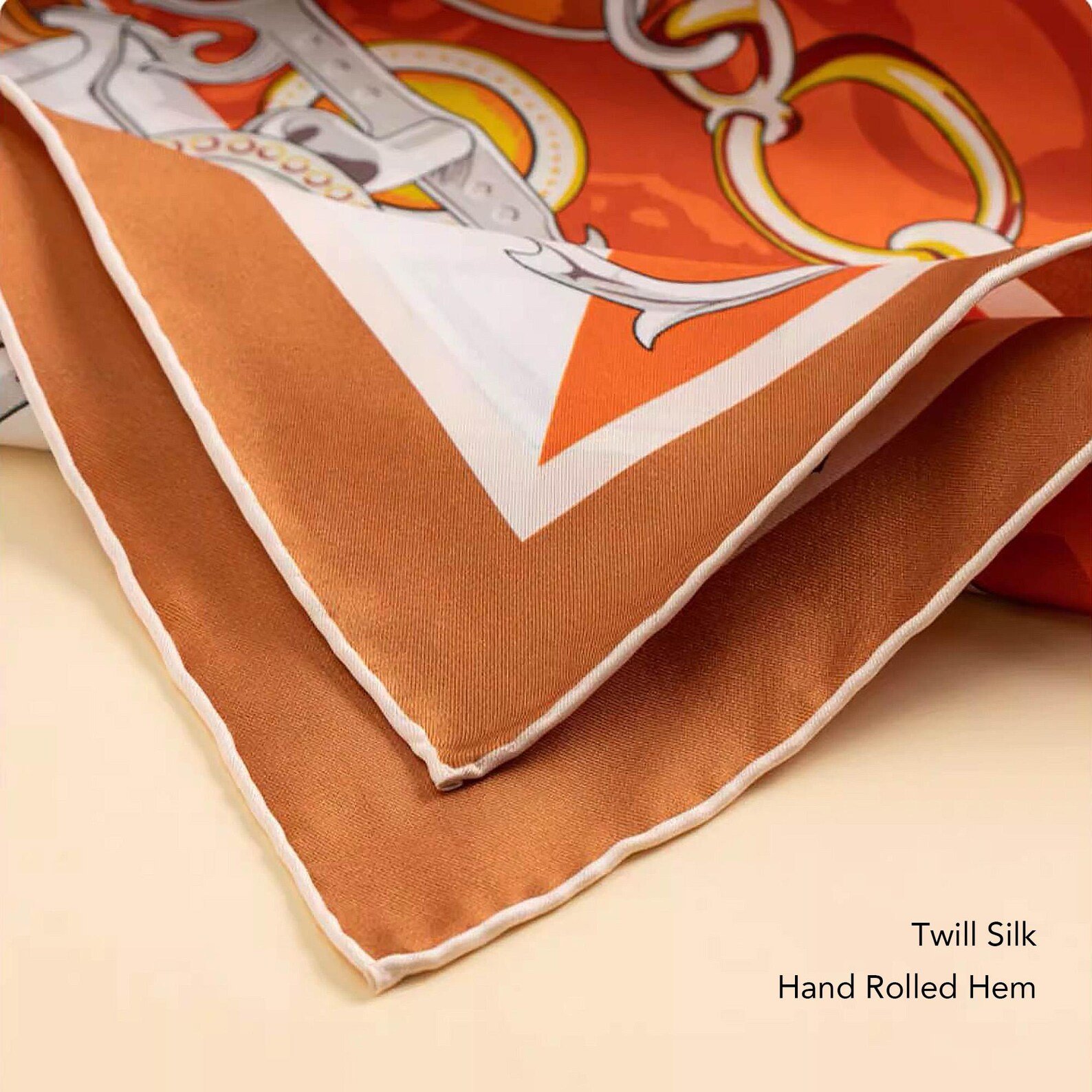
Silk is the fiber; twill, satin and chiffon describe different fabric constructions.
Silk twill generally gives a folded scarf some definition. Satin creates a smoother, more lustrous effect, while chiffon produces an airy, sheer finish. Weight and finishing also influence how each scarf behaves.
Inspect the edges and feel the fabric against your neck. Check whether the print remains appealing when only a border or small section is visible.
A strong border can create a striped effect when folded. A central illustration may largely disappear inside a knot. Both can work, but they produce different results.
Start With a Simple Neck Knot
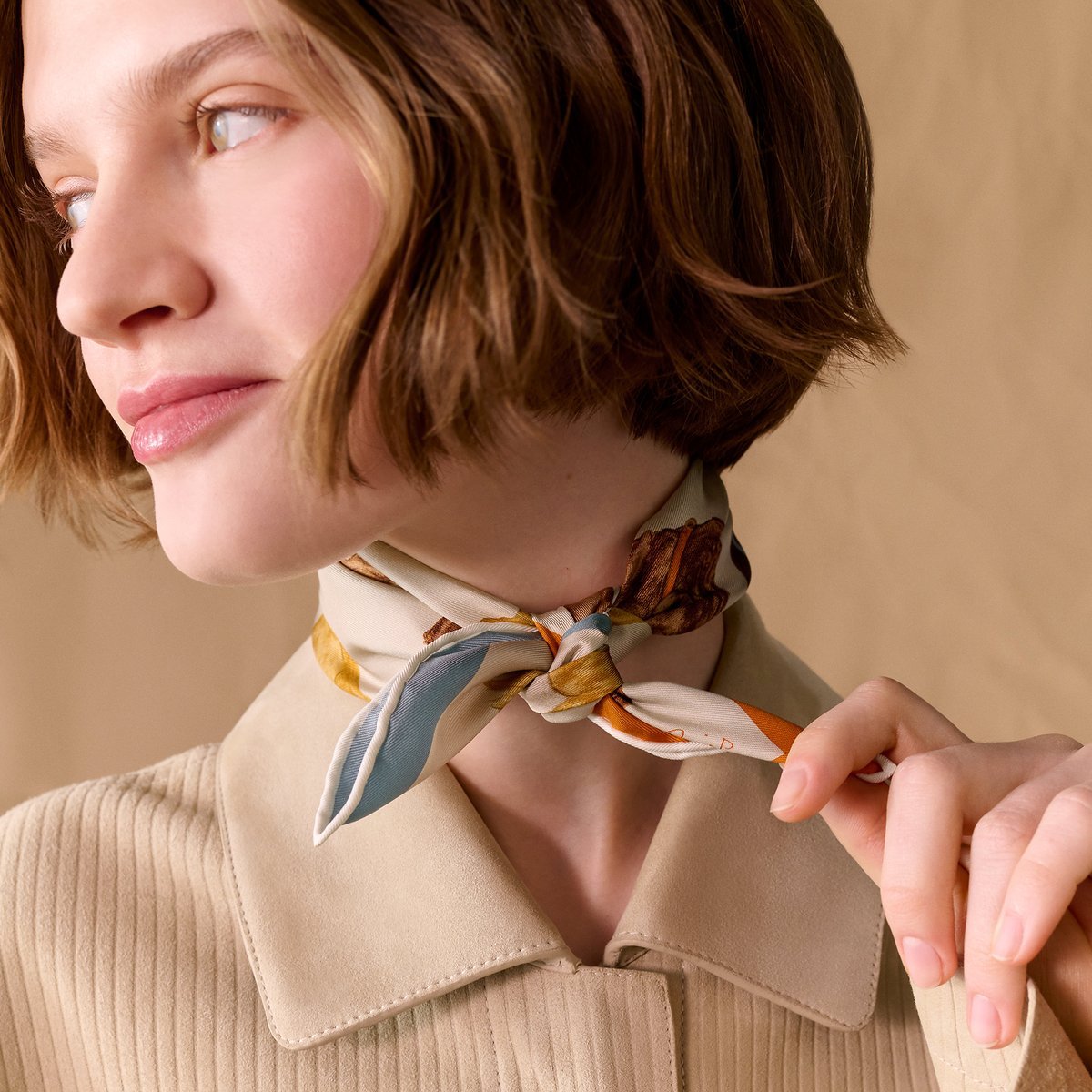
A folded band with a simple knot is one of the easiest ways to wear a silk scarf.
- Lay a square scarf flat and fold it diagonally into a triangle.
- Fold the pointed corner toward the long edge, continuing until you have a band.
- Place the band around your neck.
- Tie a loose knot at the front or slightly to one side.
- Adjust the width and ends until they sit comfortably.
Leave room between the scarf and your neck. A gentle second knot can help secure it, provided you can untie it easily.
Wear this with an open-neck shirt, a plain T-shirt or a crewneck sweater. The scarf should sit comfortably when you turn your head and look down.
Wear It With Shirts, Knitwear and Tailoring
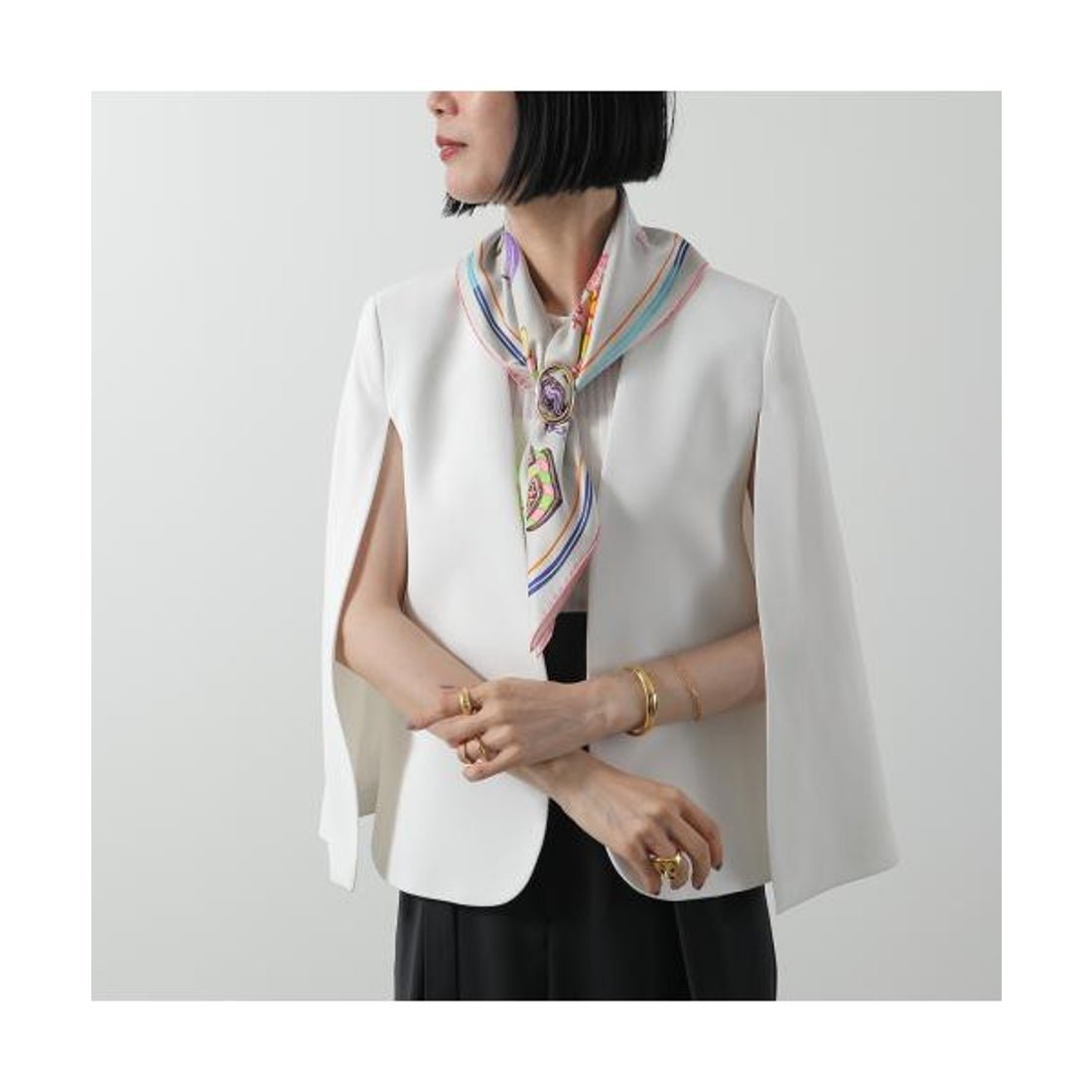
With a shirt, place the scarf inside the open collar for a discreet accent. For more visibility, wear it over the neckline and keep the knot clear of the collar points.
A crewneck sweater provides a clean background. Try a compact knot with fine knitwear or a looser triangle fold with a substantial sweater.
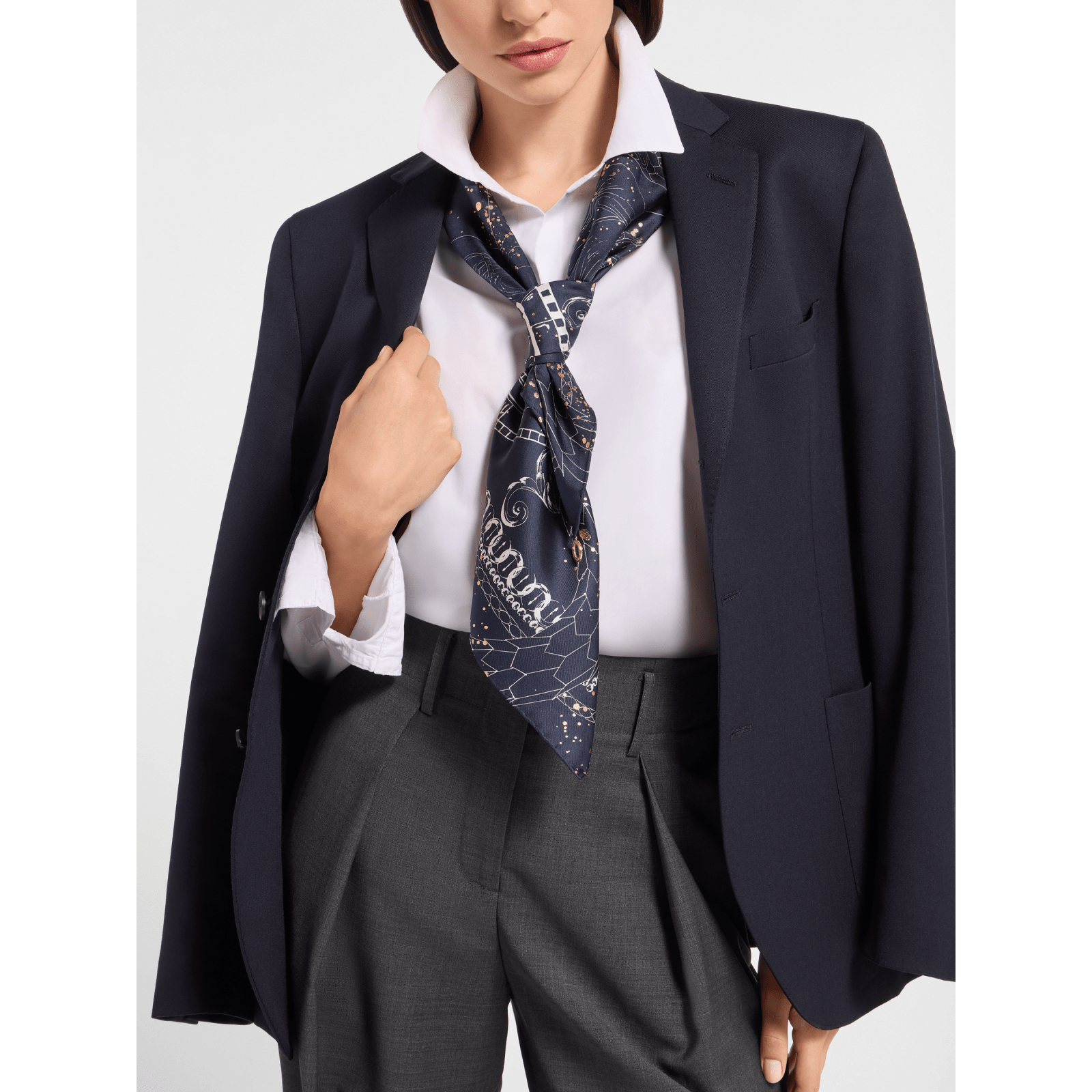
Under a blazer, keep the folds relatively flat so the scarf does not crowd the lapels. For men, a small square tucked inside an open shirt can introduce color beneath an unstructured jacket.
| Occasion | Outfit Formula |
|---|---|
| Weekend | Silk scarf + white T-shirt + straight jeans |
| Work | Folded scarf + plain blouse or shirt + tailored trousers |
| Cooler weather | Printed scarf + crewneck knit + wool coat |
| Dinner | Loosely draped scarf + simple dress or dark tailoring |
Choose Colors That Connect With Your Clothes
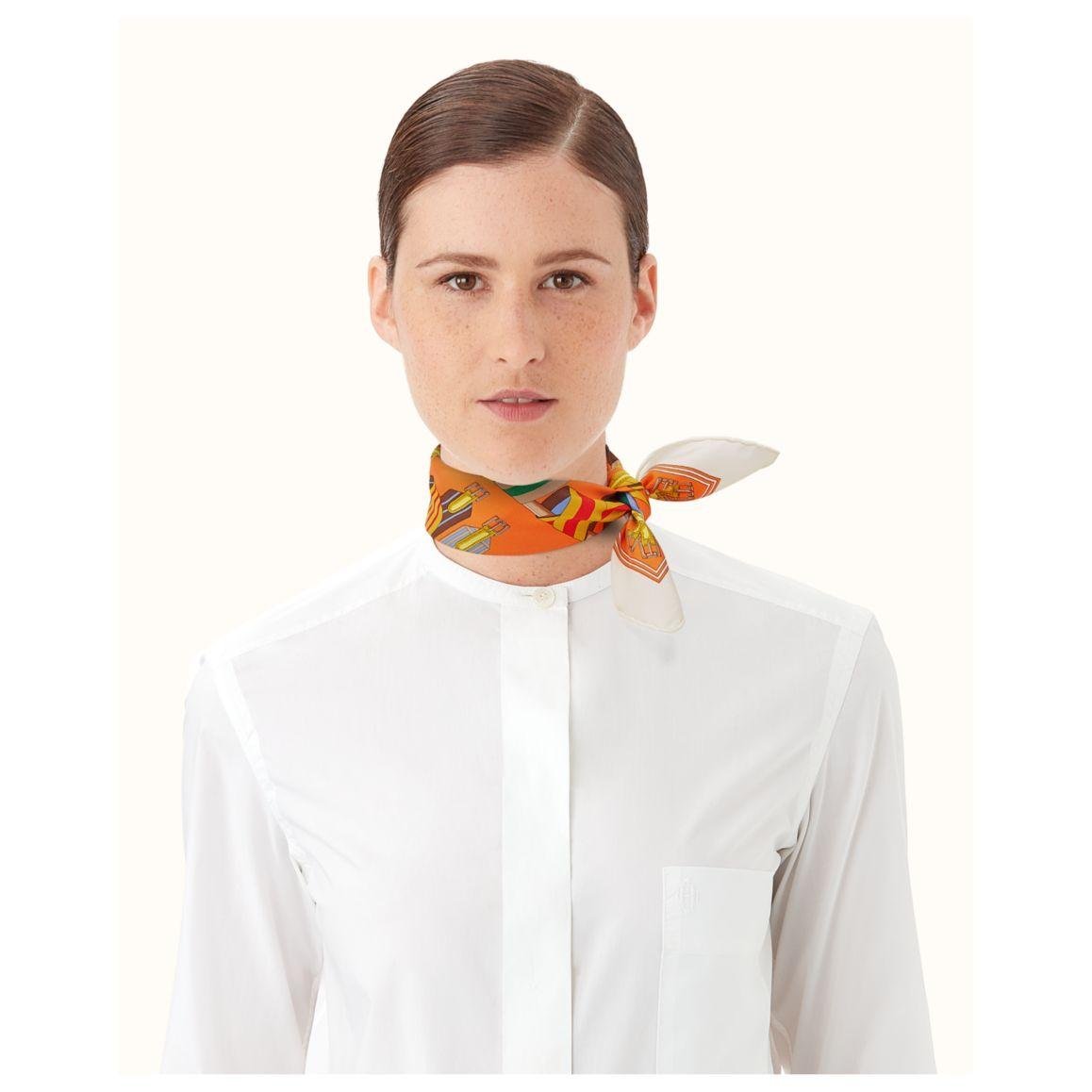
A silk scarf is easier to use when it repeats a color already present in your wardrobe.
Start with your most-worn jacket or sweater. A navy blazer works naturally with a scarf containing navy, cream and burgundy. A brown coat can provide a warm background for blue, ivory or green.
| Main Outfit Color | Scarf Colors to Try |
|---|---|
| Navy | Cream, burgundy, pale blue |
| Black | Ivory, grey, red |
| Camel or chocolate | Blue, cream, olive |
| White or ecru | Navy, green, terracotta |
| Grey | Burgundy, lilac, blue |
You do not need to match every shade. One repeated color is usually enough to connect the scarf to the outfit.
Try turning the fold to reveal a different edge. The same scarf can appear predominantly dark, pale or colorful depending on which section faces outward.
Try Hair and Bag Styling
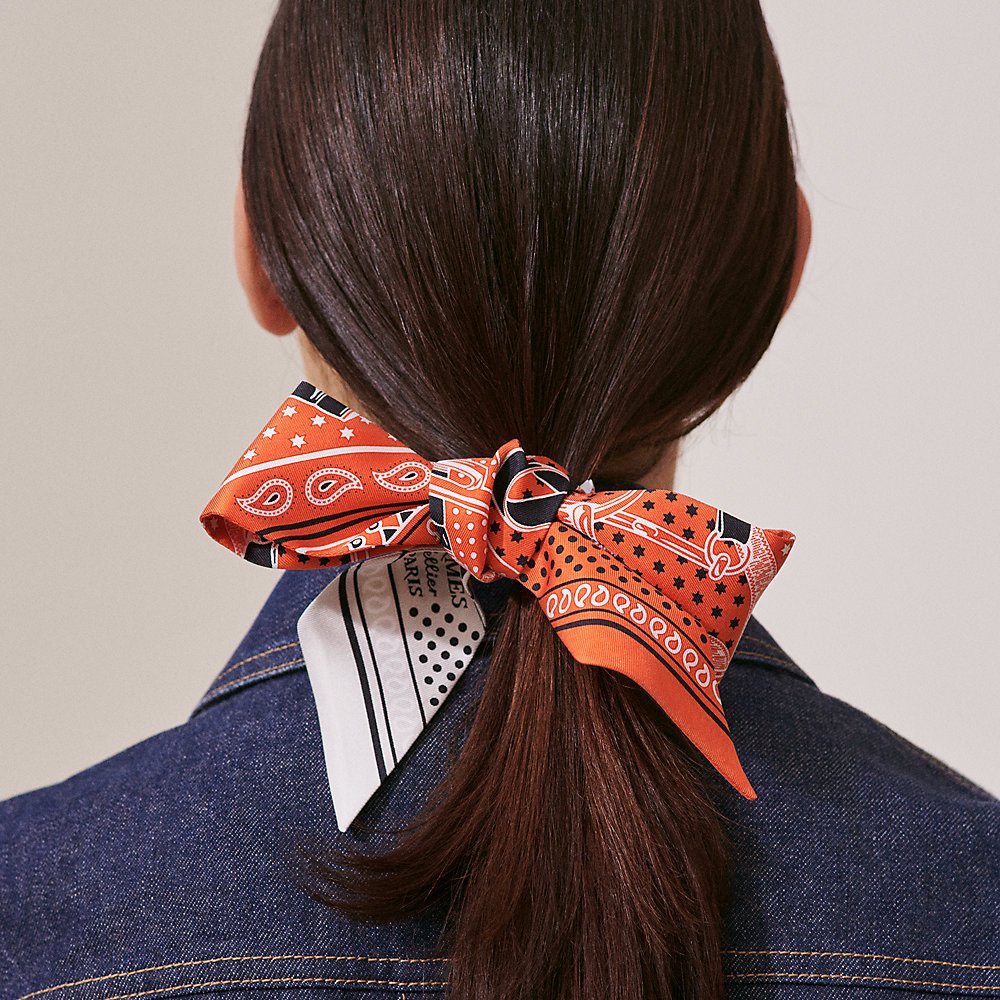
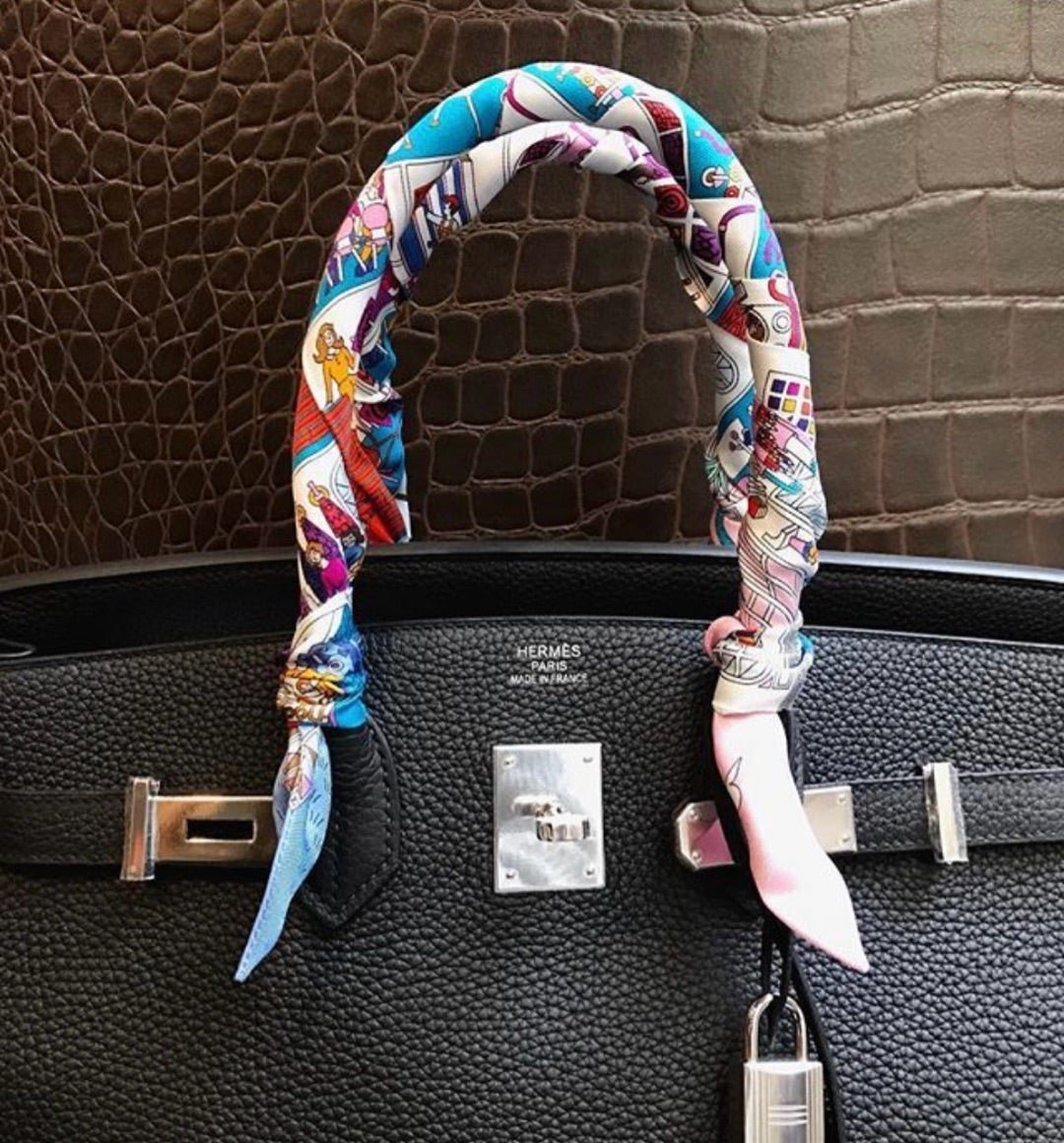
For a ponytail, secure your hair first with a suitable hair tie, then knot the scarf around it. This lets the scarf act as decoration without relying on a tight silk knot.
For a headscarf, begin with a larger square folded diagonally. Place the long edge where you want it to sit, then bring the ends behind your head and tie comfortably. Check the fit while moving; smooth silk can slip.
On a bag, a small bow at the handle base is a simple option. Keep the ends away from closures and the ground. Avoid leaving fabric tightly wrapped around delicate handles, particularly if either material becomes damp.
Care for It Between Wears
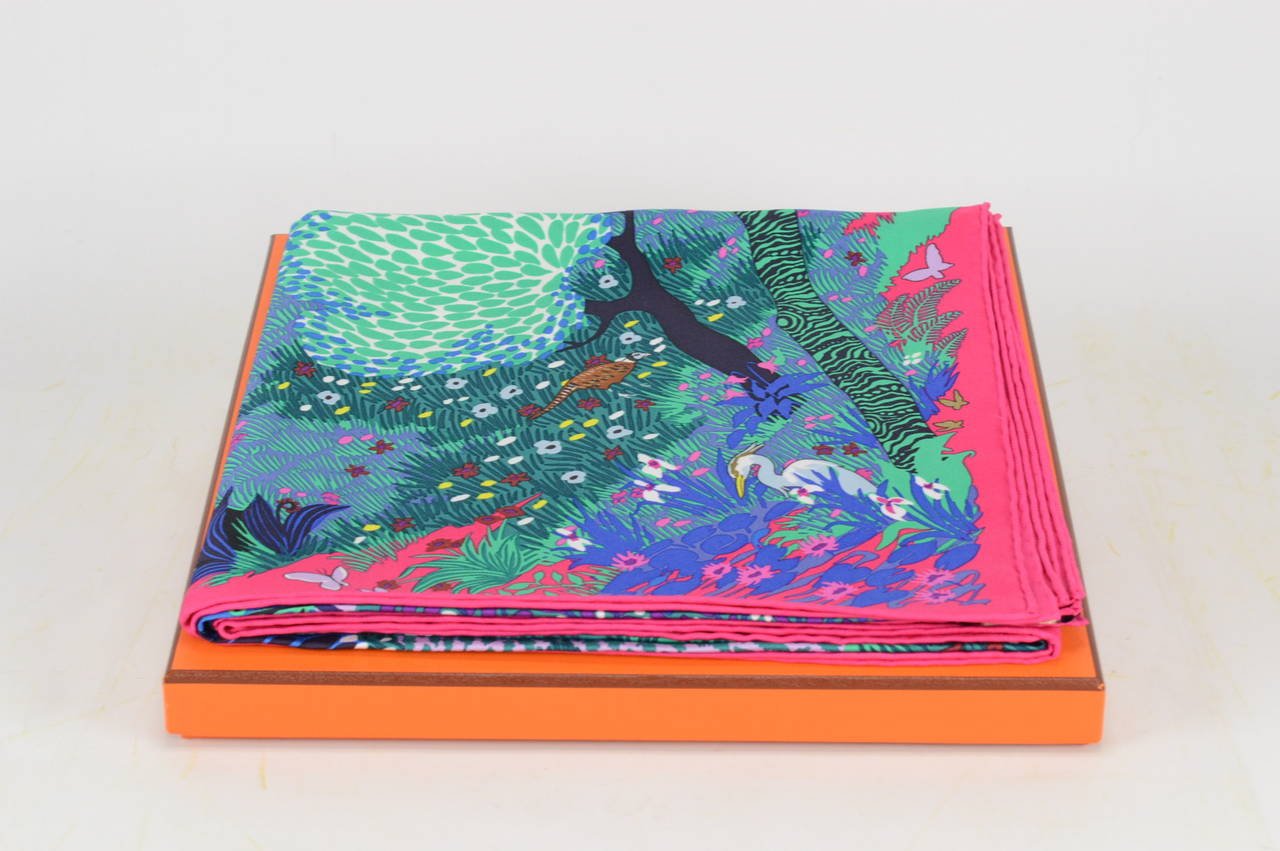
Untie your silk scarf after wearing it and inspect it before storage. Let any moisture dry fully according to the care instructions.
Care varies by construction, print and finishing. For its printed silk scarves, Hermès recommends professional dry cleaning and cautions that rain can damage printed silk. Its scarf guidance also recommends storing the fabric flat and untied.
Apply perfume and allow skincare products to settle before putting the scarf on. Be mindful of sharp jewelry, rough fastenings and anything that could catch the fabric.
Shop the Edit
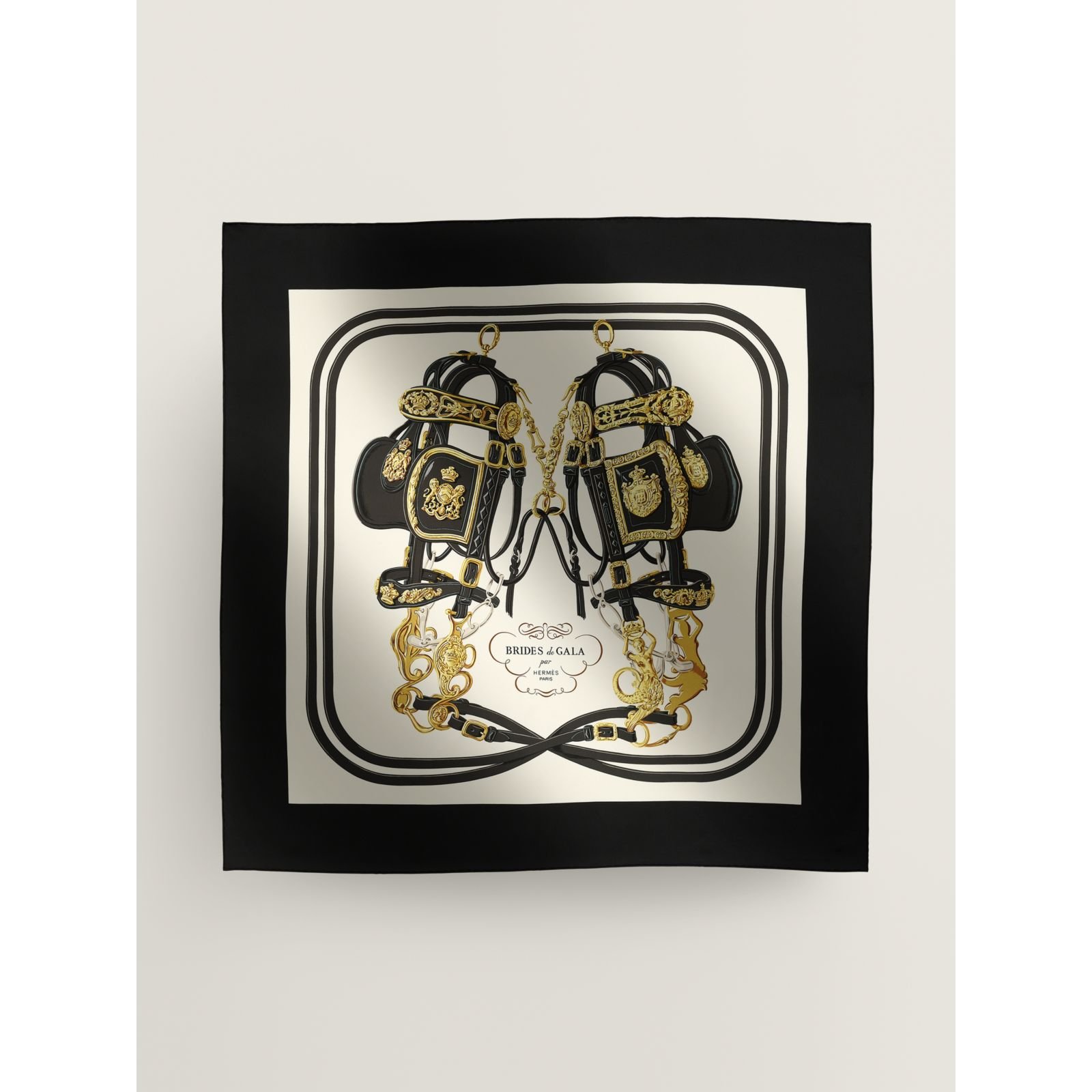
Hermès Brides de Gala Forever Scarf 90
A silk-twill square with hand-rolled edges and a graphic black-and-white design for shirts and tailoring.
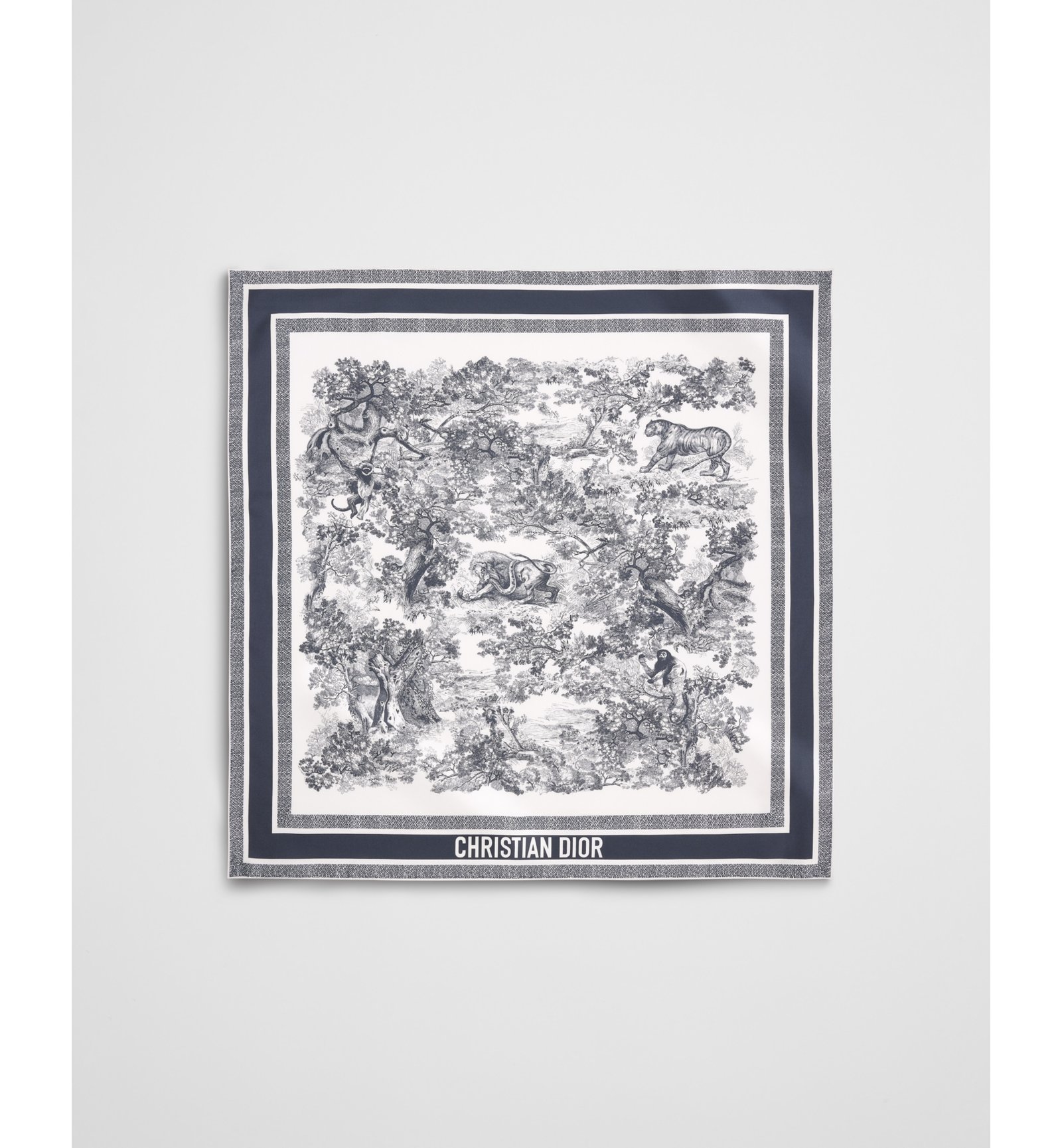
Dior Toile de Jouy Sauvage 90 Square Scarf
An ivory-and-navy silk-twill square with hand-rolled edges, useful for neck and headscarf styling.
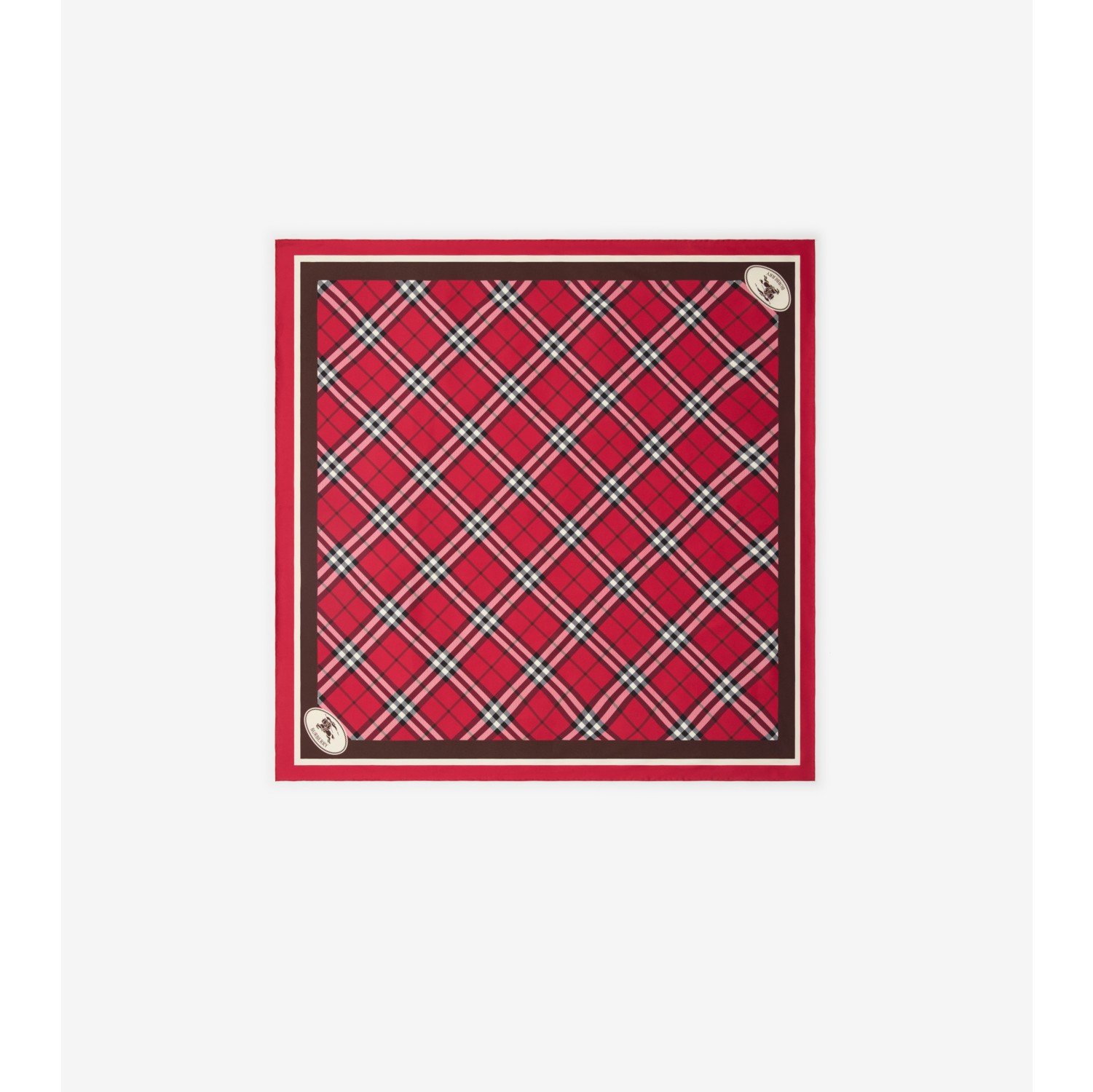
Burberry Check Silk Scarf in Post Red
A checked silk-twill square that adds a clear color accent to denim, dark knitwear and neutral coats.
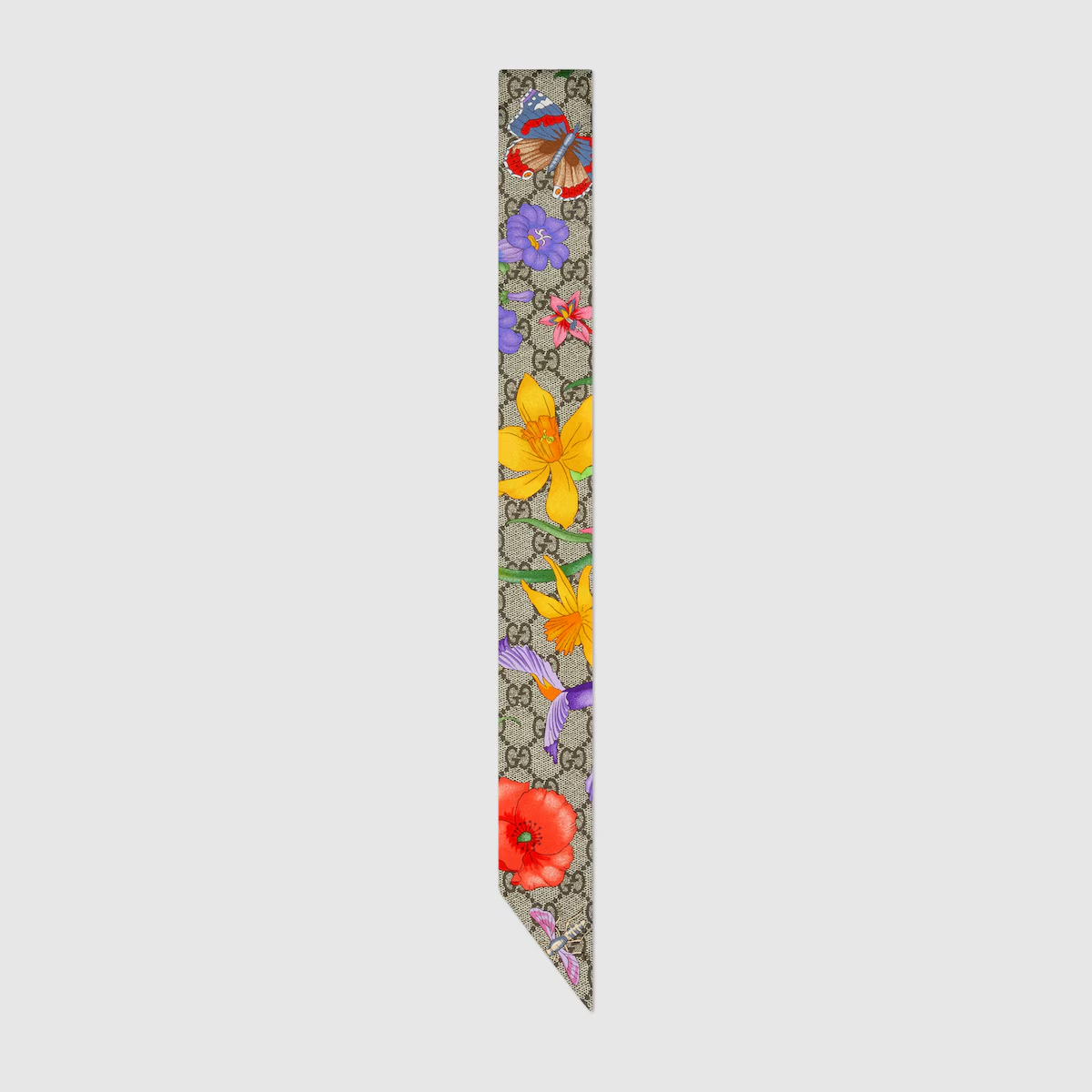
Gucci GG Flora Print Silk Neck Bow
A narrow silk accessory combining floral and GG motifs with a pink reverse for small knots or bows.
Colors, sizes and availability vary by market.
Pros and Cons
| Pros | Cons |
|---|---|
| Adds color without changing the whole outfit | Some fabrics slip and need adjustment |
| Offers several styling options | Larger squares can feel bulky at the neckline |
| Takes little space when traveling | Printed silk requires careful handling |
| Works across casual and dressed occasions | The folded print may look different from the flat design |
Final Verdict
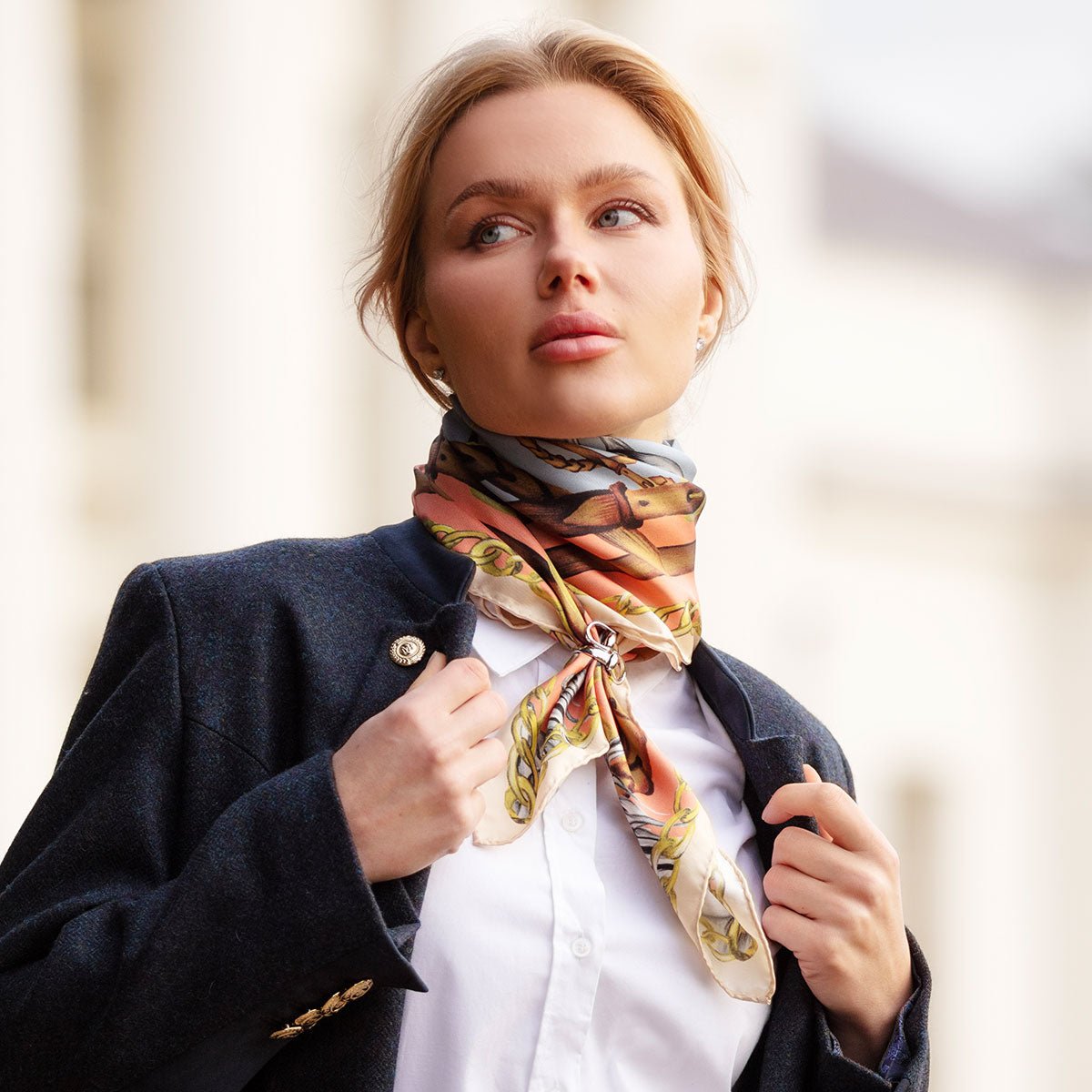
Choose your first silk scarf around the way you expect to wear it. A small square suits neat neck knots, a narrow ribbon offers a light accent, and a larger square gives you more room to experiment.
Start with one familiar outfit and a simple fold. Once you know which size, colors and knot feel comfortable, a silk scarf becomes an easy part of everyday dressing.
