
Thursday, October 22, 2026
Home Hermès — Brand Profile
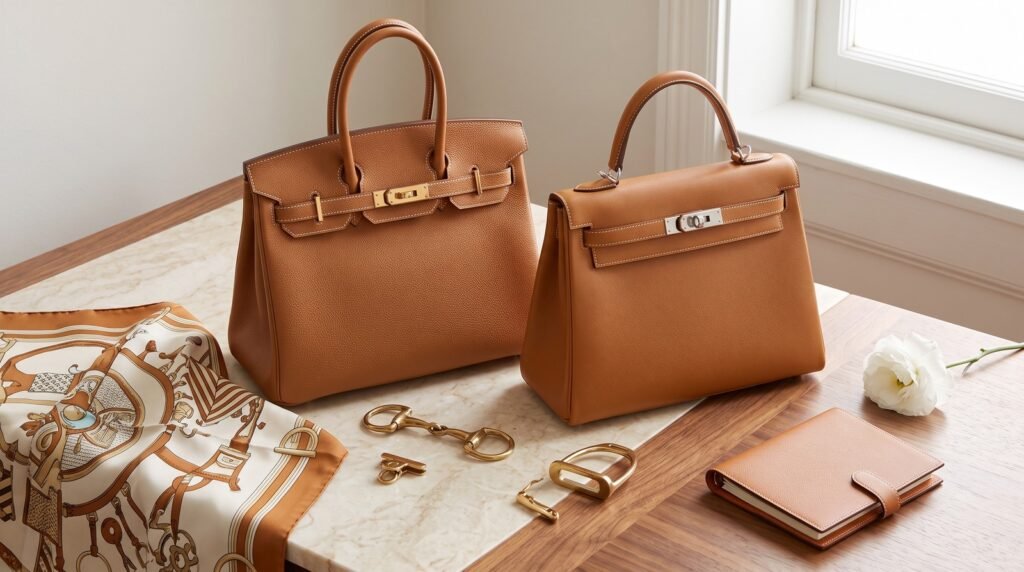
Hermès Birkin bag with silk carrée, equestrian-inspired details, leather notebook, and white flower in a warm luxury editorial flat lay.

Hermès

• Website: hermes.com
• Founded: 1837, Paris, France.
• Founder: Thierry Hermès
• Owned By: Hermès International, controlled by the Dumas family
• Known For: Birkin, Kelly, Constance, silk scarves, equestrian leather goods
• Category Focus: Handbags, leather goods, silk scarves, ready-to-wear, footwear, jewelry, watches, fragrance, homeware

Hermès is one of the world's most prestigious luxury houses, renowned for exceptional craftsmanship, equestrian heritage, and quietly distinctive design. Founded in Paris in 1837 by Thierry Hermès, the maison began as a harness workshop serving European nobility before expanding into handbags, leather goods, silk scarves, ready-to-wear, footwear, jewelry, watches, fragrance, and homeware.

Known for combining traditional craftsmanship, functional design, and carefully selected materials, Hermès has created some of luxury's most coveted objects. House codes—including saddle stitching, equestrian motifs, silk carrés, orange packaging, and meticulous leatherwork—reflect the maison's commitment to quality and longevity.

Today, Hermès remains controlled by the Dumas family, continuing its independent approach to luxury under Executive Chairman Axel Dumas and Artistic Director Pierre-Alexis Dumas.

Iconic Hermès Products

Birkin

Kelly

Constance

Evelyne

Picotin Lock

Garden Party

Carré 90 Silk Scarf

Oran Sandals

Hermès History & Heritage

Hermès' story began in 1837, when Thierry Hermès established a harness workshop in Paris. Celebrated for precision and durability, his equestrian equipment attracted aristocratic clients and established the craftsmanship principles that continue to define the maison.

As transportation and lifestyles changed, Hermès expanded from saddles and harnesses into luggage, handbags, silk scarves, jewelry, watches, fragrance, and fashion. Landmark creations such as the Kelly, Birkin, and Carré silk scarf transformed practical objects into lasting symbols of refined luxury.

Today, Hermès remains independent and family-controlled, preserving traditional artisanal techniques through specialized workshops while continuing to develop contemporary objects designed for longevity.

Key milestones:
• 1837: Thierry Hermès establishes a harness workshop in Paris.
• 1880: Charles-Émile Hermès moves the workshop to 24 Faubourg Saint-Honoré.
• 1922: Hermès introduces its first handbag after expanding beyond equestrian equipment.
• 1927: The maison launches its first jewelry collection.
• 1935: Introduction of the Sac à Dépêches, later renamed the Kelly bag.
• 1937: Launch of the first Hermès silk scarf, or Carré.
• 1956: The Sac à Dépêches becomes known as the Kelly after Grace Kelly carries it publicly.
• 1961: Hermès launches Calèche, its first fragrance for women.
• 1984: The Birkin bag is created for actress and singer Jane Birkin.
• 2014: Nadège Vanhee-Cybulski is appointed Artistic Director of Women's Ready-to-Wear.

Hermès transformed equestrian craftsmanship into a complete luxury universe, creating enduring objects defined by function, artistry, and exceptional materials.

“Hermès represents luxury at its most enduring. Its strength lies in transforming exceptional materials and artisanal skill into objects designed to last for generations.”

Why Hermès Matters Today

Hermès matters because it protects craftsmanship, patience, and permanence in an increasingly fast-moving luxury industry.

Its influence can be seen across:
• The global desirability of handcrafted handbags
• The preservation of traditional leather techniques
• The evolution of silk scarves as collectible art
• The growing importance of timeless, long-lasting design

By combining equestrian heritage, artisanal excellence, and creative independence, Hermès continues to define enduring luxury.

Hermès vs Other Luxury Houses

Hermès vs Louis Vuitton

Hermès vs Dior

Hermès vs Goyard

Other Brands
