

The Royal Palace of Madrid is monumental without feeling remote. Positioned beside Almudena Cathedral and overlooking the western edge of central Madrid, it combines an imposing stone façade with ceremonial rooms of remarkable colour, craftsmanship and scale.
The palace remains the official residence of the Spanish head of state, although it is now primarily used for state ceremonies rather than as the royal family’s everyday home. Visitors can explore only part of its more than 3,000 rooms, but the public route includes many of the most impressive interiors.
This Royal Palace of Madrid review considers its architecture, rooms, crowds, practical details and whether a guided tour adds enough value to justify the cost.
Royal Palace of Madrid at a Glance

| Detail | LxryNow Assessment |
|---|---|
| Location | Centro, Madrid |
| Best For | Architecture, royal history, decorative arts and photography |
| Suggested Visit | 1.5–2.5 hours |
| Best Time | Weekday opening or late afternoon |
| Signature Spaces | Grand Staircase, Throne Room and Gasparini Room |
| Guided Tour Value | High for historical and artistic context |
| Photography | Generally allowed without flash, except where prohibited |
| Main Limitation | Crowds and occasional official closures |
| Overall Score | 9.0/10 |
Architecture and First Impressions

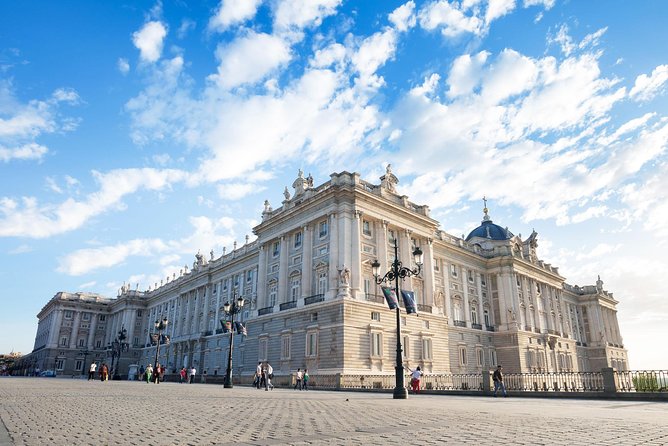
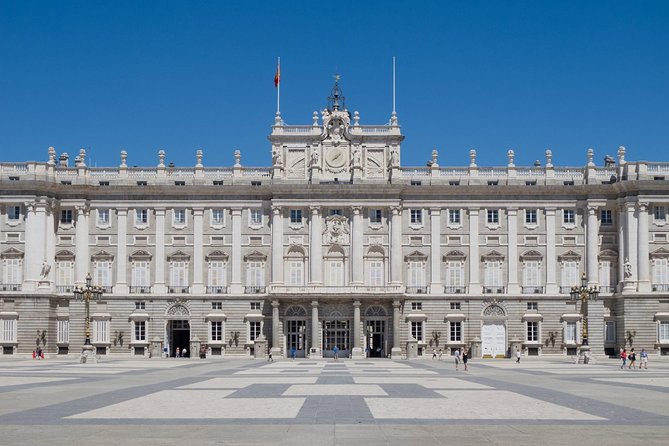
The present palace was commissioned after the former Alcázar was destroyed by fire in 1734. Its exterior blends Baroque monumentality with the composure that would increasingly define European neoclassicism.
The restrained façade does not fully prepare visitors for the interiors. While the exterior relies on symmetry, pale stone and repetition, the state rooms introduce gilding, frescoes, embroidered wall coverings, chandeliers and decorative schemes that change dramatically from one room to the next.
Plaza de la Armería, the principal courtyard, creates the strongest sense of scale. Its open space frames the palace and Almudena Cathedral, making it worth pausing before beginning the interior route.
The Grand Staircase

The Grand Staircase is among the palace’s most memorable architectural spaces. Designed by Francesco Sabatini, it uses broad steps, balanced proportions and a dramatic ceiling fresco to turn movement through the building into a ceremonial experience.
Natural light softens the white and grey stone, preventing the staircase from appearing excessively ornate. The carved lions and royal imagery reinforce its official function without overwhelming the architecture.
Because visitors naturally pause here for photographs, the staircase can become congested. An early admission slot provides more time to appreciate its scale before larger groups enter.
The Throne Room and Hall of Columns

The Throne Room is the visual centrepiece of the visit. Deep red velvet, gilded decoration, monumental mirrors and a ceiling fresco create an unmistakably theatrical display of monarchy.
Rather than presenting restrained elegance, the room communicates authority through colour, scale and symbolism. The original thrones and surrounding sculptural details make it one of the palace’s most historically significant interiors.
The Hall of Columns is comparatively architectural. Originally used for court ceremonies and formal gatherings, it remains associated with important events in modern Spanish history. A guide can be particularly valuable here because much of the room’s meaning is not immediately visible through decoration alone.
The Gasparini Room and Royal Apartments

The Gasparini Room offers the palace’s most immersive decorative experience. Rococo motifs flow across the ceiling, silk-covered walls, furniture and floor with very little visual interruption.
Its intensity may feel excessive to visitors who prefer restrained interiors, but the quality and completeness of the design are exceptional. Few rooms demonstrate the coordination of eighteenth-century European decorative arts as effectively.
Other apartments introduce different combinations of tapestries, porcelain, clocks, furniture and paintings. This variation keeps the route engaging, although closely scheduled groups can make it difficult to linger.
The Royal Armoury and Palace Collections

The Royal Armoury contains ceremonial and military pieces connected to Spain’s monarchs, including elaborately decorated armour designed as much to communicate rank as to provide protection.
The craftsmanship is impressive even for visitors without a strong interest in military history. Engraving, gilding and sculptural details transform functional equipment into expressions of royal identity.
The palace also holds paintings, tapestries, musical instruments, clocks and furnishings associated with generations of Spanish royalty. Not every object receives enough interpretation on a self-guided visit, which is one reason the experience benefits from either an audio guide or knowledgeable guide.
Palace Gardens and Exterior Views

The palace exterior deserves more time than many itineraries allow. The formal Sabatini Gardens offer geometric hedges, fountains and a close view of the northern façade.
Campo del Moro, positioned below the palace’s western side, provides a broader and more romantic perspective. Its greenery also creates a welcome contrast to Madrid’s dense historic centre.
The gardens are especially pleasant during the cooler morning or late-afternoon hours. They also provide a worthwhile alternative if palace entry is delayed by an official event or security procedure.
Crowds and Visitor Experience

The Royal Palace is one of Madrid’s most popular landmarks, and the public route can become congested. Narrow transitions between rooms occasionally create bottlenecks, particularly when several guided groups arrive together.
Timed admission helps but does not eliminate queues. Purchasing admission in advance is advisable, especially during weekends, public holidays and the busiest spring and autumn travel periods.
The visitor route is relatively controlled, so independent travellers cannot wander through every area at their own pace. This preserves the interiors but can make the experience feel less relaxed than an open-plan museum.
Official ceremonies may also close the palace or alter the available route, sometimes with limited notice.
Tickets, Hours and Best Time to Visit

The palace normally opens from 10:00 a.m. throughout the year. From April through September, it generally closes at 7:00 p.m. Monday to Saturday; from October through March, closing is normally at 6:00 p.m. Sunday hours are shorter, and final access is one hour before closing.
Opening times can change for state ceremonies, maintenance and special events. Confirm the schedule shortly before visiting, even when tickets have been reserved in advance.
The best choice is the first available weekday entry. Late afternoon can also feel calmer, but it leaves less flexibility if queues or route changes occur.
Limited free-admission periods are available to qualifying visitors on certain weekday afternoons. These sessions are restricted to self-guided entry and frequently attract long lines.
How Long Should You Spend?

The official self-guided route through the principal halls can be completed in approximately 45 minutes, but that pace feels rushed.
Allow 90 minutes for a focused independent visit or approximately two hours when using an audio guide. A guided tour of similar length provides more context while keeping the route efficient.
Reserve another hour for the courtyard, palace surroundings and nearby gardens. The adjacent Royal Collections Gallery is a separate attraction and deserves around two hours of its own rather than being treated as an additional palace room.
Travellers organising a wider cultural itinerary can use LxryNow’s guide to luxury things to do in Madrid to combine the palace with an appropriately paced afternoon or evening experience.
Photography, Facilities and Accessibility

Personal photography without flash is generally permitted unless signs indicate otherwise. Tripods, selfie sticks and similar equipment are prohibited. Rules may be more restrictive in particular rooms or during temporary displays.
Visitors should travel lightly. Large backpacks, suitcases and bulky packages are discouraged, while security screening is required before entry.
The main route provides accessibility measures for visitors with reduced mobility, although lifts and alternative passages may create a slightly different sequence. Anyone requiring assistance should speak with staff upon arrival.
Comfort is generally good, but seating inside the state rooms is limited. The controlled route and polished floors also make supportive footwear advisable.
Is the Royal Palace of Madrid Worth Visiting?

Yes. The Royal Palace of Madrid is worth visiting for its architectural scale, exceptional decorative interiors and relevance to Spanish history.
It is particularly strong for travellers interested in design, monarchy, craftsmanship and ceremonial architecture. The rooms are more varied than the palace’s restrained façade suggests, while the central location makes the visit easy to integrate into a Madrid itinerary.
Crowds and route restrictions prevent the experience from feeling entirely intimate. Nevertheless, a morning ticket or small-group tour makes this one of the city’s most rewarding historic attractions.
LxryNow Review Scorecard

| Category | Score | Assessment |
|---|---|---|
| Architecture | 9.5/10 | Monumental, balanced and exceptionally preserved |
| Interior Design | 9.5/10 | Diverse rooms with outstanding decorative craftsmanship |
| Historical Significance | 9/10 | Essential context for Spain’s monarchy and state ceremonies |
| Art and Collections | 8.5/10 | Impressive, though some objects need more interpretation |
| Visitor Experience | 8.5/10 | Well organised but tightly controlled |
| Crowd Management | 7.5/10 | Congestion remains noticeable in popular rooms |
| Accessibility | 8.5/10 | Strong for a historic palace |
| Guided-Tour Value | 9/10 | Context adds substantially to the interiors |
| Overall | 9.0/10 | One of Madrid’s most compelling historic experiences |
Which Royal Palace Experience Should You Choose?

| Visitor Type | Recommended Experience |
|---|---|
| Independent traveller | Timed palace admission with an audio guide |
| First-time visitor | Guided skip-the-line tour |
| Couple or family | Small-group palace tour |
| Luxury traveller | Private official-guide experience |
| Art enthusiast | Combined Royal Palace and Prado Museum tour |
| History-focused visitor | Old Madrid walk followed by palace entry |
| Returning visitor | Palace plus Royal Collections Gallery |
Book the Experience
Madrid Royal Palace Guided Tour with Skip-the-Line Access
Best for an efficient first visit.

Royal Palace Madrid Small-Group Tour
Best for travellers who prefer a more personal group size.

Royal Palace of Madrid Private Tour with Official Guide
Best for tailored historical and artistic interpretation.
Royal Palace and Prado Museum Guided Tour
Best for combining two major Madrid attractions in one day.
Prices and availability vary by date. Check the meeting point, group size, language and included admission before booking.
Pros and Cons
| Pros | Cons |
|---|---|
| Magnificent ceremonial rooms | Popular rooms become crowded |
| Exceptional decorative craftsmanship | Visitor route offers limited freedom |
| Central and easy-to-reach location | Official events can affect access |
| Strong guided-tour value | Minimal seating within the main route |
| Impressive gardens and exterior views | Free-admission periods attract long queues |
| Easy to combine with historic Madrid | Royal Collections Gallery requires separate time |
Final Verdict

The Royal Palace of Madrid delivers the visual grandeur expected from a major European royal residence while remaining manageable within a half-day itinerary.
Its finest rooms are richly decorated without becoming repetitive, and the contrast between the disciplined exterior and theatrical interiors gives the visit a strong sense of progression. The Throne Room, Gasparini Room and Grand Staircase are genuine highlights rather than obligatory royal-tour stops.
Crowds and occasional official closures require planning, but advance admission and an early start resolve most practical frustrations.
LxryNow Verdict: An essential Madrid landmark with spectacular interiors and excellent historical depth, best experienced through an early timed entry or a carefully chosen small-group guide.
Overall Score: 9.0/10
