
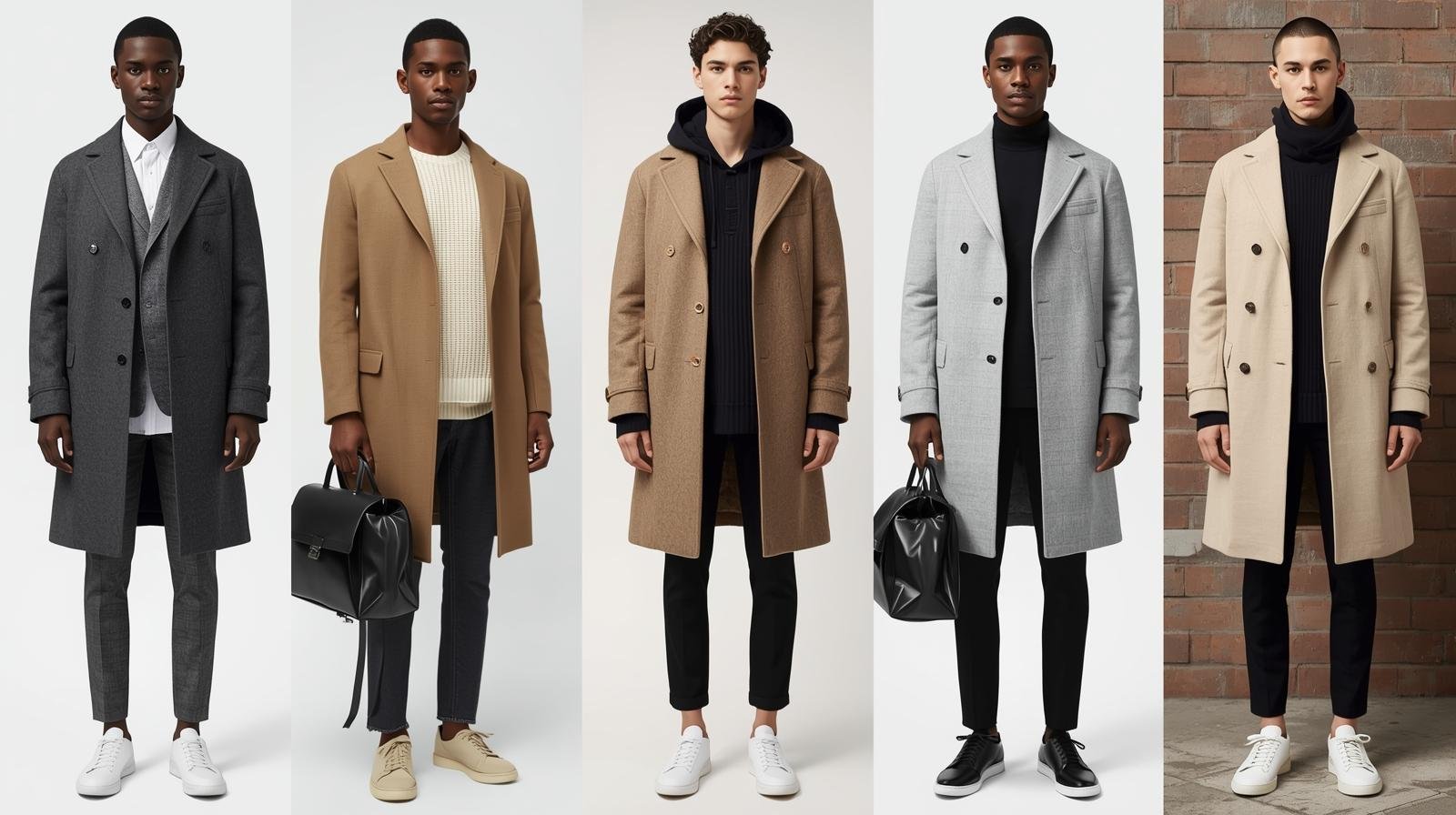
TL;DR
Menswear in 2025 risks turning into a global uniform of neutral tailoring and minimal workwear. While this “safe style” feels easy and accessible, it erodes individuality, creativity, and long-term brand value. The next wave of menswear must reintroduce variation, character, and identity — or risk becoming invisible in a sea of sameness.
At a Glance
A wave of minimalist tailoring and neutral-toned workwear has swept global menswear, producing a striking homogeneity across brands and wardrobes. According to BoF, this “sameness epidemic” stems from recent influences — notably a cross-Atlantic fashion mood led by Japanese, Scandinavian, and American labels — but many industry insiders warn the trend risks creative stagnation.
Why Does Menswear Look So Similar?
1. Minimalism & Workwear: The Default Aesthetic
The modern menswear aesthetic has increasingly settled on minimal silhouettes, pared-down color palettes, and understated workwear references. These designs — often neutral and logo-free — are seen as safe, timeless, and versatile, making them easy for brands to replicate and for consumers to adopt en masse.
What started as a niche Japanese/Scandinavian aesthetic has now become mainstream — a universal “starter pack” for men’s wardrobes worldwide.
2. Risk Aversion in a Slow Market
In an economic climate marked by inflation, supply-chain pressures, and cautious spending, brands prefer to play it safe. Predictable designs reduce production risk, minimize returns, and maximize secondary-market resale value. The result: fewer bold statements, more safe bets — and ultimately, less variety.
3. The Democratization of Style
With social media, resale platforms, and street-style coverage, what was once avant-garde quickly becomes ubiquitous. By the time a new silhouette gains traction, it has already been adopted widely — erasing novelty in favor of a homogenized, “everyone-in-the-know” uniform.
4. The “Starter Pack” Syndrome
As noted by commentators on menswear culture, many collections now offer interchangeable pieces: neutral coat, relaxed trousers, plain shoes. This makes it easy to assemble a “stylish look,” but also makes every brand and outfit blend into the same mold.
The Hidden Costs of Sameness
- Creativity suffers: With minimal variation, collections lose character and storytelling power.
- Consumer fatigue: When everything looks the same, differentiation disappears — even luxury loses its edge.
- Brand identity blurred: New or smaller menswear houses struggle to stand out.
- Stunted style evolution: Without risk, menswear sees little experimentation — style becomes safe but static.
How Some Brands Are Fighting Back
- Embracing distinct materials, textures, and color palettes — not just repeat silhouettes.
- Fusing heritage crafts, bold cuts or experimental tailoring to offer stand-out pieces.
- Leaning into storytelling, brand narratives and lifestyle identity, rather than “safe” basics.
- Offering limited-run, capsule collections or localised drops to avoid the “global uniform” trap.
These strategies aim to reintroduce character and aspiration — essential for long-term brand value.
What This Means for the Consumer (and the Future of Menswear)
For men looking to build a wardrobe beyond “starter pack” basics:
- Seek out unique pieces — interesting textures, cuts, or heritage details.
- Support brands that take creative risks — even if prices are higher, longevity and individuality pay off.
- Balance basics with statement items — don’t become a walking template.
For brands:
- Investing in creativity may be the only way to stand out — safe universality won’t build long-term loyalty.
- Storytelling, craftsmanship, and identity-driven design may become more important than rapid seasonal turnover.
Editorial Perspective
At LxryNow, we believe fashion thrives on diversity, character — and bold individuality. The current menswear wave has traded distinctiveness for ease, but the pendulum is bound to swing back. In a world saturated with neutral tailoring, the garments that will stand out are not those that follow the formula, but those that challenge it. Menswear — especially luxury menswear — needs more voices, more textures, more stories. The next chapter begins when brands and wearers choose to break away from “the same.”
