
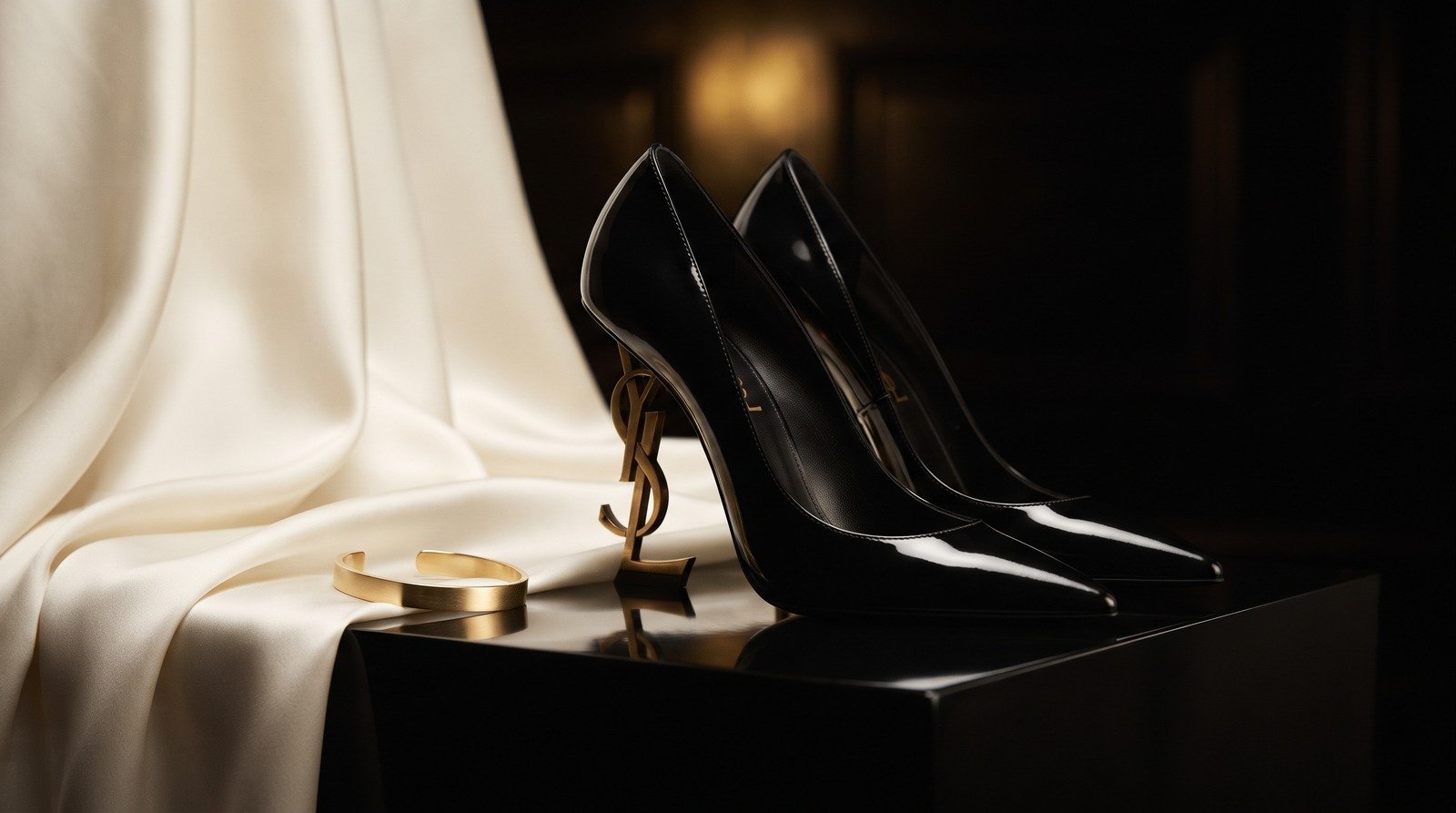
The Saint Laurent Opyum heels is not a discreet designer shoe. Its heel is formed from the interlocking YSL initials, transforming one of fashion’s most familiar logos into a piece of wearable architecture.
Introduced in Anthony Vaccarello’s Spring 2017 debut collection, the Opyum immediately became one of the designer’s defining Saint Laurent creations. The original runway presentation prominently reinstated the Cassandre monogram, including pumps supported by logo-shaped heels. Vogue
Nearly a decade later, the design is still offered in pumps, sandals, mules and boots. That longevity suggests it has moved beyond its initial social-media moment. Yet the 110 mm heel, pointed silhouette and four-figure price make it considerably less straightforward than an everyday pump.
The real question is not whether the Opyum looks dramatic. It is whether such a decorative heel can also deliver stability, comfort and enough versatility to justify its cost.

TL;DR
| Category | LxryNow Take |
|---|---|
| Best For | Dinners, parties, formal events and statement dressing |
| Best Overall Version | Black patent-leather Opyum sandal |
| Best Heel Height | 85 mm for wearability; 110 mm for maximum impact |
| Current U.S. Reference Price | Approximately $1,300–$1,550, depending on style |
| Fit | Typically narrow; trying on or considering half a size up is advisable |
| Standout Feature | Sculptural Cassandre monogram heel |
| Main Drawback | Limited walking comfort, especially at 110 mm |
| Overall Verdict | Exceptional statement design with occasion-only practicality |
The Opyum succeeds most convincingly as a special-occasion shoe. Its dramatic heel remains distinctive, but the narrow fit and aggressive pitch make the 110 mm versions difficult to recommend for long events or regular walking. Choose 85 mm if comfort matters more than runway proportions.
How the Opyum Became a Saint Laurent Signature

The Cassandre monogram was originally designed for Yves Saint Laurent in the early 1960s by graphic artist A. M. Cassandre. Vaccarello’s Opyum reinterpreted those stacked initials as structure rather than surface decoration.
Instead of placing a logo on the toe or buckle, Saint Laurent made it responsible for supporting the wearer. From a distance, the shoe resembles a sharply cut pump or minimal ankle-strap sandal. From the side, the metallic letters become the focal point.
That contrast explains much of the design’s appeal. The upper is deliberately restrained so that the heel can appear theatrical without making the entire shoe feel excessively embellished.
The original Opyum appeared in Saint Laurent’s Spring 2017 collection and has since developed into a continuing footwear family. The brand’s current shoe navigation still identifies Opyum as a named collection rather than a discontinued seasonal design. Saint Laurent
Design and Construction
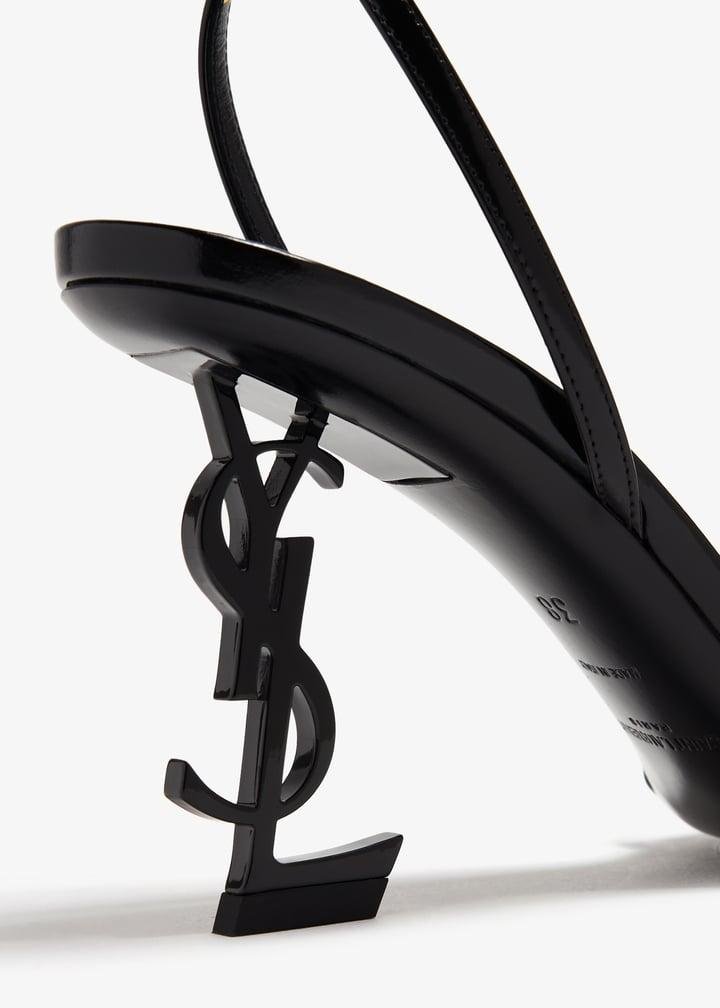
The classic Opyum combines an elongated toe with a sharply pitched sole and metal logo heel. Core versions normally feature patent-leather uppers, leather lining and leather soles, while seasonal interpretations use satin, suede or decorative finishes.
Patent leather is particularly effective here. Its reflective surface complements the polished heel and helps the shoe retain its formal appearance. It is also relatively easy to wipe clean, although it can crease across the toe and show scratches more clearly than matte leather.
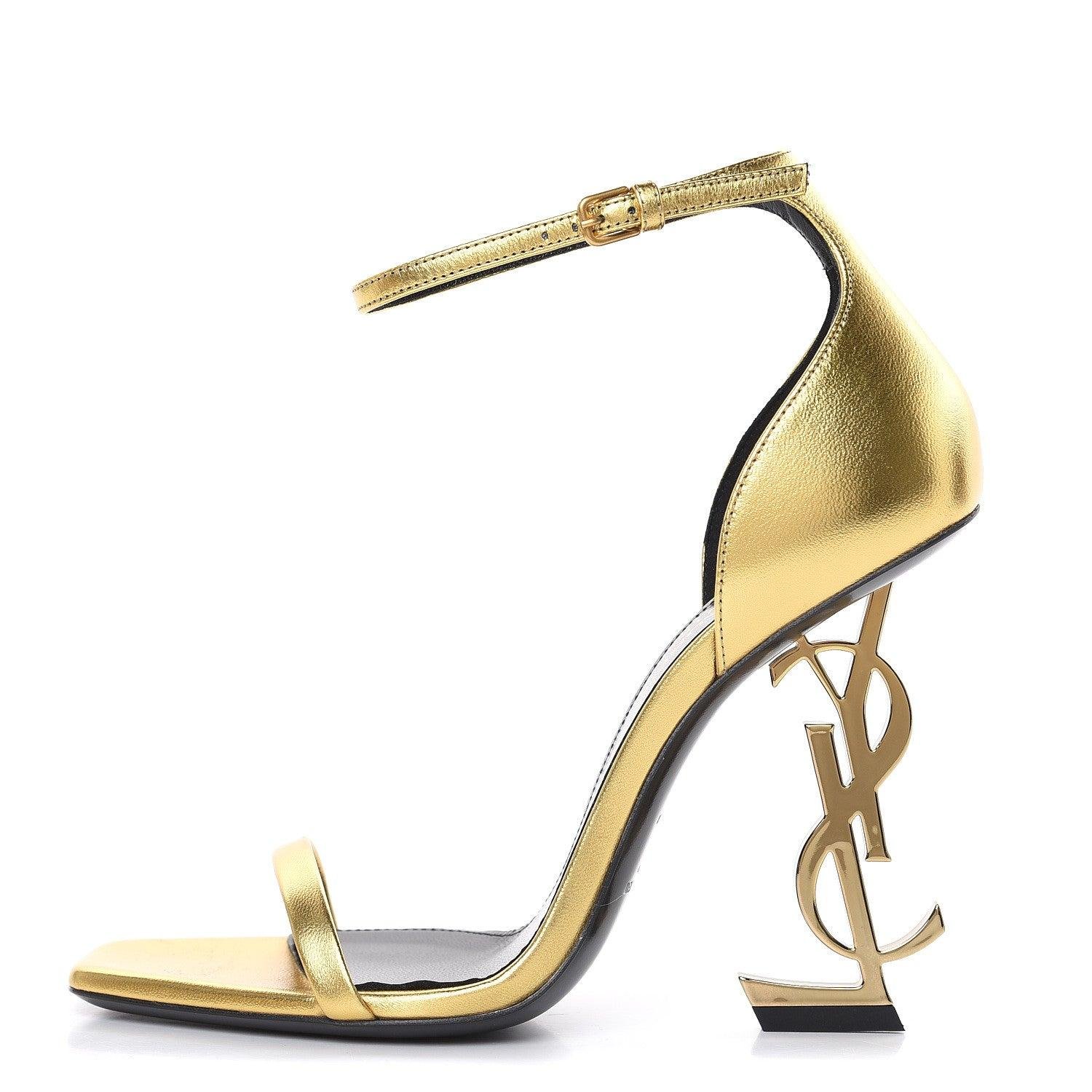
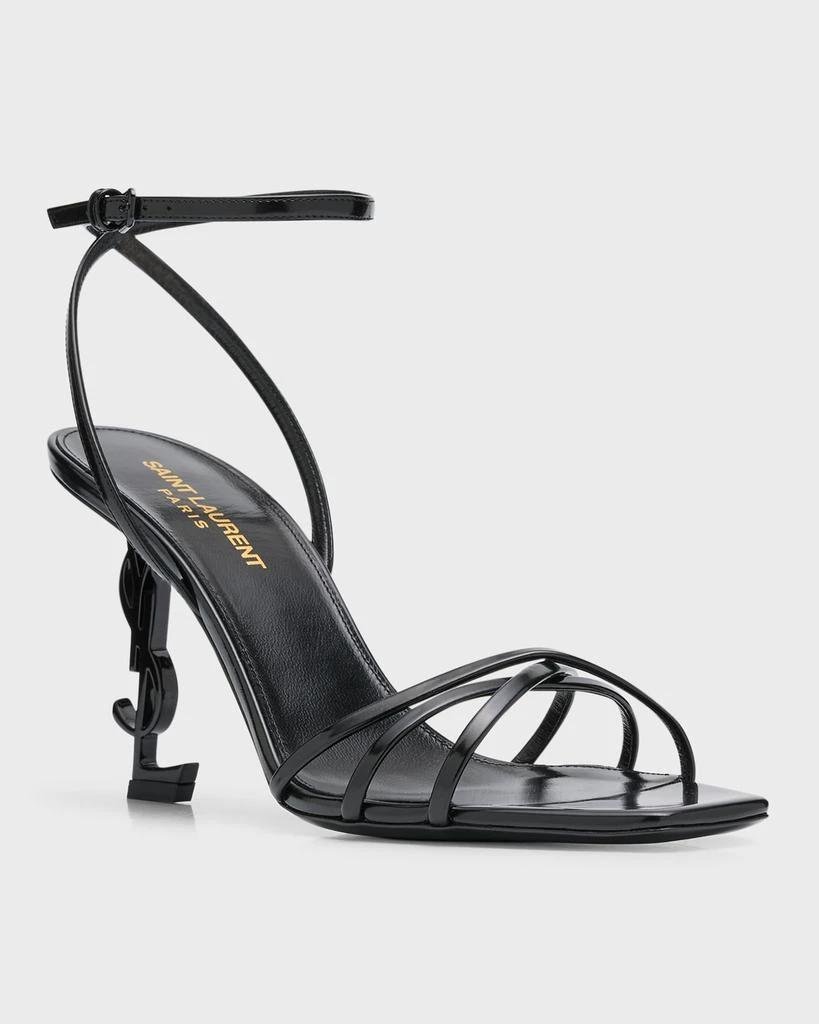
The 110 mm sandal uses an adjustable ankle strap, an open toe and a heel measuring approximately 11 cm or 4.3 inches. Current versions are available with gold-tone or black hardware. Bergdorf Goodman, Saint Laurent
The heel looks delicate but is engineered as a structural component. Nevertheless, its unusual shape makes professional maintenance more complicated than replacing the tip on a conventional stiletto. Damage to the finish, lettering or specialised heel tip may require assessment by Saint Laurent or an experienced luxury-shoe repairer.
Opyum Styles and Heel Heights Compared
| Version | Key Characteristic | Best For |
|---|---|---|
| Opyum 110 Pump | Pointed closed toe and maximum logo-heel impact | Formal outfits and shorter events |
| Opyum 110 Sandal | Open toe with adjustable ankle strap | Parties, weddings and evening dressing |
| Opyum 85 Sandal | Lower pitch with the same sculptural identity | Longer events and more frequent wear |
| Opyum 85 Mule | Easy slip-on shape, often in satin | Dinners and indoor occasions |
| Opyum Boot | Enclosed upper with a dramatic logo heel | Collectors and fashion-led winter styling |
The 110 mm pump is the purest expression of the original runway idea, but it is also the least forgiving. Its pointed toe and closed patent upper can create pressure at the toes while the steep pitch transfers weight towards the forefoot.
The 110 mm sandal allows more space around the toes and the ankle strap adds security. It therefore offers the best balance if the highest heel is non-negotiable.
The 85 mm sandal is LxryNow’s practical choice. It preserves the recognisable logo while reducing the angle of the foot. Current Mytheresa listings include Opyum 85 sandals at approximately $1,500 and 85 mm satin mules around $1,300. Prices and availability can change.
Fit and Sizing
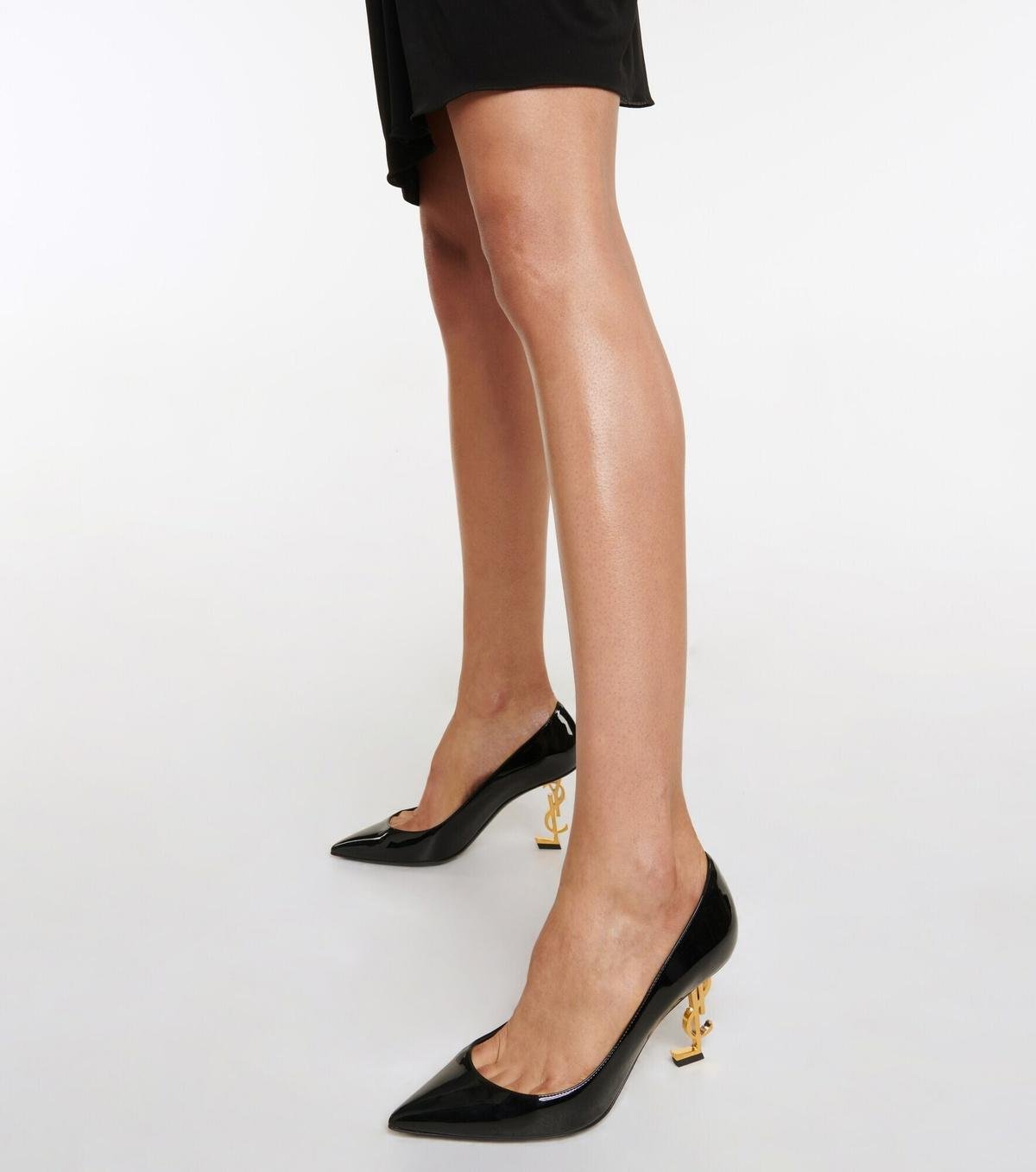
Opyum sizing requires more attention than simply converting a regular US size into an Italian size.
The pointed pumps can feel narrow through the forefoot, while the sandal’s front strap may be restrictive on wider feet. Nordstrom’s previous product guidance described the ankle-strap sandal as running narrow and recommended ordering half a size larger. Neiman Marcus similarly advises considering half a size up in Saint Laurent shoes. Nordstrom, Neiman Marcus
However, individual experiences vary. Heel slippage can occur if a closed pump is sized up excessively, particularly for wearers with narrow heels.
For the safest fit:
- Try the shoes late in the day, when feet are slightly expanded.
- Test them on both carpet and a firm indoor surface.
- Check for heel movement before adding inserts.
- Confirm that the sandal strap does not press against the widest part of the foot.
- Compare your regular size with half a size up.
- Avoid buying a non-returnable pair unless you already know your Opyum size.
Patent leather softens less readily than conventional calfskin. Do not assume severe tightness will disappear after several wears.
Comfort and Walking Experience
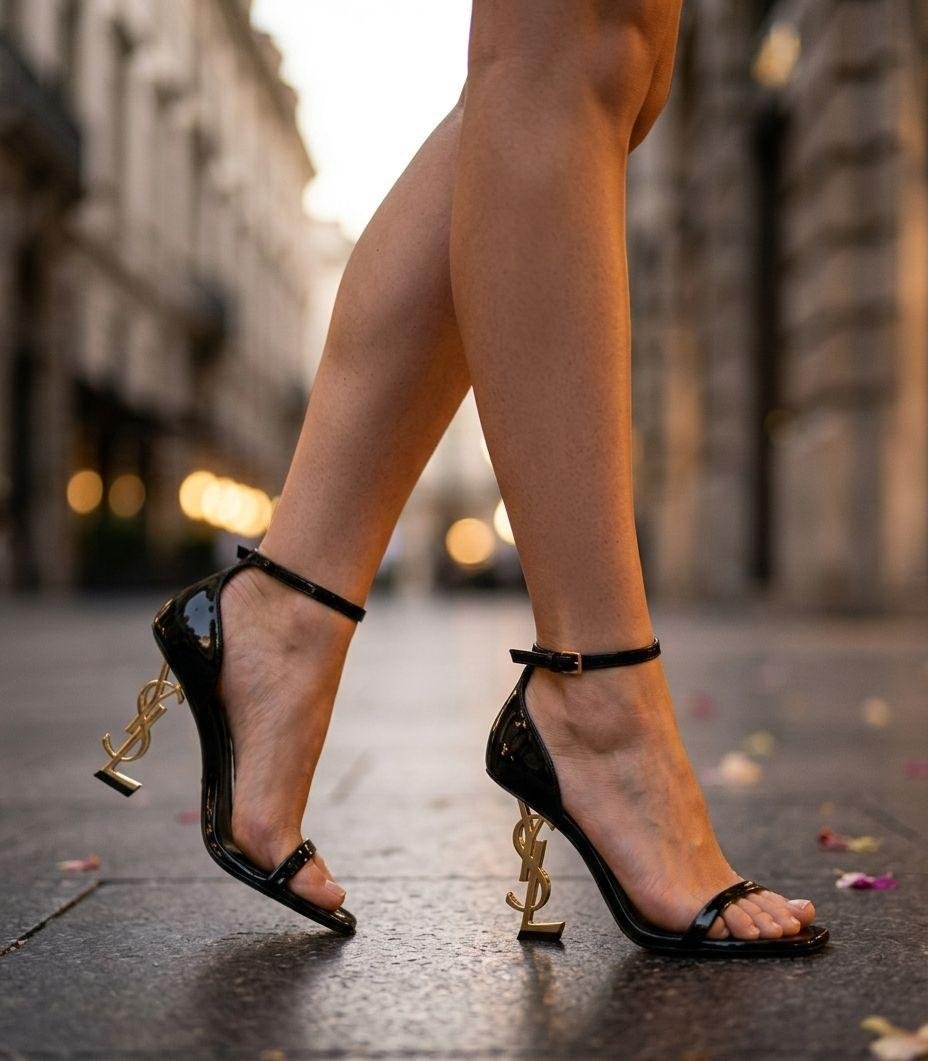
The Opyum is more stable than its appearance suggests, but stability and comfort are not the same thing.
The Cassandre heel creates a usable contact point with the ground, and the sandal’s ankle strap prevents the foot from lifting away from the sole. On smooth floors, the shoes can feel reasonably controlled once the wearer adjusts to their pitch.
The 110 mm height remains demanding. Much of the body’s weight sits over the ball of the foot, and the shoe has no meaningful platform to reduce the effective incline. Extended standing can therefore become uncomfortable quickly.
The pointed pump adds toe compression, while the sandal exposes more of the foot but may create friction beneath its straps. A thin forefoot cushion can help, provided it does not make an already narrow shoe tighter.
These are most appropriate for occasions involving seated time, short transfers and predictable flooring. They are poorly suited to cobblestones, grass, long receptions or evenings that require substantial walking.
The 85 mm version is noticeably more manageable and should be the default for anyone who wants to wear the design rather than simply collect it.
How to Style Saint Laurent Opyum Heels

The Opyum works best when the outfit gives the heel enough visual space.
| Occasion | Styling Recommendation |
|---|---|
| Formal Evening | Column dress or asymmetric black gown |
| Cocktail Event | Minimal mini dress with sheer tights |
| Dinner | Cropped tailored trousers and a silk blouse |
| Fashion-Led Daywear | Straight jeans, blazer and fitted knit |
| Wedding Guest | Fluid midi dress without competing embellishment |
| Suiting | Slim or cropped trousers that reveal the entire heel |
Black patent with a gold-tone heel is the most recognisable and versatile combination. It coordinates naturally with black clothing, warm jewellery and Saint Laurent’s evening-focused aesthetic.
Black hardware creates a quieter effect while retaining the sculptural silhouette. Nude or pale uppers visually lengthen the leg, although scratches and marks may be more obvious.
Avoid long, wide trousers that completely conceal the heel. If the Cassandre structure cannot be seen, much of the reason for choosing the Opyum disappears.
Durability and Care
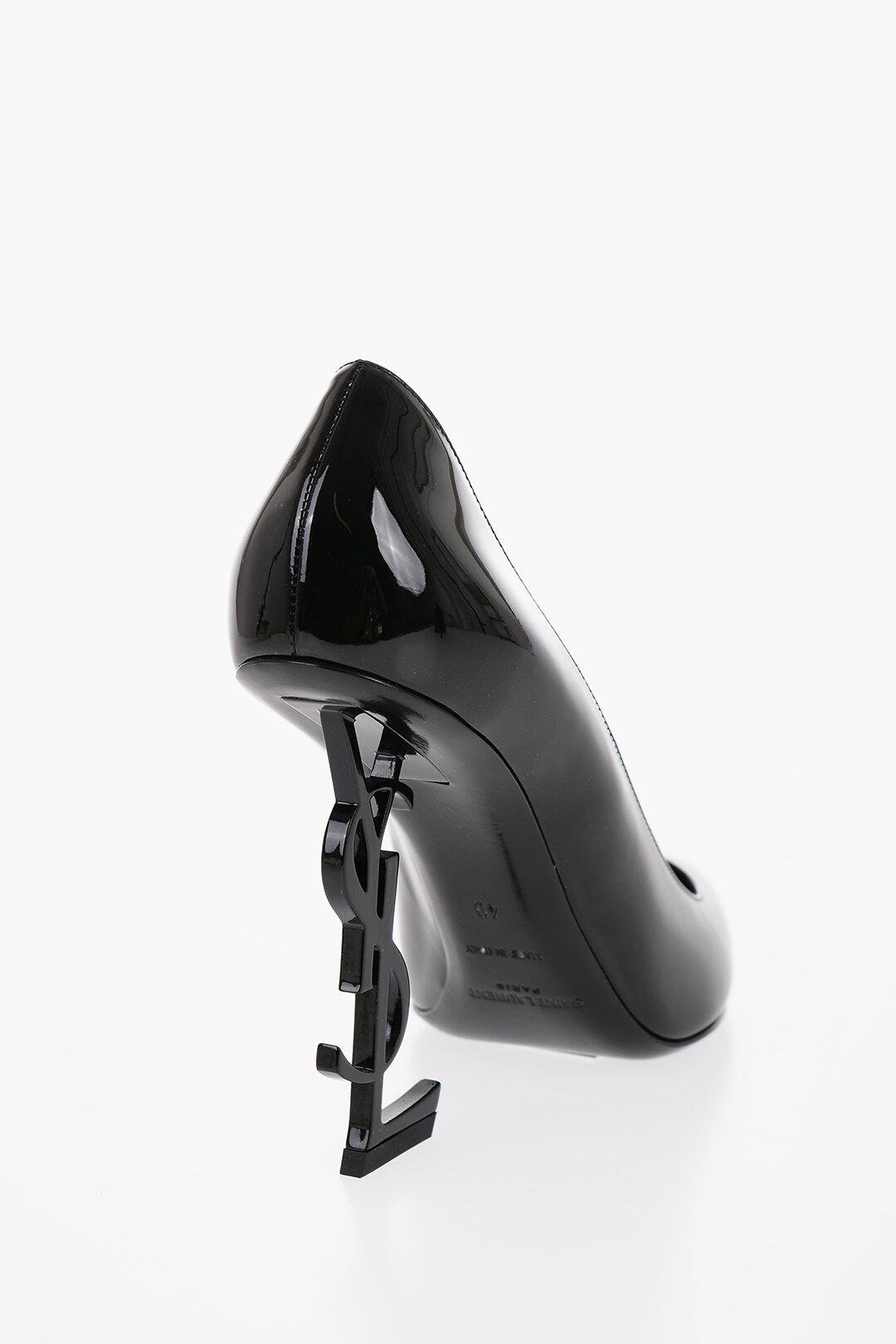
Patent leather protects the surface from minor moisture, but the polished finish remains vulnerable to scratches, colour transfer and creasing. The metallic heel can also develop marks if it strikes steps, furniture or uneven pavement.
To protect the shoes:
- Store each shoe in its own dust bag.
- Prevent patent surfaces from touching during storage.
- Wipe fingerprints away with a soft cloth.
- Avoid alcohol-based cleaners and abrasive products.
- Do not wear the logo heel on broken pavement or gravel.
- Have sole protection applied by a cobbler familiar with designer shoes.
- Inspect the heel tips before every important event.
- Retain the box and purchase documentation for future resale.
Leather soles are smooth when new and can feel slippery. Professionally installed sole guards improve grip and protect the original leather, although collectors may prefer to keep an unworn pair unchanged.
The unusual heel is the main long-term consideration. Routine sole maintenance is straightforward, but structural or cosmetic damage to the Cassandre component may be costly and difficult to resolve locally.
Are Saint Laurent Opyum Heels Worth the Price?
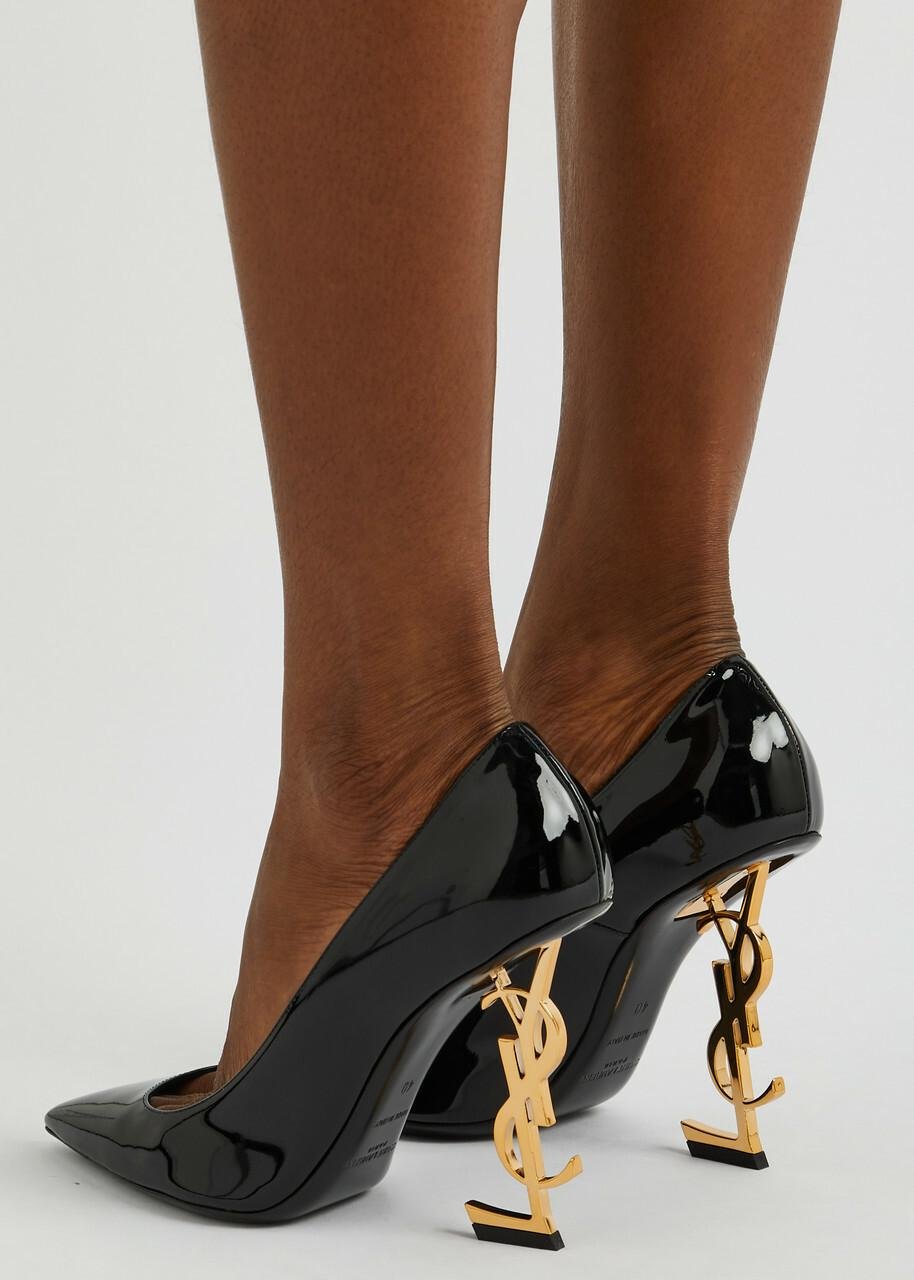
Current US reference prices place the patent Opyum pump around $1,500 and the 110 mm sandal at approximately $1,550. Satin mules generally begin lower, at around $1,300.
That price cannot be justified through comfort or frequency of use alone. Conventional luxury pumps costing less may offer better all-evening wearability.
The value is instead concentrated in the design. The Opyum is instantly identifiable from its silhouette, requires specialised heel construction and represents an important motif from Vaccarello’s tenure. It functions almost like a fashion collectible that happens to be wearable.
Buyers who attend regular formal events and enjoy visible branding may find enough use to support the purchase. Someone seeking one dependable pair of luxury heels should prioritise a simpler 70–90 mm pump.
Pre-owned examples can offer better value, but the heel tips, metallic finish, patent leather and sole condition require careful inspection.
LxryNow Review Scorecard

| Category | Score | Assessment |
|---|---|---|
| Design | 9.5/10 | A genuinely distinctive fusion of logo and structure |
| Material Quality | 8.5/10 | Luxurious finishes, though patent leather marks easily |
| Construction | 9/10 | Impressive engineering behind the sculptural heel |
| Comfort | 6.5/10 | The 110 mm pitch becomes demanding quickly |
| Stability | 7.5/10 | Better than expected, especially with an ankle strap |
| Versatility | 7/10 | Strong for eveningwear but too dramatic for many settings |
| Durability | 7.5/10 | Sound construction offset by a specialised, exposed heel |
| Value for Money | 7/10 | Price reflects design recognition more than practicality |
| Overall | 7.8/10 | Wearable sculpture designed for impact, not endurance |
Which Saint Laurent Opyum Should You Choose?
| Version | Best For | LxryNow Recommendation |
|---|---|---|
| Opyum 110 Pump | Collectors and maximum visual drama | Most iconic, least forgiving |
| Opyum 110 Sandal | Parties and formal eveningwear | Best high-heel version |
| Opyum 85 Sandal | Longer events and repeat wear | Best overall choice |
| Opyum 85 Mule | Dinners and indoor occasions | Best slip-on option |
| Opyum Boot | Statement seasonal dressing | Best for established collectors |
Shop the Edit

Opyum 110 Patent-Leather Pump
The definitive runway-inspired shape with the strongest side profile.

Opyum 110 Patent-Leather Sandal
An ankle strap provides better security while preserving the dramatic height.


Opyum 85 Satin Mule
A softer evening interpretation suited to dinners and indoor events.
Pros and Cons
| Pros | Cons |
|---|---|
| Immediately recognisable sculptural heel | 110 mm styles are uncomfortable for extended wear |
| Strong connection to modern Saint Laurent design | Narrow fit can complicate sizing |
| Available in pumps, sandals, mules and boots | Patent leather creases and scratches |
| 85 mm versions improve wearability | Specialised heel repairs may be difficult |
| Works beautifully with minimal eveningwear | Poor choice for uneven ground or long walks |
| Retains greater visual identity than a conventional pump | High price for an occasion-focused shoe |
Final Verdict

Saint Laurent’s Opyum remains one of the most convincing examples of visible branding becoming functional design. The Cassandre heel is not simply attached decoration: it defines the shoe’s structure, profile and entire reason for existing.
That creativity does not make the Opyum practical. The 110 mm pump is narrow, steep and best reserved for short occasions. Even the more secure sandal prioritises impact over comfort. Buyers who expect an effortless all-evening heel are likely to be disappointed.
The Opyum 85 sandal earns LxryNow’s strongest recommendation. It maintains the design’s distinctive identity while offering a more manageable pitch, open toe and adjustable ankle strap. The classic black patent version with a gold-tone heel remains the clearest expression of the concept and the easiest to style.
Buy the Opyum because the sculptural heel excites you—not because you need a versatile pair of designer shoes. As wearable fashion, it is compromised. As a recognisable piece of modern Saint Laurent, it is remarkably successful.
LxryNow Verdict: A visually exceptional statement heel whose design significance outweighs its limited comfort.
Overall Score: 7.8/10
