

Bridal shoes may be a small part of your wedding outfit, but they influence almost everything: how your dress falls, how confidently you walk and how long you can enjoy the dance floor.
The most beautiful pair in a photograph is not necessarily the best pair for your day. A delicate stiletto that works perfectly in a ballroom can become difficult on grass. A flat may feel reassuringly practical, yet still rub if the toe box or heel shape is wrong.
This bridal shoes guide begins with the decisions that matter most: your venue, dress length, preferred heel height and actual fit. Once those are resolved, choosing satin, pearls, crystals or a subtle “something blue” becomes considerably easier.

TL;DR
- Choose your bridal shoes before the final dress hem is set.
- Start with a heel height you already feel confident wearing.
- Block heels and flats are usually easier on uneven surfaces than narrow stilettos.
- Check toe space, heel security and strap placement—not just the stated size.
- Bring a fabric swatch when comparing white, ivory and champagne shades.
- Test embellishments against the dress lining to check for snagging.
- Prepare a second pair if useful, but consider how a lower heel changes dress clearance.
- Wear your shoes indoors before the wedding, following the retailer’s return conditions.
- Prioritise comfort and stability over assumptions about what a bride should wear.
Start With the Venue and Your Wedding Schedule

Before browsing shoes, map out the day. Will you walk across lawns, stand through a long ceremony, climb stairs or move between several locations?
A wedding can involve considerably more walking than expected, especially when photographs take place away from the ceremony venue.
| Venue or Setting | Useful Starting Point | What to Check |
|---|---|---|
| Ballroom or Hotel | Pumps, sandals or dress flats | Grip on polished floors |
| Garden or Lawn | Broad block heels, wedges or flats | Whether the sole sinks into soft ground |
| Beach | Secure flat sandals or venue-appropriate barefoot styling | Sand, heat and stability |
| Historic Venue | Low heels or secure block heels | Cobblestones, stairs and uneven flooring |
| City Wedding | Mid-height pumps or elegant flats | Walking distance between locations |
| Winter Wedding | Closed-toe pumps or bridal boots | Wet surfaces and outdoor temperature |
A block heel improves the contact area beneath the shoe, but it does not guarantee stability on every surface. If possible, test a similar pair at the venue.
Match the Shoes to Your Dress
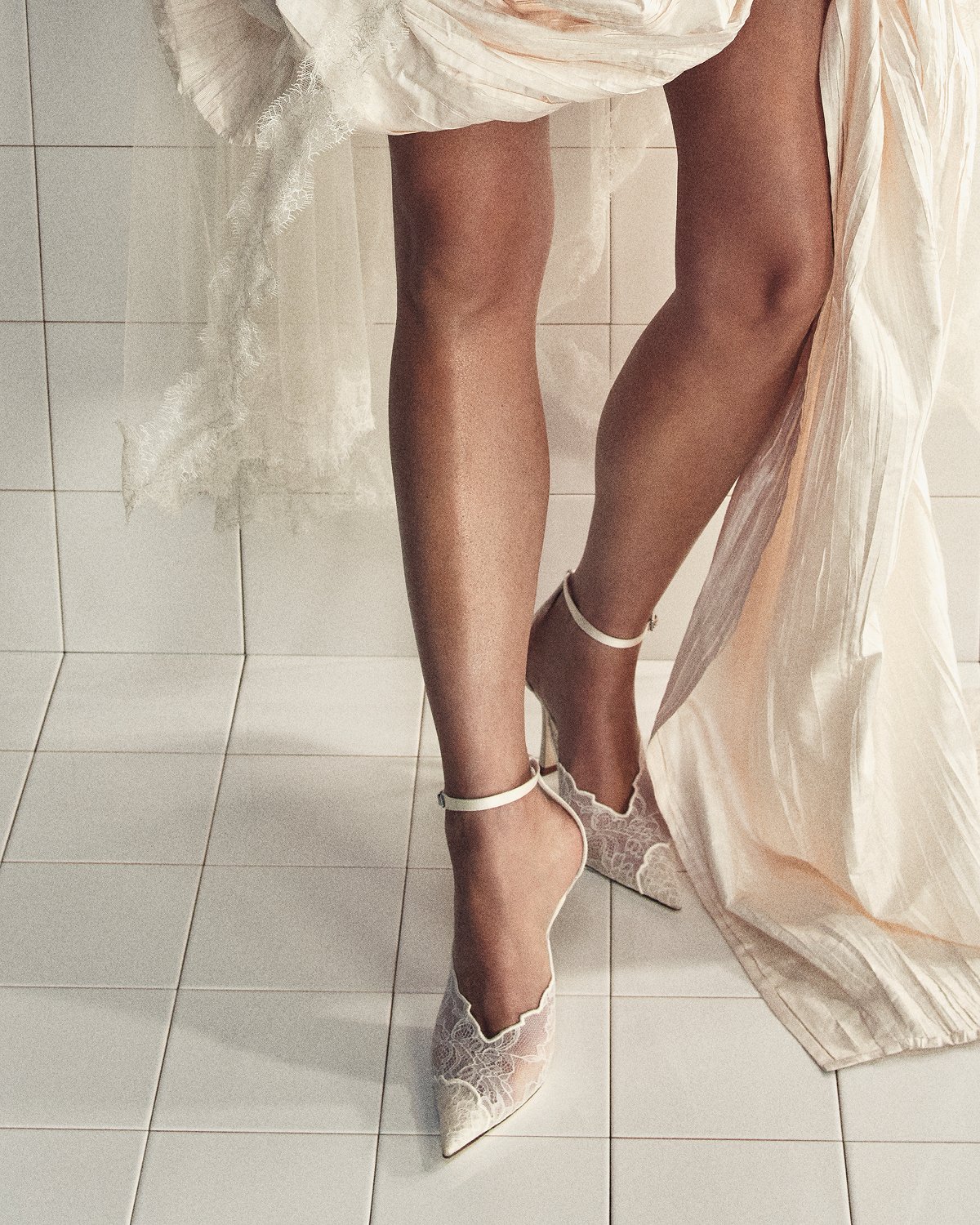
Your shoes should support the dress’s proportions and character.
With a floor-length gown, they may appear mainly while walking, sitting or lifting the hem. A short dress, bridal suit or high-low silhouette makes footwear a more prominent part of the outfit.
| Bridal Outfit | Shoe Direction |
|---|---|
| Minimal Satin Gown | Sculptural sandals, clean pumps or a restrained crystal detail |
| Lace Dress | Simple satin or leather shoes that avoid competing with the texture |
| Embellished Gown | Understated footwear or carefully coordinated sparkle |
| Short Dress | Statement pumps, ankle-strap sandals or decorative flats |
| Bridal Suit | Pointed pumps, slingbacks, refined flats or loafers |
| Relaxed Dress | Low sandals, soft flats or simple block heels |
Bring your selected shoes to dress fittings. The actual pair is preferable to a different shoe with the same advertised heel height because platforms, sole thickness and fit can alter your standing height.
If you plan to change into flats, tell your alterations specialist. A gown hemmed for high heels may drag after the change; a bustle generally manages the train rather than automatically correcting the front hem.
Choose a Heel Height You Can Wear Naturally

A wedding is a demanding occasion for experimenting with an unfamiliar heel height.
If you normally wear flats, a low block heel or kitten heel may provide enough lift. If you regularly wear high heels, you still need to assess the particular shoe’s pitch, fit and stability.
| Heel Height | General Character | Best Consideration |
|---|---|---|
| Flat or Almost Flat | Minimal lift | Fit, cushioning and dress clearance |
| Approximately 30–50 mm | Low, subtle elevation | A useful starting point for occasional heel wearers |
| Approximately 60–80 mm | Moderate lift | Test over extended standing and walking |
| Approximately 90 mm and Above | Stronger elevation | Best considered by confident heel wearers |
Height alone does not determine comfort. A platform reduces the difference between the heel and forefoot, while a broad heel can feel steadier than a narrow one. However, a heavy platform may introduce other difficulties on stairs.
Choose the lowest height that delivers the proportions you want and feels natural when you walk.
Pumps, Sandals, Slingbacks or Flats?

Pumps
Closed-toe pumps provide a polished silhouette and suit cooler weather. They also keep the toes covered when the dress lifts.
Check the toe box carefully. Pointed shoes should accommodate the toes before the decorative point begins; your toes should not be forced into the tip.
Sandals
Sandals feel lighter and work well with warm-weather weddings. They are particularly effective with flowing gowns and shorter dresses.
Straps should secure the foot without cutting into it. Make sure your toes remain on the footbed when standing and walking.
Slingbacks
Slingbacks offer the refinement of a pump with a more open heel. They can be elegant with bridal suits and restrained gowns.
Walk long enough to check that the strap stays in place. A loose strap is distracting, while an overly tight one can rub.
Flats
Flats can look every bit as intentional as heels. Crystal buckles, satin, delicate straps and clean pointed or almond toes create a formal appearance.
They still require careful fitting. A flat shoe can pinch, slip or feel uncomfortable on a hard floor, so test it as thoroughly as a heel.
Satin, Leather, Lace or Embellishment?

Satin has a soft sheen and strong bridal association. It pairs beautifully with formal gowns but can show moisture and marks, making it less forgiving outdoors.
Smooth leather is often easier to clean and gives a simple shoe a refined finish. White or ivory leather can also be easier to wear after the wedding.
Lace and mesh create a delicate appearance, but inspect the edges and seams for potential rubbing.
Pearls and crystals add detail without requiring a high heel. Before committing, check whether projecting settings or textured glitter catch against delicate fabric. Move the dress lining gently across the shoe rather than testing on visible lace or tulle.
Comfort also depends on the lining, seams, footbed and construction. A luxurious upper does not guarantee a comfortable interior.
Do Bridal Shoes Have to Be White?

White is an option, not a requirement.
Ivory, cream and champagne often work more naturally with warmer-toned gowns. Silver, gold or a skin-toned shade can provide versatility, while blue introduces a traditional symbolic detail.
Compare colours in daylight and under indoor lighting. A shoe that appears ivory on a screen may look brighter or warmer beside your dress.
For a deliberate contrast, consider:
- Pale blue beneath ivory satin
- Silver with cool-toned embellishment
- Champagne with warm pearls or embroidery
- Gold with a cream gown
- A deeper colour that connects with your accessories
If the shades are close but visibly mismatched, a clear contrast may look more considered.
Find the Right Fit Before Thinking About Size
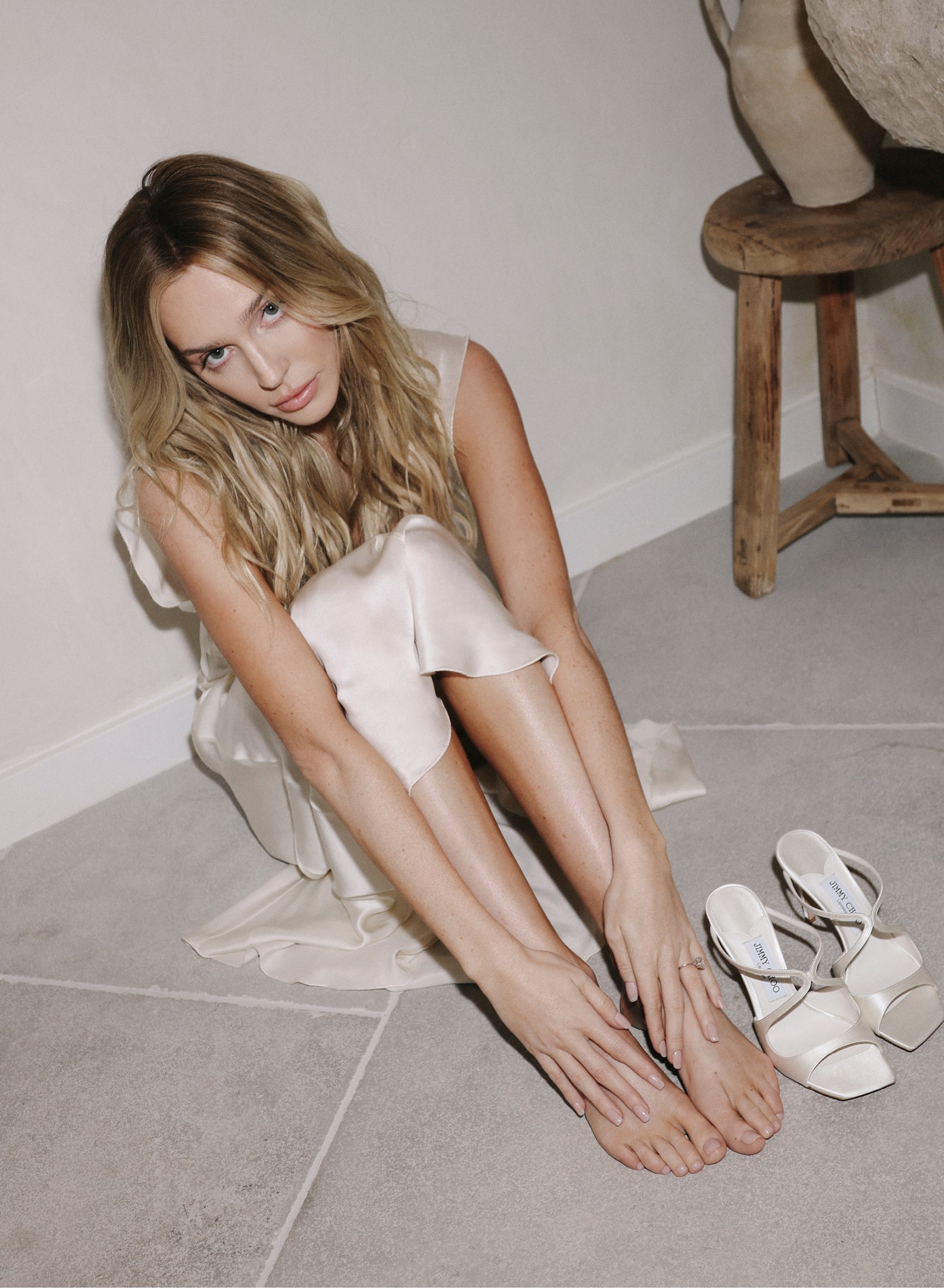
Try bridal shoes later in the day and wear any hosiery you plan to use at the wedding. Fit both feet; do not judge the pair from the more comfortable foot alone.
Check that:
- Your toes have space without compression.
- Your heel stays secure as you walk.
- Your foot does not slide forward into the toe box.
- Straps hold without digging in.
- The shoe bends and moves comfortably with your foot.
- You can walk at a normal pace and turn confidently.
Do not buy a painful pair assuming it will become comfortable after stretching. Some materials soften, but the shoe’s basic shape will remain.
Size conversions are only a starting point. Read the advice for the exact style rather than applying one rule to an entire brand.
Prepare the Pair Before the Wedding

Wear the shoes for short periods on clean indoor flooring, gradually testing longer standing and walking. Keep retailer return conditions in mind until you are certain.
If you add an insert or heel grip, test the fit again. Extra padding can reduce space and create pressure elsewhere.
Ask a cobbler about suitable sole protection or grip if necessary. Make alterations well before the wedding so you have time to assess their effect.
A small preparation kit can include blister plasters, a soft cloth and a spare pair. Have someone place it where you can access it easily.
For a second pair, choose a familiar style with a secure fit. If its height differs substantially, test it with the altered dress before the day.
Shop the Edit

Jimmy Choo Romy 60 in Champagne Glitter
A pointed pump with a 60 mm heel for brides seeking moderate lift and sparkle. JIMMY CHOO
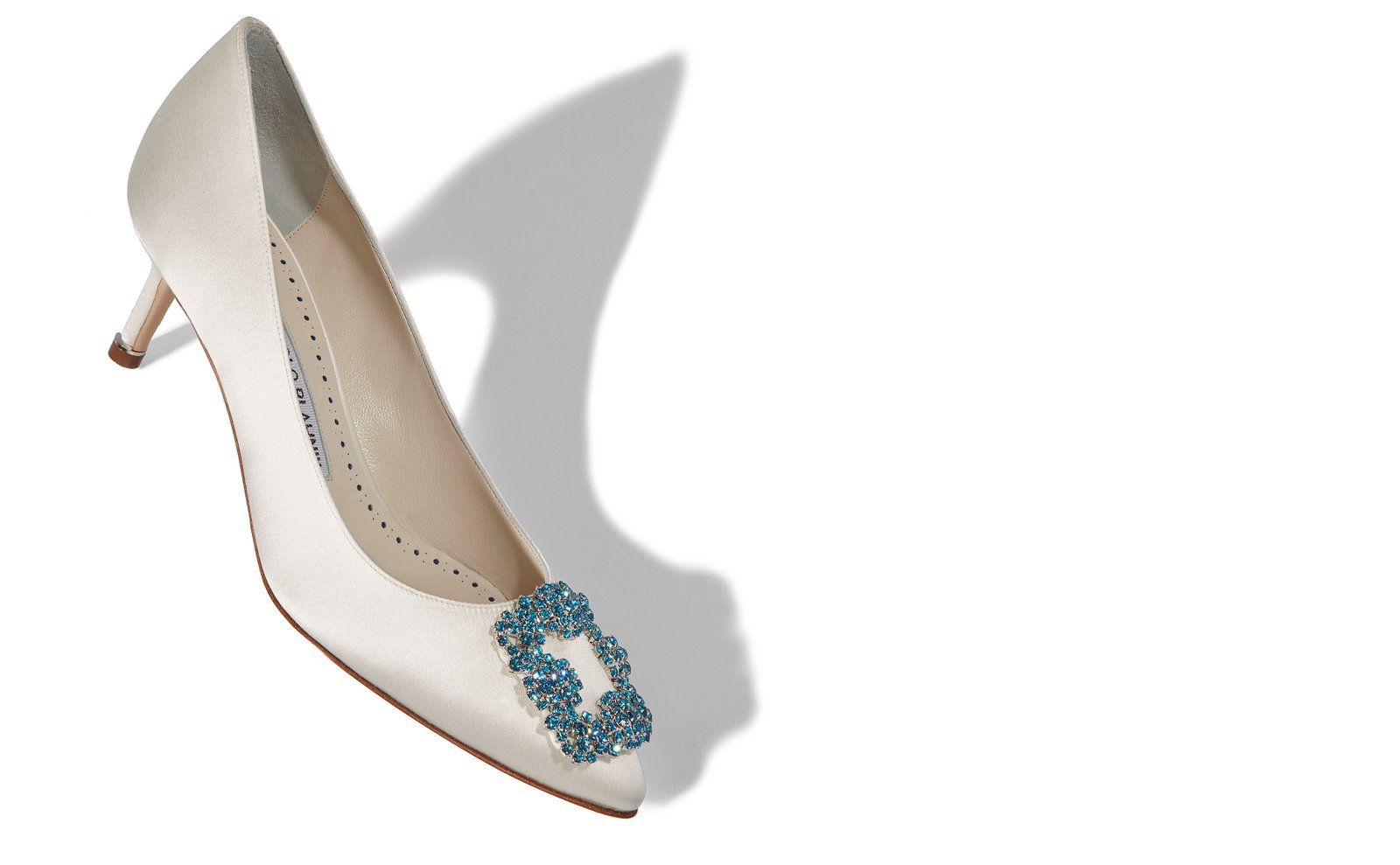
Manolo Blahnik Hangisi Bride 50
A white satin jewel-buckle pump offering the signature Hangisi appearance in a lower-heel version. Manolo Blahnik

Stuart Weitzman Nudist Poppy Block 75
A 75 mm block-heel sandal with crystal-and-pearl floral details for an open-toe bridal look. Stuart Weitzman
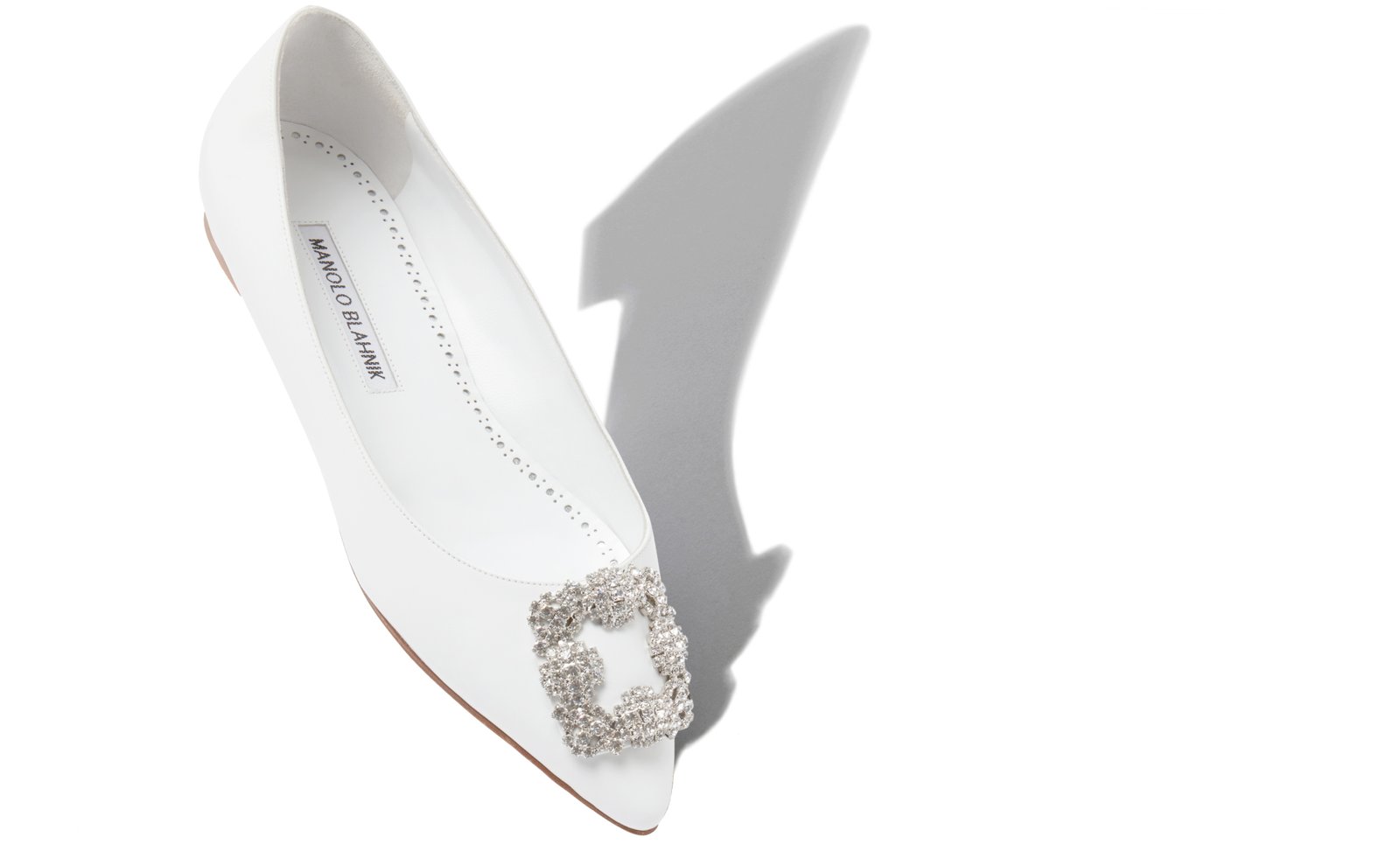
Manolo Blahnik Hangisiflat in White Leather
An almond-toe leather flat with a crystal buckle and 10 mm heel for brides prioritising minimal lift. Manolo Blahnik
Colours, sizes and availability vary by market. Check the fit guidance for each exact pair.
Pros and Cons
| Shoe Type | Pros | Cons |
|---|---|---|
| Stiletto Pumps | Elegant profile and strong lift | Less practical on soft ground; demanding over long periods |
| Block Heels | Broader support and versatile styling | Can still feel heavy or sink into grass |
| Low Heels | Subtle elevation with less dramatic pitch | Fit still needs careful testing |
| Sandals | Light appearance and warm-weather appeal | Straps may rub; toes remain exposed |
| Flats | Minimal lift and easy movement | May lack cushioning; dress hem must suit the height |
| Embellished Styles | Decorative impact without extra accessories | Settings may snag delicate fabric |
Final Verdict

The perfect bridal shoes should let you move through your wedding with confidence.
Start with the venue and schedule, then choose a heel height you know you can wear. Coordinate the actual pair with your dress fittings, assess both feet carefully and test every strap, seam and embellishment.
A satin pump may suit a formal indoor celebration, while a secure block heel can be more practical outdoors. A beautifully detailed flat is an equally complete bridal choice.
Select the pair that feels right when you walk, stand and celebrate—not only when it is photographed. Those are the shoes most likely to become a happy part of the day.
