
TL;DR
LVMH CEO Bernard Arnault’s recent remarks on the luxury industry combine cautious optimism about modest growth with candid acknowledgement of geopolitical and economic uncertainties — and reflect broader trends where clarity on succession and stable forecasts remains elusive even as the sector adapts.
At a Glance
- LVMH — the world’s largest luxury conglomerate led by Bernard Arnault — reported recent results that underscore ongoing recovery and persistent risks in the luxury sector.
- Arnault’s public remarks highlight measured optimism tempered by uncertainty, especially around geopolitics, economic volatility and consumer confidence.
- While specific data — such as sales figures and regional performance trends — provide context, much of what matters for luxury’s trajectory lies between the lines of executive commentary rather than in headline numbers.
- Shareholder pressures — including calls for clarity around Arnault’s succession plan — further complicate how the group will navigate the next decade.
Editorial Perspective
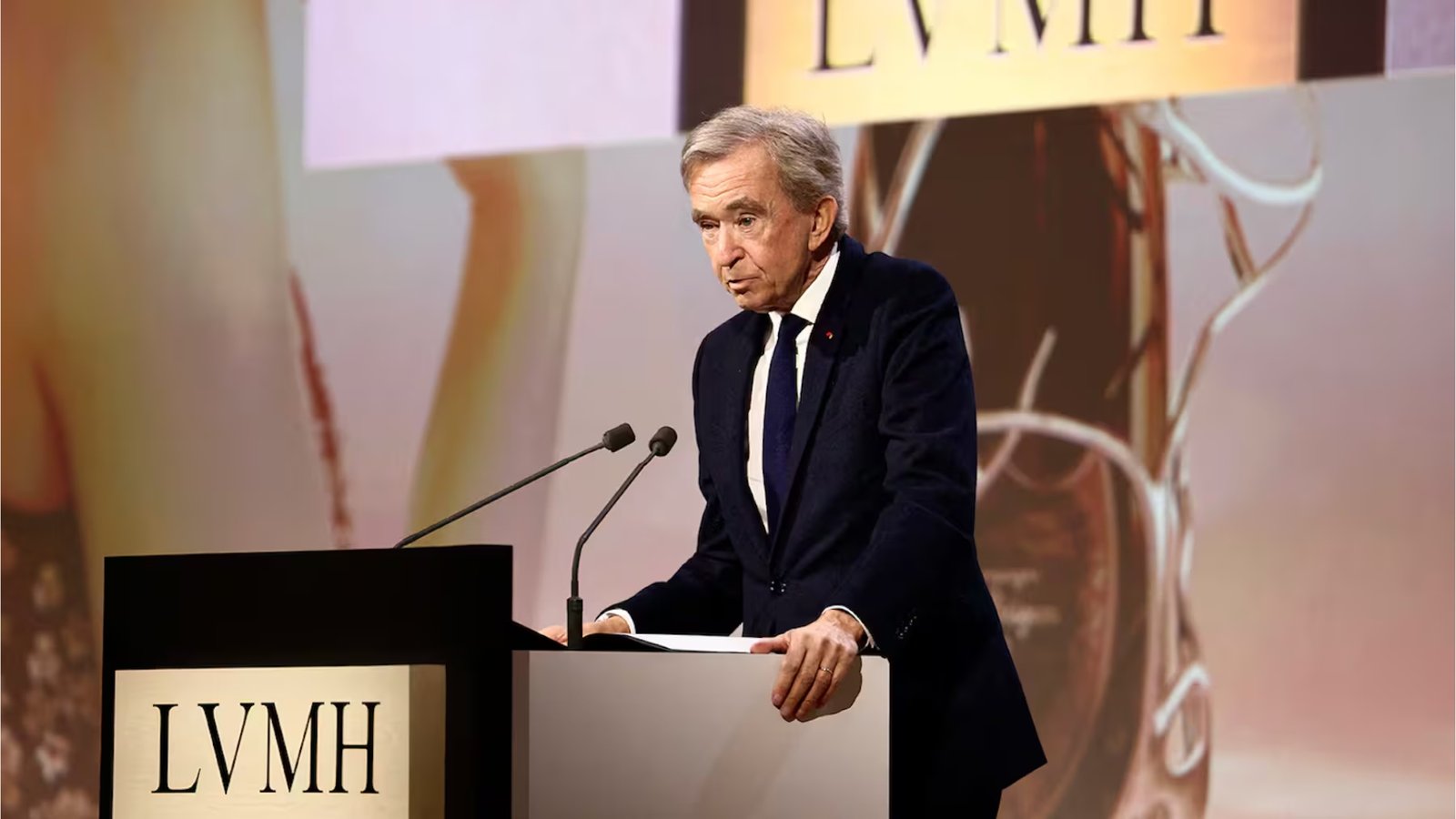
Bernard Arnault’s comments on LVMH’s performance and the outlook for luxury often arrive at the center of market attention — not just because of LVMH’s sheer scale, but because his statements signal broader sentiment across fashion, accessories and experiential luxury categories. In early 2026, Arnault’s tone has blended cautious optimism with explicit acknowledgment of uncertainty, reflecting the uneven recovery and structural shifts facing the global luxury industry.
According BoF, that language is deliberate: in environments marked by geopolitical tension, trade policy risks, and evolving consumer behaviour, luxury leaders must balance confidence with caution — especially when addressing shareholders, investors and clients alike.
Key Takeaways from Arnault’s Outlook
1. Growth Exists — But It’s Uneven
Recent earnings commentary from LVMH revealed modest organic growth, even as broader segments of luxury contend with varied demand. While quarterly results provide signals of improvement — particularly in selective regions and categories — Arnault has been careful not to overstate near-term prospects.
His cautious framing highlights how headline growth figures don’t tell the full story: luxury houses are navigating a patchwork of regional performance, segment strengths (like jewelry and watches) and persistent pressure in traditional fashion and leather goods.
2. Geopolitics and Market Volatility Are Front-Row Issues
Arnault has publicly referenced geopolitical instability and economic unpredictability — particularly in markets central to luxury demand — as key constraints on reliable forecasting. This restraint reflects a broader industry truth: luxury’s global footprint subjects it to policy volatility, exchange rate swings and shifting cross-border travel patterns that are difficult to quantify in a single earnings call or public address.
As a result, what Arnault won’t commit to — predictable, consistent short-term guidance — becomes as illuminating as what he will affirm.
3. Succession Questions Loom Large
What Arnault hasn’t publicly detailed is a clear succession strategy. Despite his continued leadership and expanded shareholder consent to remain CEO into his mid-80s, investors and analysts are increasingly demanding transparency around who will eventually inherit the reins at LVMH and how leadership continuity will be managed.
That ambiguity adds strategic uncertainty to LVMH’s long-term narrative, even as the company strengthens operational and governance structures supported by its executive bench — including family members in senior roles.
Why This Matters for Luxury in 2026
Arnault’s public statements and reticence on specific forecasts illustrate a broader industry tension:
- Consumer sentiment vs. economic reality: While affluent demand shows resilience, broader economic pressures — inflation, discretionary spending shifts and travel patterns — temper expectations across markets.
- Regional dependency: Performance in places like the U.S. and China varies significantly, complicating blanket assessments of global luxury growth.
- Leadership confidence: How luxury houses articulate their future — from creative vision to operational succession — increasingly influences investor confidence and brand narratives.
In this sense, what Arnault can’t say — clear, confident short-term guidance and a definitive succession plan — matters as much as what he does disclose. Investors, brands and analysts alike are parsing both the numbers and the nuance of his messaging to gauge how resilient luxury will be through 2026’s shifts.
