
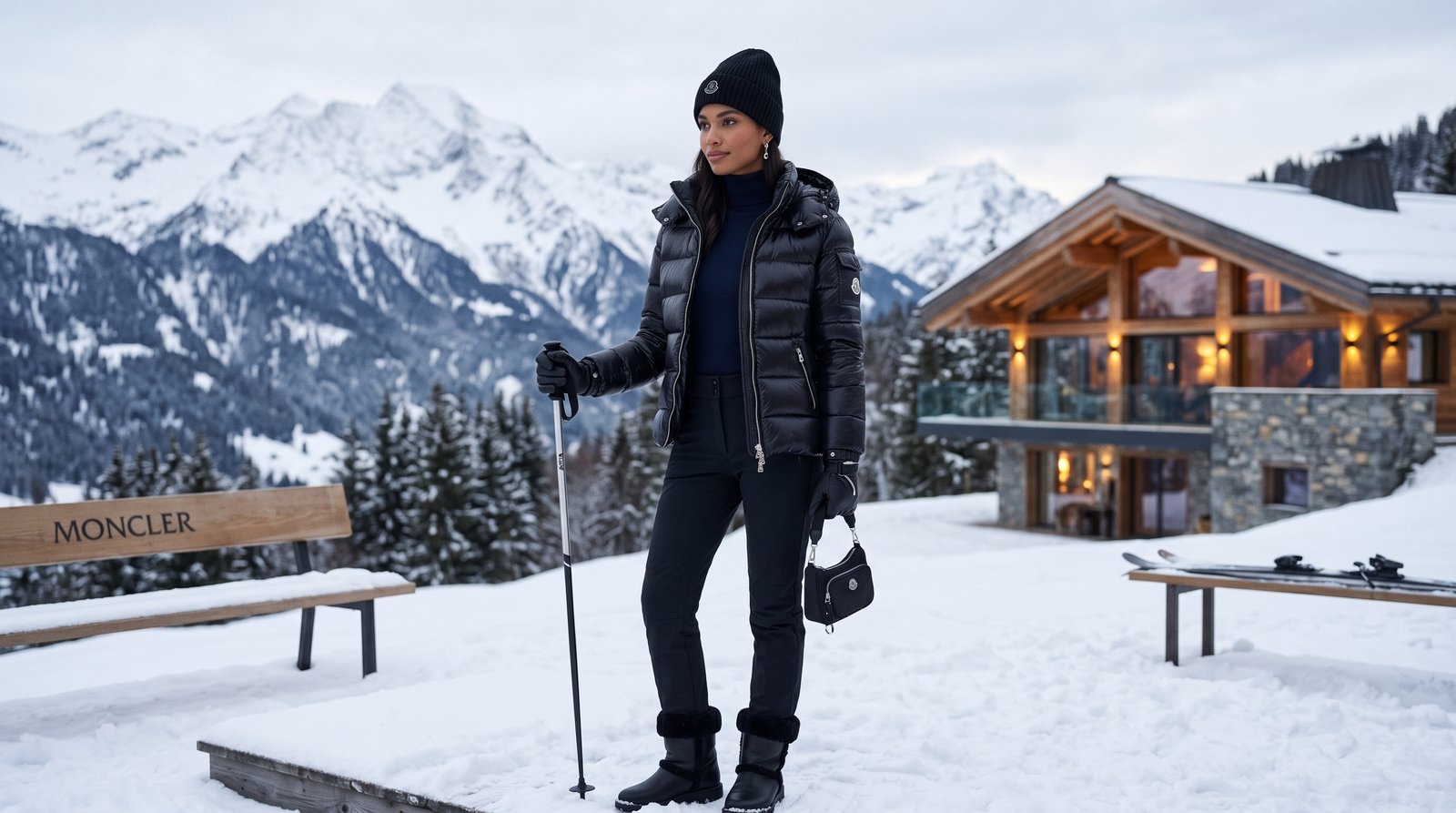
Moncler jackets occupy a rare position in luxury fashion: they are as credible on a mountain as they are on a city street.
Most fashion icons begin with a distinctive shape, logo or cultural moment. Moncler’s appeal is more layered. Its jackets began as purposeful Alpine equipment, but over decades they developed into symbols of winter luxury, technical innovation and modern outerwear style.
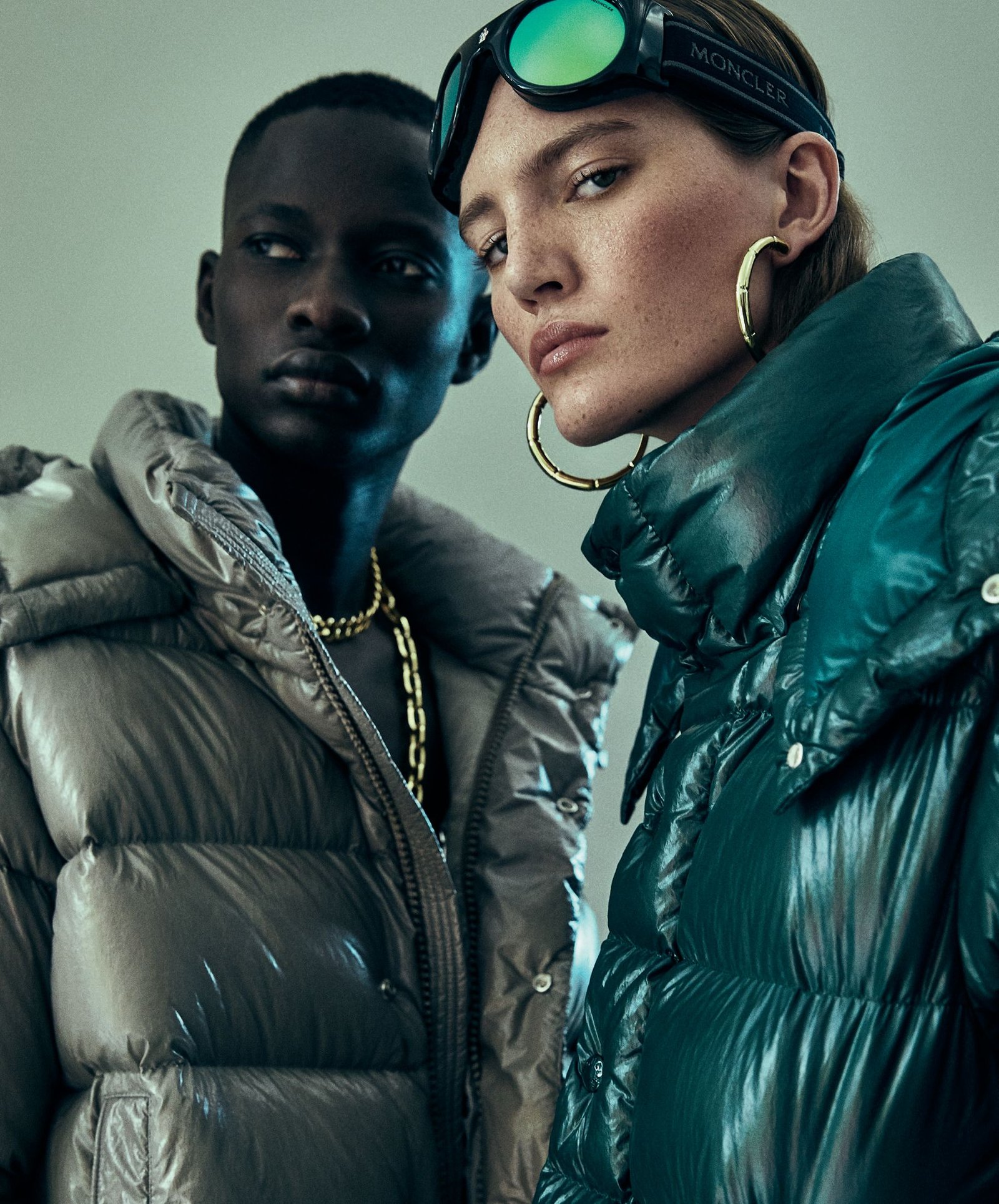
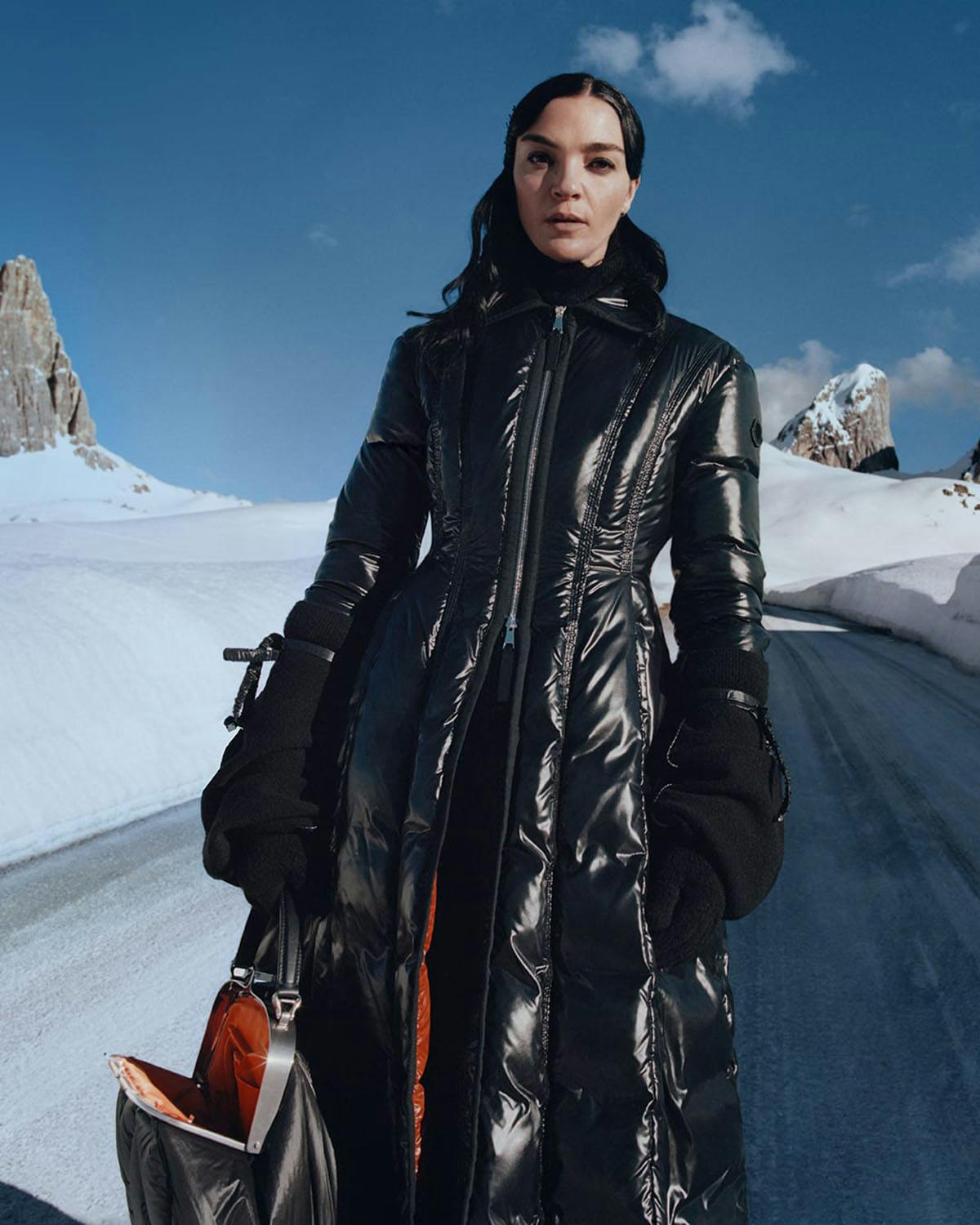
The most recognisable designs—particularly the Maya, Bady and Montcla—combine warmth, lightness, visible quilting and a compact silhouette. They look practical because they are rooted in performance, yet their proportions, glossy finishes and sleeve patch make them immediately legible as luxury.
That balance is why Moncler jackets have remained relevant long after the puffer became a seasonal trend. They do not simply protect against the cold; they make winter dressing feel intentional.
TL;DR
- Moncler began in the French Alps in 1952, producing equipment for mountain workers.
- Its technical roots gave the brand real performance credibility before it entered luxury fashion.
- Quilted boudin construction, glossy nylon and the sleeve patch created an instantly recognisable silhouette.
- Moncler made down jackets desirable in cities, not only on ski slopes.
- A luxury repositioning and Moncler Genius collaborations expanded its fashion authority.
- The jackets remain iconic because they combine function, fashion identity and strong cold-weather utility.
From French Alpine Equipment to Global Outerwear
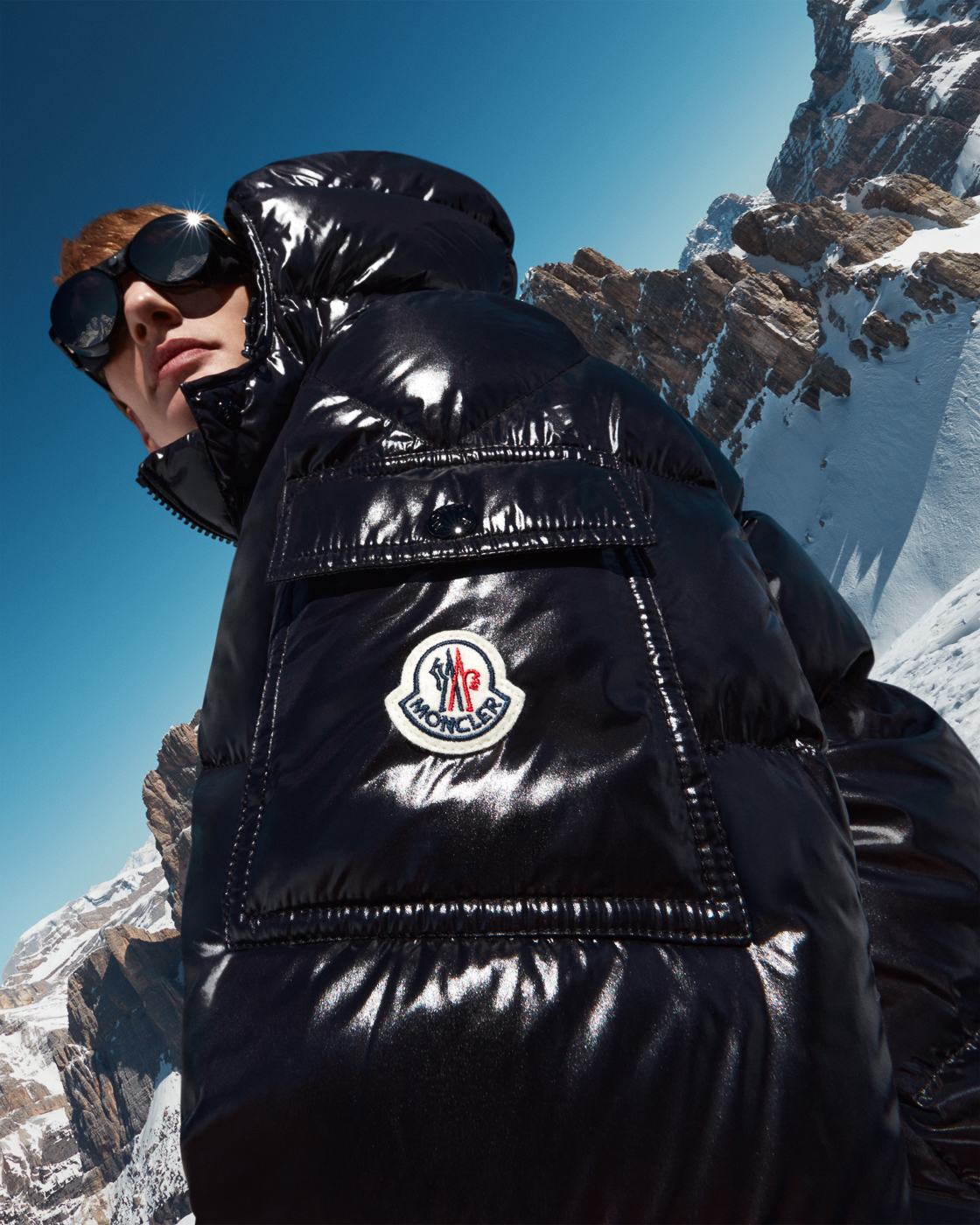
Moncler was founded in 1952 in Monestier-de-Clermont, a mountain village near Grenoble. Its name is an abbreviation of the village’s name, and its earliest products were designed around mountain life: quilted sleeping bags, tents and insulated capes for workers operating in cold Alpine conditions.
The down jacket emerged from this practical setting. It was not developed as a runway item or lifestyle accessory. It was designed to retain warmth without the bulk and weight associated with heavier outerwear.
That early purpose gave Moncler something many fashion brands cannot replicate: functional legitimacy.
In 1954, mountaineer Lionel Terray worked with Moncler on technical clothing for the Italian Karakoram expedition. The connection between down insulation, outdoor movement and extreme conditions became an important part of the brand’s story.
This heritage still matters because consumers can see it in the product. The high collars, down-filled chambers, detachable hoods, secure pockets and weather-resistant fabrics are not arbitrary design choices. They are part of an outerwear language built around protection.
Performance Made the Luxury Feel Credible
Luxury outerwear is most convincing when it delivers more than an expensive appearance.
Moncler’s strongest jackets combine insulation, lightness and weather protection with a silhouette that works outside the mountains. Technical fabrics such as longue saison nylon are central to this appeal. The material is lightweight, resistant and designed to hold down filling without creating unnecessary bulk.
The house’s current Maya 70 description captures that formula clearly: it is crafted in longue saison to provide warmth while maintaining a light weight, with a detachable hood and practical sleeve pocket.
That is the foundation of Moncler’s luxury status. The price is not justified by logo alone; the design draws on decades of research into weight, insulation, construction and wearability.
| Functional Feature | Style Impact |
|---|---|
| Down-filled boudin chambers | Creates the signature puffer silhouette |
| Lightweight technical nylon | Allows volume without excessive weight |
| Detachable hood | Makes the jacket more adaptable across climates |
| High collar and snap closure | Adds an unmistakable Alpine profile |
| Sleeve patch pocket | Gives the jacket a visible Moncler signature |
| Adjustable hem and cuffs | Refines the fit while retaining warmth |
The Puffer Became a Recognisable Shape
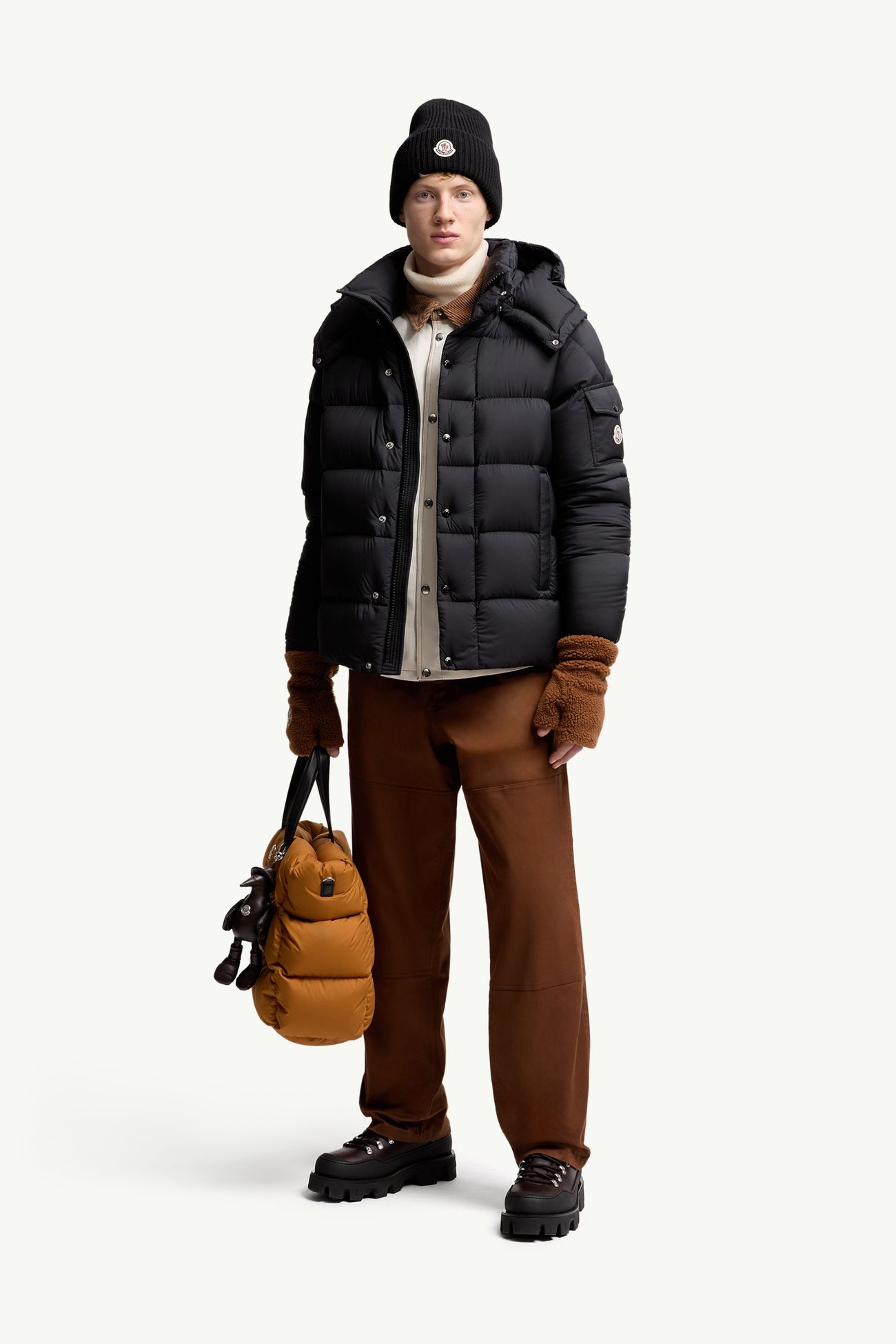
A Moncler jacket does not rely on a large all-over monogram. Its strongest identifier is the silhouette itself.
The classic short puffer has a high padded collar, rounded horizontal baffles, a slightly boxy body and a discreet but recognisable logo patch on the sleeve. These elements create a visual language that remains clear even when the jacket appears in black, navy, red, matte fabric or glossy nylon laqué.
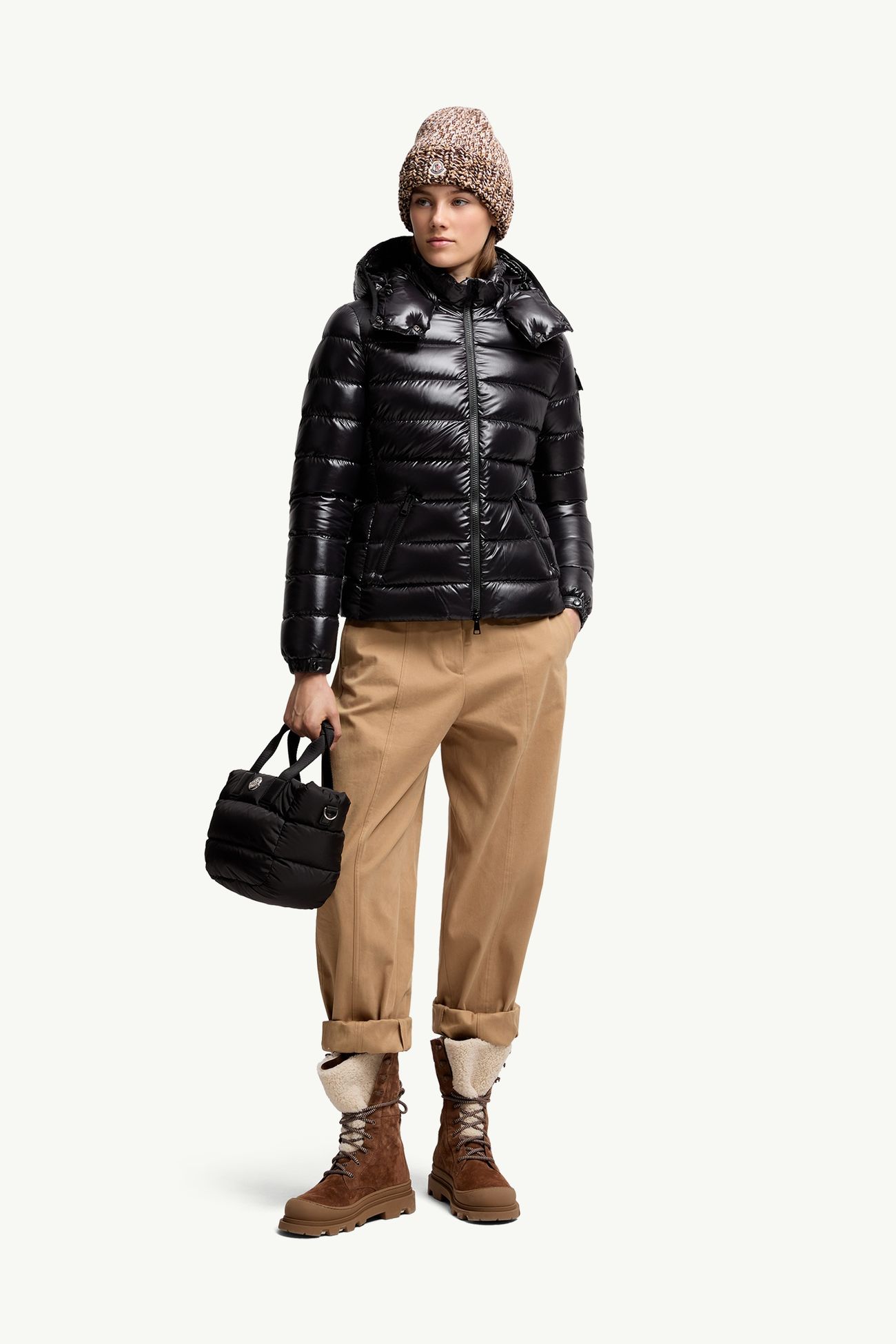
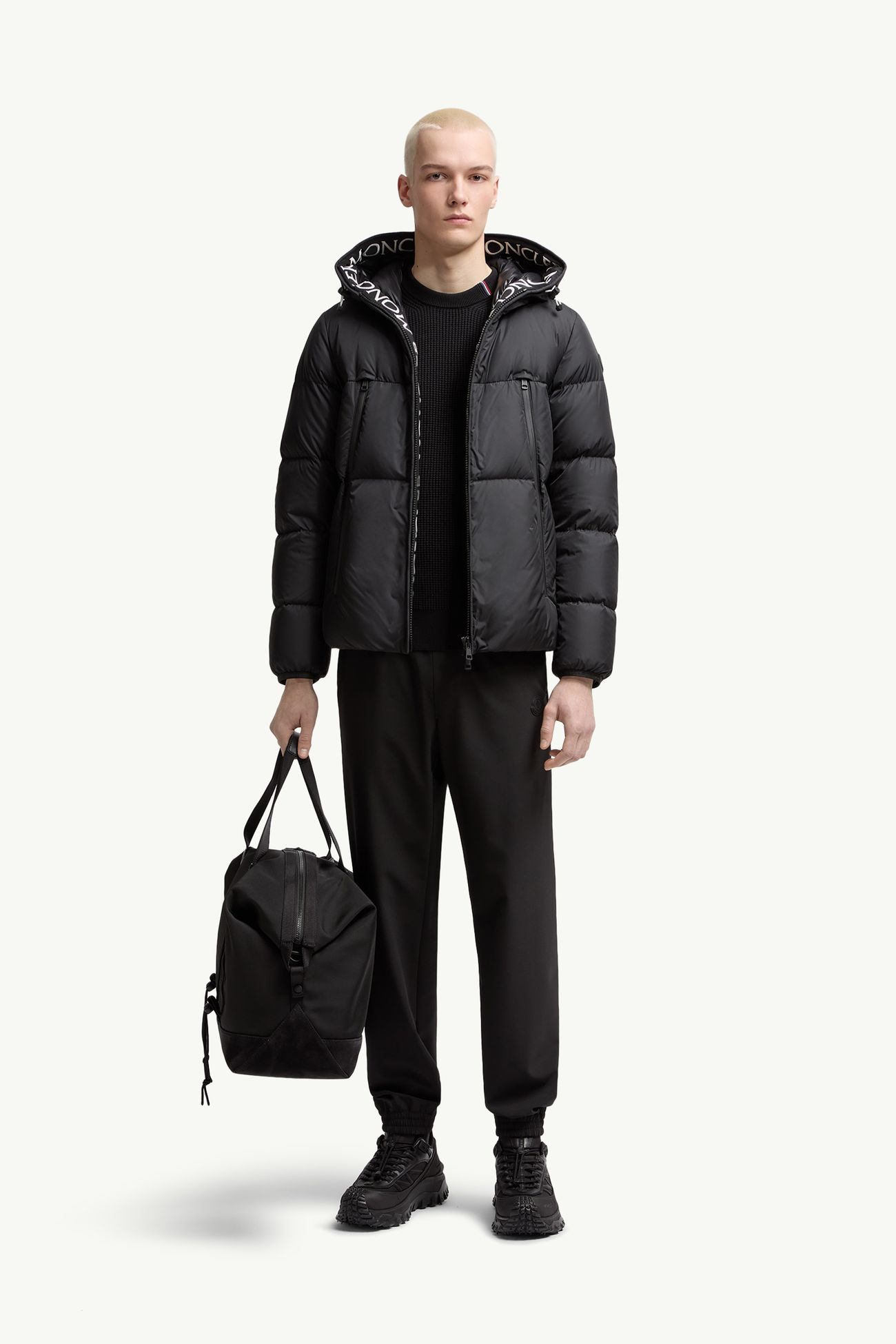
The Maya is the clearest example. Its proportions are familiar enough to feel timeless, but distinctive enough to remain a statement. The Bady takes that formula into a more fitted women’s silhouette, while the Montcla introduces logo detailing and a more urban, streamlined mood.
This clarity explains why Moncler can refresh the same core designs each season without losing their relevance. The colour may change, the finish may become matte or glossy, and the fit may move from regular to loose, but the essential shape remains intact.
Moncler Made Winter Dressing Feel Aspirational
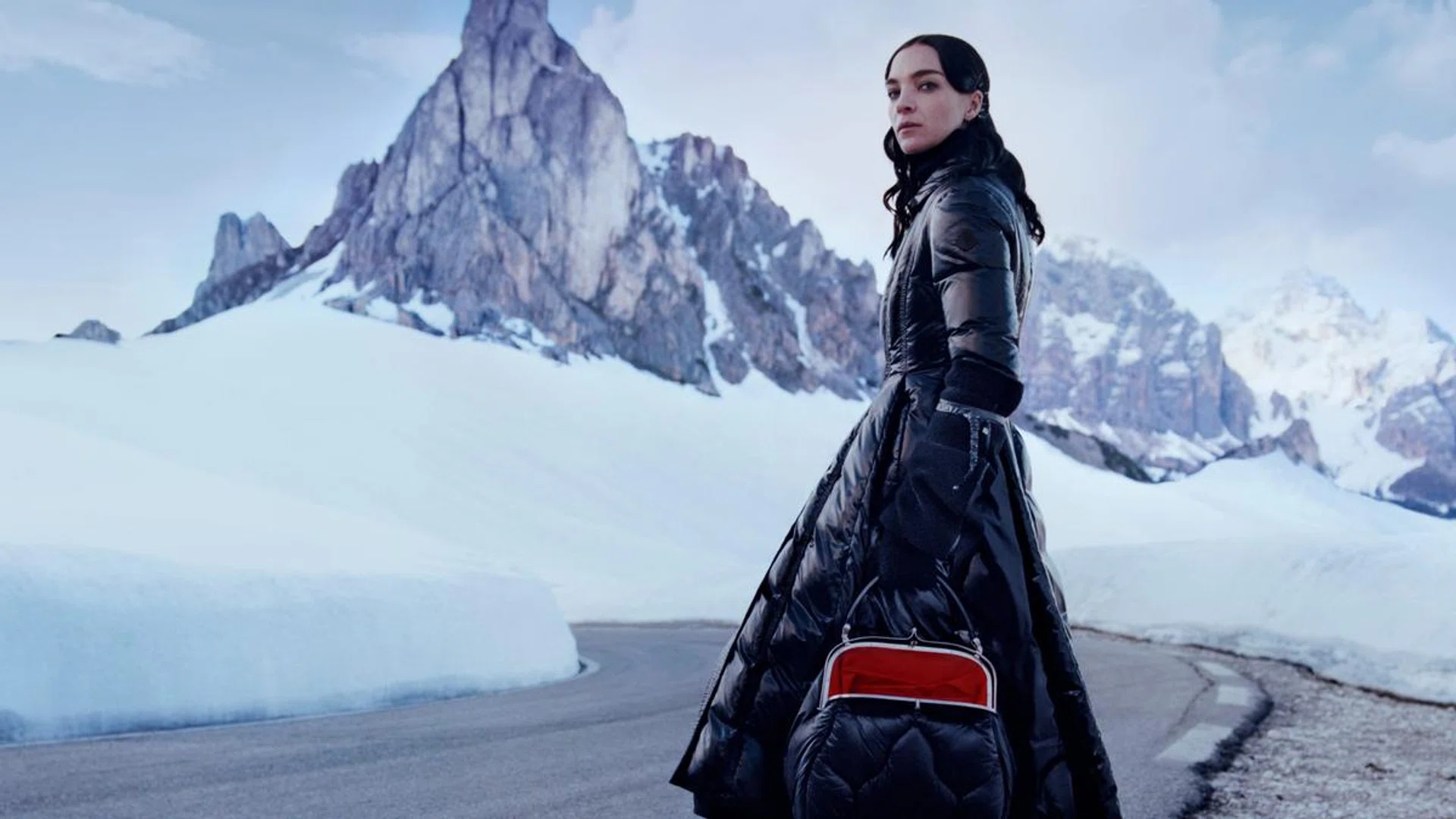
For much of the twentieth century, a winter jacket was often treated as a practical layer worn over the “real” outfit.
Moncler changed that perception. Its jackets became the centre of the look.
The combination of volume, shine and refined hardware means a Moncler puffer can make simple pieces—jeans, knitwear, leggings, tailoring or ski trousers—feel more deliberate. The jacket delivers a strong silhouette before any other styling element is added.
This is especially important in cities with long winters. A coat is often the garment people see most, which makes its visual impact more significant than a dress, blouse or sweater worn underneath.
Moncler understood that the outer layer could carry as much identity as the outfit itself. Its jackets made warmth visible, luxurious and culturally desirable.
The Luxury Repositioning Changed the Conversation
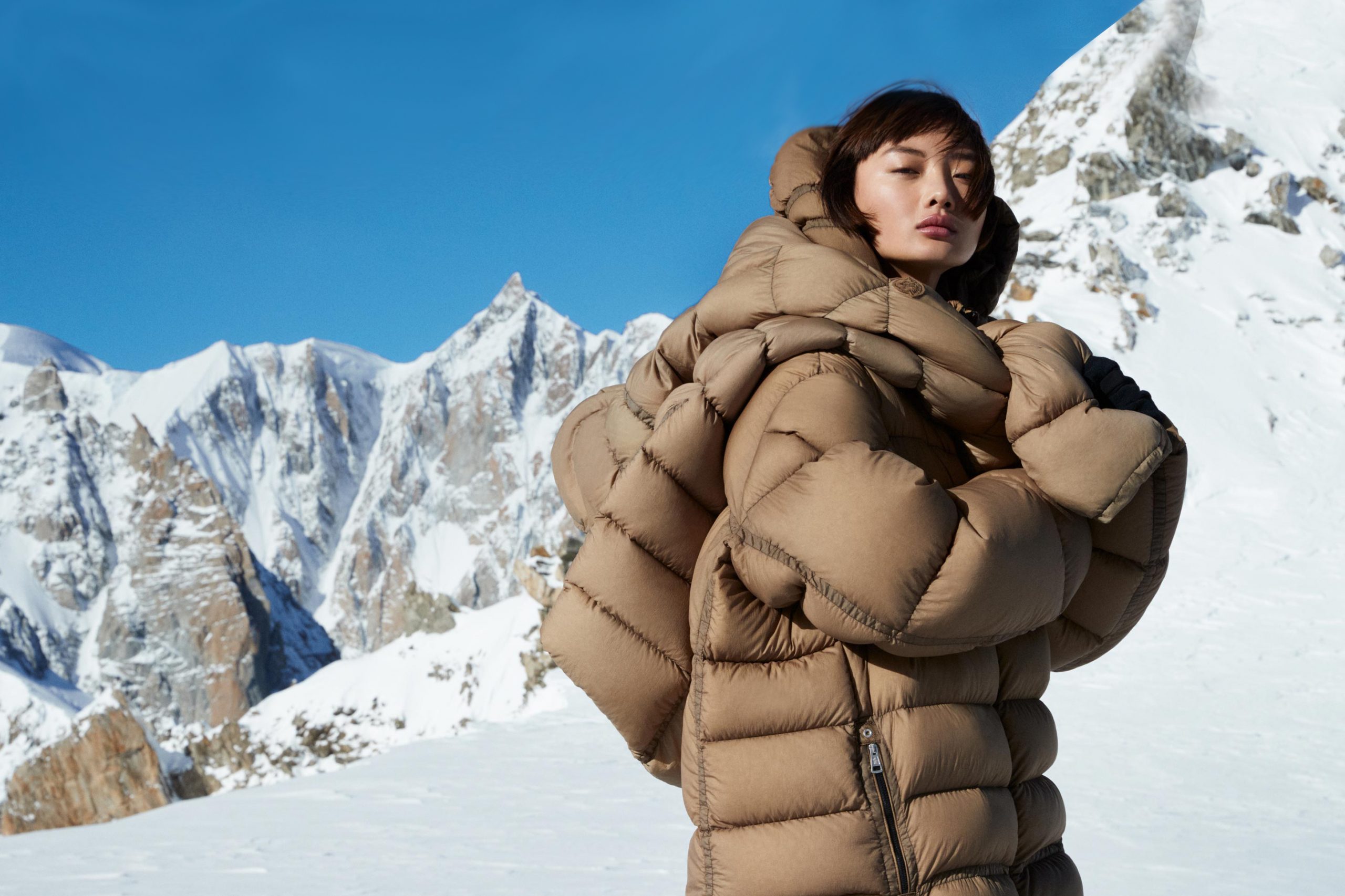
Moncler’s technical foundations alone do not explain its position in luxury fashion. The brand also needed to make performance clothing desirable within a contemporary fashion context.
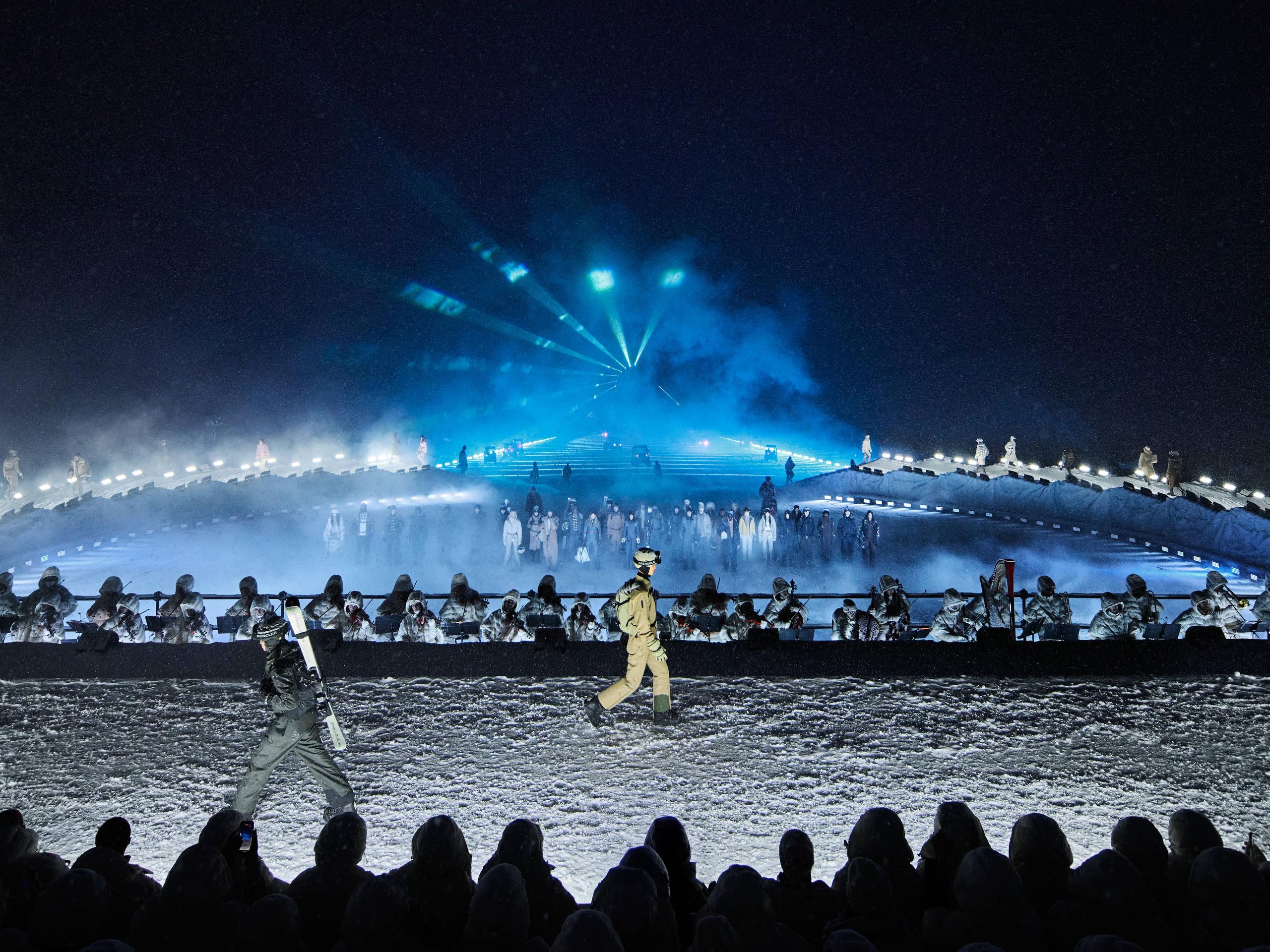
After Remo Ruffini acquired Moncler in 2003, the company underwent a global repositioning built around product research, lighter materials, modern proportions and luxury retail. The aim was not to abandon the Alpine past but to translate it for the runway, the city and an international audience.
This was a major shift in how consumers viewed down jackets. Instead of comparing them solely on warmth or outdoor specifications, people began to treat them as luxury purchases with the same emotional and visual value as a designer bag or shoe.
Moncler’s success helped establish outerwear as a category capable of carrying fashion prestige on its own.
Moncler Genius Kept the Jacket Culturally Relevant
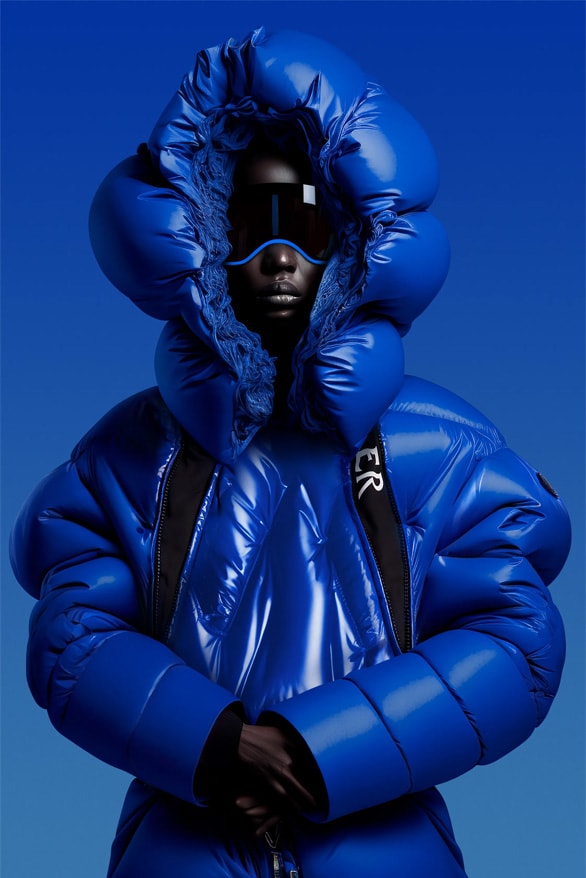
A luxury icon can become too familiar if it never evolves. Moncler avoided that through collaboration.
Launched in 2018, Moncler Genius brought together designers, artists and cultural figures to reinterpret the house’s codes. Instead of treating collaboration as an occasional marketing event, Moncler built a continuing platform for co-creation.
The Genius model matters because it allows the classic down jacket to enter different style worlds: minimalism, streetwear, avant-garde design, music, performance and art.
Some collaborative pieces are deliberately theatrical, but they strengthen the desirability of the core collection. They remind buyers that the simple black Maya or Bady belongs to a brand that remains creatively active.
This is one reason Moncler feels equally relevant to technical outerwear buyers and fashion-focused shoppers.
It Works Across Mountain, City and Streetwear Wardrobes
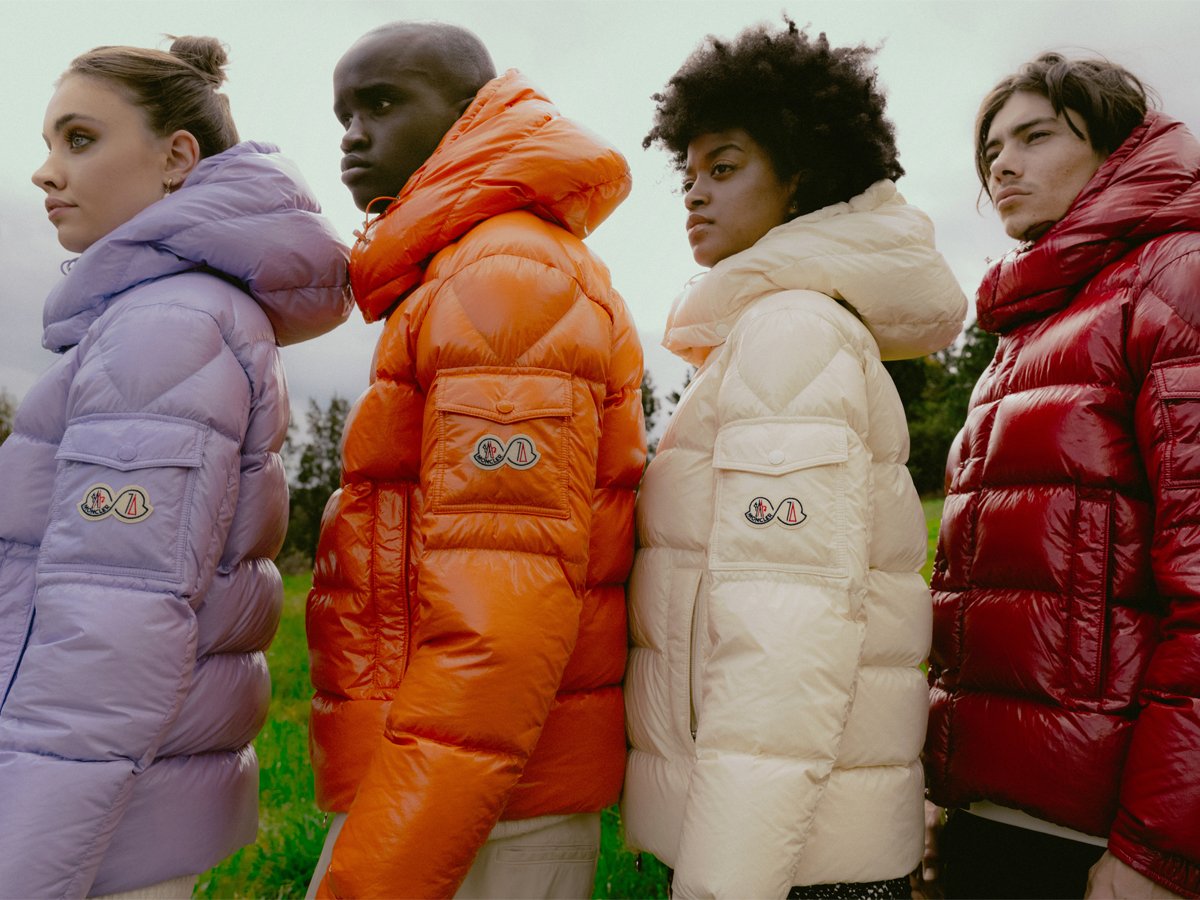
Moncler jackets are adaptable because they sit between categories.
A Maya can be worn with denim and trainers, but it also works over wide-leg trousers and knitwear. A Bady can sharpen a casual outfit while maintaining a fitted silhouette. A longer down coat can feel polished over tailoring, while Moncler Grenoble offers more technical layers for actual mountain conditions.
| Jacket Style | Best For | Wardrobe Personality |
|---|---|---|
| Maya 70 | Everyday winter wear and street-focused styling | Iconic, casual and versatile |
| Bady | Fitted urban outerwear | Feminine, glossy and compact |
| Montcla | City wear with stronger branding | Modern, graphic and sporty |
| Boed | Elevated cold-weather occasions | Defined, luxurious and more formal |
| Grenoble | Ski trips and performance-led layering | Technical, Alpine and fashion-aware |
This flexibility keeps Moncler from being limited to one environment. The same jacket can travel from a cold commute to a weekend trip, a café terrace or an evening walk.
Shop the Edit
Moncler Maya 70 Hooded Short Down Jacket
The definitive first Moncler for everyday winter style.
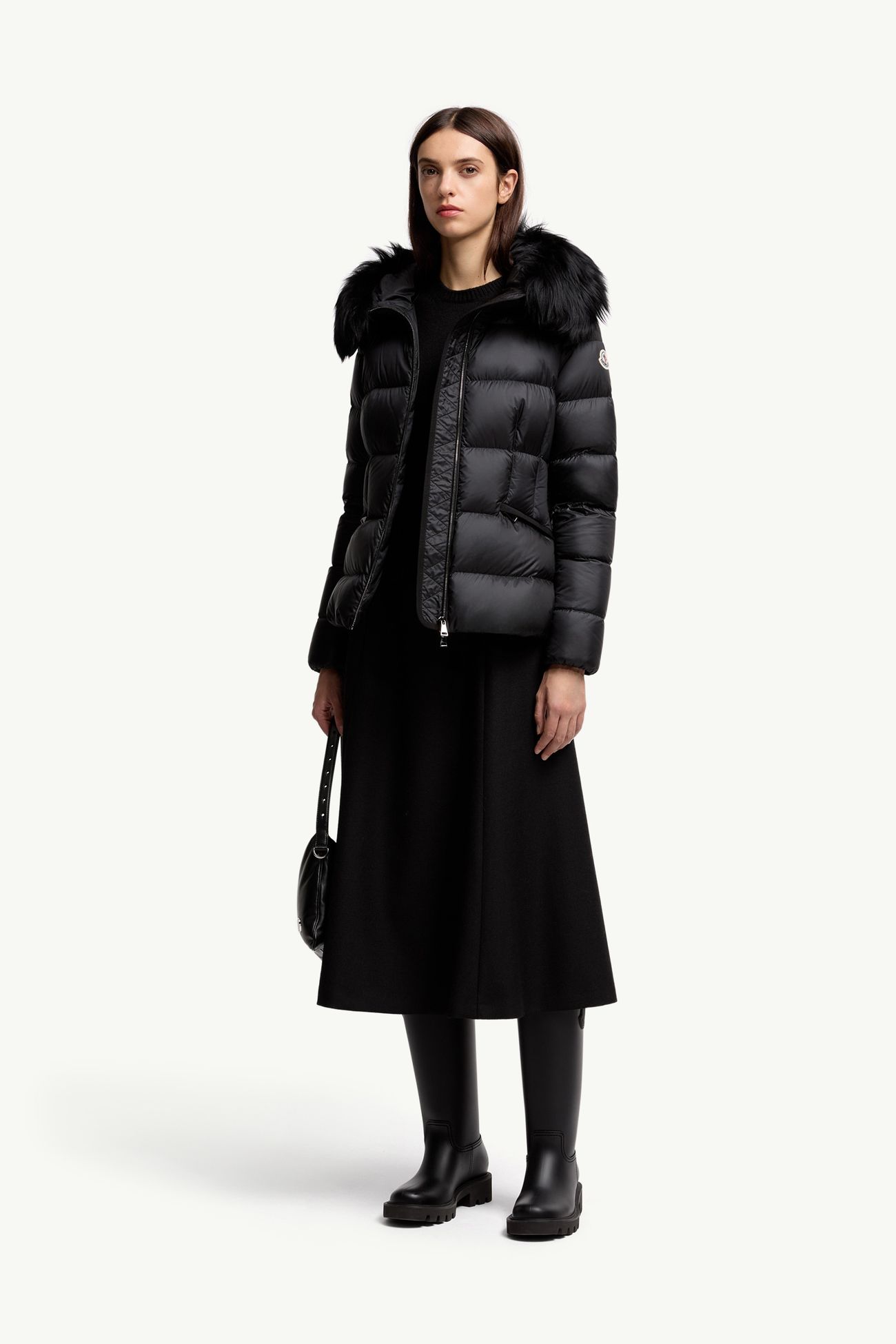
Boed Hooded Shearling-Trimmed Short Down Jacket
Elevated winter dressing and colder occasions.
Prices, colours, sizes and availability may vary by market.
Pros and Cons
| Pros | Cons |
|---|---|
| Genuine Alpine and technical outerwear heritage | High price point compared with standard winter jackets |
| Instantly recognisable silhouette without a large all-over logo | Some glossy finishes can feel less understated |
| Down insulation designed for warmth with low weight | Warm down styles may be excessive in mild climates |
| Strong city, travel and mountain versatility | Requires specialist care and careful storage |
| Core icons are refreshed without losing their identity | Collaborative pieces can be highly seasonal or limited |
Final Verdict
Moncler jackets became luxury icons because they solved a real problem before becoming fashionable.
Their history in the French Alps created functional credibility. Their high collars, quilted chambers, lightweight insulation and sleeve patch created a silhouette that is instantly recognisable. Their later luxury repositioning and Moncler Genius collaborations kept that silhouette relevant across changing fashion eras.
The strongest Moncler jackets do not force you to choose between warmth and style. They make performance part of the aesthetic.
That is why a Maya, Bady or Montcla can remain relevant for years: each is more than a puffer jacket. It is a piece of Alpine engineering translated into modern luxury.
