
TL;DR
China’s luxury growth narrative in 2026 increasingly centres on second-tier cities like Nanjing and Changsha — where rising middle-class spending, lower retail costs and strong consumer engagement are helping revive luxury demand as first-tier markets slow, prompting brands to recalibrate expansion strategies.
At a Glance
- China’s second-tier cities are now crucial to boosting luxury sales, as affluent middle-class consumers in places like Nanjing and Changsha spend at rising rates outside first-tier hubs.
- Research shows luxury spending in some second-tier markets increased by over 22 %, with average per-shopper spend rivaling or exceeding that in Beijing and Shanghai.
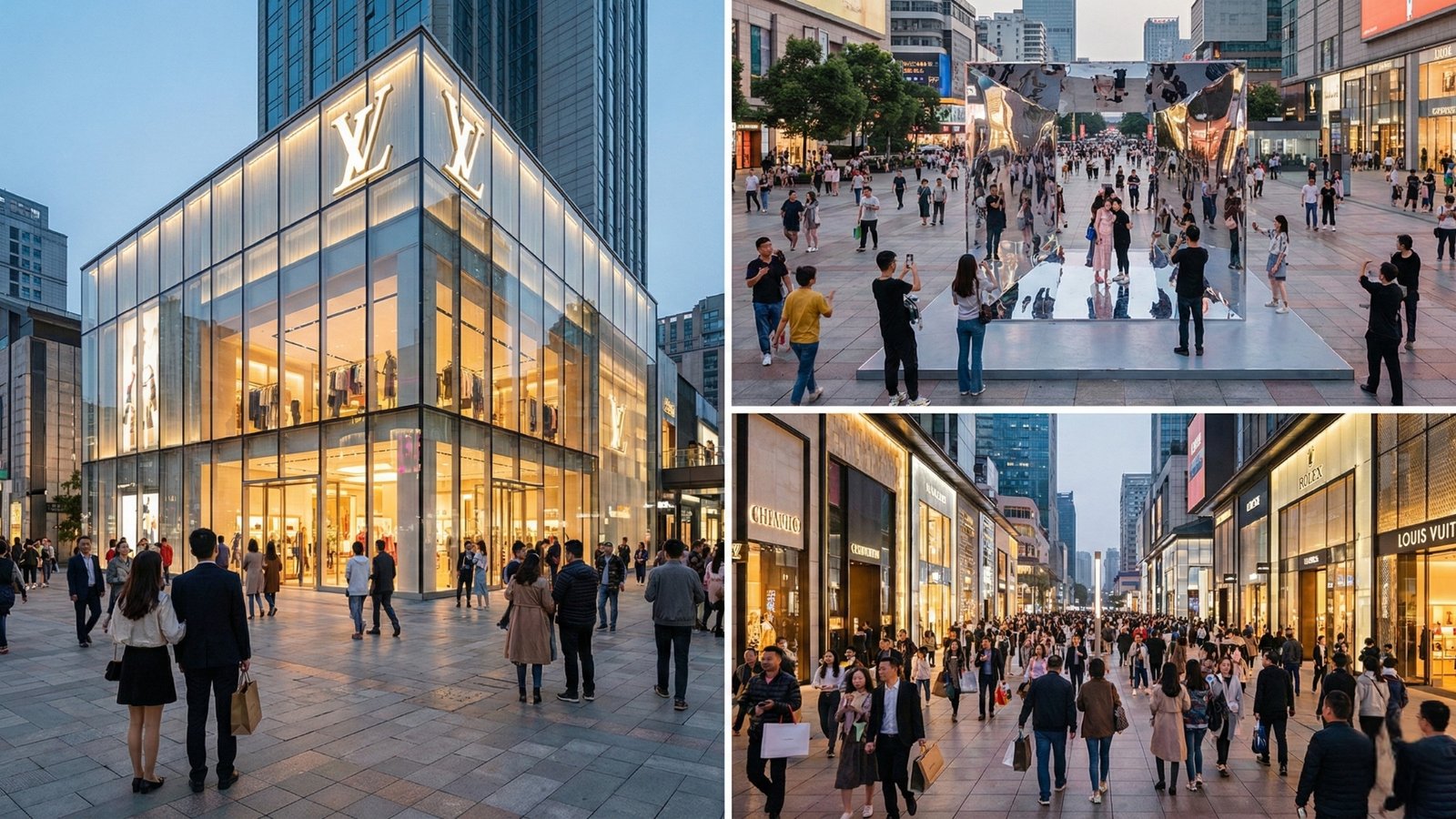
- Malls in cities such as Deji Plaza (Nanjing) and Changsha IFS are recording rapid growth in luxury transactions and attracting brands with exclusive activations and experiences.
- Luxury houses — from European heritage brands to global conglomerates — are recalibrating expansion and marketing strategies to tap these high-potential regional markets amid a broader China consumption recalibration.
Editorial Perspective
For years, China’s luxury consumption narrative was dominated by first-tier cities like Beijing, Shanghai, Shenzhen and Guangzhou — markets synonymous with international travel, global brand presence and affluent shoppers. But as luxury growth has softened and structural shifts reshape consumer patterns, second-tier cities are emerging as vital engines for future expansion.
According BoF, the shift reflects broader economic and demographic trends in China: a spreading middle class, lower living costs outside megacities, improved retail infrastructure and elevated spending capacity among younger, digitally-connected consumers. For luxury houses navigating a more cautious macroeconomic backdrop, these regional cities now offer fresh demand and scalable growth opportunities.
Why Second-Tier Cities Matter
1. Growing Consumer Spending Power
Several second-tier cities — such as Nanjing, Changsha, Wuhan and Hangzhou — have seen significant increases in per-shopper luxury spending, outperforming traditional first-tier markets in recent periods. In Nanjing, luxury retailers reported strong foot traffic and sales, challenging the assumption that only Beijing and Shanghai drive China’s high-end market.
This rising demand is often linked to local economic resilience, lower living costs and a strong middle class with discretionary income, especially among younger workers and families who value quality and lifestyle products.
2. More Affordable Retail Costs, Strong ROI Potential
Luxury brands expanding into second-tier markets benefit from lower retail rents and operational costs compared with first-tier locations — enabling better scalability and potentially higher returns on flagship and experiential store formats.
Research outside this particular story has shown average retail rents in second-tier cities can be significantly lower than in Beijing or Shanghai, helping brands optimize profitability as they diversify their footprint.
3. Shift in Consumer Behaviour Post-Pandemic
As pandemic-era travel restrictions eased and local consumption became more important, many luxury shoppers began prioritising domestic purchases over overseas spending. This shift elevates the role of regional retail hubs in capturing demand that may have once been channelled abroad. Additionally, second-tier cities are now home to digitally savvy consumers who engage with brands online before converting in-store — blending digital discovery with regional retail experiences.
This dynamic aligns with broader luxury market trends indicating partial recovery and structural change in 2026, where growth is more uneven across segments and regions and where localized strategies matter increasingly.
What This Means for Luxury Brands
Luxury houses that had concentrated their efforts in China’s first-tier cities are now rethinking growth strategies:
- Localized Market Strategies: Brands are tailoring assortments, communications and retail experiences to fit regional tastes and lifestyles, instead of relying solely on one-size-fits-all global messaging.
- Experiential Retail Hubs: Second-tier cities are hosting new flagship concept stores, cultural activations and pop-ups to engage local communities and deepen brand affinity.
- Balanced Footprint: A diversified retail footprint helps brands mitigate risks tied to slower growth zones and capitalise on cities where consumer confidence and spending power remain robust.
Second-tier cities are not merely substitutes for major metros — they are becoming complementary engines of luxury demand that could shape how brands prioritise market development in China’s evolving economic landscape.
