
TL;DR
Lanvin Group posted a €263 million loss in 2025 as revenue fell and restructuring efforts intensified. The company is now focused on a strategic reset — streamlining operations, strengthening core brands and rebuilding profitability in a challenging global luxury market.
At a Glance
- Lanvin Group reported a €263 million net loss in 2025.
- Revenue declined 18% year-over-year to around €240 million.
- The company is undergoing a strategic reset, including store closures and operational streamlining.
- Focus is shifting toward core brands and long-term profitability.
Editorial Perspective
Lanvin Group is entering a critical phase — one defined less by expansion and more by survival, discipline and reinvention.
After posting a €263 million loss in 2025, the luxury group is accelerating a broad strategic reset aimed at stabilizing performance and rebuilding long-term value.
The numbers reflect both external pressures and internal transformation. A softer global luxury market — particularly in China and Europe — has collided with deliberate restructuring efforts, creating short-term pain in pursuit of long-term recovery.
In essence, Lanvin Group is trading immediate growth for structural change.
What’s Behind the Losses
1. Declining Revenue Across the Portfolio
Lanvin Group’s revenue fell 18% to approximately €240 million, reflecting both macroeconomic headwinds and internal adjustments.
Performance varied across brands:
- Lanvin and Sergio Rossi saw steep declines
- Wolford experienced disruption but improved later in the year
- St. John remained relatively stable
The uneven performance highlights the challenge of managing a multi-brand luxury portfolio during a downturn.
2. Strategic Restructuring Costs
The losses are not purely operational — they are also strategic.
The group has been actively:
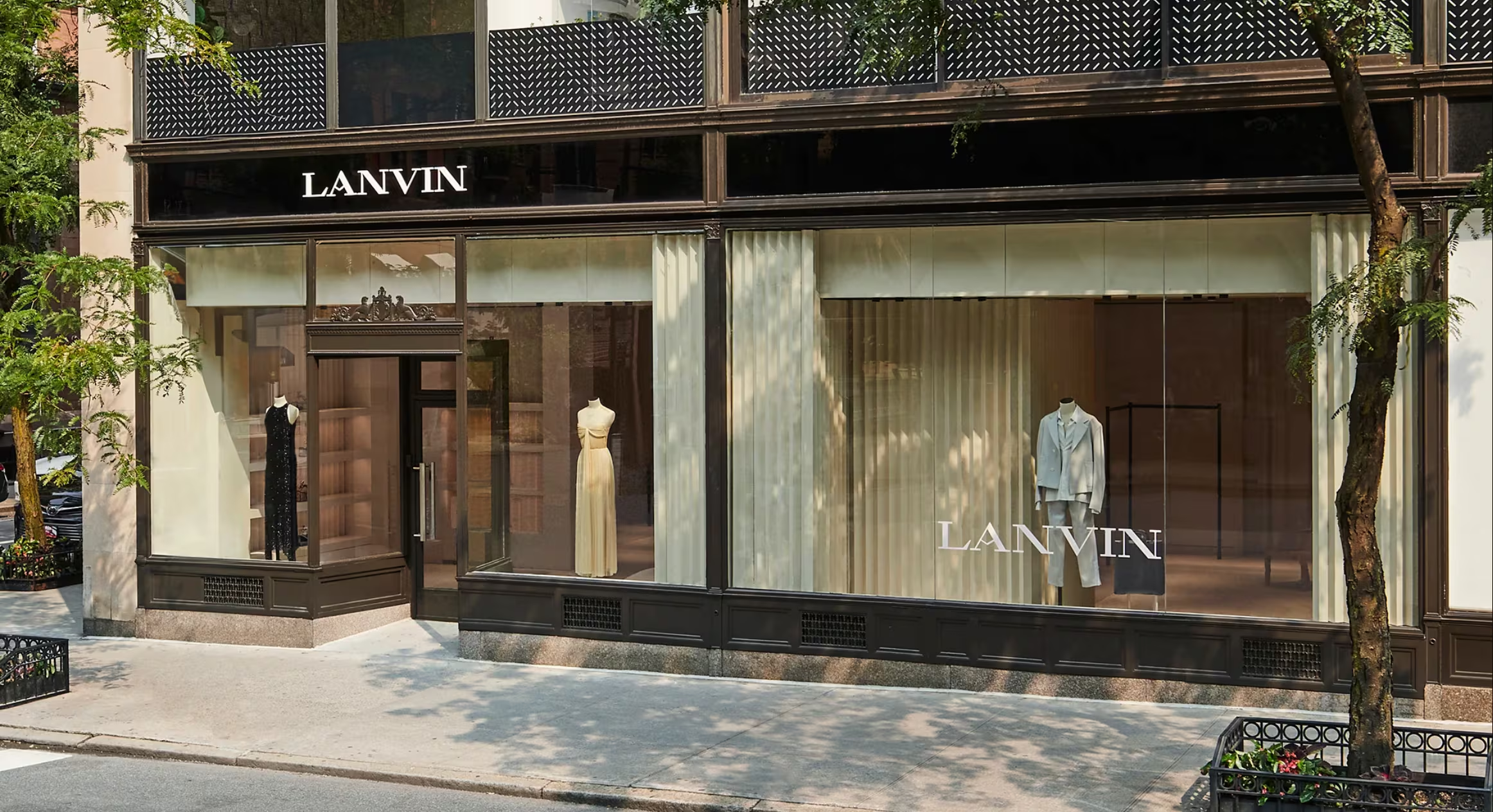
- Closing underperforming stores
- Optimizing its retail footprint
- Streamlining operations
These moves aim to create a leaner, more efficient business model — but come with short-term financial impact.
3. Market Headwinds in Key Regions
Global conditions played a significant role:
- Weak demand in Greater China
- Softer performance in EMEA markets
- More resilient but still cautious North American consumers
Luxury’s post-boom slowdown is exposing weaker players — and forcing structural change.
Inside the Strategic Reset
1. Focus on Core Brands
Lanvin Group is narrowing its focus to strengthen its most important labels:
- Lanvin (flagship brand)
- Wolford
- Sergio Rossi
- St. John
The goal is to:
- Reinforce brand identity
- Improve product positioning
- Drive more consistent performance
2. Cost Discipline and Efficiency
Despite declining revenue, the group has shown early signs of operational improvement:
- Adjusted EBITDA losses narrowed slightly
- Operating expenses reduced
- Inventory and retail networks optimized
This suggests that cost discipline is beginning to take effect — even if profitability remains distant.
3. Leadership and Creative Reset
Lanvin Group has also been reshaping leadership and creative direction across its brands.
Key changes include:
- New executives across the portfolio
- Fresh creative direction at Lanvin
- Repositioning efforts to modernize brand appeal
These moves are essential in luxury, where perception and desirability drive long-term value.
Why It Matters for Luxury
1. The Reality of a Slower Market
Luxury is no longer in a universal growth phase.
- Demand is more selective
- Regional disparities are increasing
- Smaller or less established groups face greater pressure
Lanvin Group’s results reflect this new reality.
2. Transformation Over Expansion
The industry is shifting from growth-at-all-costs to:
- Profitability
- Efficiency
- Brand clarity
Lanvin’s reset mirrors similar moves across the sector.
3. Multi-Brand Complexity
Managing multiple luxury brands is increasingly challenging:
- Each requires distinct positioning
- Performance can vary widely
- Investment must be carefully allocated
Success depends on balancing scale with focus.
What This Means for 2026
Lanvin Group’s path forward is clear — but not easy.
The strategy centers on:
- Completing its transformation program
- Stabilizing revenue
- Improving profitability over time
Early signs of momentum — particularly in the second half of 2025 — offer cautious optimism.
But the turnaround will take time.
