
TL;DR
Saudi Arabia’s Fashion Commission has partnered with Four Directions Real Estate to build a dedicated Fashion District in Riyadh — an integrated creative and commercial hub with studios, runway venues, incubators, workspaces and retail — designed to advance the Kingdom’s fashion sector and global cultural influence under Vision 2030 by around 2028.
At a Glance
- The Saudi Fashion Commission has signed a memorandum of understanding with Four Directions Real Estate Development to build a Fashion District in Riyadh — part of broader Vision 2030 efforts to expand the Kingdom’s cultural and creative economy.
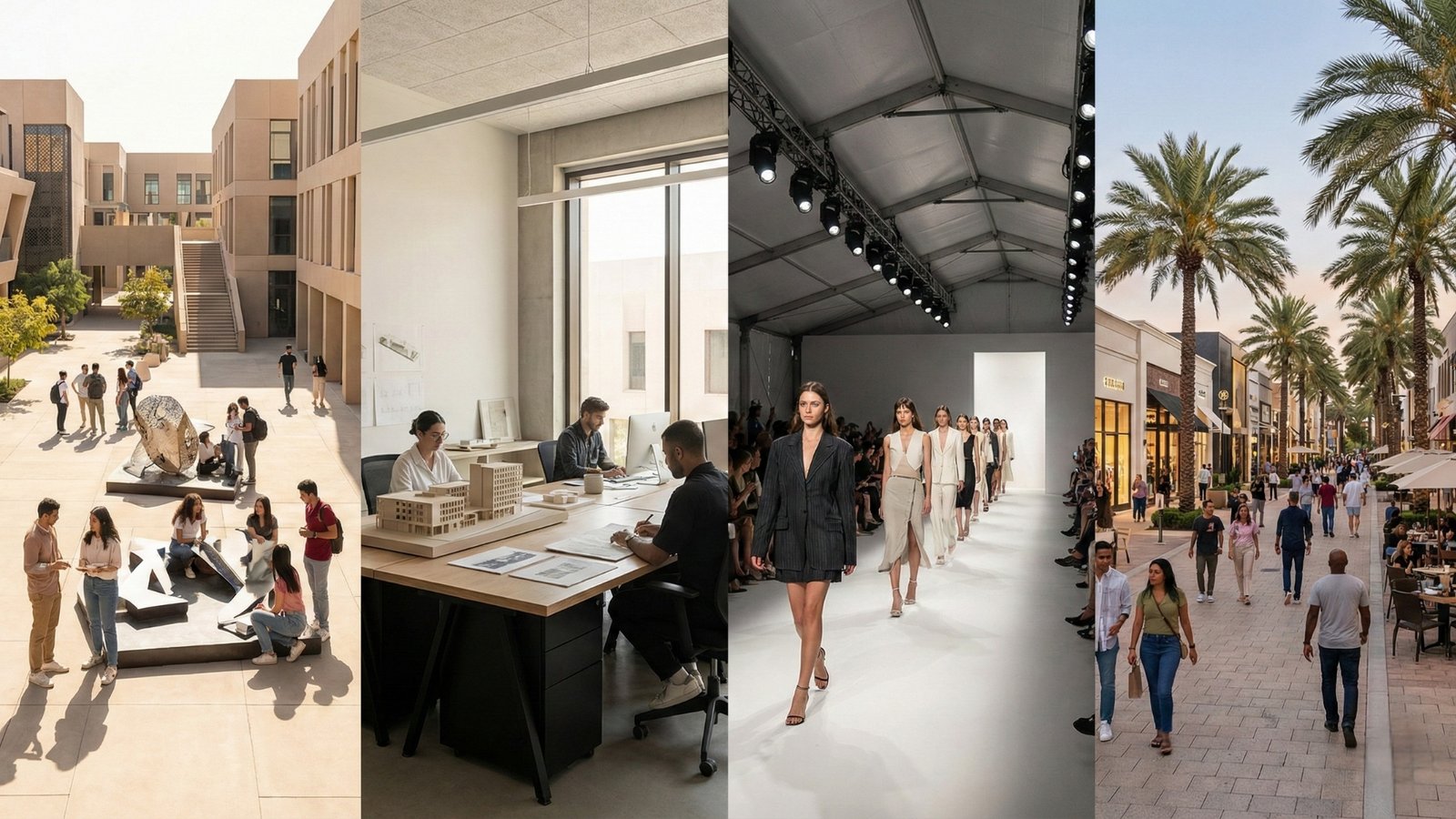
- The initiative will create an integrated urban destination for the fashion sector, including design studios, production spaces, fashion show venues, brand incubators, hospitality and workspaces.
- The Fashion District is envisioned as both a local growth engine and a global creative hub, reinforcing Saudi Arabia’s position as a cultural and commercial center for fashion.
- Project timelines target completion by around 2028, aligning with a renewed focus on non-oil growth and cultural tourism across Saudi Arabia as part of Vision 2030.
Editorial Perspective
Saudi Arabia’s Vision 2030 — a sweeping socio-economic reform agenda — has driven a series of cultural and creative initiatives aimed at diversifying the economy away from oil dependence and elevating the Kingdom’s global profile. The new Riyadh Fashion District represents the next phase of this strategy, focused specifically on strengthening the fashion value chain and unleashing creative talent both locally and internationally.
Source said unlike isolated retail developments, the Fashion District is planned as a multi-use ecosystem: from grassroots fashion education to runway infrastructure and brand acceleration — blending design, production, commerce and lifestyle experience.
What the Fashion District Will Include
Creative and Production Spaces
The Fashion District will house design studios, creative production workshops and collaborative spaces designed to support emerging and established designers alike. This broader infrastructure aims to scale local talent and bridge Saudi designers with global markets.
Show Venues and Showcase Platforms
Dedicated runway venues and presentation spaces will anchor the district — providing year-round platforms for fashion shows, presentations and brand activations that extend beyond the traditional fashion calendar.
Incubators, Retail and Hospitality
Plans include brand incubators for emerging talent, flexible workspaces, retail streets and hospitality offerings — positioning the district as a vibrant destination for creators, residents and visitors. By integrating education, retail and cultural programming, the district will aim to foster both economic activity and lifestyle appeal.
Why This Matters for Luxury and Fashion in 2026
- A new global creative hub: Saudi Arabia’s fashion ambitions reflect broader efforts to compete with New York, Paris, Milan and London as cultural and design centers.
- Economic diversification: Through Vision 2030, fashion and creative industries are increasingly viewed as key drivers of urban value creation, tourism and high-skill employment.
- Talent development: With initiatives like the Fashion District alongside programs such as Saudi 100 Brands, the Kingdom is cultivating a local talent pipeline and creating pathways for designers from emerging to global stages.
- Global cultural connectivity: Fashion events like Riyadh Fashion Week — previously spotlighted as catalysts for cultural positioning — will likely gain enhanced infrastructure and long-term visibility through the district’s ecosystem.
This launch marks a strategic inflection point: Saudi Arabia isn’t just hosting fashion events — it’s building the infrastructure and urban framework that could reshape regional design, creativity and luxury markets in the decade ahead.
