
TL;DR
Dubai has emerged as a global hotspot for fragrance dupes and broader olfactory culture in 2026, blending its heritage as a perfume capital with social-media-driven demand for affordable alternatives, expanding export influence and a thriving retail ecosystem that bridges luxury and accessible scent experiences.
At a Glance
- Dubai has become a global hub for fragrance dupes — affordable scent alternatives that replicate the profiles of high-end perfumes — partly fuelled by social-media trends and consumer demand for accessible olfactory experiences.
- The city’s status as a global luxury fragrance capital and growing export footprint give it unique advantage in both premium and accessible scent markets.
- Social platforms like TikTok have amplified interest in smell culture, driving visibility and sales of dupes that mirror designer perfume profiles.
- Dubai’s longstanding perfume traditions, regional preferences for rich notes such as oud and amber, and thriving retail ecosystems continue to shape how scents are created, consumed and commercialised internationally.
Editorial Perspective
The fragrance world is no longer defined solely by heritage houses in Europe. Business of Fashion highlights Dubai’s ascent as a powerhouse in scent culture — not just for luxury perfumes, but for accessible alternatives and regional fragrance innovation.
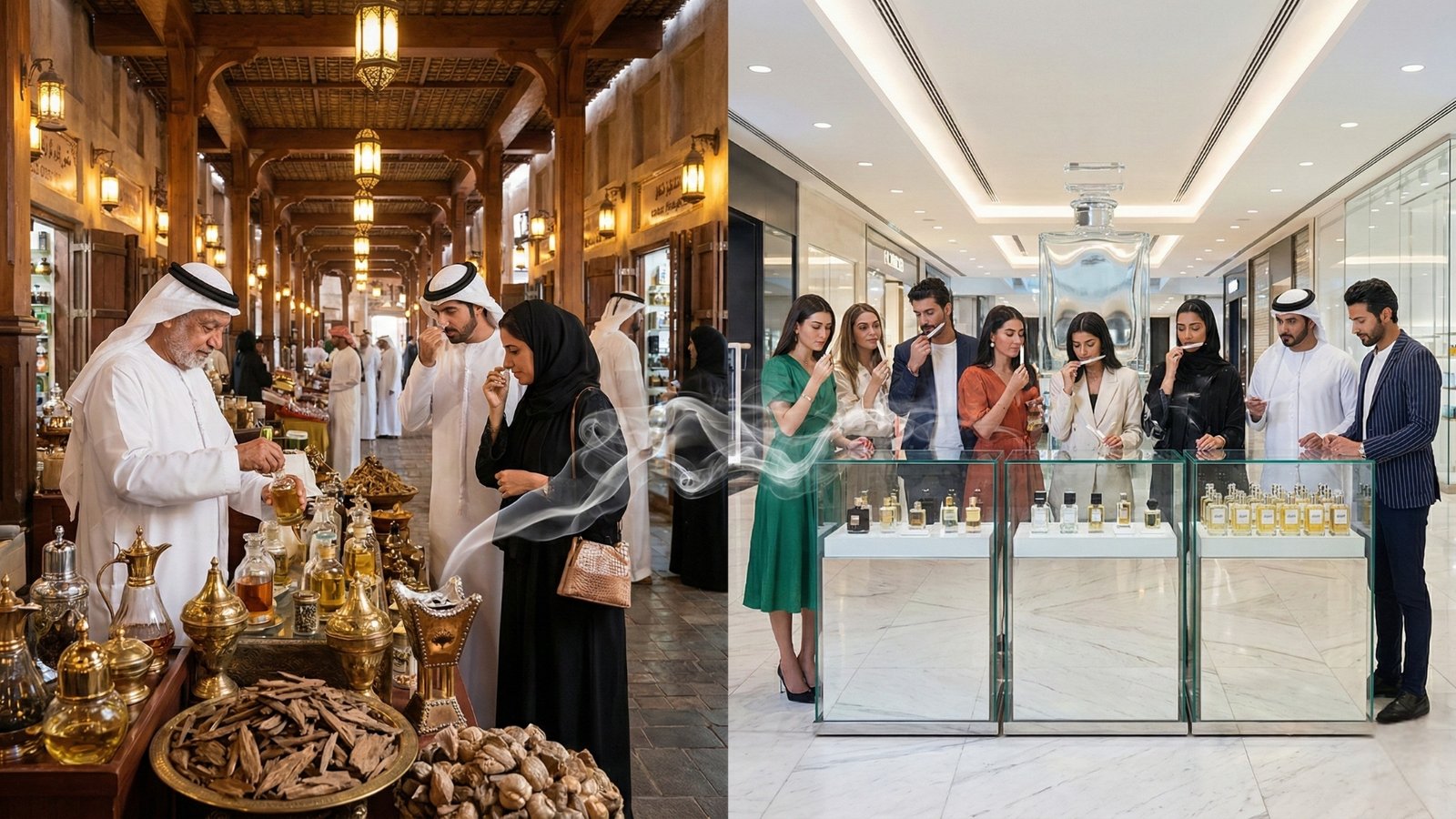
Previously known for its deep-rooted traditions in attars and oud-based compositions, Dubai has leveraged its cosmopolitan consumer base, luxury retail scene and vibrant digital communities to cultivate an ecosystem where both high-end and “dupe” fragrances thrive. This evolution underscores a broader shift in how perfumes are discovered, shared and valued in the digital age.
Fragrance Dupes: Accessibility Meets Culture
Fragrance “dupes” — affordable alternatives that aim to approximate the scent profiles of well-known designer perfumes — have found a receptive audience in Dubai for several reasons:
- Consumer appetite: Shoppers increasingly seek value-oriented options that still deliver familiar olfactory landscapes, especially amid rising prices for luxury bottles.
- Social amplification: Platforms like TikTok and Instagram spotlight trending scent profiles and budget-friendly finds, turning specific dupe labels into viral favourites.
- Retail density: Dubai’s mix of luxury perfume boutiques, niche houses and local scent ateliers offers consumers choice and discovery — from bespoke oud compositions to modern dupe collections.
This dynamic has helped sustain a vibrant market where fragrance lovers — from seasoned collectors to trend-driven shoppers — can navigate between premium experiences and more affordable options.
Dubai’s Broader Fragrance Influence
Dubai’s role in the global fragrance landscape extends beyond dupes. A recent analysis of the UAE’s fragrance sector shows:
- The UAE is becoming a significant global fragrance exporter, with perfume exports rising sharply and positioning the country among the world’s top producers outside traditional European hubs.
- Regional olfactory traditions — particularly the use of oud, amber and rose — remain central to both local tastes and international perfume design narratives.
- Bespoke perfumery and artisanal scent experiences — from traditional souk boutiques to luxury flagship spaces — continue to draw global interest and tourism, reinforcing the city’s olfactory identity.
This blend of heritage, innovation and accessibility gives Dubai a distinctive imprint on fragrance culture that transcends simple categorisations of luxury or budget.
Why This Matters in 2026 Beauty
Dubai’s fragrance phenomenon illuminates several industry trends:
- Democratisation of scent: Fragrance is increasingly shaped by community discourse, social discovery and value-oriented alternatives, not just classic luxury marketing.
- Cultural export: The UAE’s scented traditions and growing export footprint underscore how regional olfactory cultures can shape global perceptions and product development.
- Retail hybridisation: Markets where luxury boutiques and “accessible” dupe offerings coexist create layered consumer journeys that cater to diverse tastes and budgets.
For brands and retailers alike, understanding Dubai’s role — as both a luxury perfume destination and a hub for fragrance alternatives — offers insight into how scent discovery and consumption are evolving around the world.
