
TL;DR
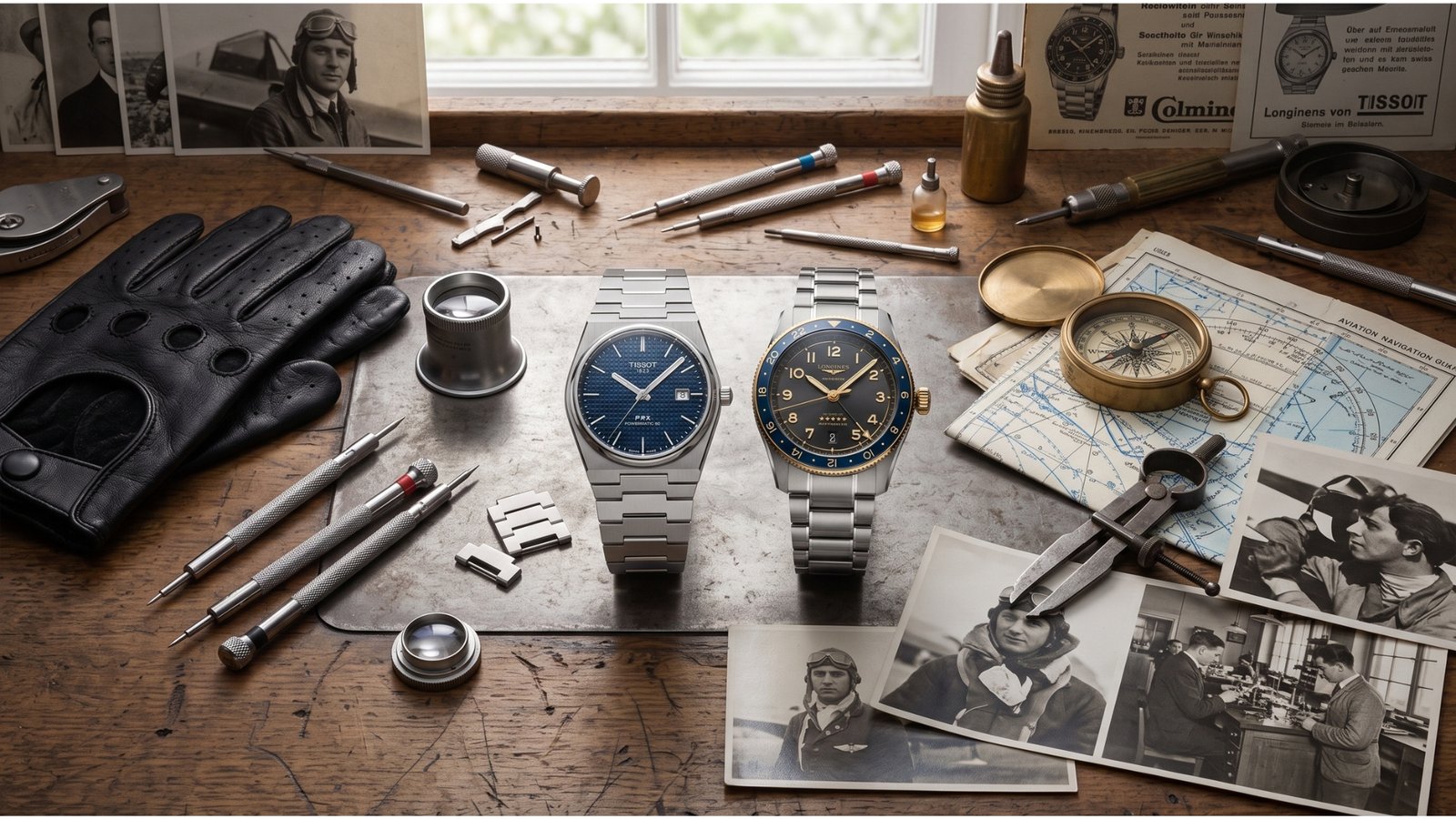
Tissot vs Longines are two historic Swiss watchmakers, but they occupy distinctly different positions in today’s market.
- Choose Tissot if you want an accessible entry into Swiss watchmaking, excellent specifications for the money, quartz and mechanical choices, and popular designs such as the PRX.
- Choose Longines if you prioritize higher-end finishing, stronger mechanical watchmaking credentials, COSC-certified options, richer aviation heritage, and a more prestigious luxury position.
Simply put:
- Tissot offers exceptional accessible Swiss watchmaking.
- Longines offers a more refined luxury experience.
Tissot traces its history to 1853 in Le Locle, while Longines has been based in Saint-Imier since 1832. Both are now part of the Swatch Group, but their positioning allows them to serve different segments of the Swiss watch market.
Table of Contents
Introduction
Few comparisons illustrate the hierarchy of modern Swiss watchmaking as clearly as Tissot vs Longines.
Both have genuine 19th-century histories.
Both make mechanical watches.
Both combine heritage designs with modern movements.
And both belong to the same parent company.
Yet they are not direct equivalents.
Tissot dates to 1853 and remains based in Le Locle, Switzerland. Over more than 170 years, the company has built an identity around making Swiss watchmaking available to a broad audience while combining traditional designs with practical innovation.
Today, collections such as the PRX, Gentleman, Seastar, Le Locle, and Chemin des Tourelles allow buyers to enter Swiss watch ownership without immediately moving into several-thousand-dollar territory.
The PRX demonstrates this formula particularly well.
The current automatic PRX uses the Powermatic 80 movement with up to 80 hours of power reserve, a Nivachron balance spring, sapphire crystal, and 100 metres of water resistance. A current 35mm steel version is listed at $795 in the U.S.
Longines occupies the next step upward.
The brand has been based in Saint-Imier since 1832, and its identity combines elegance with extensive historical experience in precision timing, aviation, sport, and watches designed for exploration.
Current collections such as the Spirit Zulu Time, Conquest, HydroConquest, Legend Diver, and Master Collection combine that heritage with more premium finishing and increasingly sophisticated mechanical specifications.
The result is a comparison that is less about deciding whether one company makes “good watches.”
Both do.
The more useful question is:
Is Longines worth paying considerably more for—or does Tissot already give you everything you need from a Swiss watch?
Heritage & Brand Identity
Tissot: Accessible Swiss Watchmaking Since 1853

Tissot’s story began in Le Locle in 1853.
The brand describes its philosophy as balancing tradition with a pioneering spirit, and accessibility remains an important part of its modern identity.
That positioning should not be confused with a lack of watchmaking credibility.
Tissot has spent more than 170 years producing Swiss watches and today operates across mechanical, quartz, sport, dress, and connected categories.
It also maintains an unusually visible relationship with professional sport. Tissot currently serves as official timekeeper for competitions including the NBA and WNBA, Tour de France, and MotoGP.
Today, Tissot is recognized for:
- Accessible Swiss watchmaking
- Powermatic 80 movements
- Sport timing
- Broad product variety
- Strong price-to-specification value
Signature Tissot Collections
| Collection | Known For |
|---|---|
| PRX | Integrated-bracelet sport style |
| Gentleman | Everyday Swiss watch |
| Seastar | Diving watches |
| Le Locle | Traditional elegance |
| Chemin des Tourelles | Mechanical heritage |
| Ballade | Refined everyday watch |
| T-Touch | Multifunction technology |
| Heritage | Archive-inspired designs |
Longines: Elegance, Aviation & Performance

Longines predates Tissot by more than two decades.
Its history begins in Saint-Imier in 1832, when Auguste Agassiz entered the watchmaking business. Longines remains based in Saint-Imier today, and the company summarizes its identity through three central ideas: elegance, tradition, and performance.
Its historical depth is particularly evident in aviation and navigation.
The modern Spirit Zulu Time, for example, references Longines’ first dual-time-zone wristwatch from 1925. Current models use exclusive Longines automatic calibres with silicon balance springs, magnetic resistance, COSC chronometer certification, and up to 72 hours of power reserve.
That represents the broader difference between these two companies.
Tissot is designed to make Swiss watchmaking accessible.
Longines uses similar Swiss industrial foundations to create a more elevated mechanical and finishing experience.
Today, Longines is recognized for:
- Aviation heritage
- Elegant Swiss watchmaking
- Chronograph history
- Precision timing
- Luxury sport watches
Signature Longines Collections
| Collection | Known For |
|---|---|
| Spirit Zulu Time | GMT & aviation |
| Spirit | Aviation heritage |
| Conquest | Everyday sport luxury |
| HydroConquest | Modern diving |
| Legend Diver | Heritage diving |
| Master Collection | Traditional watchmaking |
| Conquest Heritage | Vintage elegance |
| Ultra-Chron | High-frequency heritage |
Heritage Comparison
| Category | Tissot | Longines |
|---|---|---|
| Founded | 1853 | 1832 |
| Historic Base | Le Locle | Saint-Imier |
| Swiss Heritage | ★★★★★ | ★★★★★ |
| Aviation Heritage | ★★★★☆ | ★★★★★ |
| Sport Timing | ★★★★★ | ★★★★★ |
| Historical Watchmaking Depth | ★★★★☆ | ★★★★★ |
| Contemporary Recognition | ★★★★★ | ★★★★★ |
Heritage Winner
Longines
Both companies possess legitimate Swiss watchmaking histories that many newer luxury brands cannot match.
Tissot has been making watches in Le Locle for more than 170 years, and its modern sporting partnerships have helped preserve extraordinary global visibility.
But Longines wins on historical depth.
Its story reaches back to 1832, and the company has particularly significant archives around aviation, multiple time zones, precision timing, sport, and exploration. Longines itself describes a history spanning nearly two centuries from its creation in Saint-Imier to the present.
Design Philosophy
Tissot: Swiss Watchmaking for Everyone
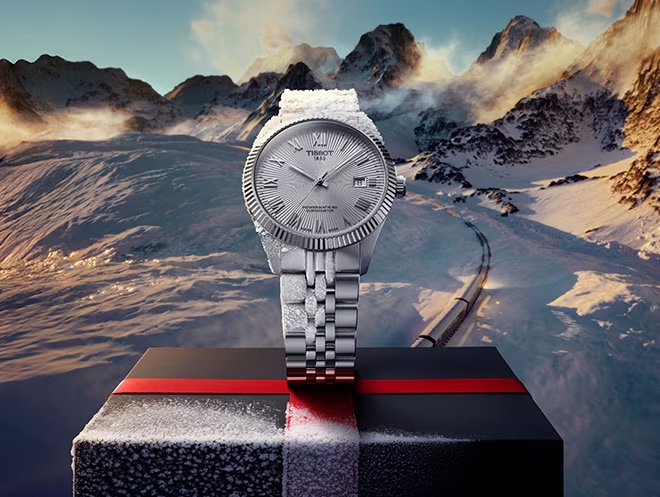
Tissot’s greatest strength is accessibility without abandoning traditional Swiss-watch cues.
Its current catalogue covers almost every major category:
- Integrated-bracelet sport watches
- Dive watches
- Dress watches
- Chronographs
- Quartz watches
- Mechanical watches
- Connected watches
The PRX is the clearest expression of Tissot’s modern design success.
Its case shape draws from a 1978 Tissot design, but the modern automatic version adds contemporary specifications including a Powermatic 80 movement, Nivachron balance spring, sapphire crystal, and 100 metres of water resistance.
That combination has allowed Tissot to offer the look and feel of a contemporary integrated-bracelet mechanical sports watch at a remarkably approachable price.
Longines: Refined Heritage
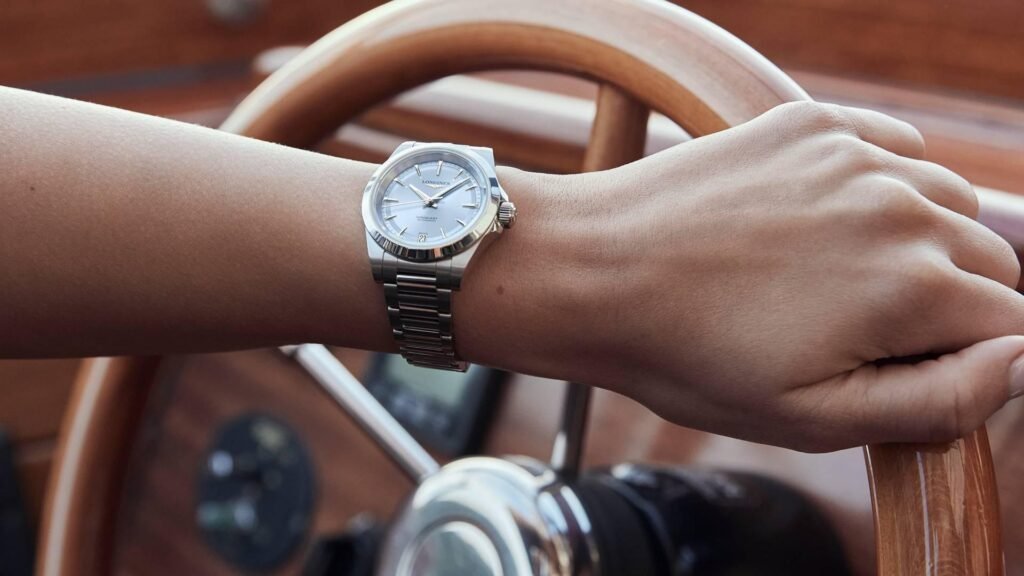
Longines takes a more refined approach.
Its defining characteristics include:
- Classical proportions
- Strong archival references
- Premium dial finishing
- Mechanical complications
- Sport-luxury versatility
The Spirit Zulu Time demonstrates how the brand combines heritage with modern functionality.
Its design references Longines’ historical expertise with multiple time zones, but the current execution includes a ceramic bidirectional bezel, exclusive automatic calibre, silicon balance spring, COSC certification, and up to 72 hours of power reserve.
Longines therefore feels less focused on maximizing specifications at the lowest possible price and more focused on creating a cohesive luxury-watch experience.
Design Philosophy Comparison
| Design Element | Tissot | Longines |
|---|---|---|
| Contemporary Appeal | ★★★★★ | ★★★★★ |
| Heritage Design | ★★★★☆ | ★★★★★ |
| Classical Elegance | ★★★★☆ | ★★★★★ |
| Sport Watch Design | ★★★★★ | ★★★★★ |
| Dress Watch Design | ★★★★☆ | ★★★★★ |
| Everyday Versatility | ★★★★★ | ★★★★★ |
| Value-Oriented Design | ★★★★★ | ★★★★☆ |
Design Winner
Longines
Tissot deserves enormous credit for the PRX.
The current Powermatic 80 model combines an extremely recognizable 1970s-inspired silhouette with an automatic movement offering an 80-hour power reserve, Nivachron balance spring, sapphire crystal, and 100-metre water resistance.
But Longines wins because its collection demonstrates greater refinement across more traditional luxury-watch categories.
The Spirit Zulu Time, Legend Diver, Master Collection, and Conquest give the brand a stronger balance between sport, heritage, dress, and travel watches.
Early Scorecard
| Category | Winner |
|---|---|
| Heritage | Longines |
| Design Philosophy | Longines |
Tissot’s biggest weapon is the Powermatic 80. At $795 for a current PRX 35mm automatic, buyers receive an 80-hour movement, Nivachron balance spring, sapphire crystal, steel bracelet, and 100 metres of water resistance.
Longines counters with more premium construction and watches such as the Spirit Zulu Time, whose exclusive automatic calibre adds a silicon balance spring, COSC certification, GMT functionality, and 72 hours of power reserve.
That makes the central question of this comparison increasingly clear:
Tissot offers more watch for the money. Longines offers more watch, period.
Movements & Watchmaking
The technical comparison between Tissot and Longines is closer than their price difference might suggest.
Both brands benefit from the industrial strength of the Swatch Group and offer modern Swiss mechanical movements with long power reserves and anti-magnetic technologies. But they are tuned for different markets.
Tissot focuses on maximizing specifications at accessible prices. The Powermatic 80 has become central to this strategy, providing up to 80 hours of power reserve and appearing across collections such as the PRX, Gentleman, Le Locle, and Seastar.
Longines moves further upmarket. Its movements are generally exclusive to the brand and frequently incorporate silicon balance springs, extended power reserves, more sophisticated complications, and—within collections such as Spirit—COSC chronometer certification.
The Spirit Zulu Time’s L844.4, for example, provides a 72-hour power reserve while combining automatic winding with a GMT complication.
Tissot: Powermatic 80 Value
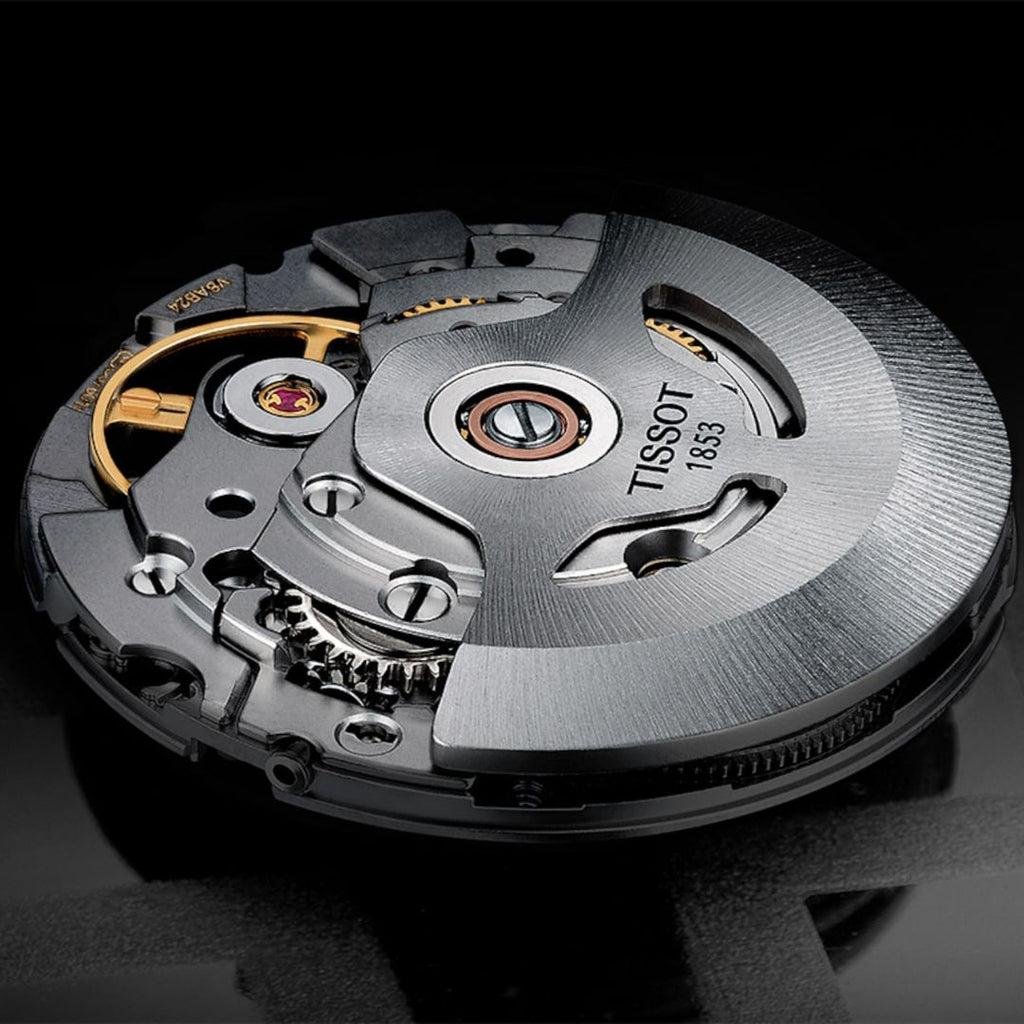
Tissot’s Powermatic 80 platform is one of its greatest competitive advantages.
Key characteristics include:
- Automatic winding
- Up to 80 hours of power reserve
- Nivachron technology on selected references
- Broad availability
- Excellent price-to-performance ratio
The extended reserve is especially practical.
A conventional automatic watch may stop after being left unworn for a weekend. An 80-hour reserve means a Tissot can potentially be removed on Friday evening and still be running Monday morning.
Tissot Strengths
- Excellent 80-hour reserve
- Accessible mechanical watches
- Nivachron technology
- Reliable everyday performance
- Outstanding specifications for the price
Longines: More Elevated Mechanical Watchmaking
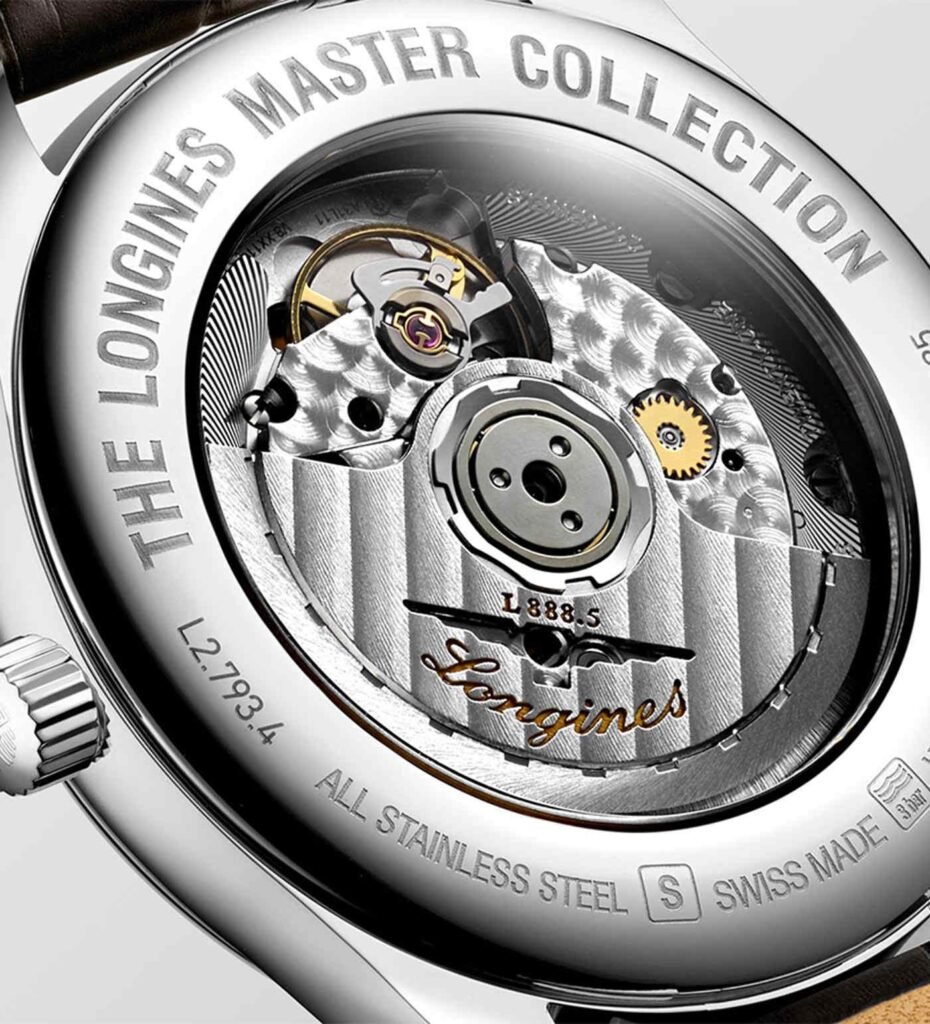
Longines’ movements reflect its higher positioning.
The Spirit Zulu Time uses the L844.4, an automatic GMT calibre with 21 jewels, a 25,200-vph frequency, and a 72-hour reserve.
Its broader mechanical strategy emphasizes:
- Brand-exclusive calibres
- Silicon balance springs
- Extended power reserves
- COSC-certified movements in selected collections
- More sophisticated mechanical complications
The result isn’t necessarily that every Longines movement dramatically outperforms every Tissot movement.
Rather, Longines combines mechanical performance with a more premium overall watch.
Longines Strengths
- Exclusive mechanical calibres
- Silicon technology
- COSC-certified options
- GMT and complication expertise
- More elevated execution
Movement Comparison
| Category | Tissot | Longines |
|---|---|---|
| Mechanical Quality | ★★★★☆ | ★★★★★ |
| Power Reserve | ★★★★★ | ★★★★★ |
| Technical Sophistication | ★★★★☆ | ★★★★★ |
| Anti-Magnetic Technology | ★★★★☆ | ★★★★★ |
| Chronometer Options | ★★★★☆ | ★★★★★ |
| Complications | ★★★★☆ | ★★★★★ |
| Value for Money | ★★★★★ | ★★★★☆ |
Winner
Longines
Tissot’s Powermatic 80 deserves enormous credit because it brings strong mechanical specifications into a relatively accessible price bracket.
But Longines wins for its combination of movement technology, chronometer certification, complications, and higher-end execution.
Accuracy & Certification
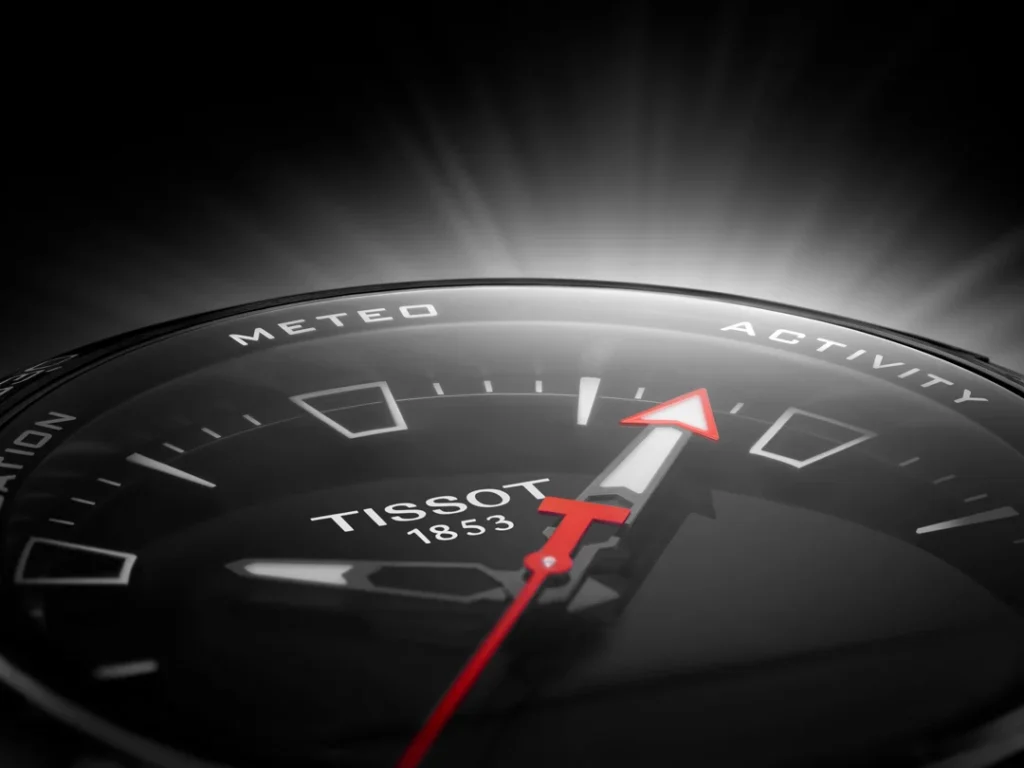
Both brands offer chronometer-grade watches, but certification plays a more central role within Longines’ premium collections.
Tissot
Tissot has produced COSC-certified watches and uses modern technologies such as Nivachron to improve resistance against magnetic interference.
For most mainstream Tissot mechanical watches, however, the principal selling proposition is not chronometer certification.
It is strong mechanical performance for the price.
Longines
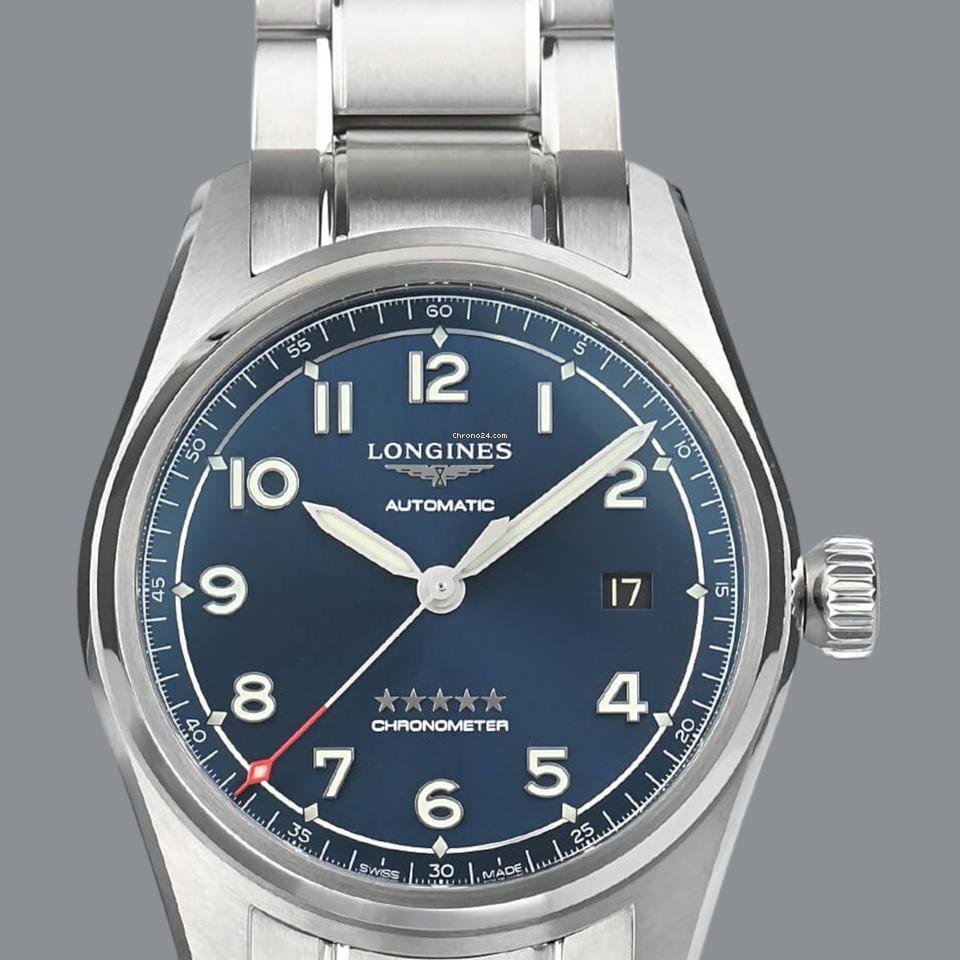
COSC certification is particularly important to the Spirit family.
The Spirit Zulu Time is officially positioned as a chronometer, and current secondary-market specification data for the L844.4 confirms its chronometer status alongside its 72-hour reserve.
This gives buyers an independently certified performance standard alongside Longines’ higher-end construction.
Accuracy Comparison
| Feature | Tissot | Longines |
|---|---|---|
| Mechanical Accuracy | Very Good–Excellent | Excellent |
| COSC Options | Yes | Yes |
| Silicon / Anti-Magnetic Technology | Yes | Yes |
| Chronometer Focus | Selected Models | Stronger |
| Premium Movement Positioning | ★★★★☆ | ★★★★★ |
Winner
Longines
Build Quality & Materials
This is where the price difference becomes easier to see and feel.
Tissot watches such as the PRX provide impressive specifications: stainless steel construction, sapphire crystal, integrated bracelets, and strong mechanical movements.
Longines generally adds another level of refinement through:
- More sophisticated case finishing
- Higher-quality bracelet execution
- More detailed dials
- Applied markers and finishing
- Ceramic components on selected sport models
- More premium tactile quality
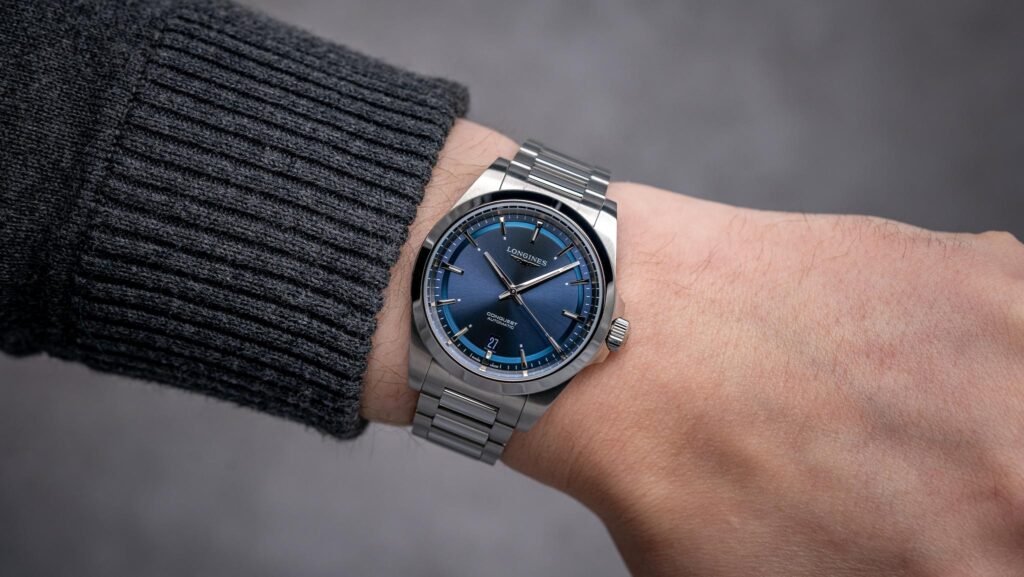
Consider the current Longines Conquest 38mm. It combines a stainless-steel case and bracelet, sapphire crystal with multiple anti-reflective layers on both sides, screw-down crown, and 100-metre water resistance. Its current U.S. retail price is $2,400.
That pricing reflects the broader difference between the brands.
Build Quality Comparison
| Category | Tissot | Longines |
|---|---|---|
| Case Quality | ★★★★☆ | ★★★★★ |
| Dial Finishing | ★★★★☆ | ★★★★★ |
| Bracelet Quality | ★★★★☆ | ★★★★★ |
| Sapphire Crystal | ★★★★★ | ★★★★★ |
| Material Selection | ★★★★☆ | ★★★★★ |
| Overall Refinement | ★★★★☆ | ★★★★★ |
Winner
Longines
Tissot delivers remarkable quality relative to price.
Longines delivers the more luxurious object.
Sport Watches
The most natural comparison here is:
Tissot PRX vs Longines Conquest.
Tissot PRX
The PRX delivers:
- Integrated-bracelet styling
- 1970s-inspired design
- Automatic and quartz choices
- Strong everyday versatility
- Exceptional affordability
Its success demonstrates how effectively Tissot can translate historical design into a contemporary product.
Longines Conquest
The Conquest occupies a noticeably more premium category.
Longines describes it as its ultimate everyday watch, with the collection’s history stretching back to 1954, when Conquest became the brand’s first collection name protected by the Swiss Federal Intellectual Property Office.
The modern collection combines:
- Automatic movements
- 100-metre water resistance
- Sapphire crystals
- Sport-luxury styling
- More refined finishing
Winner
Longines
The PRX arguably offers better value.
But the Conquest is the more sophisticated watch.
Dive Watches
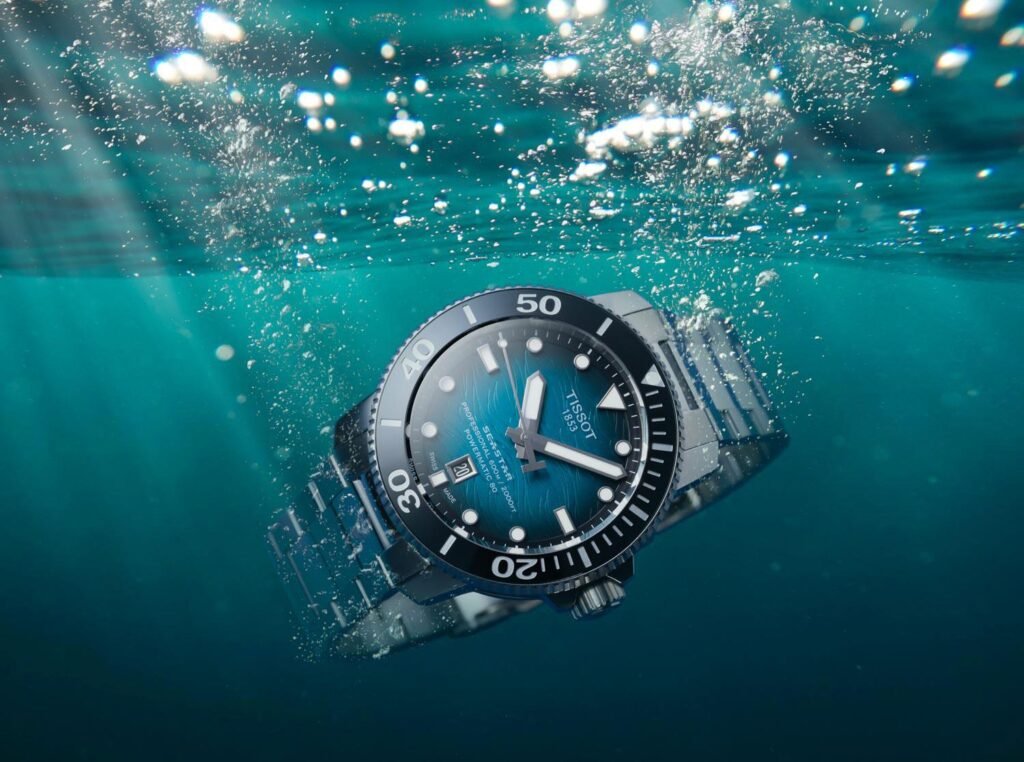
Both brands offer serious dive-watch collections.
Tissot
The Seastar family provides accessible Swiss diving watches across quartz and mechanical configurations.
The Powermatic 80 versions combine professional-looking dive-watch design with the same long-reserve automatic architecture that makes Tissot’s mechanical range so competitive.
Longines
The principal modern diver is the HydroConquest.
Longines also offers the Legend Diver, providing a more heritage-oriented alternative for buyers who prefer vintage compressor styling.
This gives Longines greater breadth:
- HydroConquest
- HydroConquest GMT
- Legend Diver
Dive Watch Comparison
| Category | Tissot | Longines |
|---|---|---|
| Main Collection | Seastar | HydroConquest |
| Heritage Diver | Limited | Legend Diver |
| Mechanical Options | ★★★★★ | ★★★★★ |
| Finishing | ★★★★☆ | ★★★★★ |
| Value | ★★★★★ | ★★★★☆ |
| Collection Depth | ★★★★☆ | ★★★★★ |
Winner
Longines
Tissot wins on affordability.
Longines wins on overall range, refinement, and heritage.
Dress Watches
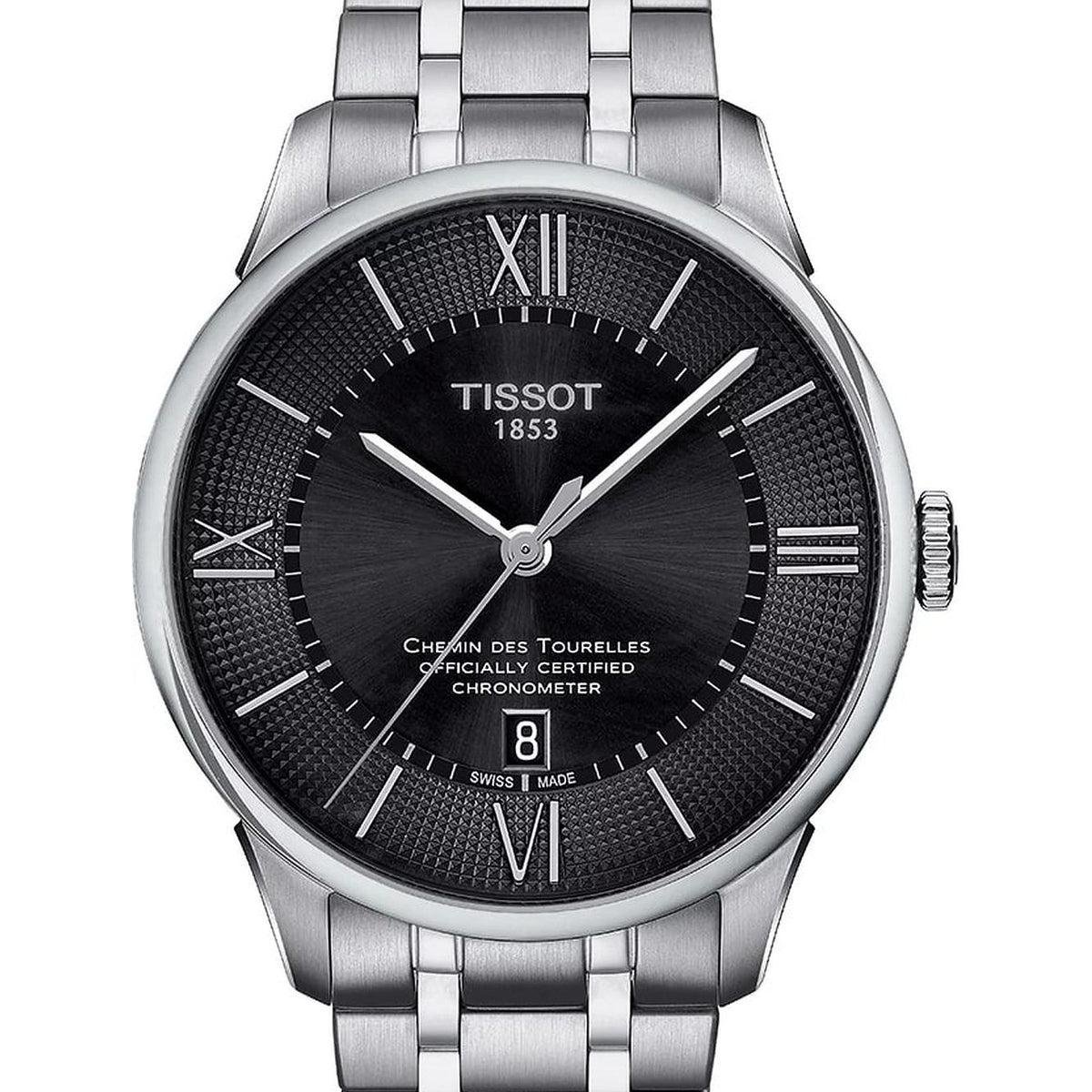
Traditional watches remain important to both brands.
Tissot
Notable choices include:
- Le Locle
- Chemin des Tourelles
- Carson
- Heritage collections
The Le Locle is particularly representative of Tissot: traditional Swiss styling, automatic mechanics, and approachable pricing.
Longines
Longines offers:
- Master Collection
- Flagship Heritage
- Conquest Heritage
- Présence
- Elegant Collection
The Master Collection moves further into classical luxury watchmaking, including complications such as moon phases and chronographs alongside conventional automatic models.
Winner
Longines
Tissot makes excellent accessible dress watches.
Longines simply operates at a higher level of finishing and refinement.
Pricing Comparison
This is where Tissot strikes back decisively.
The brands occupy different price brackets.
Tissot’s mechanical collection allows buyers to enter Swiss automatic watchmaking around the three-figure to low-four-figure level, depending on model and configuration.
Longines generally begins considerably higher.
A current Longines Conquest 38mm automatic on a steel bracelet is listed at $2,400 in the U.S.
A Spirit Zulu Time sits higher still. Secondary-market data lists historical retail around $3,600 for the 39mm steel model.
| Category | Tissot | Longines |
|---|---|---|
| Entry Quartz | $ | $$ |
| Entry Automatic | $ | $$$ |
| Sport Watch | $–$$ | $$$ |
| Dive Watch | $$ | $$$ |
| GMT | $$ | $$$ |
| Dress Watch | $–$$ | $$–$$$ |
| Overall Positioning | Accessible Premium | Entry Luxury |
Winner
Tissot
Tissot is dramatically more accessible.
And importantly, you’re not simply paying less because you’re getting a basic watch.
The PRX Powermatic 80 demonstrates how much mechanical performance Tissot can deliver below $1,000.
Value for Money
This deserves a separate category because pricing alone doesn’t tell the whole story.
Tissot
The PRX is the obvious example.
You receive:
- Swiss automatic movement
- 80-hour power reserve
- Nivachron balance spring
- Sapphire crystal
- Steel construction
- Integrated bracelet
- 100-metre water resistance
That combination makes Tissot one of the strongest value propositions among established Swiss manufacturers.
Longines offers a more sophisticated product, but you’re paying substantially more to obtain it.
Resale Value
Neither Tissot nor Longines should generally be purchased primarily as an investment.
Both typically depreciate after retail purchase.
However, Longines’ higher positioning and stronger enthusiast interest around models such as the Spirit Zulu Time can give certain references a healthier secondary market.
Current WatchCharts data illustrates the depreciation clearly.
A 39mm Spirit Zulu Time with historical retail around $3,600 has recently carried an estimated secondary-market value around the low-$2,000 range, depending on reference.
The 42mm versions show a similar pattern: one current reference with approximately $3,100 historical retail is estimated around $2,043 on the secondary market.
That isn’t investment-grade retention, but it demonstrates an active market.
Resale Comparison
| Collection | Secondary Market Strength |
|---|---|
| Longines Spirit Zulu Time | Good–Very Good |
| Longines Legend Diver | Good |
| Longines HydroConquest | Good |
| Tissot PRX | Good |
| Tissot Gentleman | Moderate–Good |
| Tissot Le Locle | Moderate |
Winner
Longines
Longines generally offers the stronger secondary-market proposition, although depreciation remains meaningful.
Iconic Watches Head-to-Head
| Category | Tissot | Longines |
|---|---|---|
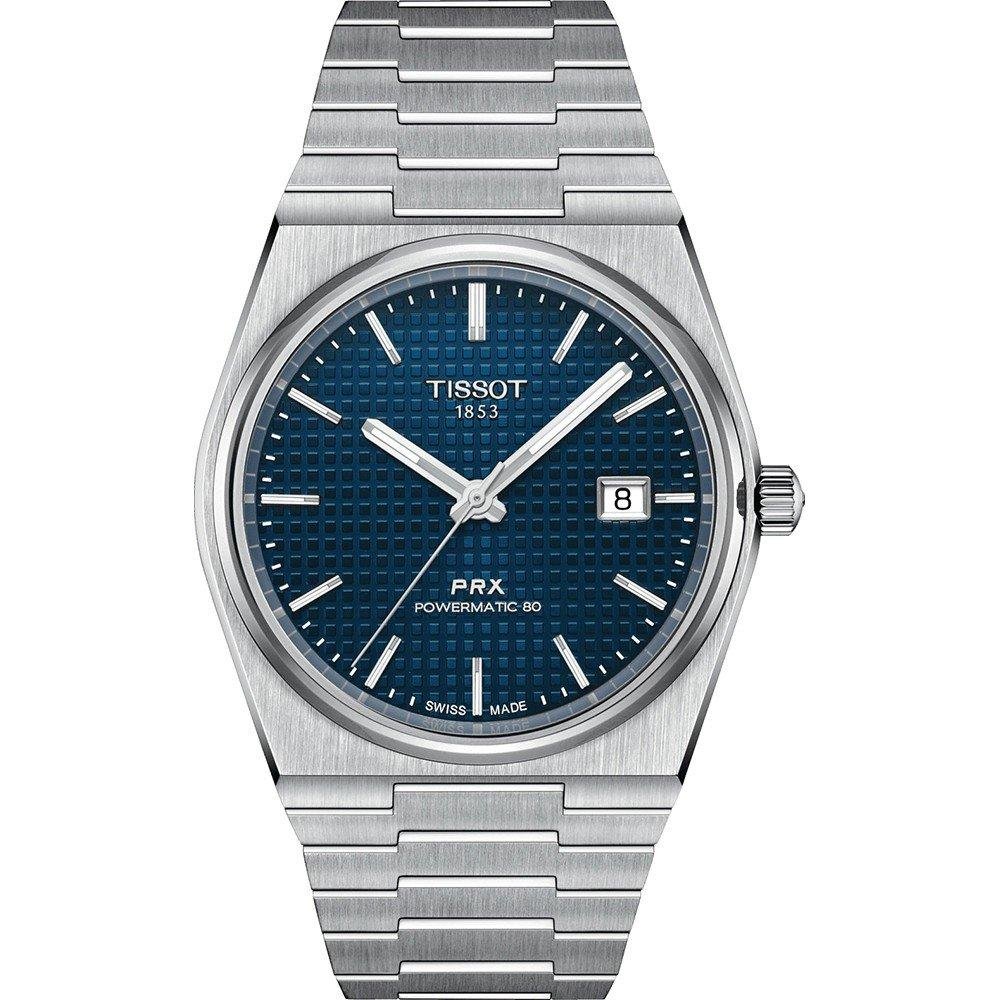
| Signature Modern Watch | PRX | Spirit Zulu Time |
| Everyday Sport | Gentleman / PRX | Conquest |
| Dive Watch | Seastar | HydroConquest |
| Heritage Diver | Seastar Heritage | Legend Diver |
| Dress Watch | Le Locle | Master Collection |
| Travel Watch | Chemin des Tourelles GMT | Spirit Zulu Time |
| Heritage Collection | Heritage | Conquest Heritage |
| Modern Value Icon | PRX Powermatic 80 | Conquest |
Winner
Tie
The PRX has become an extraordinarily recognizable modern Tissot.
Longines, however, has a deeper selection of established luxury-watch families rather than relying on one dominant contemporary design.
Overall Score So Far
| Category | Winner |
|---|---|
| Heritage | Longines |
| Design Philosophy | Longines |
| Movements & Watchmaking | Longines |
| Accuracy & Certification | Longines |
| Build Quality & Materials | Longines |
| Sport Watches | Longines |
| Dive Watches | Longines |
| Dress Watches | Longines |
| Pricing Accessibility | Tissot |
| Value for Money | Tissot |
| Resale Value | Longines |
| Iconic Watches | Tie |
Current Score
- Longines: 9 Wins
- Tissot: 2 Wins
- Tie: 1 Category
Longines is supposed to be better.
It occupies a higher position within Swiss watchmaking and asks buyers to spend substantially more money in return for better finishing, stronger chronometer credentials, more sophisticated collections, and a more luxurious overall experience.
Tissot’s achievement is how much of that Swiss mechanical-watch experience it can deliver for dramatically less money.
Shop the Edit
These four watches best represent the difference between Tissot and Longines. Tissot makes Swiss mechanical watchmaking remarkably accessible, while Longines adds more refined finishing, stronger historical references, and a distinctly more luxurious overall experience.
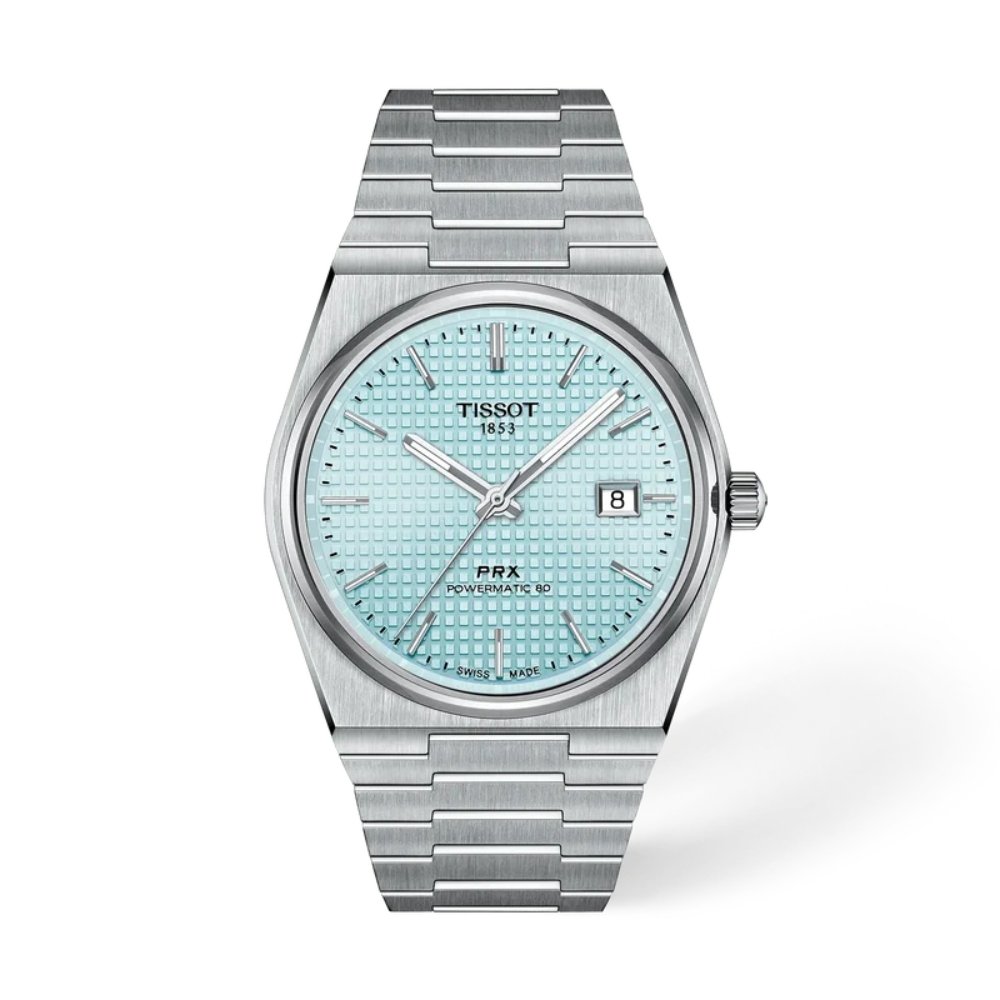
Tissot PRX Powermatic 80
First mechanical watch, everyday wear, integrated-bracelet style, value-conscious collectors
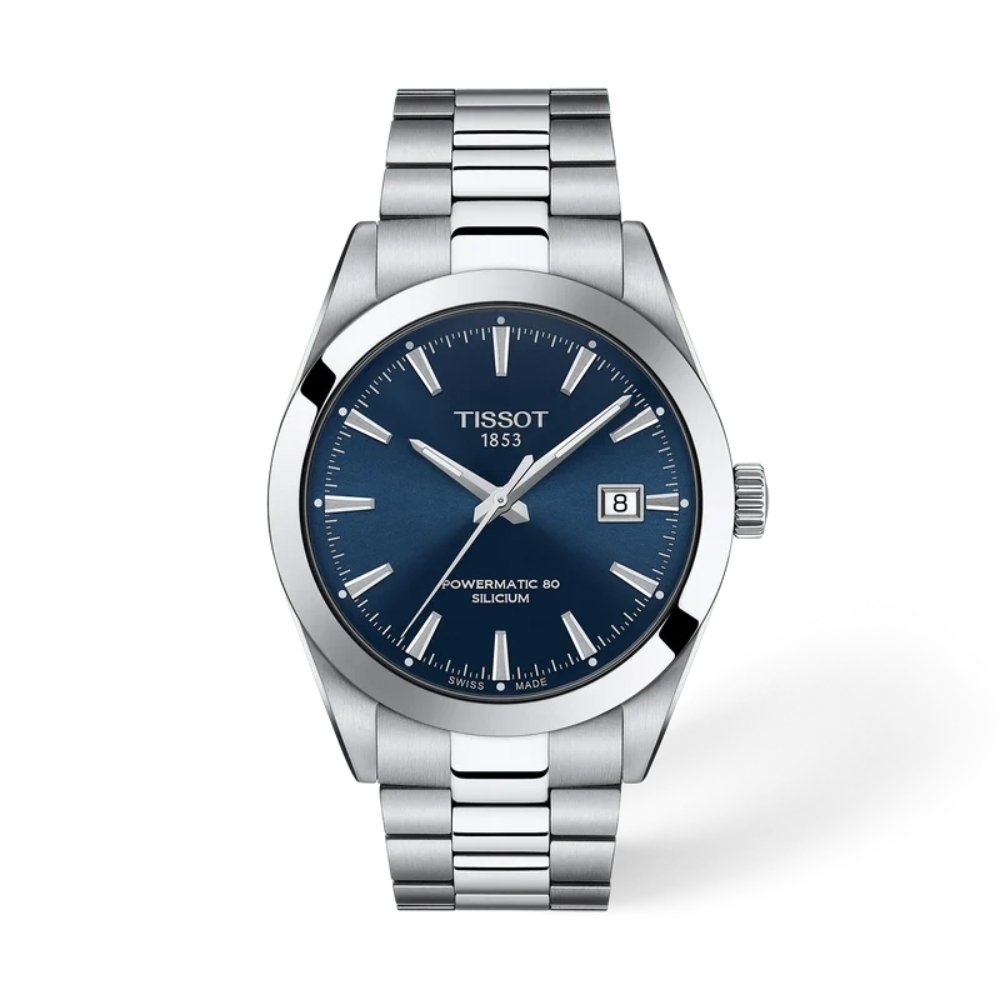
Tissot Gentleman Powermatic 80
Office wear, first Swiss automatic, smart-casual wardrobes, everyday versatility
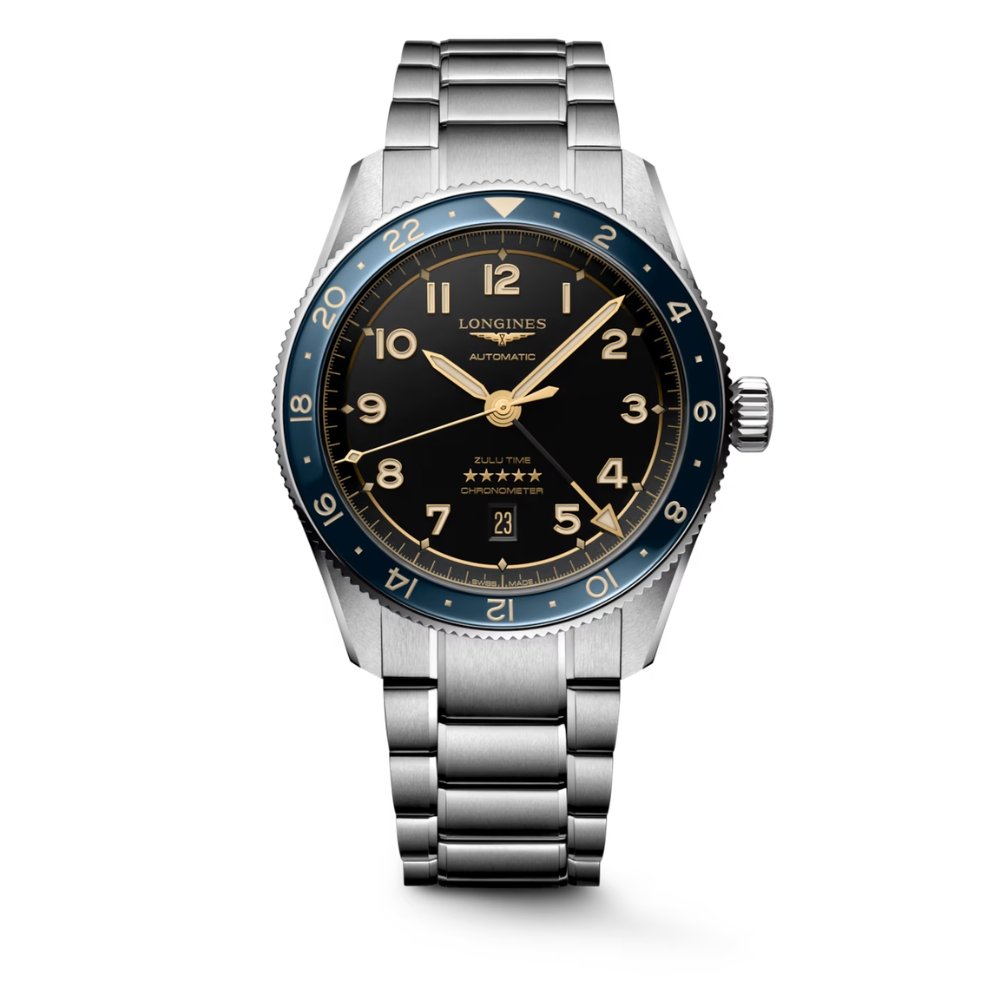
Longines Spirit Zulu Time
Frequent travelers, first luxury watch, aviation enthusiasts, long-term collections
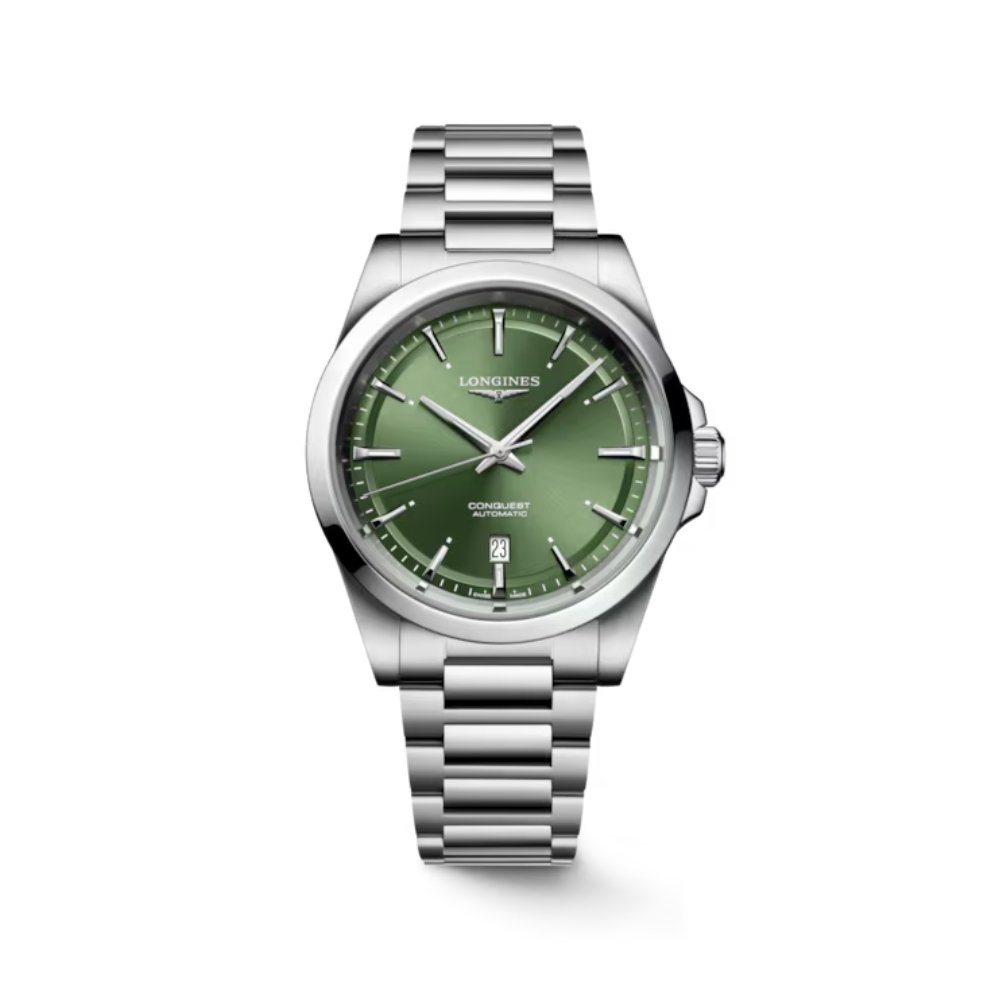
Longines Conquest
Everyday luxury, professional wardrobes, sport-luxury styling, moving up from entry-level Swiss watches
Pros & Cons
Tissot
| Pros | Cons |
|---|---|
| Exceptional price-to-specification ratio | Finishing below Longines |
| 170+ years of Swiss heritage | Less prestigious positioning |
| Powermatic 80 movement | Fewer high-end complications |
| Excellent first mechanical watch | Weaker resale overall |
| Huge selection across price points | Some collections feel more mass-market |
| PRX is a strong modern icon | Less exclusive |
Longines
| Pros | Cons |
|---|---|
| Heritage dating to 1832 | Considerably more expensive |
| Higher level of finishing | Large price jump from Tissot |
| Exclusive mechanical calibres | Not every model is COSC certified |
| Excellent aviation history | Still below higher luxury tiers in prestige |
| COSC-certified Spirit watches | More expensive entry point |
| Stronger luxury positioning | Value proposition is less aggressive |
Which Watch Brand Should You Buy?
Choose Tissot If…
- You’re buying your first Swiss mechanical watch.
- You want maximum specifications for your budget.
- You want to stay around or below $1,000.
- You like the PRX design.
- You want an everyday watch without worrying excessively about it.
- Value matters more than prestige.
Choose Longines If…
- You’re ready to enter luxury watchmaking.
- Finishing and refinement matter.
- You value aviation and navigation heritage.
- You want COSC-certified options.
- You want a more sophisticated GMT.
- You intend to build a longer-term watch collection.
Quick Buying Guide
| You’re Looking For… | Best Choice |
|---|---|
| First Swiss Watch | Tissot |
| First Automatic Watch | Tissot |
| First Luxury Watch | Longines |
| Best Value | Tissot |
| Integrated-Bracelet Watch | Tissot PRX |
| Everyday Luxury Watch | Longines Conquest |
| Best GMT | Longines Spirit Zulu Time |
| Dress Watch Value | Tissot |
| Higher-End Dress Watch | Longines |
| Dive Watch Value | Tissot Seastar |
| Better Finishing | Longines |
| Chronometer Options | Longines |
| More Accessible Pricing | Tissot |
| Stronger Luxury Prestige | Longines |
Best First Swiss Watch
Tissot
Tissot wins this category decisively.
The PRX Powermatic 80 demonstrates why.
At $850 for a current standard 40mm steel model, you receive a Swiss automatic movement, 80-hour power reserve, Nivachron balance spring, sapphire crystal, 316L stainless-steel case, integrated bracelet, exhibition caseback, and 100 metres of water resistance.
Those specifications make it difficult to argue that a buyer needs to spend several thousand dollars simply to experience credible Swiss mechanical watchmaking.
Tissot also brings genuine heritage to the equation. The company has been making watches in Le Locle since 1853, rather than being a recently created brand using Swiss manufacturing as a marketing proposition.
Best First Luxury Watch
Longines
Once the objective shifts from buying a good Swiss watch to buying a luxury Swiss watch, Longines becomes the stronger proposition.
The difference is about more than movement specifications.
Longines generally offers:
- Better case finishing
- More sophisticated dials
- More refined bracelets
- Stronger historical storytelling
- Exclusive movements
- Greater complication depth
- More prestigious positioning
The Conquest 38mm provides a particularly sensible entry point. Its 72-hour automatic movement, silicon balance spring, sapphire crystal, 100-metre water resistance, and versatile proportions make it suitable as a single everyday luxury watch. The steel-bracelet version currently costs $2,400.
PRX vs Conquest: Is Longines Worth the Upgrade?
This is perhaps the most practical question in the entire comparison.
Tissot PRX Powermatic 80 — $850
You receive:
- 80-hour power reserve
- Nivachron balance spring
- Sapphire crystal
- Automatic movement
- Integrated bracelet
- 100m water resistance
- 40mm case
Longines Conquest 38mm — $2,400
You receive:
- 72-hour power reserve
- Silicon balance spring
- Sapphire crystal with multi-layer AR treatment on both sides
- Automatic movement
- More refined bracelet
- 100m water resistance
- 38mm case
- More premium finishing and positioning
The Longines costs roughly 2.8 times as much.
Is it 2.8 times better?
Probably not in purely functional terms.
The Tissot actually has the longer quoted power reserve.
But luxury watches aren’t priced linearly according to specifications.
The additional money buys refinement, finishing, brand positioning, historical depth, and a more sophisticated overall ownership experience.
Winner on Value
Tissot PRX
Winner on Overall Quality
Longines Conquest
Final Verdict
Tissot and Longines occupy different positions in Swiss watchmaking, and understanding that difference makes choosing between them much easier.
Tissot is about accessibility.
It has been producing Swiss watches since 1853, yet its modern catalogue still allows buyers to experience mechanical watchmaking without spending several thousand dollars.
The PRX Powermatic 80 is the perfect example.
An 80-hour automatic movement, Nivachron balance spring, sapphire crystal, stainless-steel construction, and 100 metres of water resistance for $850 represent extraordinary value.
Longines is about refinement.
Its history extends back even further—to 1832 in Saint-Imier—and its contemporary watches occupy a noticeably higher luxury position.
The Spirit Zulu Time shows what the additional money can buy.
You move from a straightforward automatic movement to an exclusive GMT calibre with a silicon balance spring, COSC chronometer certification, ceramic bezel, 72-hour reserve, and a stronger connection to Longines’ century-old experience with multiple time zones.
But there is no avoiding the price difference.
A current PRX Powermatic 80 40mm is $850.
A Longines Conquest 38mm is $2,400.
A Longines Spirit Zulu Time 39mm is $3,550.
That means a buyer choosing Longines isn’t simply paying for better specifications.
They’re paying for the complete upgrade from accessible Swiss watchmaking to entry-level Swiss luxury.
Overall Scorecard
| Category | Winner |
|---|---|
| Heritage | Longines |
| Design Philosophy | Longines |
| Movements & Watchmaking | Longines |
| Accuracy & Certification | Longines |
| Build Quality & Materials | Longines |
| Sport Watches | Longines |
| Dive Watches | Longines |
| Dress Watches | Longines |
| Pricing Accessibility | Tissot |
| Value for Money | Tissot |
| Resale Value | Longines |
| Iconic Watches | Tie |
| First Swiss Watch | Tissot |
| First Luxury Watch | Longines |
| Overall Refinement | Longines |
Final Score
Longines — 11 Wins
Tissot — 3 Wins
Tie — 1 Category
LxryNow Verdict
If you’re asking which is the better watch brand overall, Longines wins.
It offers greater refinement, more sophisticated mechanical watches, stronger chronometer credentials, deeper aviation and navigation heritage, and a more convincing luxury experience.
Longines’ history stretches back to 1832, and the brand remains based in Saint-Imier today. Its contemporary identity continues to combine what it describes as tradition, elegance, and performance.
The Spirit Zulu Time is perhaps the strongest demonstration of what separates it from Tissot. Its exclusive calibre, silicon balance spring, COSC certification, GMT complication, ceramic bezel, and historical connection to Longines’ 1925 dual-time wristwatch create a package that feels substantially more horologically ambitious.
But Tissot wins on value.
And for many buyers, that may matter more.
The PRX Powermatic 80 delivers most of the practical ingredients people actually need from a mechanical everyday watch: automatic winding, an 80-hour reserve, sapphire crystal, Nivachron technology, 100-metre water resistance, and Swiss production.
You can therefore make a strong case that the PRX is the more rational purchase—even though Longines is the superior watchmaker overall.
Final Recommendation
Choose Tissot if you want excellent Swiss watchmaking, strong specifications, accessible pricing, and maximum value for money.
Choose Longines if you want superior finishing, greater prestige, stronger mechanical credentials, more sophisticated complications, and a genuine step into luxury watchmaking.
For your first Swiss watch, choose Tissot.
For your first mechanical watch, choose Tissot.
For your first luxury watch, choose Longines.
For pure value, choose Tissot.
For overall quality and refinement, choose Longines.
For the better Swiss watch brand overall, choose Longines.
