
TL;DR
Top international designers are now openly leading creative roles for major Chinese brands — signalling the end of discreet collaboration and marking a new chapter where Chinese labels command global creative prestige and influence.
At a Glance
- Historically, international designers often kept their work for Chinese brands quiet — even if influential figures were involved.
- In 2026, designers like Kim Jones at Bosideng and Kris Van Assche at Anta are openly promoting their roles, signalling a shift in perception about Chinese fashion platforms.
- This trend reflects growing prestige, budget and career opportunity within Chinese labels, which now command global creative relevance.
- Designers and industry voices note that creative legitimacy now flows both ways — not just from West to East, but from East to global spotlight markets.
Editorial Perspective
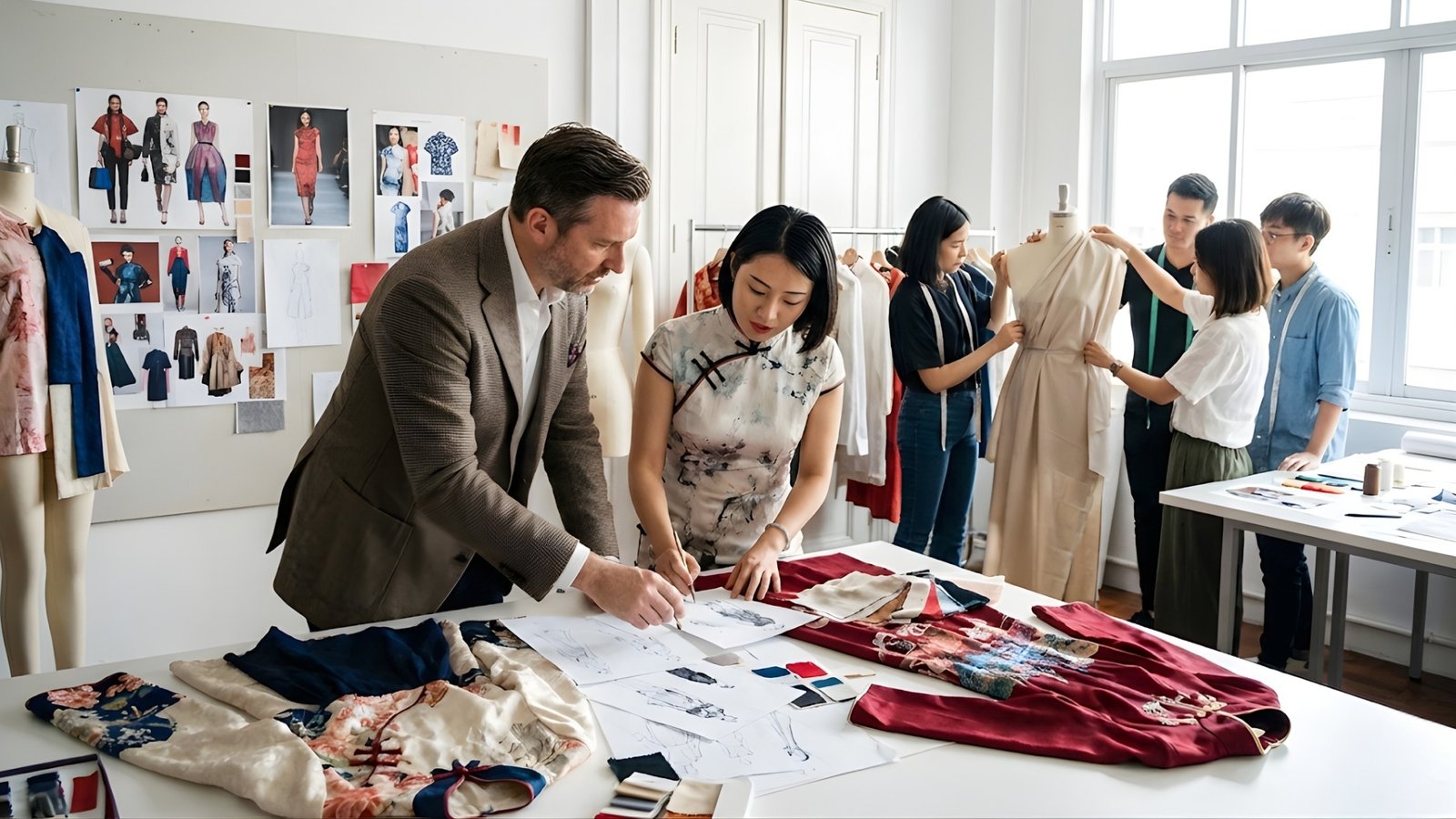
The fashion world’s creative geography is evolving. What was once the norm — subtle or discreet collaborations between Western designers and Chinese labels — is giving way to public, high-profile leadership roles and open creative partnerships. According to Business of Fashion, this shift reflects the growing confidence, resources and global ambition of top-tier Chinese fashion houses.
Designers no longer feel the need to hide these collaborations — and the change signals a deeper transformation in how creative authority, prestige, and influence are distributed across the global fashion ecosystem.
From Discretion to Visibility
In past decades, relationships between international design talent and Chinese brands were often unpublicised or downplayed, even if they were strategically significant. Today, however:
- Designers are announcing roles publicly.
- Creative directors move to China to lead design teams.
- Brand launches feature their creative vision front-and-centre.
As one industry commentator noted, the era of secrecy is ending — not because Western brands once disapproved of China, but because the assumption that creative legitimacy only flowed one way (West → East) no longer applies.
High-Profile Moves Illustrating the Trend
Examples include:
- Kim Jones, who took on a leading creative role with Bosideng, a major Chinese outerwear group — openly signalling his influence across product and global strategy.
- Kris Van Assche, previously at major European houses, now prominently aligned with Anta, a Chinese sportswear giant — bringing his global design reputation into new territory.
Designers themselves have echoed this sentiment: openly working with Chinese brands now signals creative respect and career opportunity, not just commercial assignment.
Why This Shift Matters
1. China’s Growing Brand Prestige
Chinese fashion labels are no longer seen as mere regional players — many invest heavily in design, narrative, and global distribution, attracting top creative talent with the promise of creative freedom, significant budgets, and global scope.
2. Two-Way Creative Exchange
Rather than a one-direction flow of influence from West to East, fashion is witnessing what some industry observers call a two-way exchange of ideas and authority — where designers contribute to Chinese brands while maintaining international stature.
3. Strategic Global Ambition
Chinese brands increasingly target global markets. By hiring well-known international designers and publicly associating them with their brand identity, they accelerate recognition and appeal in Western and Asian markets alike.
What This Means for Global Fashion in 2026
- Creative leadership is becoming more fluid — designers cross geographies without stigma.
- Brand hierarchies are shifting — Chinese houses gain creative credibility on par with Western peers.
- Global fashion narratives are expanding — local identity, cultural nuance, and regional influence are now central to global design conversations.
In this landscape, fashion is truly becoming global by design — where creative ownership, cultural influence and brand power are negotiated at multiple crossroads, not just in traditional Western capitals.
