
TL;DR
According to Business of Fashion, Salt & Stone turned premium deodorant into a $140 million business by combining clean formulations, elevated design, and lifestyle-driven branding. The brand’s success shows how even the most functional beauty categories can be transformed through cultural relevance and thoughtful positioning.
At a Glance
- Salt & Stone has grown its deodorant-led brand into a $140 million business, according to Business of Fashion.
- The brand redefined a traditionally utilitarian product through clean ingredients and elevated design.
- Lifestyle positioning and cultural alignment played a central role in its success.
- Deodorant has become an entry point into a broader beauty and wellness ecosystem.
- The story reflects how niche categories can scale when branding and product align.
Reimagining an Everyday Essential
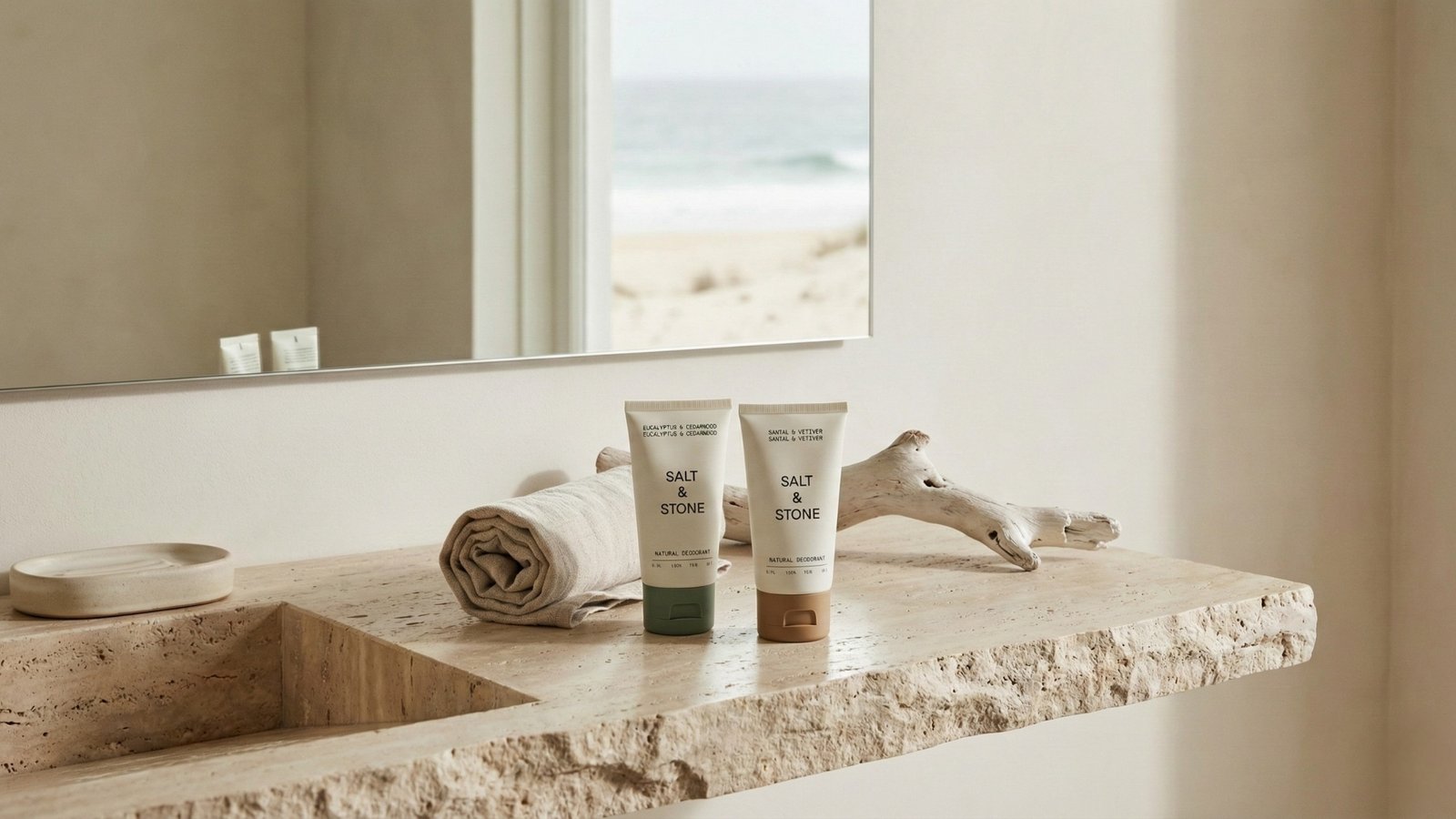
According to Business of Fashion, Salt & Stone approached deodorant not as a commodity, but as a design and lifestyle object.
Key elements of its approach include:
- clean, skin-conscious formulations
- refined, minimalist packaging
- scent profiles inspired by nature and travel
- branding rooted in wellness and modern masculinity
This repositioning elevated deodorant from necessity to personal ritual.
Lifestyle Branding Over Traditional Beauty Marketing
Unlike legacy beauty brands that rely heavily on celebrity endorsements or trend cycles, Salt & Stone built credibility through community and culture.
The brand aligned itself with:
- surf and outdoor culture
- wellness-focused consumers
- modern grooming routines
- premium but approachable aesthetics
This strategy allowed it to grow organically while maintaining authenticity.
Scaling Beyond Deodorant
Deodorant served as Salt & Stone’s foundation—but not its limit.
As reported by Business of Fashion, the brand expanded into:
- body care
- skincare-adjacent products
- broader wellness offerings
Each extension remained consistent with the brand’s identity, reinforcing trust and encouraging repeat purchasing.
Why Consumers Responded
Salt & Stone’s success reflects broader shifts in consumer behavior.
Shoppers are increasingly:
- scrutinizing ingredients
- prioritizing design and experience
- choosing brands that align with their lifestyle
- willing to pay more for perceived quality and values
In this context, premium deodorant became a logical upgrade rather than an indulgence.
What This Means for the Beauty Industry
Salt & Stone’s growth highlights an important lesson for beauty brands: innovation doesn’t always mean inventing something new. Sometimes, it means reframing something familiar.
The brand’s trajectory suggests that:
- overlooked categories can become growth engines
- lifestyle branding can outperform traditional segmentation
- premium positioning works when supported by substance
Beauty’s future may lie as much in rethinking basics as in launching the next hero serum.
What to Watch Next
As Salt & Stone continues to scale, industry observers will watch:
- how the brand expands internationally
- whether it maintains authenticity at larger scale
- its approach to category expansion
- potential interest from larger beauty groups
Its journey may become a blueprint for other founders looking to elevate everyday essentials.
Editorial Perspective
Once considered a purely functional purchase, deodorant has quietly become a category ripe for reinvention. Salt & Stone’s rise shows how even the most everyday products can be transformed into luxury-adjacent businesses when reframed through lifestyle, aesthetics, and values.
Rather than competing on performance claims alone, the brand focused on how deodorant fits into modern routines—positioning it alongside skincare, wellness, and personal identity. In doing so, Salt & Stone tapped into a consumer mindset that values intention as much as efficacy.
