
TL;DR
Richemont beat sales expectations in its holiday quarter, driven by robust performance in jewellery and improving watch demand, with broad regional growth signaling early hope for the luxury sector in 2026.
At a Glance
- Richemont’s holiday quarter sales exceeded analyst expectations, signalling resilience in a volatile luxury environment.
- The Swiss group saw double-digit growth in constant-currency sales, with jewellery leading performance.
- Cartier and Van Cleef & Arpels drove strong demand, bolstered by holiday shopping and global market momentum.
- Specialist watchmaking also returned to growth, with increased demand supporting broader recovery trends.
Editorial Perspective
In a luxury sector that has faced slowing demand in key markets and widespread caution around discretionary spending, Richemont’s holiday quarter results stand out. Exceeding expectations in late-2025 trading — which many analysts view as a bellwether for 2026 — Richemont demonstrated that hard luxury categories like jewellery and fine watches still command strong consumer interest, as FT reported.
This performance not only underscores the resilience of high-end jewellery demand but also suggests that the world’s affluent shoppers remain willing to invest in pieces with perceived enduring value, especially during peak buying periods like year-end holidays.
Jewellery Drives the Outperformance
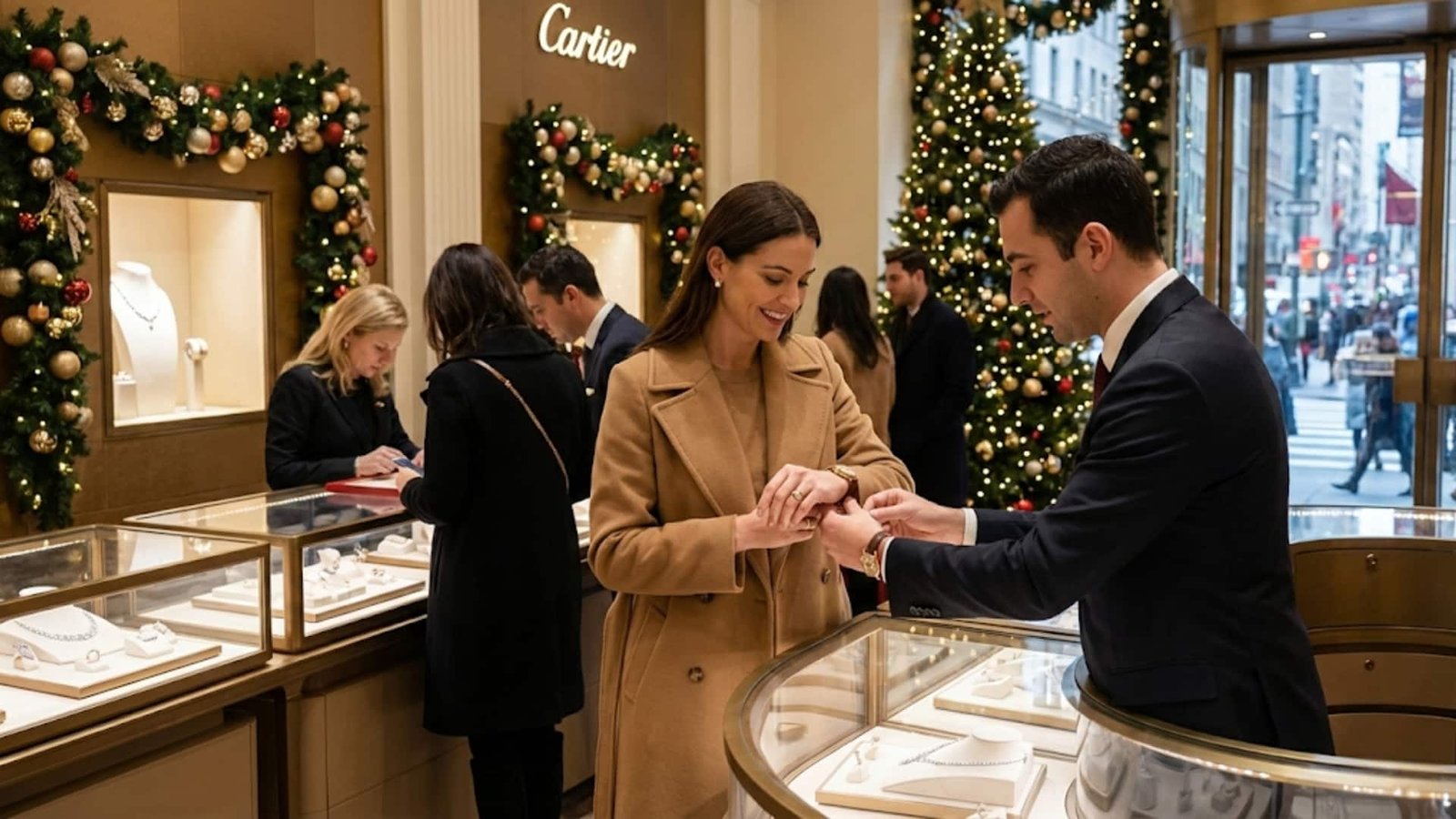
The standout segment for Richemont was its jewellery division, which includes houses such as Cartier and Van Cleef & Arpels. These labels continued to attract strong demand — particularly in the Americas and Middle East — with pieces that blend prestige, craftsmanship and investment appeal outperforming broader luxury goods categories.
Jewellery sales rose sharply at constant exchange rates, topping consensus forecasts and helping lift overall group results.
Watchmaking Rebound and Broader Momentum
Richemont’s specialist watchmakers — brands like IWC, Jaeger-LeCoultre and Piaget — also contributed to the positive quarter, returning to growth after a challenging period for the global watch market. Analysts noted progress from previous declines, underscoring that holiday season buying spurred renewed interest in premium timepieces.
While watches historically lag broader fashion and jewellery in periods of economic uncertainty, Richemont’s performance hints at a softening of headwinds in this segment.
Regional and Channel Highlights
Regional performance illustrated broad geographic engagement:
- Americas and Middle East saw robust growth, buoyed by affluent domestic buyers and travel-linked spending.
- Asia Pacific showed steady gains, with Greater China reporting modest improvement — a key signal given the region’s importance to luxury demand.
- Retail channels continued to outperform overall distribution, with direct consumer engagement yielding healthier sales momentum.
These results are especially notable given the recent retail disruptions affecting department stores and traditional wholesale channels.
Why This Matters for Luxury in 2026
Richemont’s strong holiday quarter carries significance beyond a single earnings print:
- Early indicator for luxury recovery: As one of the first global luxury groups to report quarterly figures, Richemont sets a hopeful tone for the 2026 earnings season.
- Jewellery’s defensive strength: High-end jewellery remains a resilient category, outperforming softer segments like apparel and leather goods globally.
- Market diversification matters: Success across regions — particularly the Americas and the Middle East — highlights the importance of diversified geographic exposure in luxury strategy.
Amid ongoing macroeconomic uncertainty, Richemont’s results suggest that value propositions anchored in craftsmanship and legacy are maintaining appeal among luxury consumers in 2026.
