
TL;DR:
At CIIE 2025, Kering reframed luxury in China as a fusion of culture, sustainability, and innovation — a model likely to define global luxury for the years ahead.
At a Glance
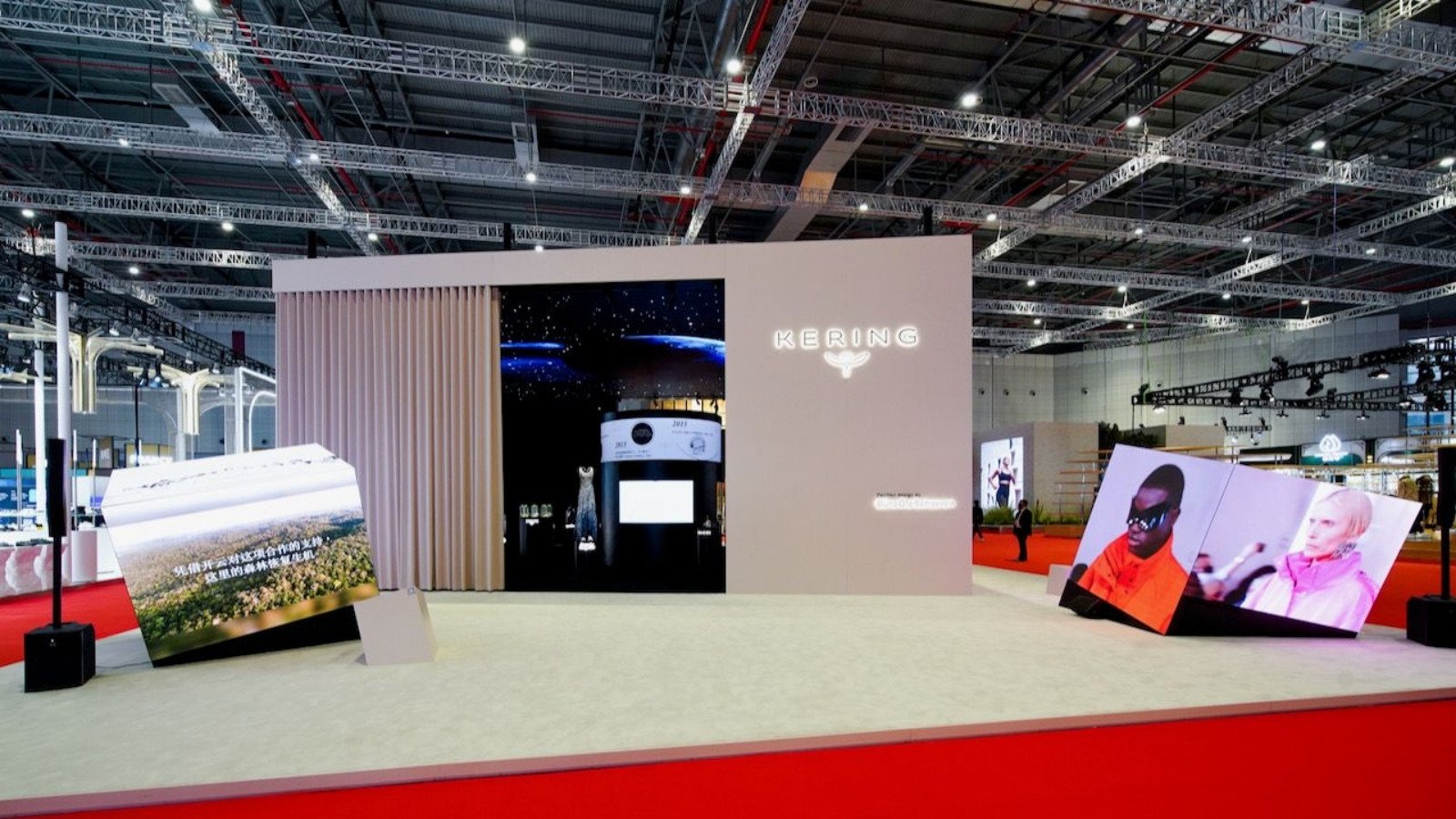
At the 8th China International Import Expo (CIIE) in Shanghai, luxury conglomerate Kering transformed its pavilion into a manifesto for the future of luxury.
Rather than focusing on retail expansion, Kering spotlighted craftsmanship, sustainability, innovation, and Chinese creative talent — signalling how global fashion houses are recalibrating their China playbook.
Why This Matters
China’s luxury market is maturing
China’s luxury retail value is projected to reach ¥3.13 trillion in 2025 — steady growth, but driven by experience, culture, and sustainability, not just product drops. According to Vogue Business, this new wave of consumers is young, informed, and eager for authenticity.
Retail is no longer the main story
Kering’s 2025 pavilion at CIIE reused over 50 percent of last year’s materials and featured plant-based leather installations. Its “Creativity Is Our Legacy” theme positioned sustainability as creative heritage, not compliance.
Luxury now equals cultural dialogue
Through immersive exhibitions, archival showcases, and collaborations with local artists, Kering emphasized that luxury in China is evolving into a cultural language, one that merges artistry with technology.
Inside the Kering Pavilion
Design & Experience
Visitors explored a multisensory journey featuring Gucci, Bottega Veneta, Balenciaga, and Alexander McQueen, with installations blending archival craftsmanship and AR-driven storytelling.
“Creativity Is Our Legacy isn’t just a slogan — it’s how we express sustainability through design,” said a Kering Group spokesperson at the event.
Innovation & Sustainability
The pavilion reused structures from CIIE 2024, introduced full-plant-cycle leather seating, and showcased zero-carbon store pilots developed with China Resources Mixc Lifestyle and Tsinghua University — an ambitious move toward greener retail.
Empowering Next-Gen Talent
In partnership with Shanghai Fashion Week, Kering launched Kering CRAFT — a residency blending art, fashion, and technology to nurture emerging Chinese designers.
Read more on Vogue.
Implications for the Luxury Industry
- From selling to storytelling: Brands are positioning themselves as cultural curators, not just merchants.
- Innovation as image: Interactive installations and digital experiences are now essential components of brand prestige.
- Sustainability as soft power: The Chinese market increasingly rewards brands that embed eco-innovation into their creative process.
- Localization as collaboration: Programs like Kering CRAFT show that China is a co-creator in the global luxury narrative.
What It Means for You
Whether you’re following industry strategy or shopping smart, these moves matter:
- Trendwatchers: Expect more capsule collections born from local collabs and cultural tie-ins.
- Collectors: Pieces first launched at CIIE often carry stronger resale value due to limited availability.
- Conscious buyers: Sustainability is becoming synonymous with luxury; “responsible opulence” is the next status symbol.
The Bigger Picture
Luxury’s future in Asia is not about more stores, but smarter storytelling.
By using CIIE as a stage for creativity and conscience, Kering and its peers remind us that luxury’s next chapter is written not in marble boutiques, but in meaningful connections — cultural, digital, and sustainable.
