
TL;DR
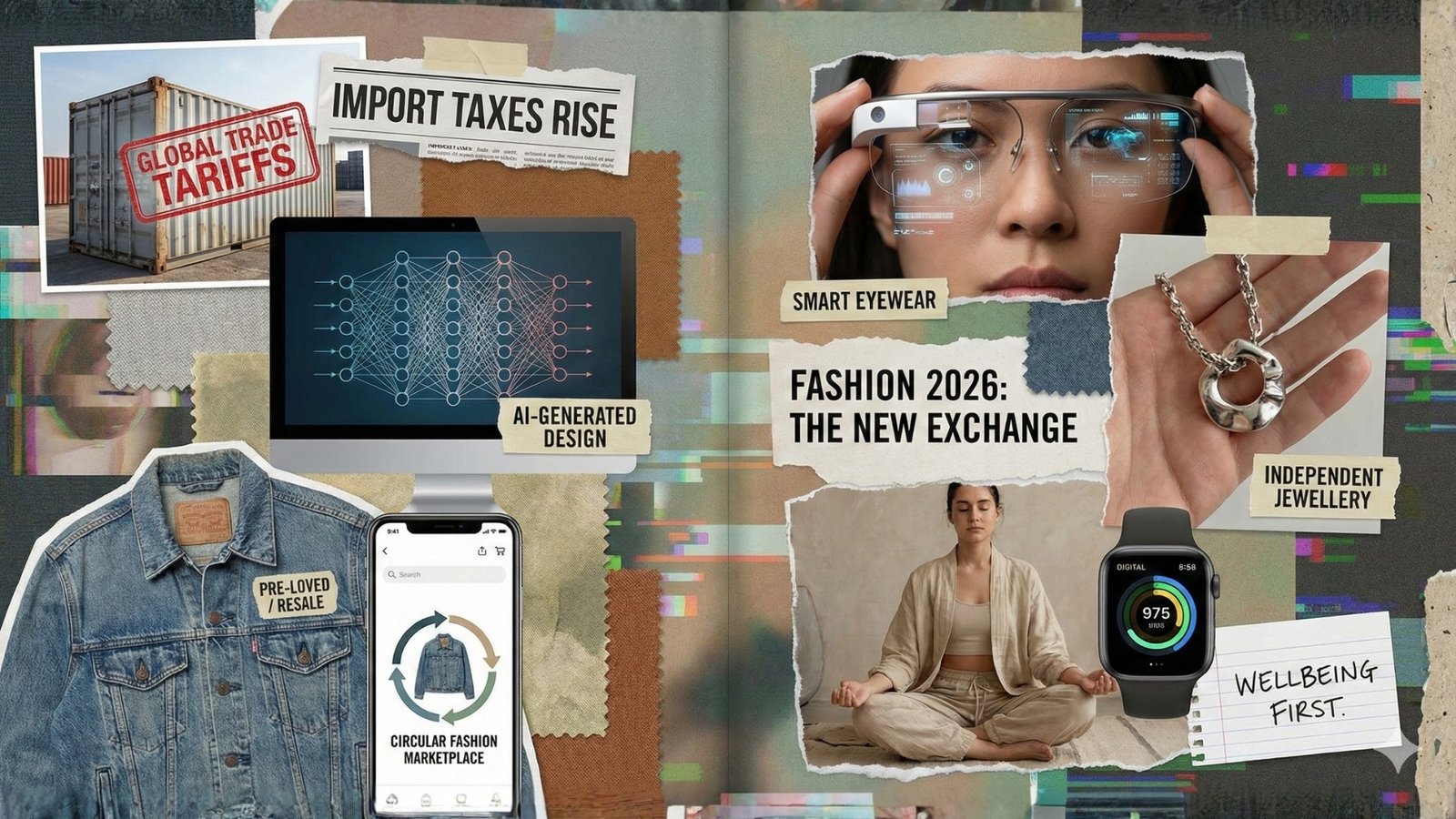
The State of Fashion 2026 outlines 10 defining forces — from tariffs and AI to resale and luxury recalibration — signalling a year where agility, efficiency, and emotional relevance will determine winners.
At a Glance
- The global fashion industry enters 2026 under sustained economic and geopolitical pressure.
- Tariffs, AI, efficiency, and resale reshape operating models across the value chain.
- Jewellery, smart eyewear, and wellbeing emerge as growth-aligned categories.
- Brands across price segments pursue elevation strategies.
- Luxury enters a phase of recalibration, refocusing on creativity and trust.
Editorial Perspective
Fashion is no longer navigating a single disruption — it is adapting to multiple structural shifts at once. According to The State of Fashion 2026 by Business of Fashion, the year ahead will test agility, relevance, and resilience across every tier of the industry.
Growth will not come from scale alone. It will come from how quickly brands adapt, how intelligently they deploy technology, and how clearly they articulate value to increasingly selective consumers.
1. Tariff Turbulence
US-led tariff changes are reshaping global trade flows, pushing up costs across sourcing, manufacturing, and distribution. Fashion brands are responding with price adjustments, supplier diversification, and operational efficiency programs.
Large suppliers are accelerating footprint optimisation, automation, and digitisation, while smaller players face margin pressure and rising complexity. In 2026, agility becomes a competitive advantage, not a nice-to-have.
2. Workforce Rewired
Artificial intelligence is redefining how fashion companies work. Productivity gains from AI are already reshaping roles, with new AI-centric positions emerging alongside the decline of others.
To remain competitive, fashion leaders must invest heavily in upskilling, talent acquisition, and change management. Those who fail to bring their organisations along risk technological progress without real impact.
3. The AI Shopper
AI is no longer just influencing discovery — it is beginning to act on behalf of consumers. Autonomous shopping agents are expected to monitor prices, compare products, and even complete purchases.
For brands, this shifts the rules of digital visibility. Success will depend on semantically rich product data, API-accessible content, and AI-readable storytelling, fundamentally changing e-commerce and marketing strategies.
4. Jewellery Sparkles
Jewellery continues to outperform other fashion categories, defying the broader luxury slowdown. Consumers are drawn to jewellery as a form of long-term value, self-expression, and emotional reward.
As jewellery cements itself as the centerpiece of accessories, fashion brands are racing to capture a share of its outsized growth — either through category expansion or strategic partnerships.
5. Smart Frames
Smart eyewear is emerging as the next major wearables frontier. Equipped with multi-modal AI, these devices blend utility, style, and real-world integration.
With the category projected to exceed $30 billion by 2030, 2026 marks a critical window for fashion brands to collaborate with technology players and shape high-value, style-led use cases.
6. The Wellbeing Era
Wellbeing is becoming central to consumer identity. Shoppers are increasingly drawn to brands that offer emotional resonance, balance, and meaning, rather than constant stimulation.
Fashion brands are entering wellbeing-adjacent “third spaces,” but the larger opportunity lies in embedding wellbeing values across product, communication, and brand experience — not treating it as a side project.
7. Efficiency Unlocked
In a pressured market, efficiency is no longer about cost-cutting alone. Scale and low-cost sourcing are insufficient to sustain growth.
By leveraging technology to improve productivity, brands can unlock resources to invest in design, experience, and differentiation — the true drivers of long-term value.
8. Resale Sprint
Secondhand fashion continues to gain momentum as consumers seek value amid rising prices. While resale platforms have made pre-owned mainstream, brands are now defining their own resale strategies.
Despite operational complexity, resale offers untapped revenue potential and brand halo benefits — making it an increasingly attractive pillar in 2026.
9. The Elevation Game
Across the market, brands are moving upmarket. Some aim to escape ultra-low-cost competition, while others seek to attract customers priced out of luxury.
In 2026, elevation strategies gain urgency as margins tighten. Improved quality, sharper storytelling, and standout experiences will determine which brands successfully upgrade their positioning.
10. Luxury Recalibrated
Luxury is entering a period of strategic renewal. After years of price-led growth, brands are refocusing on creativity, craftsmanship, and client trust.
This recalibration requires balancing distinct customer segments while aligning product, storytelling, and experience into a cohesive expression of brand value — signaling a more disciplined, value-driven era for luxury.
What This Means for Fashion in 2026
The fashion industry’s future will not be shaped by a single breakthrough, but by how well brands integrate multiple forces at once — from AI and efficiency to emotional relevance and trust.
2026 belongs to those who can adapt fast, communicate clearly, and build value beyond price.
