
TL;DR
Fashion brands are escaping the brick-and-mortar trap in 2026 by adopting flexible store formats, blending digital data with physical experiences, and reframing retail spaces as cultural and community hubs — balancing presence with profitability.
At a Glance
- Traditional brick-and-mortar retail is under pressure as rising operating costs and changing consumer expectations erode its long-term profitability.
- Brands are embracing digital-physical integration and hybrid retail formats to build relevance and profitability.
- Strategies including data-driven experiences, pop-ups, experience-first spaces, and localized demand forecasting are reshaping the physical footprint.
- Flexible store formats and partnerships — from digital hubs to appointment-only spaces — help brands balance physical presence with economic efficiency.
Editorial Perspective
The retail playbook that once hinged on expanding physical stores is being rewritten. Increasing costs — rent, staff, inventory, and capital expenditure — combined with evolving digital behaviour and the growth of hybrid commerce — have made it clear that presence alone does not equal profitability. In 2026, according BoF, fashion brands are rethinking physical retail not as a default channel but as a strategic, value-added ecosystem component.
The brands that succeed in this era are those that view stores not just as transaction points, but as experience platforms that enhance discovery, deepen loyalty, and connect digital insights with real-world moments.
Why the Traditional Retail Model Is Straining
Brick-and-mortar stores were historically central to fashion’s growth — providing discovery, imagery, immediacy, and brand presence. However, this model now faces structural pressures:
- Operating costs — rent, staffing, and inventory carrying costs continue to rise.
- Digital alternatives — online and AI-powered discovery reduce reliance on physical browsing.
- Consumer expectations — shoppers now expect experiential value, not just a place to purchase.
As a result, brands must rethink how, where, and why they maintain a physical footprint.
Hybrid and Flexible Store Formats
One key evolution is hybrid retail, where physical locations serve multiple functions beyond transactions:
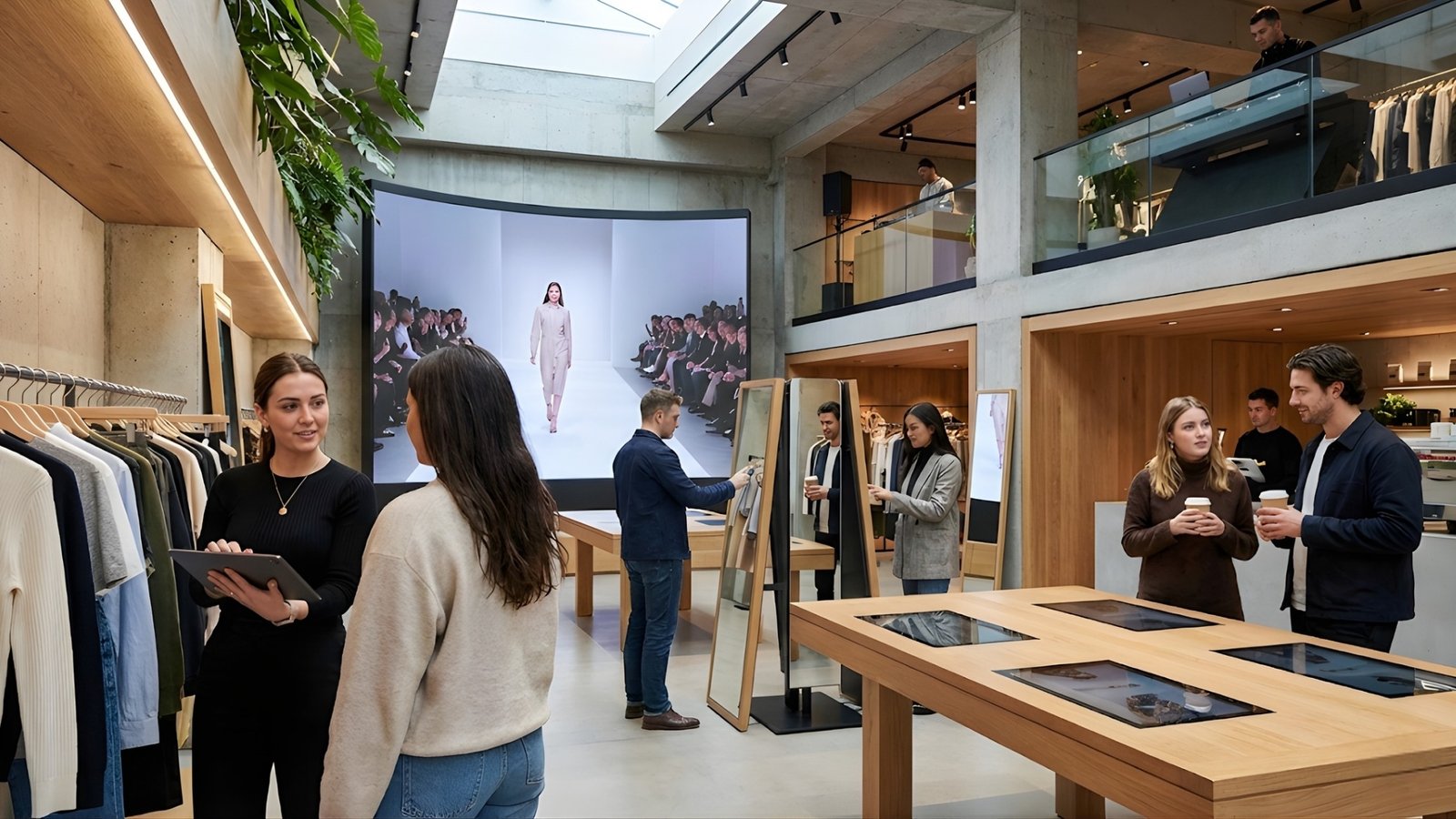
- Flagship experience hubs — immersive brand spaces that drive cultural engagement and storytelling.
- Appointment-only studios — intimate, personalized shopping moments without the overhead of full stores.
- Compact pop-ups and brand activations — agile presences that test markets or launch capsules with limited risk.
These formats reduce fixed costs while preserving brand discovery and customer connection.
Data-Driven Retail Integration
Brands are now using customer data and AI insights to inform physical retail decisions:
- Local demand forecasting to right-size inventory.
- Personalized experiences triggered by prior digital interactions.
- Real-time feedback loops where in-store behaviour influences online content, and vice versa.
This integration blurs the divide between digital and physical, making each store an extension of the broader omni-channel ecosystem rather than a standalone revenue silo.
Experience-First Spaces and Community Playgrounds
Increasingly, stores serve as community and culture destinations:
- Events, workshops, and collaborations turn a store into a cultural touchpoint.
- Curated partnerships with local creators and tastemakers deepen relevance.
- Zones for social interaction — lounges, personalization bars, and demo spaces — add value beyond product display.
This approach reframes retail from checkout counters to cultural hubs, building deeper, emotional consumer relationships.
Localized and Lean Retail Footprints
Brands are also experimenting with lean physical footprints:
- Smaller store formats in high-impact locations.
- Shared retail partnerships (retail collectives, brand co-ops).
- Seasonal or context-based deployment tied to peaks in demand and cultural calendars.
These approaches help optimise unit economics while maintaining visibility and relevance.
Partnerships and Third-Party Platforms
Rather than owning every touchpoint, some fashion brands partner with:
- Specialty retail collectives — multi-brand venues that share cost and audience.
- Marketplace experiences — where brands curate digital shelves and off-site retail pop-ups.
- Tech-enabled partners — integrating digital try-on and appointment systems within physical spaces.
Such alliances extend reach without replicating the cost structure of standalone stores.
What This Means for the Future of Fashion Retail
In 2026, winning brands will approach physical retail with strategic intent rather than inertia. This means:
- Viewing physical space as an experience layer, not a sales default.
- Leveraging digital insights to power physical relevance, not vice versa.
- Cultivating community and culture through spaces that people want to visit, not just shop.
- Balancing physical presence with economic sustainability and operational agility.
In essence, fashion retail is evolving into an ecosystem where physical touchpoints complement digital fluency, creating seamless, differentiated brand experiences.
