
TL;DR
Tariffs on beauty and fragrance imports are raising costs and squeezing margins across the industry, challenging brands to rethink supply chains and pricing as global demand for luxury scents continues.
At a Glance
- New import tariffs affecting beauty products — especially fragrance components and finished perfumes — are reshaping industry economics, according to Business of Fashion reporting.
- Costs for globally sourced ingredients and finished products are rising, forcing brands to reassess pricing and supply chains.
- Major fragrance companies such as Puig have already faced tariff-related headwinds while still reporting growth, illustrating varied responses across the sector.
- The shifts come as global demand remains strong, especially for prestige beauty and luxury fragrance, despite cost pressures.
Tariff Impact on Production and Pricing
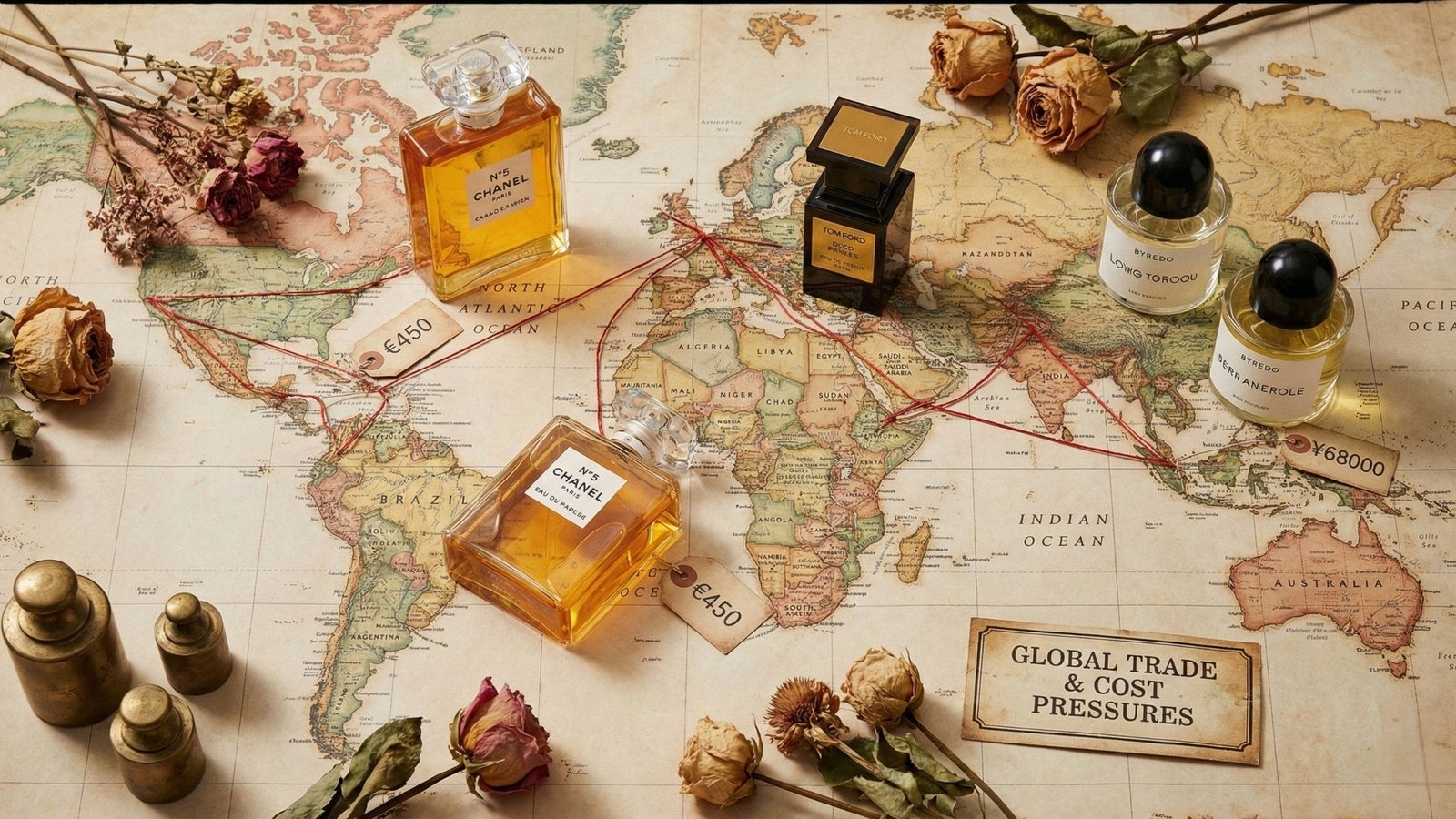
According to Business of Fashion, tariffs are driving up costs across globally sourced fragrance components and finished products — particularly those imported into major markets such as the United States and Europe.
Beauty and fragrance products often incorporate ingredients from multiple countries, including Europe and Asia. When tariffs are introduced or increased, brands face added duty costs on both raw and finished goods, leading to:
- Higher production expenses
- Potentially higher consumer prices
- Pressure on profit margins
These factors can reshape how businesses approach product launches, inventory planning, and country-of-origin strategies.
Industry Responses and Market Variability
Some companies are adapting better than others.
For example, Puig — owner of multiple fragrance labels including Jean Paul Gaultier and Carolina Herrera — reported significant profit growth in 2025 despite tariff headwinds, leveraging strategic stocking and pricing adjustments.
However, not all brands are equally insulated. Smaller or emerging fragrance houses that lack flexible global manufacturing may face more significant costs, potentially slowing growth or prompting reformulation of product lines.
Why This Matters to Luxury Consumers
Luxury fragrances are more than products; they are symbols of personal style and identity. When tariffs push prices higher or constrain product availability, consumer behavior can shift — especially among affluent shoppers sensitive to value perception.
At the same time, continued demand for prestige scents suggests that core luxury buyers may absorb some cost increases without reducing consumption. But broader market segments could become more price-sensitive, reshaping competitive dynamics between mass and luxury beauty.
What to Watch Next
As beauty tariffs take effect globally, industry observers will be watching:
- how brands adjust supply chains and ingredient sourcing
- pricing strategies across global markets
- whether tariff pressures spur local manufacturing or ingredient substitution
- the impact on emerging fragrance brands and indie labels
The evolving landscape may ultimately influence not just cost structures, but the creative and cultural direction of luxury fragrance.
Editorial Perspective
The luxury fragrance boom — where perfumes serve both as fashion statements and premium lifestyle purchases — is now being tested by global trade dynamics. Beauty brands have long relied on internationally sourced ingredients and global manufacturing networks that helped fuel creativity and variety. Now, higher tariffs are squeezing margins and prompting strategic shifts in how goods are sourced and priced.
This tension highlights a broader challenge for the luxury world: balancing global brand identity with shifting economics. Unlike apparel or accessories, fragrances are deeply dependent on specialized ingredients and cross-border value chains, making them especially vulnerable to trade policy changes.
