
At a Glance
- Global K-beauty category expansion accelerates across markets.
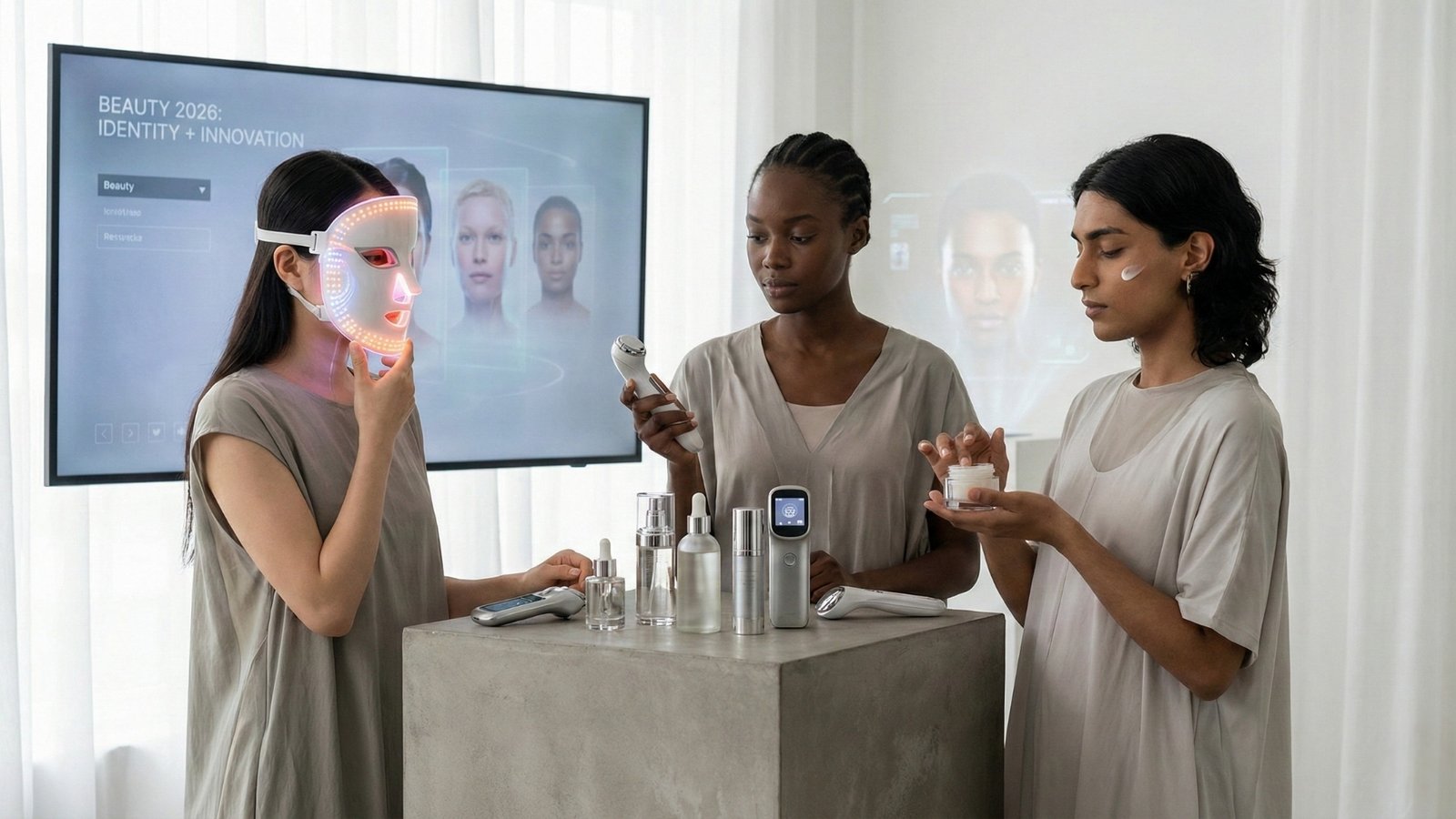
- Expert-led, science-driven beauty — including at-home medspa alternatives — grows in influence.
- Personalization and AI shape discovery, product matching, and digital experiences.
- Makeup evolves toward expressive, hybrid formulations that blend skincare benefits with artistic flair.
- Consumers increasingly seek efficacy, wellness alignment, and authentic brand connection.
K-Beauty: Global Expansion and Category Leadership
One of the clearest structural shifts coming into 2026 according BoF is the global expansion of the Korean beauty category. What once was a regional export phenomenon has matured into a foundation of global beauty demand, with formulations, routines, and ingredient stories influencing product development worldwide.
This trend is not just about popularity — it’s about cultural influence and long-term category authority. Brands that can authentically engage with this heritage — while adapting it to local consumer priorities — will unlock disproportionate attention and growth.
Expert-Led and At-Home Medspa Alternatives
Consumers are increasingly gravitating toward expert-led solutions — whether via dermatologists, scientists, or hybrid medspa-at-home formats. Business of Fashion identifies this move toward science-backed efficacy as a defining force in 2026 beauty.
In practice, this means:
- Performance-focused skincare that bridges clinical strength with everyday usability.
- Fully at-home alternatives to traditional spa and med treatments, driven by advanced formulations and device support.
- A premium placed on evidence, transparency, and measurable outcomes.
This shift underscores a broader paradigm: beauty is increasingly a health-inspired journey rather than a symbolic luxury purchase.
AI, Personalization, and Digital Experience Evolution
Artificial intelligence — much as in fashion and commerce — is transforming how beauty products are discovered, evaluated, and purchased. From AI-driven personalization engines to predictive shopping recommendations, the industry is gearing up for a future where digital tools actively shape consumer choice.
Brands that fail to adapt their digital infrastructure — particularly product data, APIs, and AI-readable content — risk losing visibility in a world where virtual assistants and intelligent agents influence purchase paths.
This trend is a strategic imperative, not just a buzzword.
Makeup and Skincare: Hybrid, Expressive, and Functional
Makeup in 2026 moves away from rigid norms toward hybrid formulations that blend skincare benefits with expressive aesthetics. From sheer, skin-healthy bases to pigment-rich, mood-driven palettes, beauty products will emphasize both performance and personality.
Consumers — particularly Gen Z and Millennials — are seeking products that reflect individual identity and offer multi-dimensional value, such as hydration, SPF protection, and antioxidant benefits alongside bold colour stories.
Wellbeing, Authenticity, and Brand Connection
Perhaps the most fundamental shift is the way consumers define beauty itself. No longer confined to surface enhancement, beauty is increasingly tied to wellbeing, self-care, and authenticity.
This trend surfaces in:
- A preference for clean, transparent formulations with clear benefit claims.
- Marketing that honours self-acceptance over perfection.
- Products and experiences that connect emotionally, not just visually.
In this landscape, brands that articulate purpose and offer genuine value — beyond narrative fluff — will gain the greatest traction.
What This Means for Beauty in 2026
The defining trends of 2026 reflect a beauty ecosystem in evolution — where technology, identity, science, and wellbeing converge. Brands that harness these forces strategically will not only win market share but shape consumer culture for years to come.
In a world where beauty is increasingly personal, intelligent, and intentional, the future belongs to innovators who think beyond formulas and into meaningful experience.
Editorial Perspective
Beauty in 2026 is poised at the intersection of technology, self-expression, and health-centric performance. According to Business of Fashion, the industry will shift dramatically from surface level aesthetics toward meaningful consumer experiences that fuse science, identity, and digital fluency.
In an era where users demand both results and resonance, brands must rethink not just what they sell — but how they engage, educate, and innovate.
