
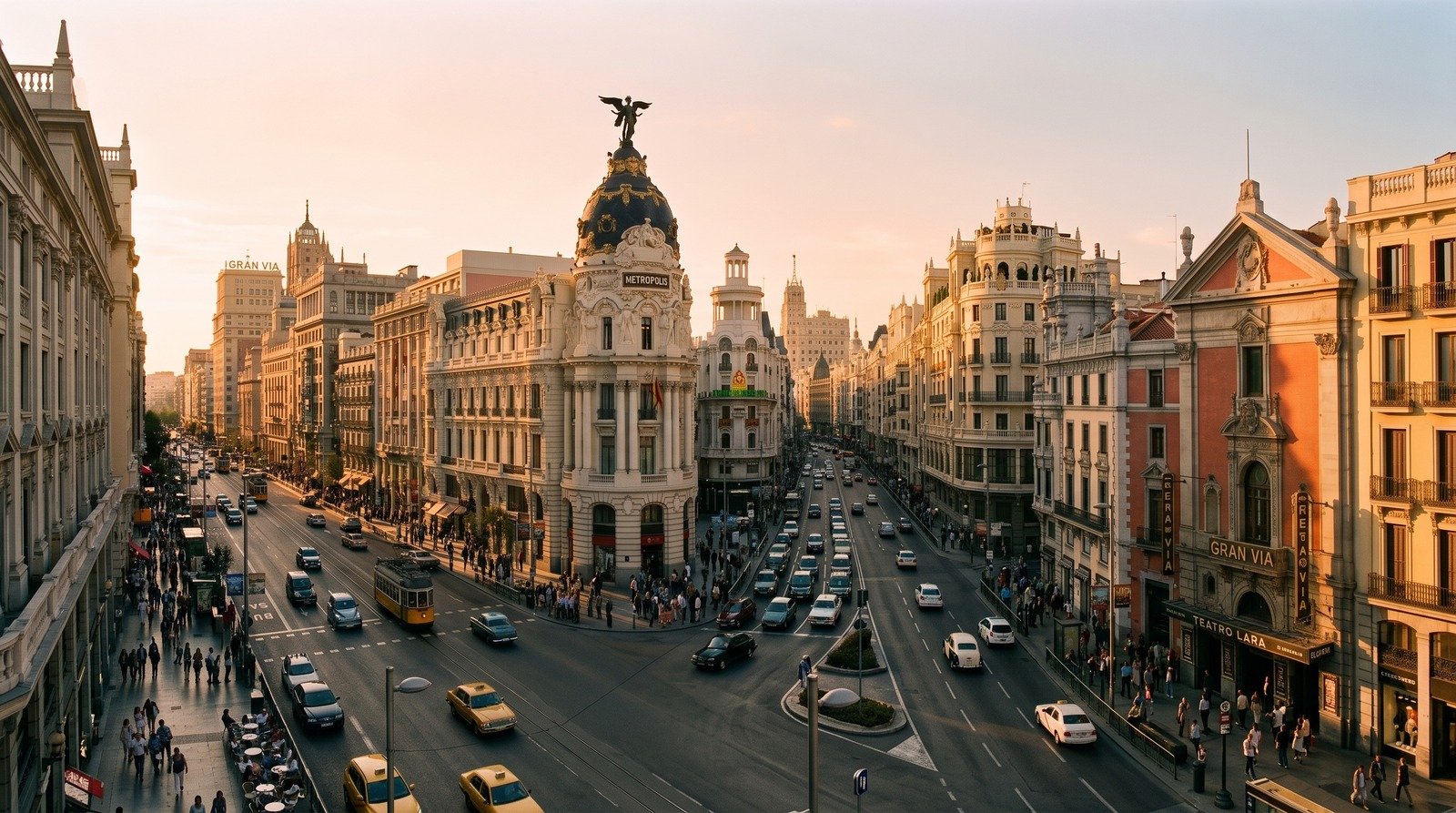
Gran Vía delivers Madrid on a grand scale. Ornate façades rise above busy pavements, theatres announce their latest productions, and rooftop terraces offer a different perspective on the capital.
Its appeal comes from the combination. Architecture gives the avenue substance; shopping, entertainment and evening crowds keep it animated.
For luxury travellers, the most rewarding approach is a deliberate one: walk slowly, study the buildings, choose a rooftop carefully and reserve an evening performance. The street itself is free to explore, making it easy to combine an accessible introduction to Madrid with a more polished night out.

TL;DR
| Category | LxryNow Take |
|---|---|
| Best For | Architecture, rooftop views and evening entertainment |
| Standout Feature | The progression from ornate façades to modern urban landmarks |
| Best First Visit | Late-afternoon walk followed by a rooftop stop |
| Admission | Free to explore the avenue |
| Suggested Time | 60–90 minutes walking; longer with dining or entertainment |
| Shopping Appeal | Strong for mainstream fashion and browsing |
| Main Drawback | Crowds, traffic and a heavily commercial atmosphere |
| Overall Verdict | An essential Madrid walk with worthwhile cultural additions |
LxryNow Recommendation: Make architecture the focus, then add one carefully chosen experience. A rooftop or theatre visit gives the evening more shape than an extended shopping circuit.
Gran Vía at a Glance

| Detail | Information |
|---|---|
| Location | Central Madrid, Spain |
| Route | Calle de Alcalá to Plaza de España |
| Attraction Type | Public avenue and entertainment district |
| Street Access | Open public space; individual venues set their own hours |
| Booking Required | None for walking; advisable for selected venues |
| Useful Metro Stops | Gran Vía, Callao and Plaza de España |
| Best Approach | Walk one direction and pause at architectural landmarks |
| Additional Spending | Optional tours, rooftops, meals and performances |
Madrid’s tourism authority lists the avenue as free to visit and identifies several Metro stations serving it. Tourism Madrid
What Makes Gran Vía Special?

Gran Vía is a window into Madrid’s transformation into a modern capital. Built in stages between 1910 and 1931, it introduced a broad urban thoroughfare and architectural influences associated with American cities. Tourism Madrid
That development remains visible as you walk. The eastern stretch feels decorative and ceremonial, while the area around Callao introduces a more metropolitan character.
The experience rewards looking upward. Sculptures, cornices, towers and elaborate rooflines supply much of the interest, easily missed when attention stays on shop windows.
Its greatest strength is this architectural continuity. Even without entering a building, the avenue offers a substantial introduction to twentieth-century Madrid.
The Architecture Worth Stopping For
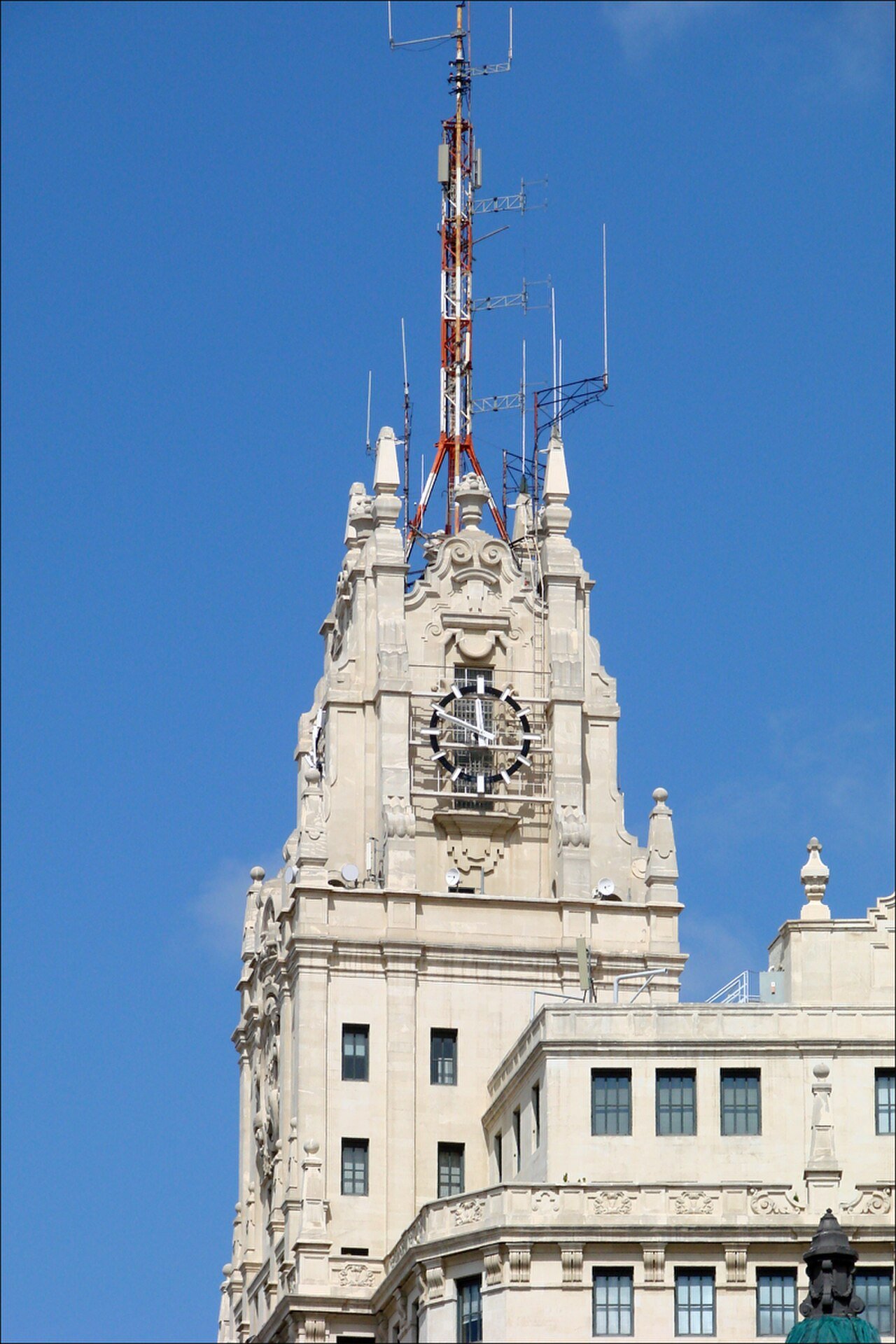
Three landmarks provide a useful framework for the walk.
| Landmark | What to Notice |
|---|---|
| Metrópolis Building | Its dome and sculptural silhouette at the eastern approach |
| Telefónica Building | The tower’s vertical emphasis and early skyscraper character |
| Carrión Building | Its rounded corner and famous illuminated sign near Callao |
These are among the avenue’s best-known architectural landmarks. The Metrópolis building stands on Calle de Alcalá at the Gran Vía junction, so it works particularly well as the starting point. Tourism Madrid
Pause on the opposite pavement where crossings and space allow. Close-up views reveal decoration, but a little distance makes the proportions easier to appreciate.
Building access varies. Treat exterior viewing as the dependable experience and arrange interior visits separately.
Theatre and Evening Entertainment

Theatres and cinemas give Gran Vía an evening purpose beyond sightseeing. Madrid’s official shopping guide identifies entertainment venues alongside the avenue’s hotels, restaurants and cafés. Tourism Madrid
A performance is a strong addition for travellers who enjoy a structured night out. Walk beforehand, eat nearby and arrive without rushing.
Check the production language when booking. Familiar music may make a musical easier to follow, but translated dialogue and lyrics can still affect the experience.
Choose the performance on its merits rather than simply selecting whichever theatre has the brightest façade.
Shopping: Convenient and Energetic
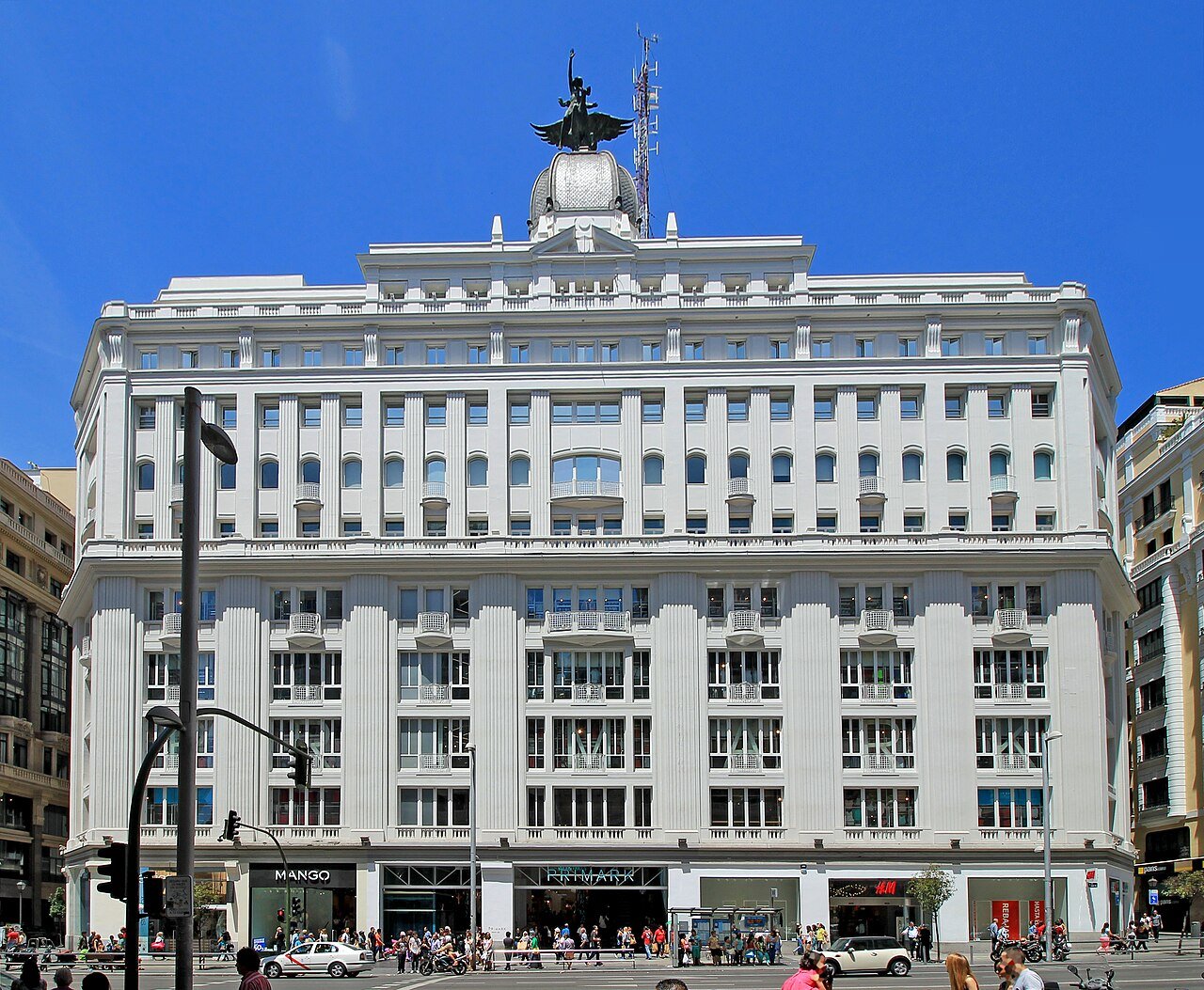
Gran Vía is an effective shopping street for mainstream fashion, accessories and spontaneous browsing. Major chain stores dominate, alongside smaller footwear, jewellery and souvenir shops. Tourism Madrid
The appeal is convenience: several categories sit within a compact central route, and browsing fits easily between architectural stops.
For LxryNow readers, the limitation is clear. Gran Vía’s retail mix offers less distinction than its buildings and entertainment. Shopping works best as a supporting activity.
Set a time limit if the avenue forms part of a short Madrid itinerary. Familiar stores can absorb an afternoon without adding much to the destination experience.
Are the Rooftops Worth It?

A rooftop can be the most memorable paid addition to a Gran Vía visit. Height reveals the relationship between towers, domes and surrounding streets.
The area has several terraces, including hotel rooftops along the avenue. Madrid’s tourism authority specifically highlights rooftop dining and drinks in the Sol–Gran Vía neighbourhood. Tourism Madrid
Choose according to the view, seating arrangements and atmosphere. Some terraces suit photography; others are better for a relaxed drink.
Confirm admission rules, reservations and any minimum spend. Sunset is attractive, but a crowded standing area can undermine the experience. Comfortable seating and an unobstructed outlook deserve priority.
Dining Along and Around Gran Vía

Gran Vía offers convenience for a meal between sightseeing and a performance. Its hotels, cafés and restaurants provide plenty of opportunities to stop. Tourism Madrid
For a destination meal, choose deliberately. A prominent address and attractive décor do not establish culinary quality.
Allow time to explore the adjoining streets, where a dining stop can become part of the wider neighbourhood experience. Match the reservation to your evening plans, particularly when theatre tickets impose a fixed arrival time.
A shorter meal before a show often works better than an ambitious tasting menu with little margin.
Daytime or After Dark?

Daylight is best for reading architectural detail. Stonework, sculptures and the changing styles along the avenue become easier to distinguish.
After dark, the emphasis shifts to illuminated façades, signs and the movement of people. The street becomes more theatrical, though less comfortable for uninterrupted strolling.
Late afternoon offers a useful compromise. Begin with the buildings in daylight, pause for refreshments, then continue as the lights come on.
In hot weather, avoid making a long exposed walk the centrepiece of the afternoon. Breaks improve both comfort and attention.
The Best Walking Route

For a first visit, walk from the Calle de Alcalá junction towards Plaza de España.
- Start at Metrópolis: Establish the avenue’s architectural scale.
- Continue towards Telefónica: Compare the decorative façades with the tower.
- Pause at Callao: Take in the cinemas and Carrión building.
- Follow the western stretch: Notice the entertainment venues.
- Finish at Plaza de España: Give yourself time to rest before continuing.
The route follows the avenue’s three historical construction stages. Tourism Madrid
Resist turning every landmark into a lengthy photo stop. A few considered pauses preserve the rhythm of the walk.
How Long Should You Spend?

Allow 60–90 minutes for a relaxed architectural walk with photographs. These are planning estimates, rather than fixed visit durations.
| Visit Style | Suggested Allocation |
|---|---|
| Brief introduction | 30–45 minutes |
| Architecture and photography | 60–90 minutes |
| Walk with rooftop or meal | 2–3 hours |
| Walk, dinner and performance | A full evening |
Gran Vía fits naturally into a wider itinerary. Use LxryNow’s guide to luxury things to do in Madrid to pair the avenue with cultural visits and a considered evening plan.
Comfort and Accessibility

The avenue’s renovation widened pavements and added benches and trees, improving the pedestrian experience. Tourism Madrid
Crowds still affect comfort, especially around busy crossings and shopping entrances. Allow extra time and step aside when stopping for photographs.
Travellers with mobility requirements should check the specific Metro entrance, rooftop lift or theatre access they intend to use. Street accessibility does not guarantee that every venue or guided itinerary is suitable.
Comfortable footwear and a planned rest stop make the visit easier.
Is Gran Vía Worth Visiting?
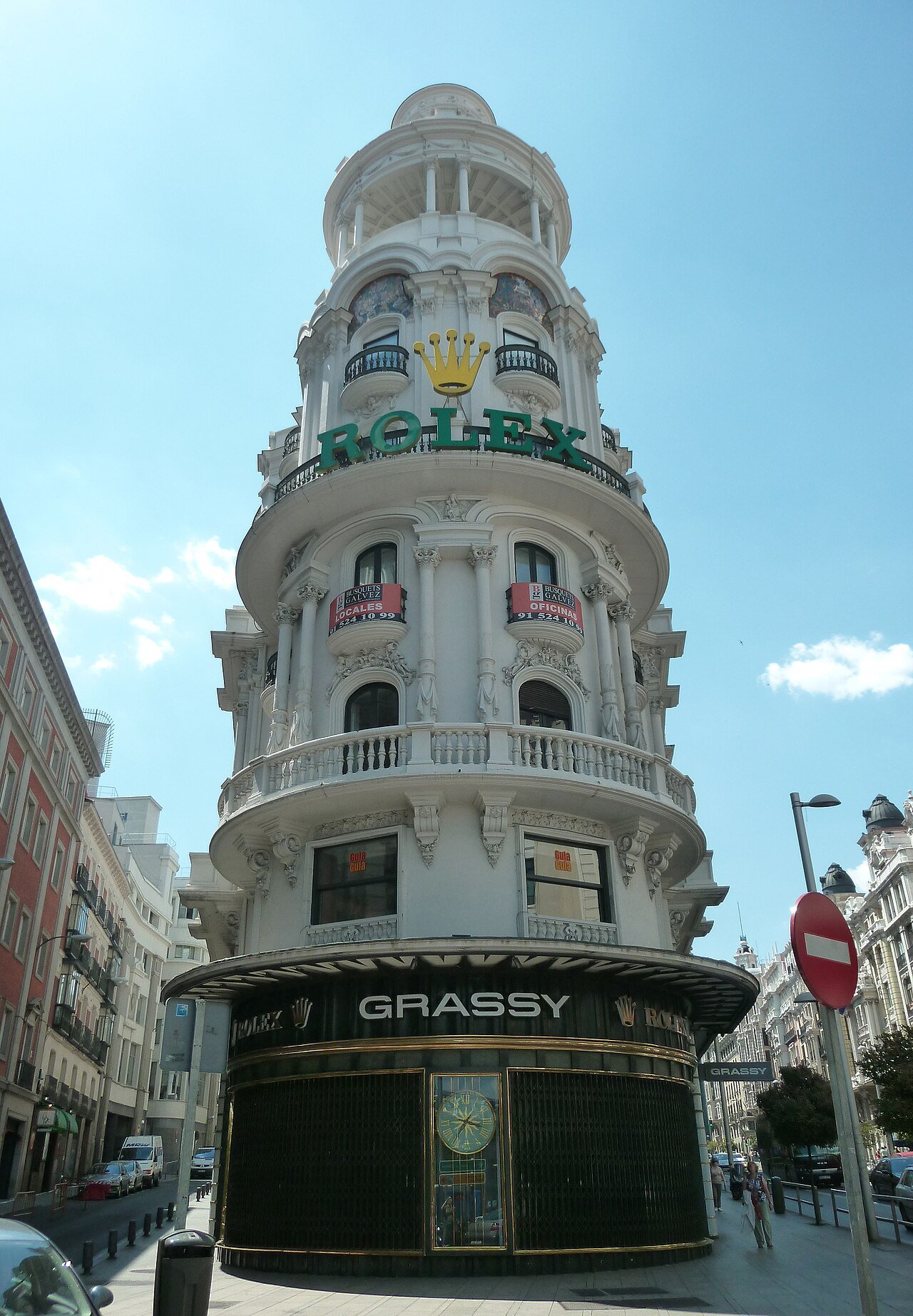
Yes, particularly on a first Madrid trip. Its architecture and central location justify a dedicated walk, even for travellers with little interest in shopping.
The strongest experience combines the free street visit with one addition that reflects your interests: architectural guidance, rooftop views or a performance.
Its limitations are equally apparent. Traffic, crowds and familiar retail chains can make it feel commercial. Travellers seeking quiet should keep the visit focused and schedule a calmer stop afterwards.
LxryNow Review Scorecard

Scores reflect LxryNow’s editorial assessment.
| Category | Score | Assessment |
|---|---|---|
| Architecture | 9/10 | Distinctive buildings and a rewarding historical progression |
| Atmosphere | 9/10 | Animated throughout the day and especially after dark |
| Rooftop Potential | 9/10 | Excellent perspectives with the right venue |
| Entertainment | 9/10 | Strong scope for a complete evening |
| Shopping | 7/10 | Convenient, though largely mainstream |
| Dining | 7/10 | Plenty of choice; selection matters |
| Crowd Comfort | 6/10 | Congestion can interrupt the walk |
| Accessibility | 8/10 | Improved pavements; individual access varies |
| Value | 10/10 | Substantial architectural interest without admission |
| Overall Score | 8.2/10 | An essential avenue best enjoyed with a deliberate plan |
Which Experience Should You Choose?

| Experience | Best For | LxryNow Recommendation |
|---|---|---|
| Independent walk | Flexible sightseeing | Best starting point |
| Architecture tour | Understanding the buildings | Best cultural upgrade |
| Private city walk | Broader context and personal attention | Confirm time devoted to Gran Vía |
| Rooftop stop | Views and a relaxed pause | Select seating and outlook carefully |
| Theatre evening | Entertainment enthusiasts | Book the production first |
Book the Experience
Gran Vía requires no admission ticket. Guided experiences add interpretation or combine the avenue with other Madrid sights.

Gran Vía Architecture Tour from Its Rooftops
An architect-led approach with elevated viewpoints
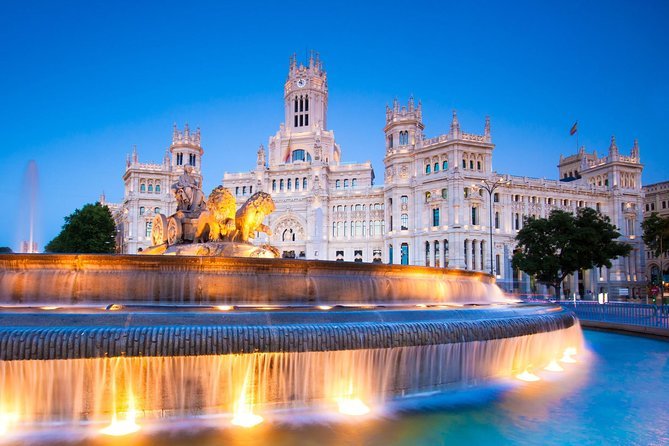


Check the current route, language and accessibility before booking. For rooftop tours, confirm admission inclusions; the architecture tour lists additional rooftop costs separately. Madrid
Pros and Cons
| Pros | Cons |
|---|---|
| Remarkable architectural variety | Busy pavements and traffic |
| Free to explore | Commercial atmosphere |
| Strong evening entertainment | Mainstream shopping dominates |
| Worthwhile rooftop possibilities | Rooftop access may cost extra |
| Easy to fit into a central itinerary | Venue accessibility varies |
Final Verdict
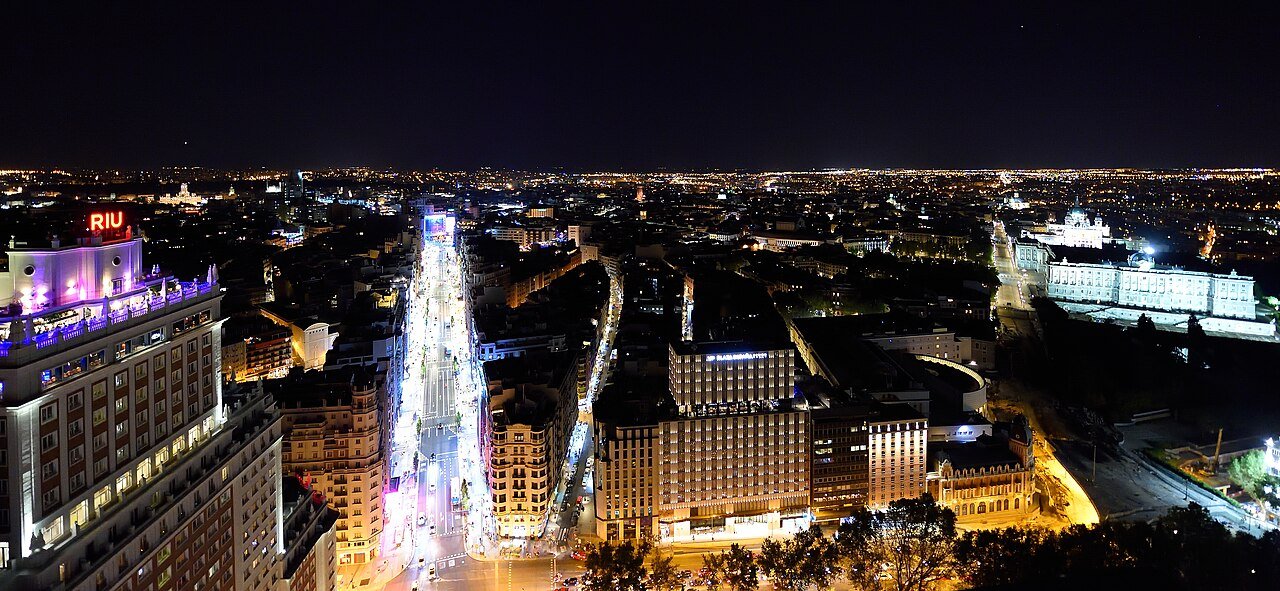
Gran Vía earns its place in a Madrid itinerary through architecture, atmosphere and entertainment. Its buildings reward attention, while the evening setting makes a rooftop stop or performance feel like a natural continuation.
Walk the avenue with a clear focus and leave room for one worthwhile addition. That approach gives its grandeur time to register without letting shopping or crowds dominate the visit.
LxryNow Verdict: A defining Madrid experience, especially rewarding for travellers who combine architectural sightseeing with a carefully chosen evening.
