
TL;DR
A nearly identical Rolex Day-Date in gold can be significantly cheaper than its platinum counterpart — not because gold is intrinsically less valuable, but because brand narrative, perceived rarity, and luxury signaling drive pricing in high-end markets.
At a Glance
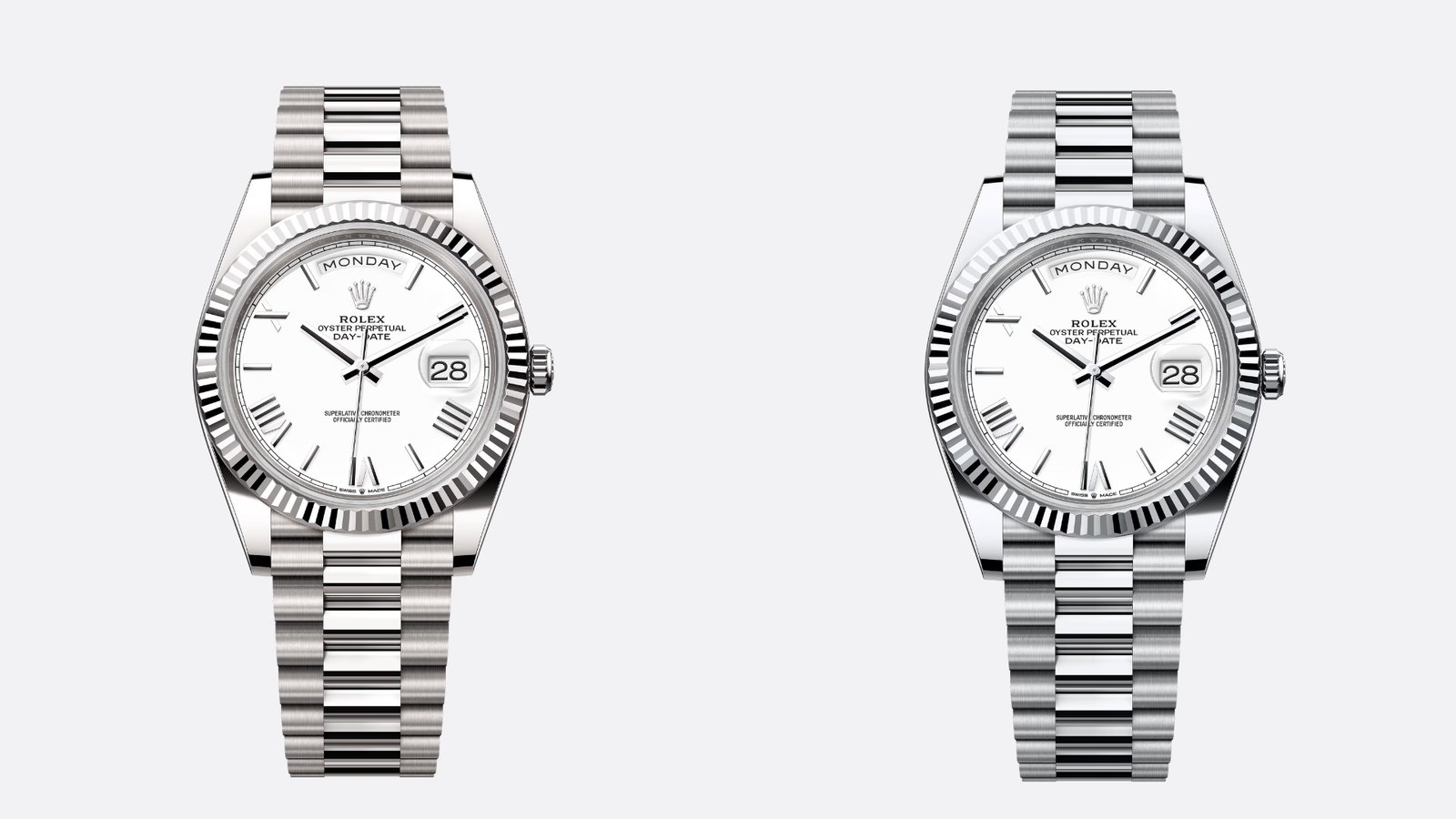
- Two nearly identical Rolex Day‑Date watches — one in gold and one in platinum — carry a $17,000 price gap despite similar looks.
- The discrepancy is driven not solely by material cost but by market demand, perceived rarity, and luxury signaling.
- Platinum models often command a larger premium due to historical scarcity and collector esteem.
- Rolex pricing illustrates how intangible factors shape value in high-end luxury markets.
The Rolex Pricing Puzzle
The two watches at the center of this story are:
- A Rolex Day-Date in white gold, and
- A similar Rolex Day-Date in platinum. Both share design DNA, case dimensions, and high-end finishing.
Yet the platinum version can be about $17,000 more expensive than the gold one on retail and secondary markets.
At first glance, this seems counterintuitive: traditional bullion pricing would often place gold — a globally traded commodity — at a higher price per ounce than platinum. But in the context of luxury watches, perceived value outweighs raw material cost.
Luxury Signaling and Perceived Scarcity
Experts and collectors point to several reasons why platinum commands a premium:
- Scarcity and prestige: Platinum has historically been rarer and harder to work with than gold, which adds to its mystique among watch connoisseurs.
- Collector demand: Prestige materials often attract a different segment of buyers who view rarity and understated luxury as desirable hallmarks.
- Market signaling: In luxury goods, price functions as a signal — not just a reflection of cost. A higher price can reinforce exclusivity and status.
As one watch market commentator put it, “To the untrained eye, it looks like steel; to the initiated, it signals restraint and fluency in luxury language.”
Beyond Material: Craft, Brand, and Market Dynamics
Rolex’s pricing also reflects factors beyond metal pricing:
- Brand positioning: Rolex is synonymous with status — and pricing is part of that narrative.
- Production nuance: Different precious metals require distinct manufacturing processes that influence yield, finishing complexity, and quality control.
- Secondary market performance: Platinum models may trade at stronger resale levels, reinforcing their premium over time.
This approach aligns with luxury economics where intangibles — heritage, desirability, rarity — often eclipse tangible cost bases.
What This Means for Luxury Watch Buyers
For collectors and affluent buyers, the Rolex pricing gap is a reminder that:
- Luxury value is multi-dimensional: aesthetics, narrative, and scarcity shape what buyers are willing to pay.
- Investment potential varies by material and model desirability: platinum may hold or grow value differently than gold.
- Understanding brand language matters: in the high luxury segment, price can signal much more than production cost — it signals status, taste, and exclusivity.
Editorial Perspective
In luxury markets, price tags often reflect more than the sum of materials and manufacturing costs — they encode brand perception, scarcity signaling, and consumer psychology. This dynamic is vividly illustrated in a recent pricing anomaly highlighted by Business of Fashion, where a Rolex in gold is significantly cheaper than its platinum sibling despite similar aesthetics and functionality.
This price gap challenges conventional assumptions about material value and reveals how luxury brands calibrate pricing based on narrative, desirability, and market positioning — not just bullion value.
