
TL;DR
Gen Alpha is entering beauty earlier than ever, driving rapid growth in skincare and reshaping marketing strategies. But as demand rises, brands face increasing scrutiny over product safety, ethical marketing and the impact of early beauty adoption.
At a Glance
- Gen Alpha is entering the beauty market earlier than any previous generation.
- Skincare — including advanced routines — is a key focus among teens and tweens.
- Social media platforms like TikTok are accelerating product discovery and demand.
- Brands face growing scrutiny over age-appropriate marketing and product safety.
Editorial Perspective
The beauty industry is getting younger — fast.
Generation Alpha, the cohort born from roughly 2010 onwards, is entering the beauty category earlier than any generation before them. What begins as curiosity quickly evolves into routines, product preferences and even brand loyalty — often before teenage years.
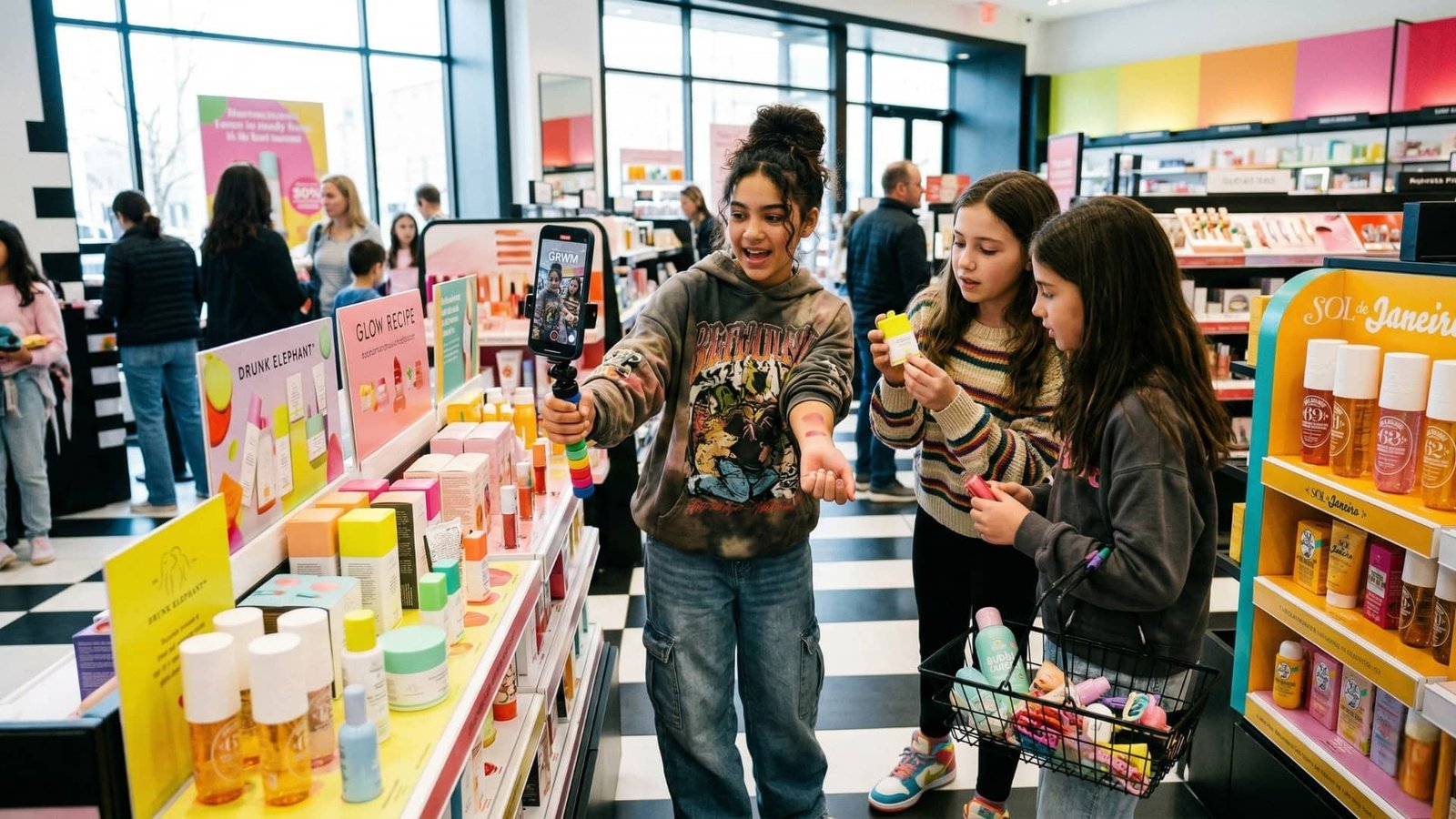
According to industry insights, this shift is not just expanding the market — it is reshaping it. From skincare routines inspired by TikTok to in-store shopping experiences with friends and parents, Gen Alpha is redefining how beauty is discovered, consumed and marketed.
But with this rapid growth comes tension: where is the line between education, aspiration and exploitation?
Why Gen Alpha Matters to Beauty
1. Earlier Entry Into Beauty
Today’s teens are starting younger than ever.
- Average entry into beauty purchasing is around age 12 — earlier than previous generations
- Beauty is increasingly seen as self-expression, not just grooming
- Skincare, once an adult category, is now central to youth routines
This early engagement creates long-term value for brands — but also raises ethical questions.
2. Skincare Over Makeup
Unlike past generations, Gen Alpha is gravitating toward skincare rather than heavy makeup.
The trend reflects:
- Influence of “skin-first” beauty culture
- Desire for healthy, natural-looking skin
- Education through social media content
However, the rise of multi-step routines — often inspired by adult products — has sparked concern among dermatologists and parents.
3. Social Media as the Primary Driver
Platforms like TikTok and YouTube are now the dominant discovery channels.
- Around 75% of teen girls consume beauty content daily
- Influencers and peers drive product awareness
- Trends spread rapidly across global audiences
This creates both opportunity and risk — especially when complex or inappropriate routines go viral.
The Industry Dilemma: Growth vs Responsibility
1. The Rise of “Sephora Kids”
A growing phenomenon sees tweens shopping premium skincare brands — often designed for adult skin.
This includes:
- High-strength active ingredients
- Multi-step skincare routines
- Premium price points
While it fuels growth, it also raises concerns about:
- Skin sensitivity and long-term health
- Psychological impact of early beauty focus
- Commercialisation of childhood
2. Marketing to Two Audiences
Gen Alpha doesn’t shop alone.
- Parents still control a large share of purchases
- Teens influence decision-making heavily
- Brands must balance messaging for both
This creates a dual challenge: appealing to youthful curiosity while maintaining parental trust.
3. Regulation and Backlash Risks
As awareness grows, so does scrutiny.
- Concerns around harmful ingredients and overuse
- Calls for clearer age-appropriate guidelines
- Increasing debate around ethics in youth marketing
Some brands are already shifting toward:
- Simpler routines
- Educational messaging
- “Safe” and gentle formulations
How Brands Are Adapting
1. Age-Appropriate Product Development
New lines are being designed specifically for younger skin — focusing on hydration, protection and simplicity rather than anti-aging.
2. Education-First Marketing
Brands are beginning to:
- Promote simplified routines
- Provide ingredient transparency
- Position skincare as health, not perfection
3. Community-Driven Engagement
Gen Alpha prefers participation over passive consumption.
Successful brands are:
- Building interactive communities
- Encouraging co-creation
- Leveraging peer-to-peer influence
Why It Matters for Luxury and Beauty
The rise of Gen Alpha signals a structural shift:
- Beauty demand is expanding into younger demographics
- Brand relationships are forming earlier than ever
- Social media is reshaping authority and trust
For luxury beauty, the challenge is particularly nuanced — balancing aspiration with responsibility.
What This Means for 2026
According to WWD, Gen Alpha is set to become one of the most influential consumer groups in beauty — not just as buyers, but as decision-makers within households.
Looking ahead:
- The category will continue to grow faster than the overall beauty market
- Brands will face increasing pressure to define ethical boundaries
- Success will depend on trust, transparency and education
In short, Gen Alpha is not just the future of beauty — it is already reshaping its present.
