
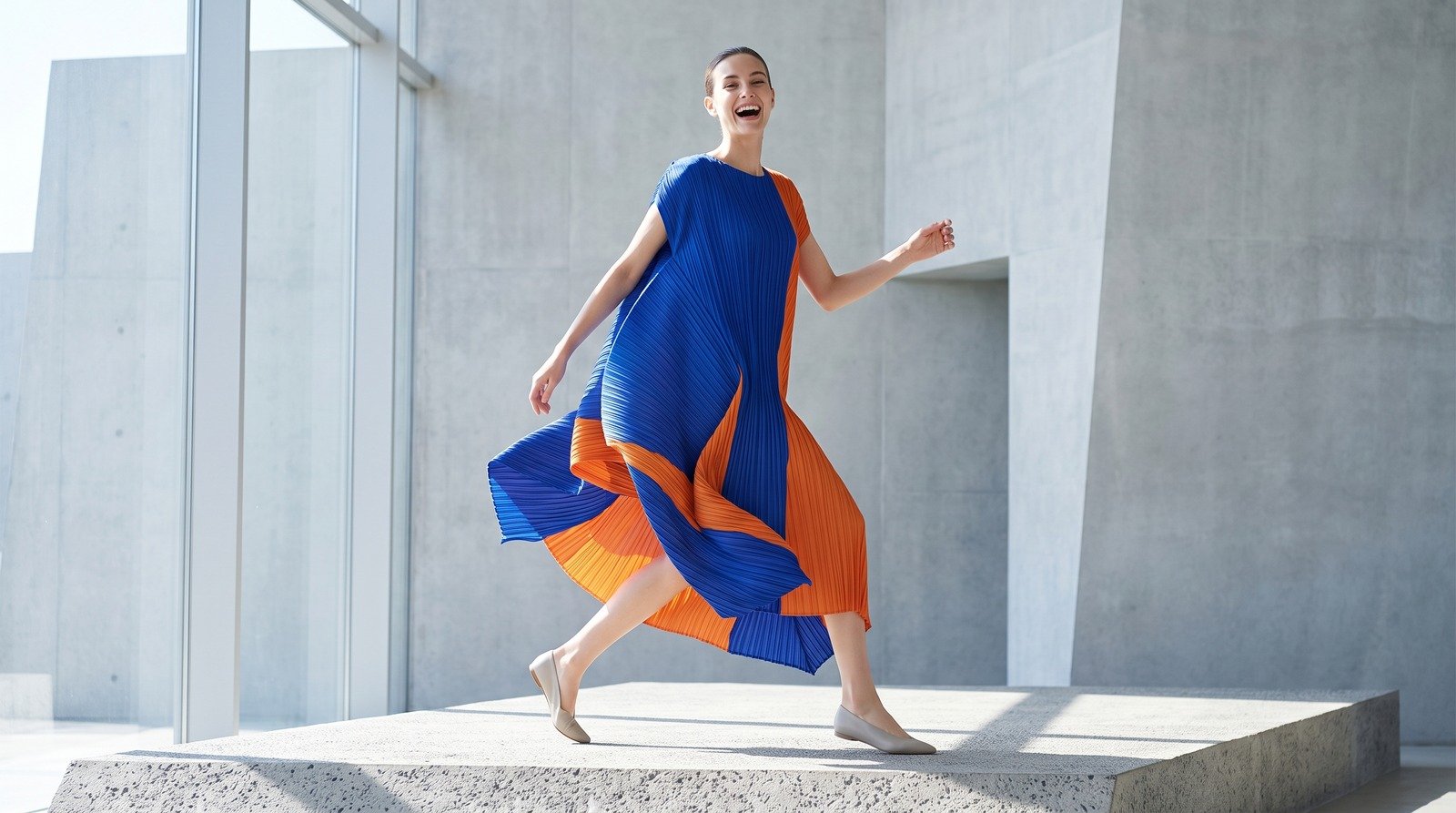
The Issey Miyake Pleats Please collection proves that practicality and experimentation do not need to exist at opposite ends of fashion.
Its garments are lightweight, compact, flexible and comparatively easy to maintain. Yet their precisely engineered folds create shapes that move between understated wardrobe staples and wearable sculpture.
The difference lies in the production method. Rather than pleating fabric before construction, the clothes are cut and sewn in enlarged proportions before being permanently pleated into their final form. This allows the folds to follow completed seams and silhouettes instead of merely decorating flat material.
The visual identity is unmistakable, but the prices—often several hundred dollars for polyester clothing—invite a fair question. Does the engineering, longevity and versatility justify the investment?
TL;DR
| Category | LxryNow Take |
|---|---|
| Best For | Travel, creative workwear and low-maintenance wardrobes |
| Best First Piece | Black Basics straight-leg trousers |
| Best Everyday Top | Mist Basics short-sleeve top |
| Typical U.S. Price | Approximately $285–$770 for many current garments |
| Main Material | Primarily heat-set polyester |
| Sizing | Flexible through width; numbered sizes often affect length |
| Standout Feature | Permanent garment pleating that expands with movement |
| Main Drawback | High price for predominantly synthetic fabric |
| Overall Verdict | One of fashion’s most convincing combinations of design and utility |
Pleats Please is worth considering when ease of wear matters as much as visual distinction. The Basics trousers provide the strongest starting point, while dresses and sculptural seasonal pieces offer greater impact but less everyday versatility.
How Pleats Please Began
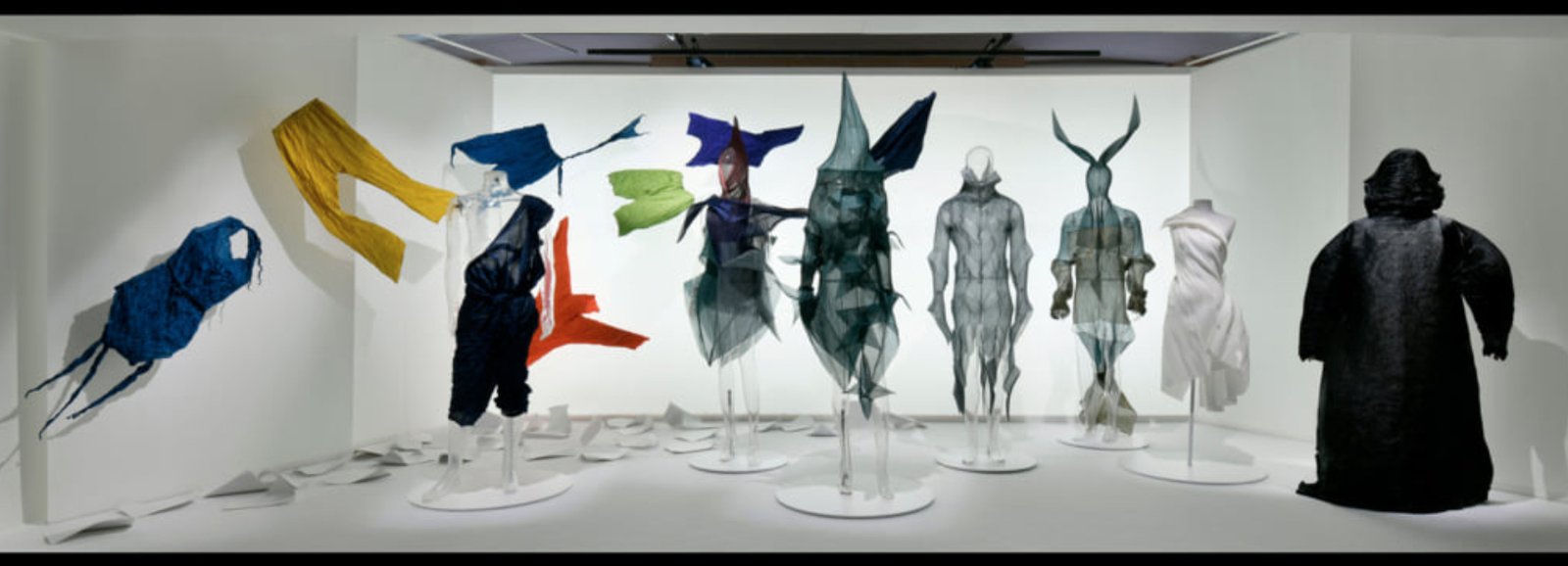
Issey Miyake began presenting experiments with pleated clothing in the late 1980s. The technique gained an important practical test in 1991 when he created costumes for William Forsythe’s The Loss of Small Detail for the Frankfurt Ballet.
The dancers required clothing that could move freely, endure performance and remain visually expressive. That pursuit helped establish the idea of a garment that adapts to the body rather than requiring the body to conform to a rigid shape.
The dedicated Pleats Please line was launched in 1993, with its first independent seasonal collection following for Spring/Summer 1994. Its purpose was unusually direct for an avant-garde fashion project: to produce clothing that was light, comfortable, easy to wear, simple to care for and appropriate for daily life.
Those principles continue to define the collection. While colours, prints and silhouettes change seasonally, the central idea remains consistent: fabric technology should create greater freedom for the wearer.
How The Pleating Process Works
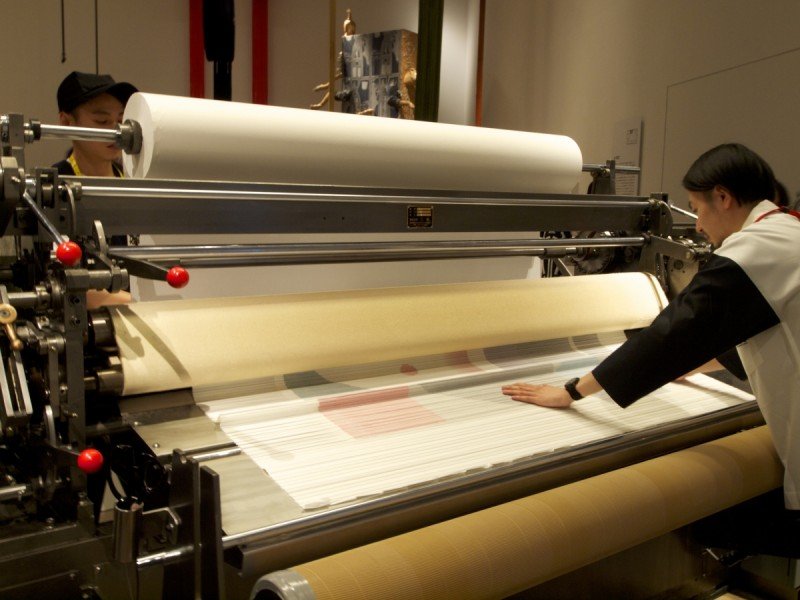
The process reverses the traditional relationship between pleating and garment construction.
A conventional pleated garment is often made by folding or treating the fabric before individual pattern pieces are assembled. Pleats Please begins by cutting and sewing a garment at a significantly larger scale.
The completed piece is positioned between sheets of paper and fed through a pleating process using heat and pressure. The fabric contracts into its final dimensions while retaining flexible, permanent folds.
This order of construction produces several advantages:
- Pleats continue naturally across completed seams.
- The garment expands with the body and returns to shape afterwards.
- Simple pattern shapes develop unexpected volume during movement.
- The clothing can be compressed for packing without conventional wrinkling.
- The folds remain integral to the design rather than functioning as surface decoration.
The technique also explains why the garments look different when laid flat. A top may appear exceptionally narrow on a hanger but expand substantially when worn.
The result is not one fixed silhouette. It is a responsive structure that changes according to body shape, styling and movement.
Core Collections And Garment Types
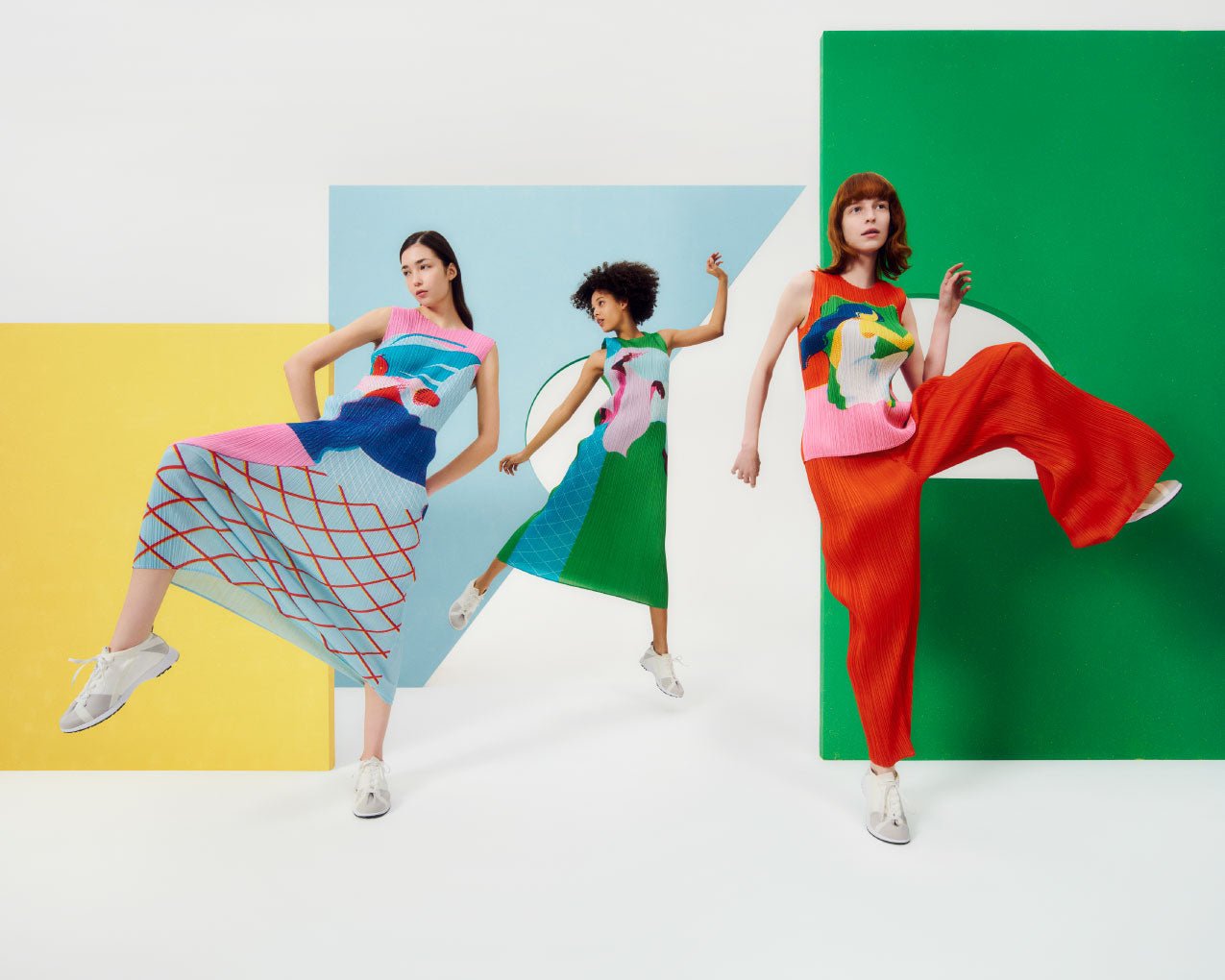
| Collection Or Style | Key Characteristics | Best For |
|---|---|---|
| Basics | Neutral colours and seasonless silhouettes | A first purchase |
| Mist Basics | Fine one-millimetre pleats and softer texture | Lightweight layering |
| Monthly Colors | Familiar shapes in changing seasonal shades | Building colour into a wardrobe |
| Fluffy Basics | Partially softened or erased pleats | Relaxed volume |
| Rib Pleats Basics | More pronounced linear texture | Fitted layering pieces |
| Printed Series | Graphic artwork transformed by pleating | Statement dressing |
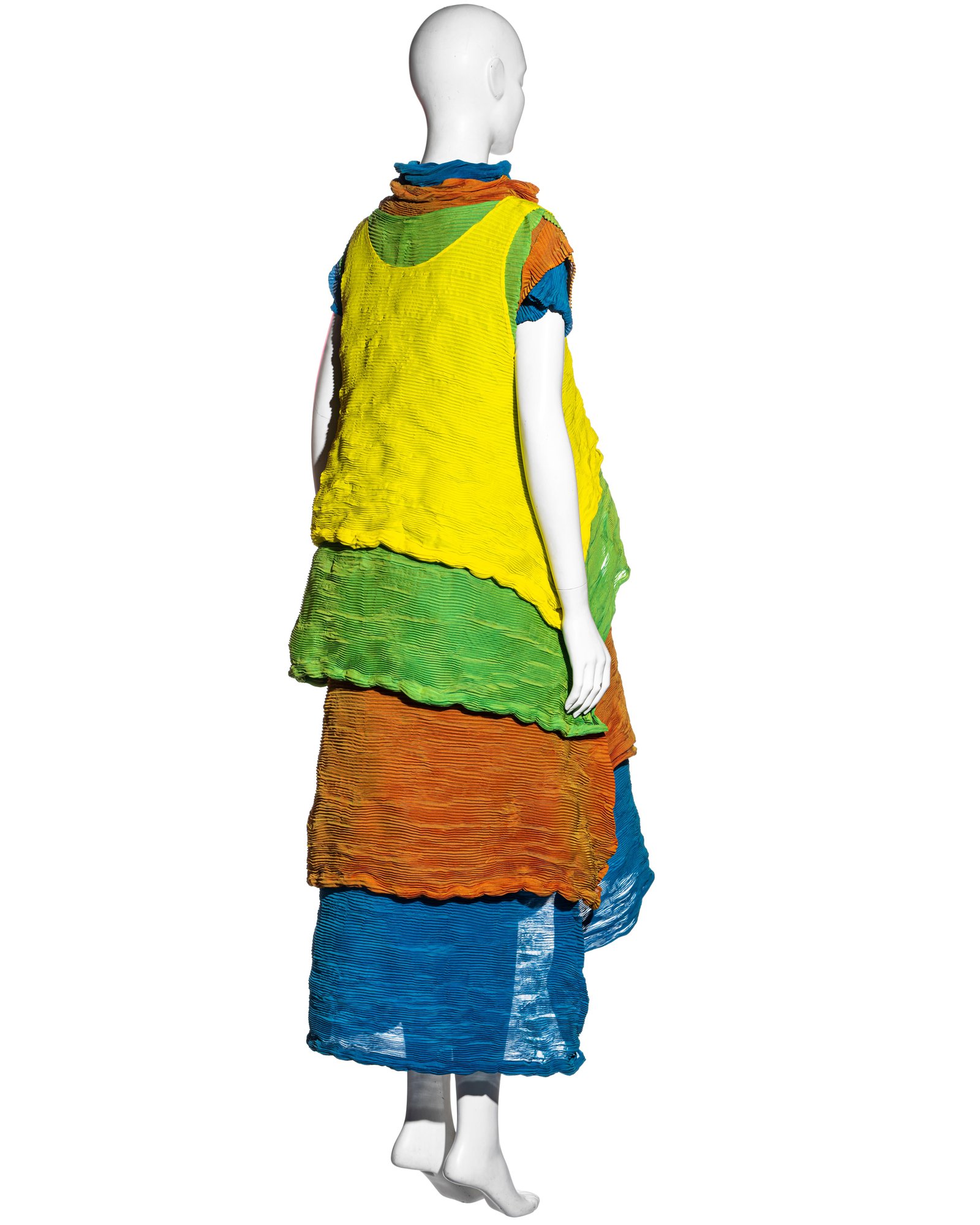
| Sculptural Seasonal Pieces | Asymmetry, panels and adjustable shapes | Collectors and creative wardrobes |
Tops
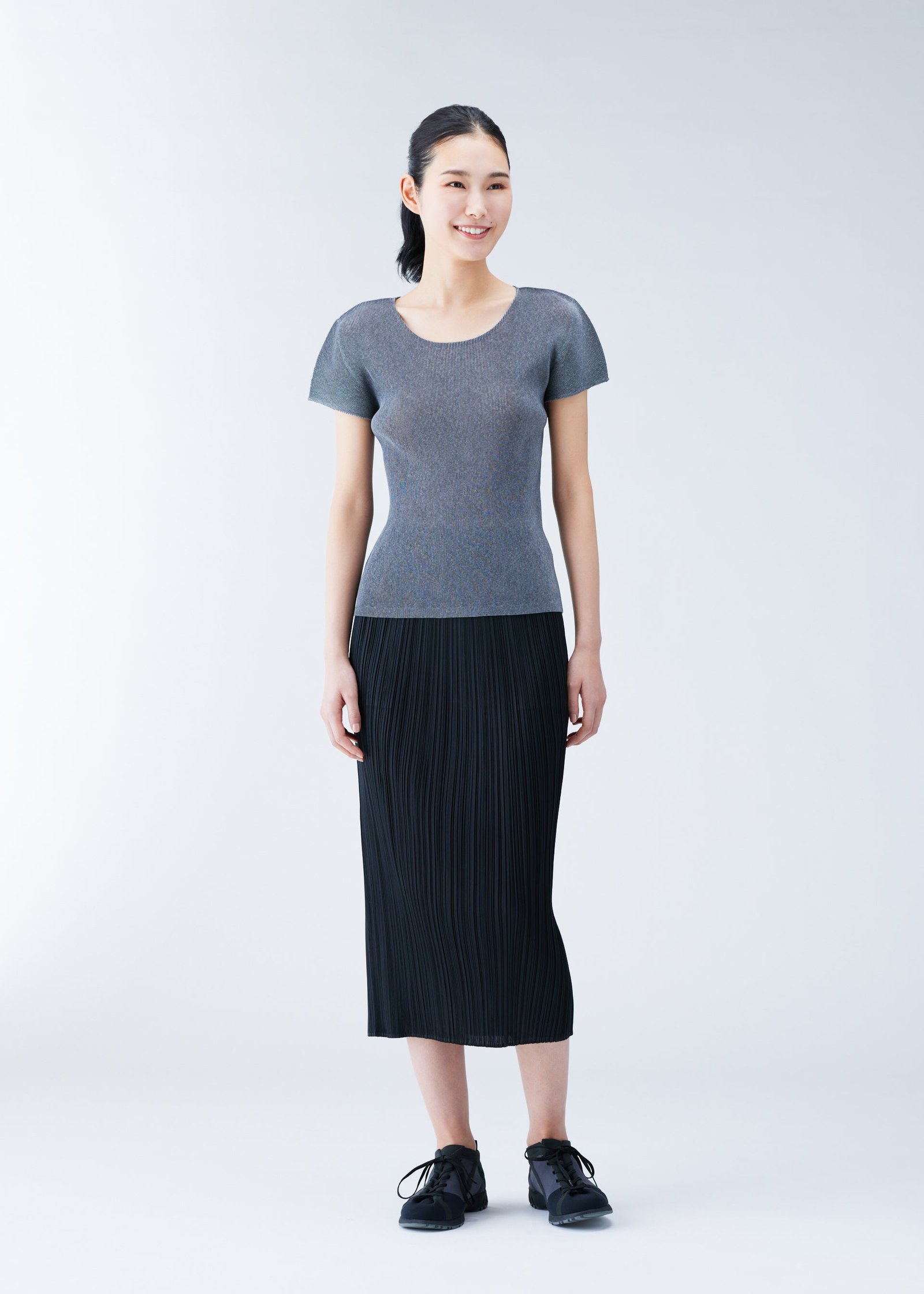
Short-sleeve and sleeveless tops offer the easiest introduction to the fabric. They require little styling, pack into very little space and can be worn beneath jackets or over wider trousers.
Mist Basics uses especially fine pleats, creating a softer and more body-conscious appearance than the standard Basics series.
Trousers
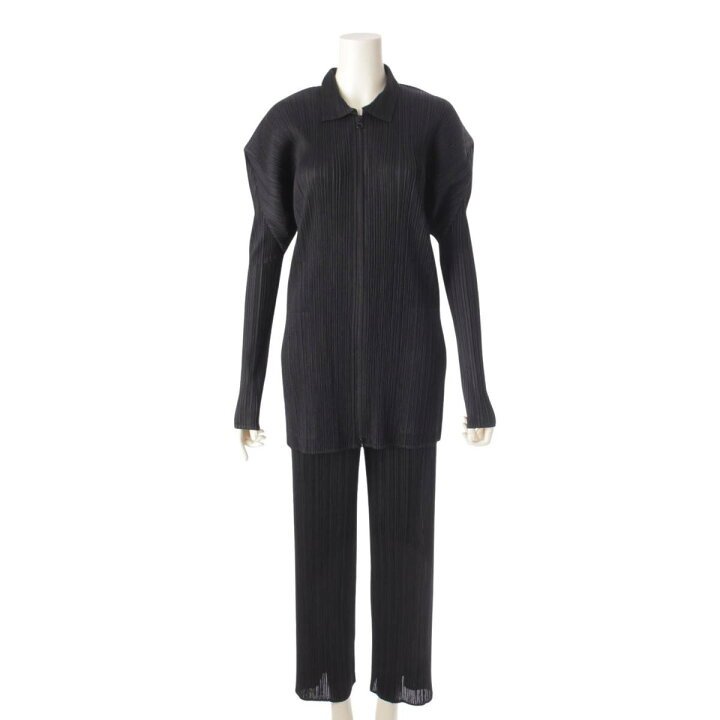
Pleated trousers show the technology at its most practical. Elastic waistbands and expandable fabric support comfort, while straight or wide legs create enough structure for work and evening wear.
Black straight-leg Basics trousers are the strongest first purchase because they make the unusual fabric easier to integrate into an existing wardrobe.
Dresses And Jumpsuits
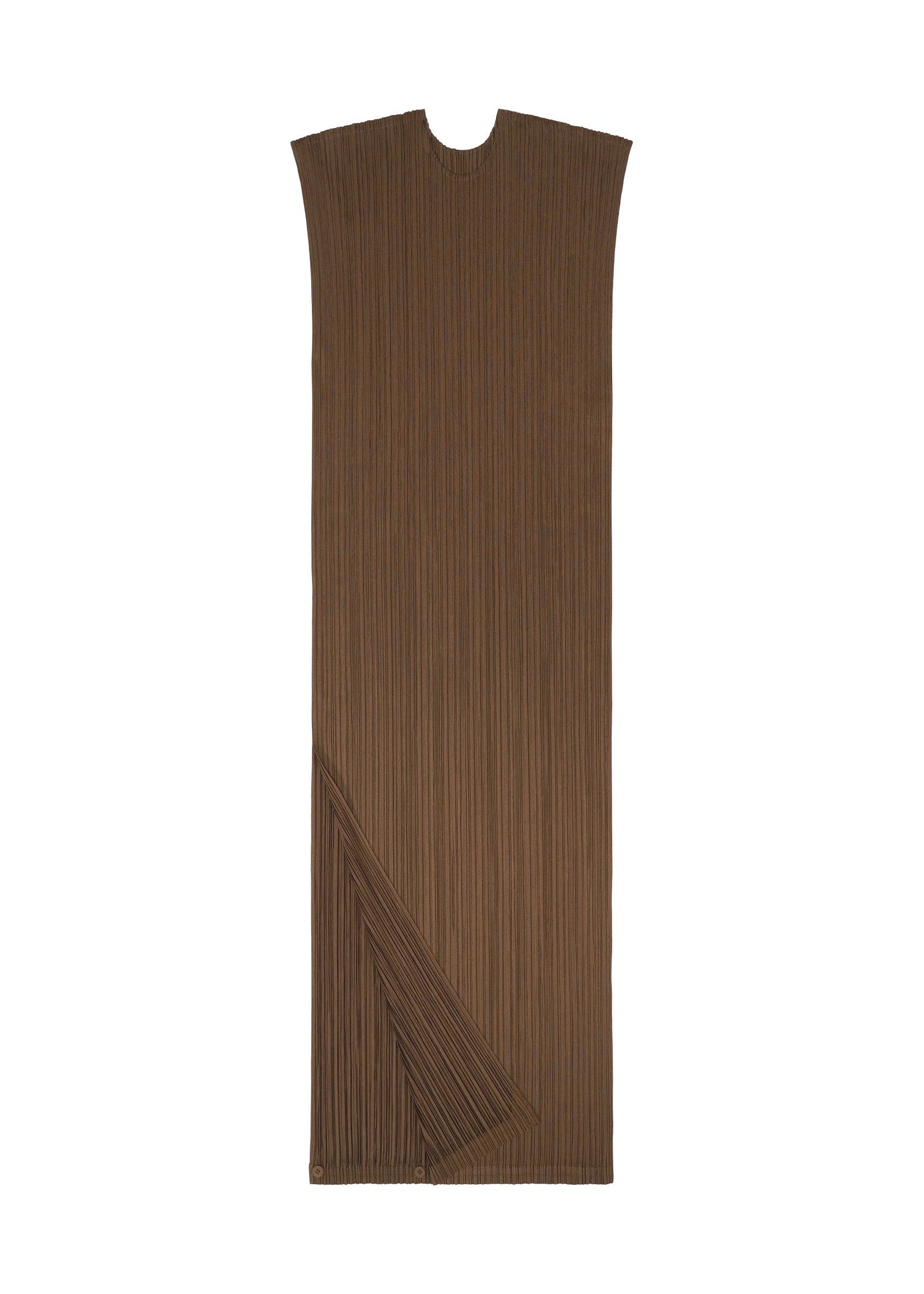
Dresses provide greater visual movement and reveal how effectively the pleats create volume without substantial weight. Simple column shapes are versatile, while adjustable or asymmetric seasonal designs can become highly sculptural.
Jumpsuits deliver similar impact but require more careful attention to torso length and bathroom practicality.
Jackets And Cardigans
Pleated outer layers are better understood as lightweight styling pieces than protective outerwear. They add texture and structure but provide little insulation against cold or wind.
Materials And Construction
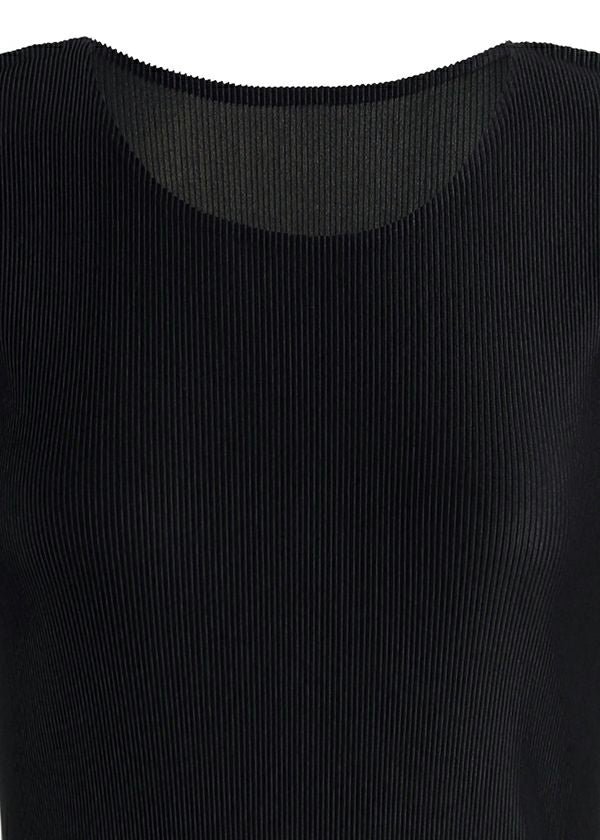
Polyester is essential to the collection’s performance. It accepts heat-set pleats, dries quickly, resists conventional wrinkling and recovers after stretching.
| Characteristic | Advantage | Consideration |
|---|---|---|
| Lightweight Polyester | Packs easily and dries quickly | Lacks the natural feel of silk or wool |
| Permanent Pleats | Retain their structure after washing | Vulnerable to excessive heat |
| Elastic Recovery | Adapts to several body shapes | Can cling to the body |
| Minimal Internal Structure | Keeps garments light and flexible | Offers limited insulation |
| Finished Seams Before Pleating | Allows folds to continue across construction | Alterations are difficult |
| Elastic Waistbands | Comfortable and adaptable | May feel informal to some wearers |
The construction can appear simple when viewed from the inside. Many pieces use straightforward shapes, elasticated waists and limited tailoring.
The value lies less in traditional hand-finishing than in textile development, pleating technology and the precision required to predict how an oversized garment will contract into its final form.
Calling the pieces “polyester basics” therefore misses much of their design content. At the same time, buyers who prioritise natural fibres may struggle to justify the price regardless of the engineering involved.
Pleats Please Sizing And Fit
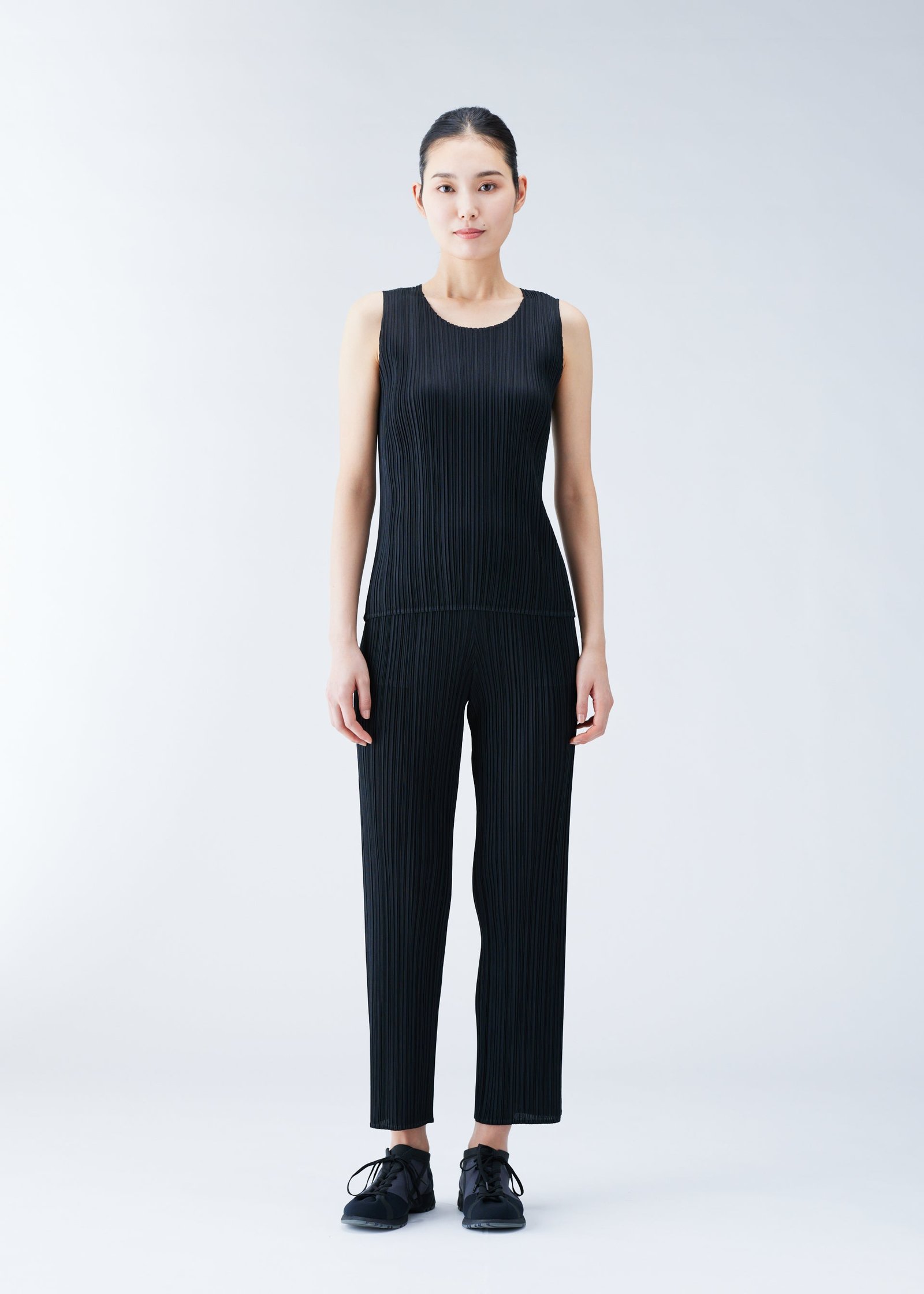
Pleats Please often uses numbered sizing, commonly ranging from 1 to 5. The expandable fabric makes the fit more flexible than a conventional woven garment, but that does not make size irrelevant.
| Fit Consideration | What To Expect |
|---|---|
| Width | Pleats expand substantially across the body |
| Length | Usually changes more noticeably between numbered sizes |
| Shoulders | Dropped or flexible shapes are forgiving |
| Waist | Frequently elasticated |
| Hips | Pleats adapt, but lighter colours may reveal more contour |
| Sleeves | Check measurements carefully on fitted styles |
| Dresses And Jumpsuits | Torso and overall length remain important |
Choose trousers primarily according to rise, inseam and preferred drape rather than relying only on waist measurements. A smaller size may fit through the waist but create a shorter or closer silhouette.
The most fitted tops can become semi-sheer when the pleats expand. A tonal camisole or base layer may therefore be useful beneath pale colours.
Alterations are difficult. The brand warns that raising a hem can change the shape of the pleats, so selecting the correct length at purchase is particularly important.
Comfort And Everyday Practicality
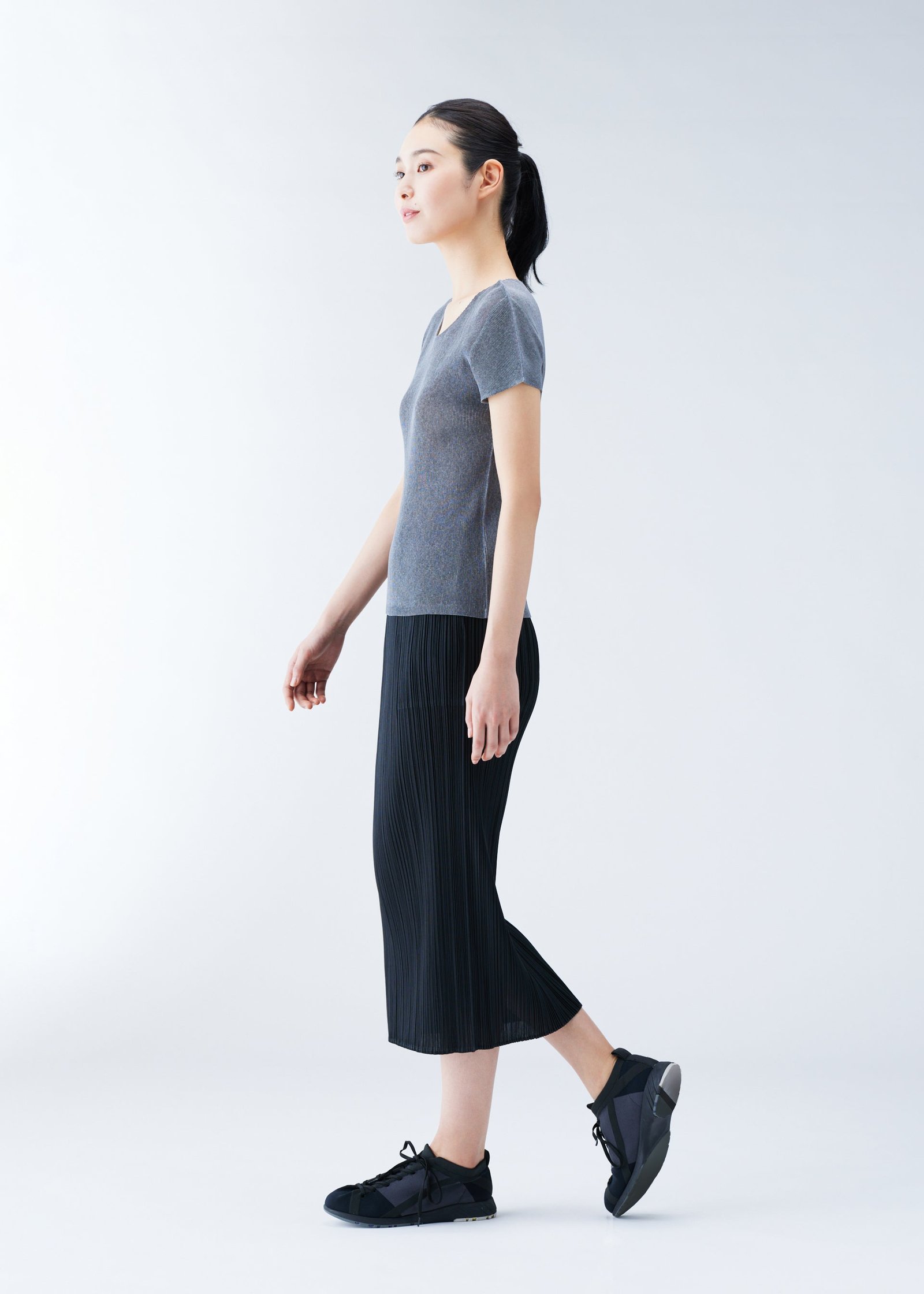
Pleats Please is exceptionally comfortable within the designer clothing category.
The lightweight fabric moves without pulling, elastic waistbands accommodate sitting and travel, and the pleats provide room without requiring bulky construction. Most pieces can be folded or rolled into luggage and recover without conventional ironing.
The collection is especially effective for:
- Long flights and train journeys.
- Warm-weather offices.
- Creative or less formal professional environments.
- Events requiring comfort over several hours.
- Travel wardrobes with limited luggage space.
- Periods of moderate body-size fluctuation.
There are limitations. Polyester may feel warm in humid conditions despite the garment’s low weight. Static can develop in dry climates, and the fabric may cling to hosiery or underlayers.
The pleats also create texture rather than concealment. When stretched across the body, fitted pieces can reveal more contour than expected.
How To Style Pleats Please
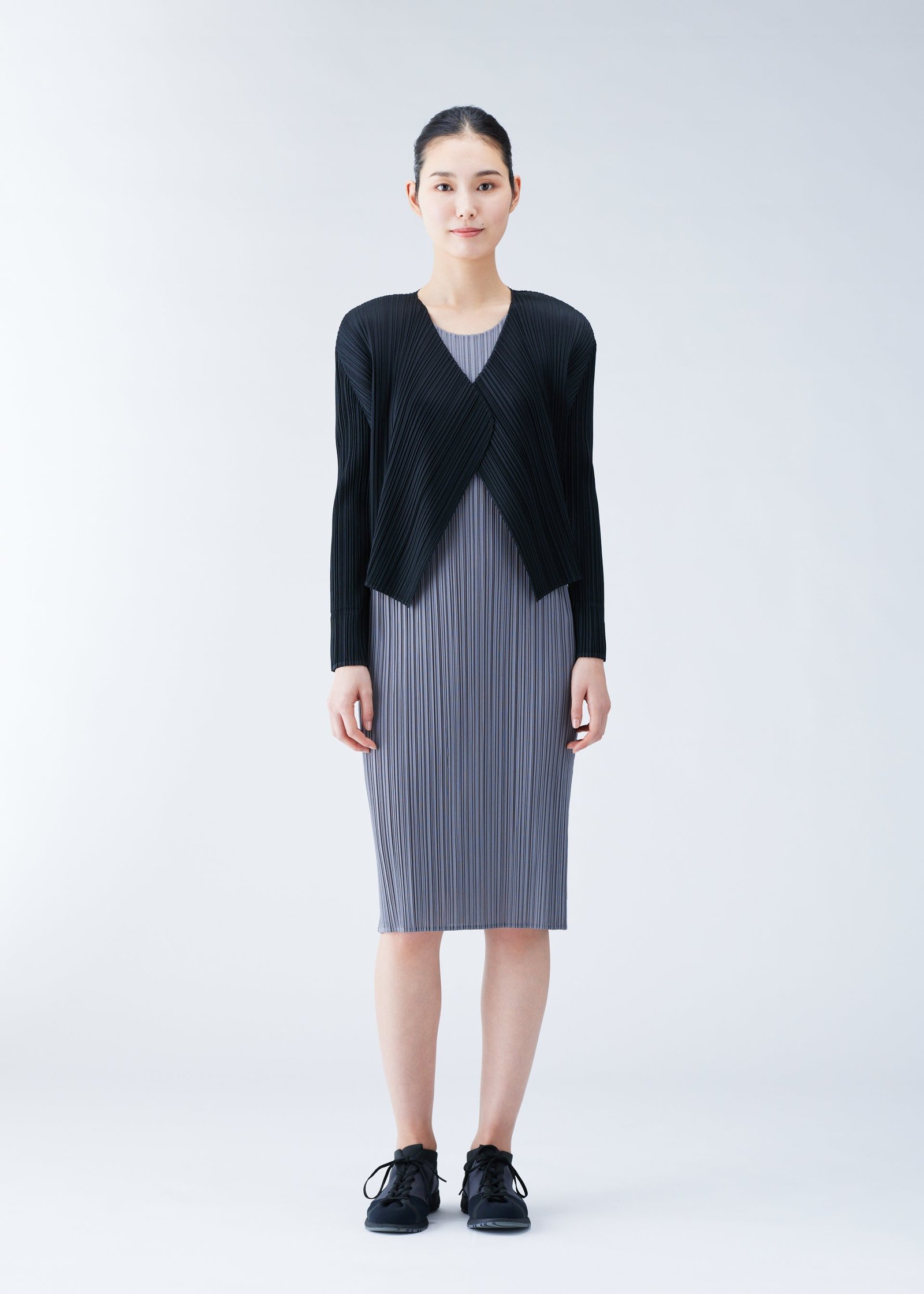
| Occasion | Styling Recommendation |
|---|---|
| Everyday | Pleated top, straight trousers and leather flats |
| Creative Office | Matching pleated set, structured tote and loafers |
| Travel | Long cardigan, elastic-waist trousers and clean sneakers |
| Evening | Sculptural dress, minimal jewellery and heeled sandals |
| Weekend | Sleeveless top, wide trousers and crossbody bag |
| Gallery Or Event | Bright Monthly Colors pieces with contrasting shoes |
A matching black or charcoal set is the most adaptable introduction. It allows the texture to provide interest without making the outfit feel theatrical.
Colour is central to Pleats Please, however. A vivid top works well with neutral trousers, while two related shades can create a tonal outfit with greater depth.
Keep accessories relatively structured. Smooth leather bags, geometric jewellery and simple shoes balance the fabric’s movement. Too many soft or heavily textured accessories can make the outfit feel visually unanchored.
Durability And Care
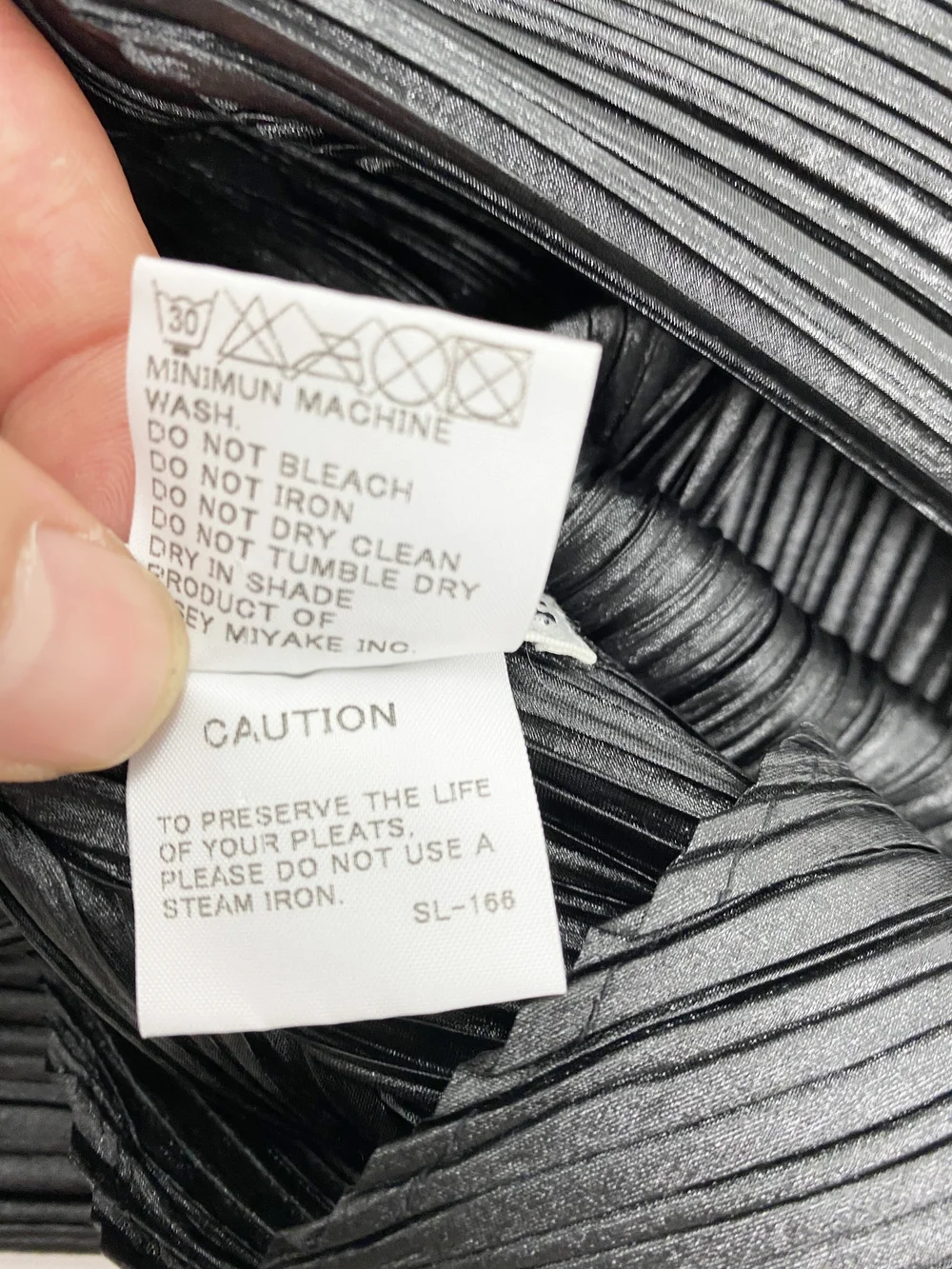
Pleats Please is easier to maintain than its appearance suggests, but heat must be treated carefully.
Official care guidance recommends washing pleated products at no more than 30°C. Place the garment inside a laundry net and use a quick or gentle cycle, or press it carefully when hand washing.
Avoid fabric softener. After a gentle spin, reshape the garment in the direction of the pleats and dry it flat in a shaded, ventilated place.
Do not tumble-dry or iron the pleats. Excessive heat can damage the structure that gives the garment its defining shape.
For longer wear:
- Wash similar colours together.
- Close zips or fastenings before washing.
- Use a laundry net to reduce snagging.
- Avoid heavy bags rubbing repeatedly against the fabric.
- Keep the garment away from hook-and-loop fasteners and sharp jewellery.
- Do not leave it compressed while damp.
- Fold or roll rather than forcing it onto an overcrowded hanger.
- Follow the individual care label when a piece includes mixed materials.
The material resists ordinary wrinkling well, but it is not immune to pulls, abrasion or permanent heat damage.
Is Pleats Please Issey Miyake Worth The Price?
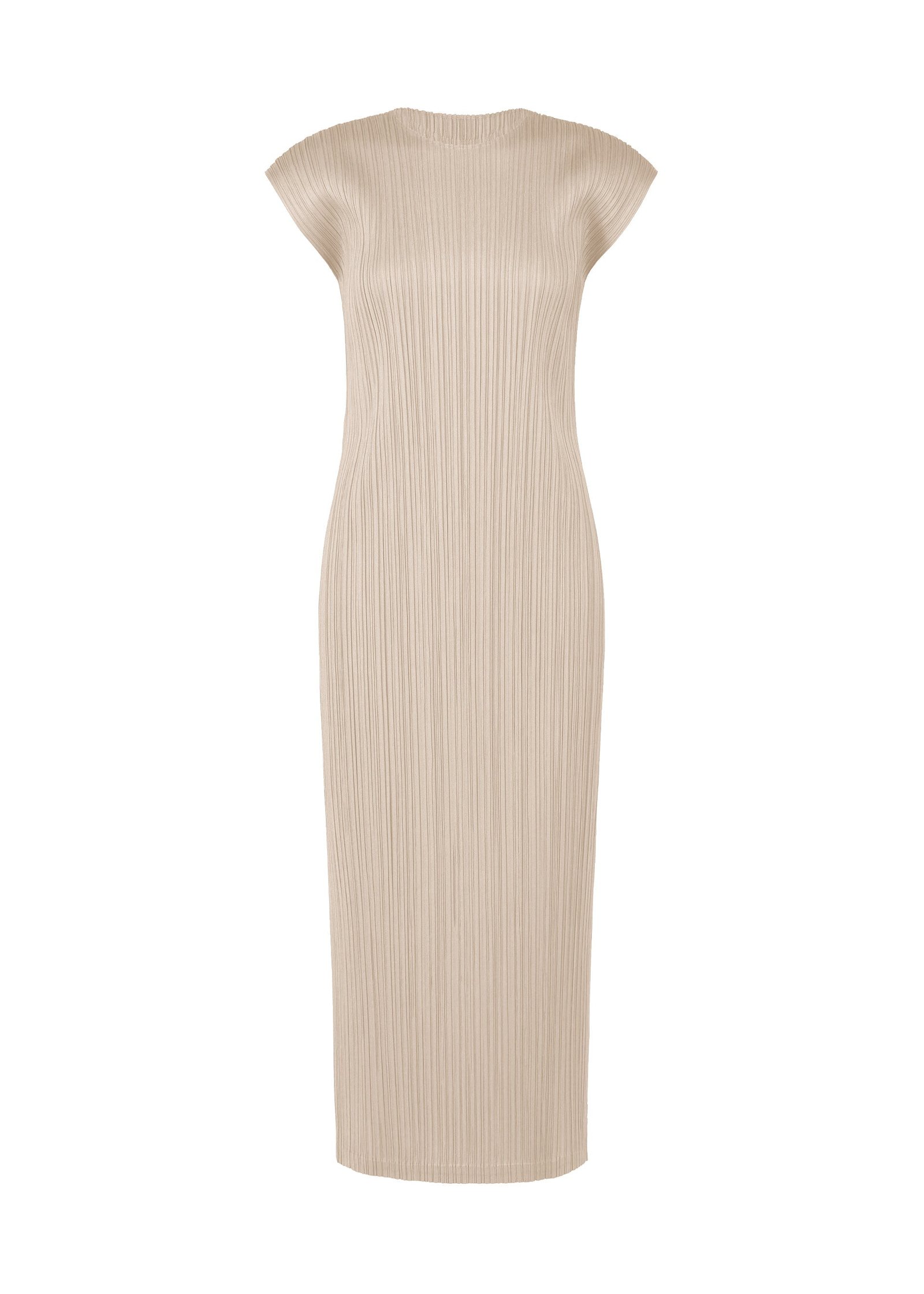
At the time of review, current U.S. prices include approximately $285 for selected Mist Basics tops, $395 for Basics trousers and cardigans, and $650 for more complex dresses or jackets. Seasonal pieces can rise beyond $700 depending on shape and construction. Prices and availability may change.
The price appears difficult when judged by material alone. Polyester is neither rare nor inherently expensive.
The stronger argument comes from the complete product: proprietary fabric development, post-construction pleating, comfortable fit, low maintenance, packability and a design language that has remained relevant for more than three decades.
Cost per wear can become favourable for a black top, straight trousers or simple cardigan used regularly. A highly specific print or sculptural seasonal piece requires greater confidence because it will be harder to repeat frequently.
Pleats Please is therefore worth its price for shoppers who will use its practical advantages. It is less convincing for anyone purchasing the pleated appearance without needing its comfort, travel performance or adaptability.
LxryNow Review Scorecard
| Category | Score | Assessment |
|---|---|---|
| Design | 10/10 | A distinctive visual language built around movement |
| Material Innovation | 10/10 | Garment pleating transforms familiar polyester |
| Construction | 9/10 | Technically precise despite deliberately simple shapes |
| Comfort | 9/10 | Lightweight, flexible and easy to wear for long periods |
| Versatility | 9/10 | Core pieces move easily between travel, work and evening |
| Durability | 8/10 | Pleats retain their shape, but heat and snagging remain risks |
| Value For Money | 8/10 | Expensive by material, persuasive through engineering and wear |
| Overall | 9.0/10 | An exceptional union of textile innovation and everyday utility |
Which Pleats Please Piece Should You Choose?
| Piece | Best For | LxryNow Recommendation |
|---|---|---|
| Basics Straight Pants | Everyday wear and travel | Best overall |
| Mist Basics Top | Lightweight layering | Best entry-level top |
| Basics Cardigan | Work and transitional dressing | Best versatile layer |
| Monthly Colors Top | Adding seasonal colour | Best expressive basic |
| Simple Pleated Dress | Travel and evening | Best one-piece outfit |
| Sculptural Seasonal Dress | Events and collecting | Best statement choice |
| Printed Pleated Piece | Art-led wardrobes | Best visual impact |
Shop The Edit
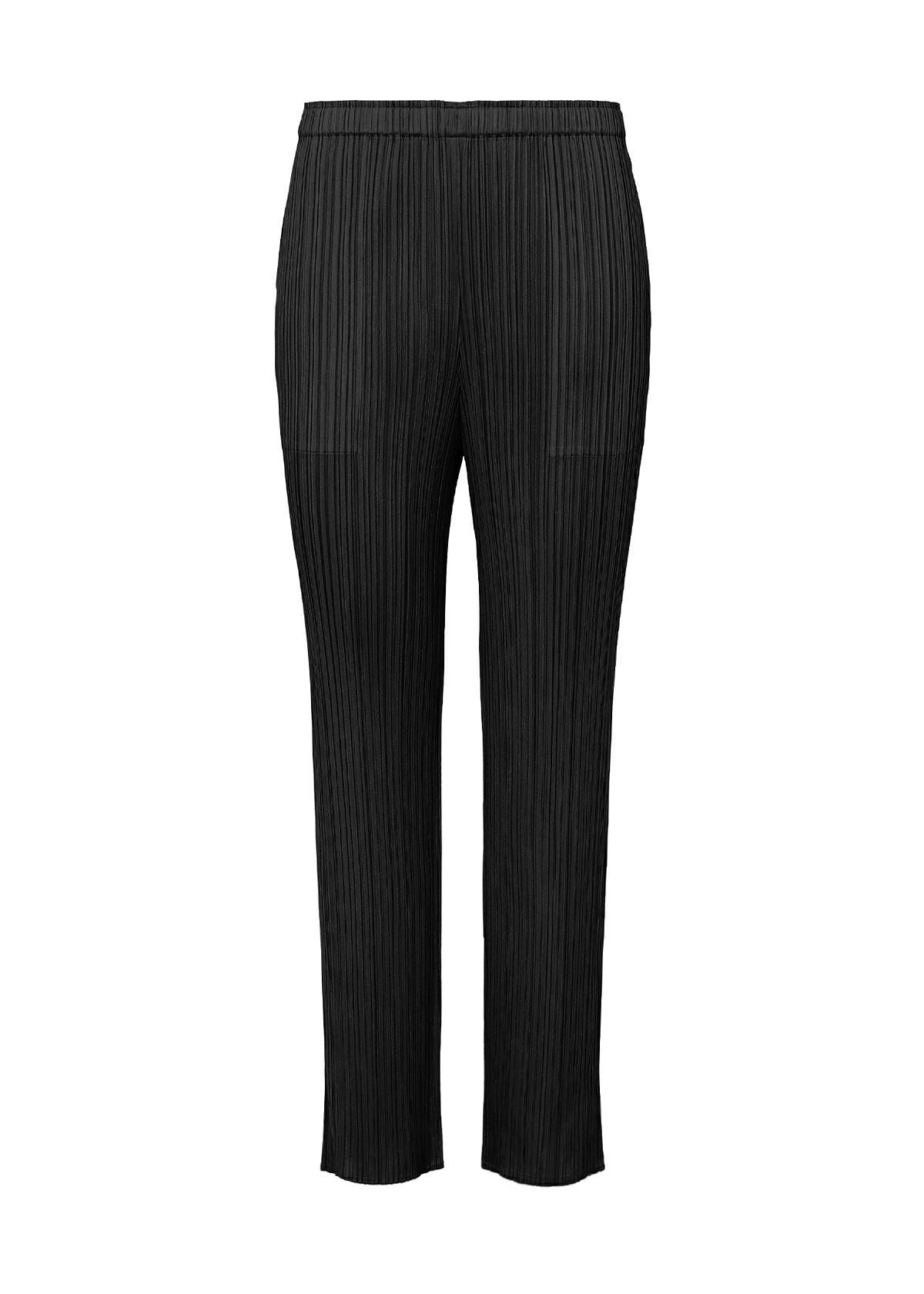
Basics Straight Pants
Seasonless straight trousers provide the strongest combination of comfort, versatility and cost per wear.
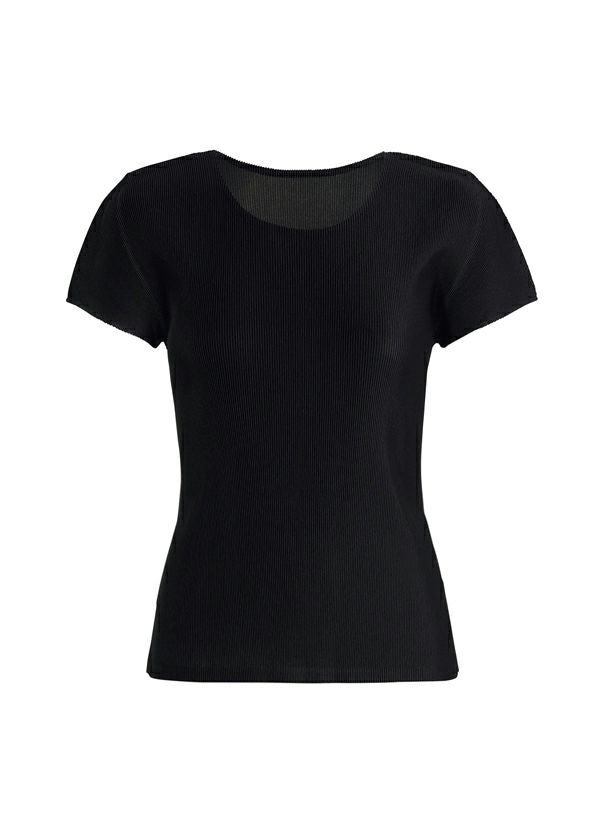
Mist Basics Top
Fine one-millimetre pleats create a lighter, softer entry into the collection.
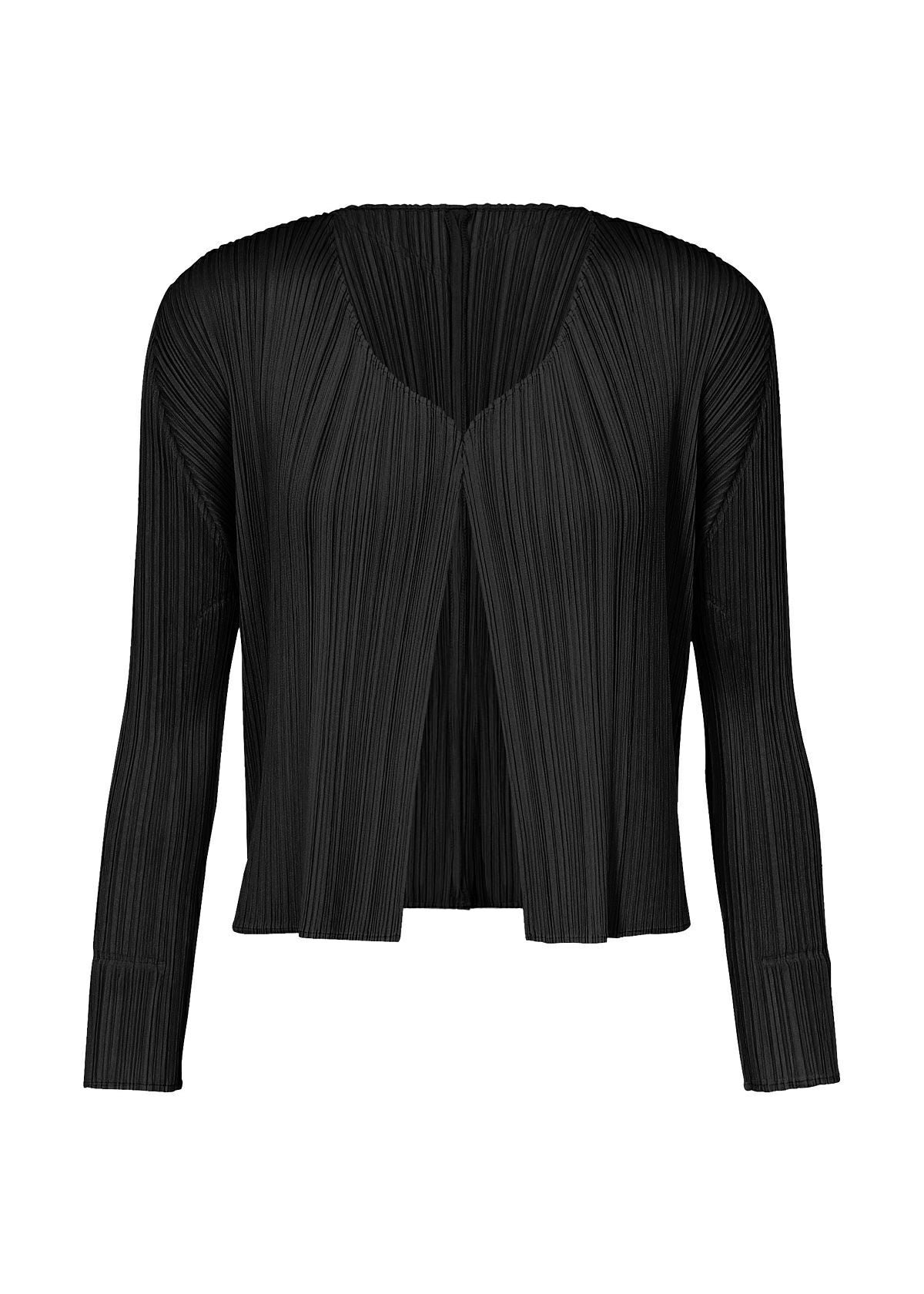
Basics Cardigan
A compact pleated layer that works with matching pieces and conventional wardrobes.
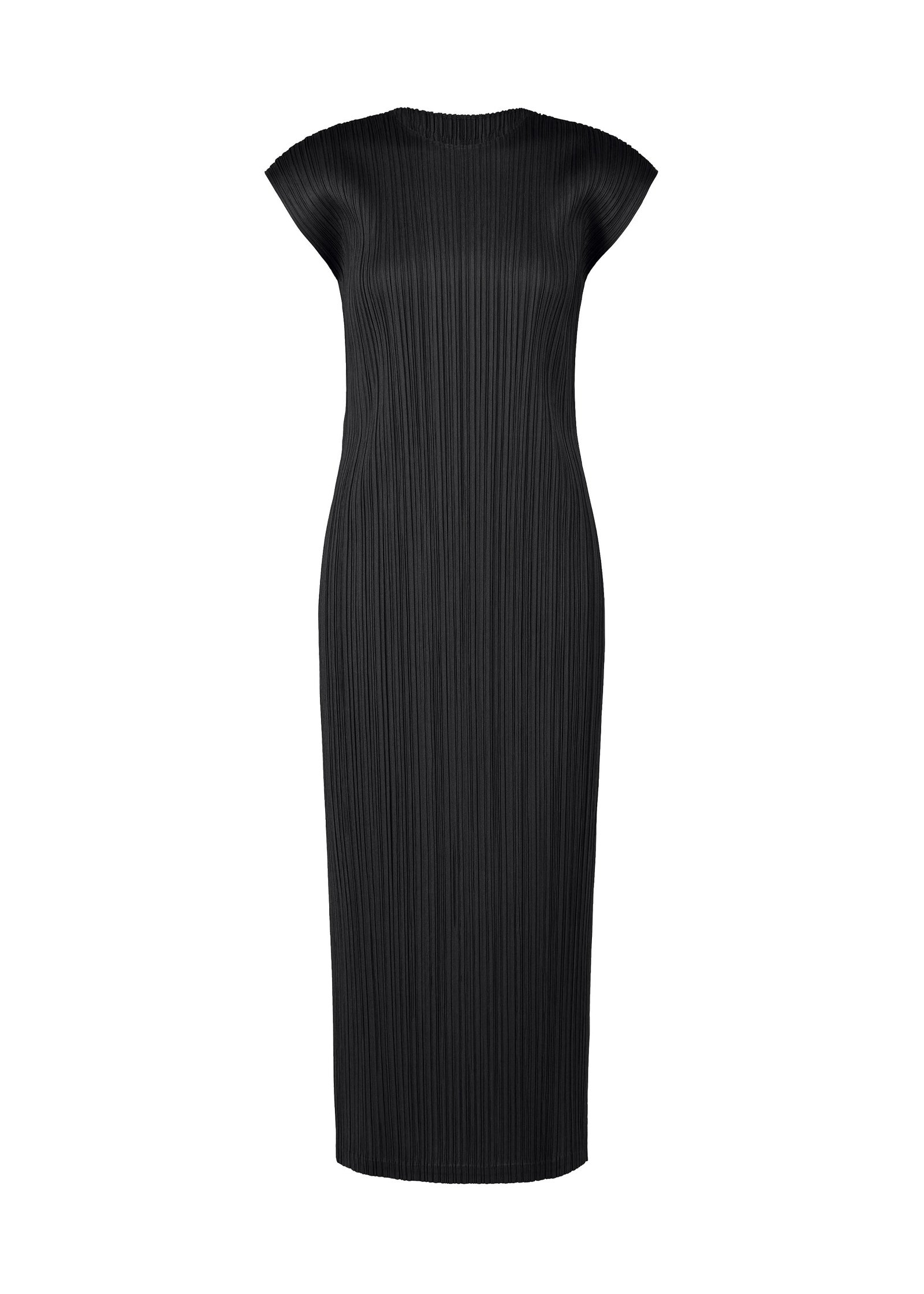
Swing Solid Dress
Adjustable detailing demonstrates how pleating can create several silhouettes within one garment.
Pros And Cons
| Pros | Cons |
|---|---|
| Highly distinctive garment-pleating technology | Expensive for predominantly polyester clothing |
| Lightweight and exceptionally packable | Excessive heat can damage the pleats |
| Comfortable across long days and travel | Alterations are difficult |
| Machine-washable under appropriate conditions | Fine fabric may snag |
| Flexible fit accommodates several body shapes | Pale fitted pieces can become revealing |
| Core styles remain visually relevant | Polyester may feel warm in humid conditions |
| Strong choice for repeat wear | Sculptural pieces can be difficult to style frequently |
Final Verdict
Pleats Please Issey Miyake remains one of the clearest examples of fashion technology improving daily life rather than merely creating novelty.
The garments are light, flexible, washable and unusually easy to pack. Their pleats respond to movement, accommodate different proportions and transform simple shapes into clothing with a distinctive visual rhythm.
The principal objection is equally clear. Most pieces are made predominantly from polyester, yet prices can approach or exceed those of traditionally tailored garments in natural fibres.
That comparison does not capture the entire product. Pleats Please derives its value from textile research, an unusual post-construction pleating process and the ability to deliver comfort without becoming visually anonymous.
LxryNow recommends beginning with black Basics straight-leg trousers. They demonstrate the collection’s comfort and versatility without requiring a complete change in personal style. Add a Mist Basics top for lightweight layering or a simple dress when packability and visual impact matter equally.
Seasonal prints and sculptural pieces are best approached later, once the wearer knows how the pleated fabric behaves within their wardrobe.
LxryNow Verdict: A rare designer collection in which experimental construction creates genuine everyday convenience.
Overall Score: 9.0/10
