
TL;DR
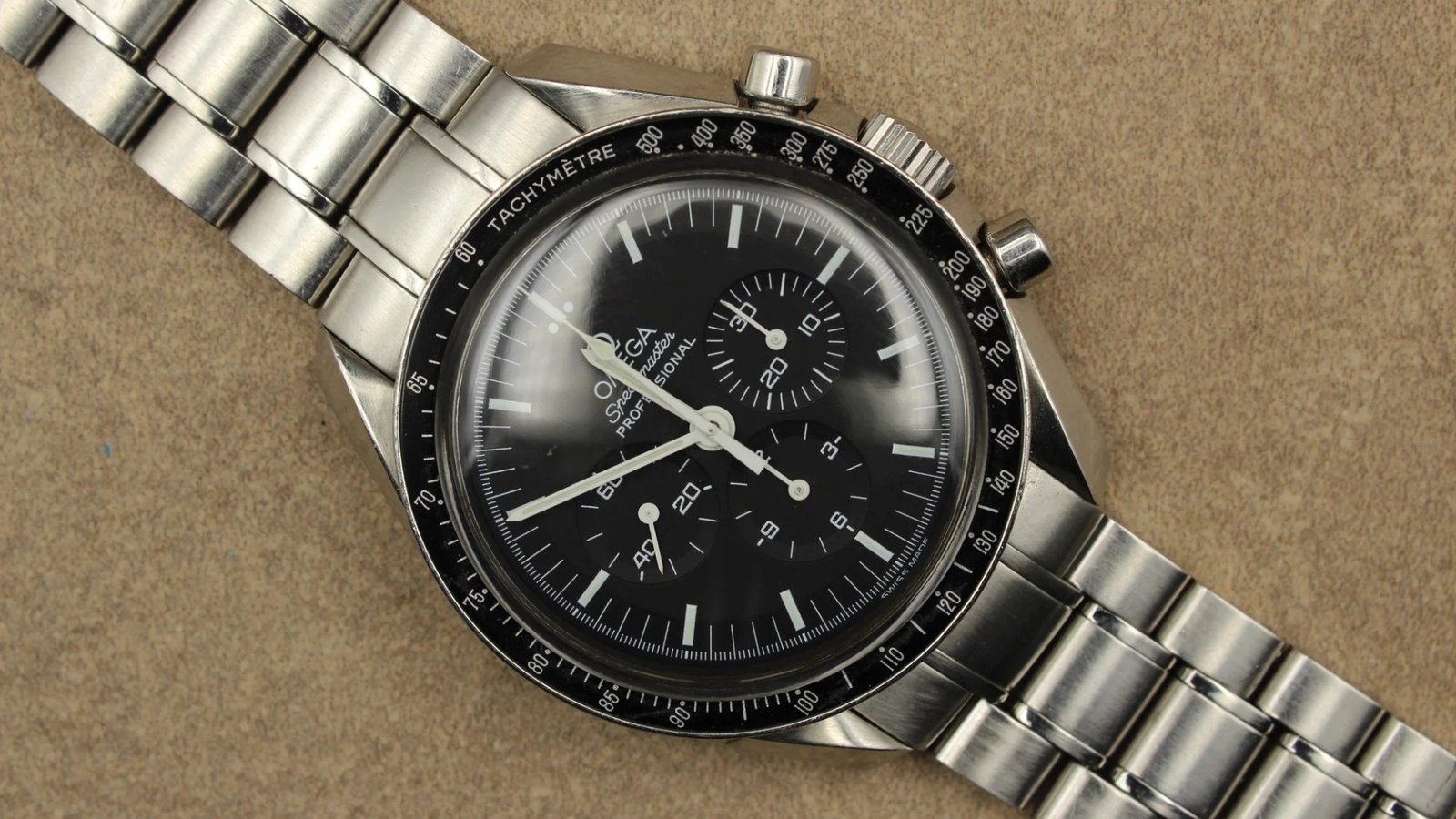
The Speedmaster Moonwatch from Omega remains one of the most historically significant watches ever made. With NASA-tested heritage, strong chronograph craftsmanship, and the modern Co-Axial Master Chronometer Caliber 3861, it justifies its price for collectors who value legacy and mechanical authenticity.
Table of Contents
Introduction: The Watch That Went to the Moon
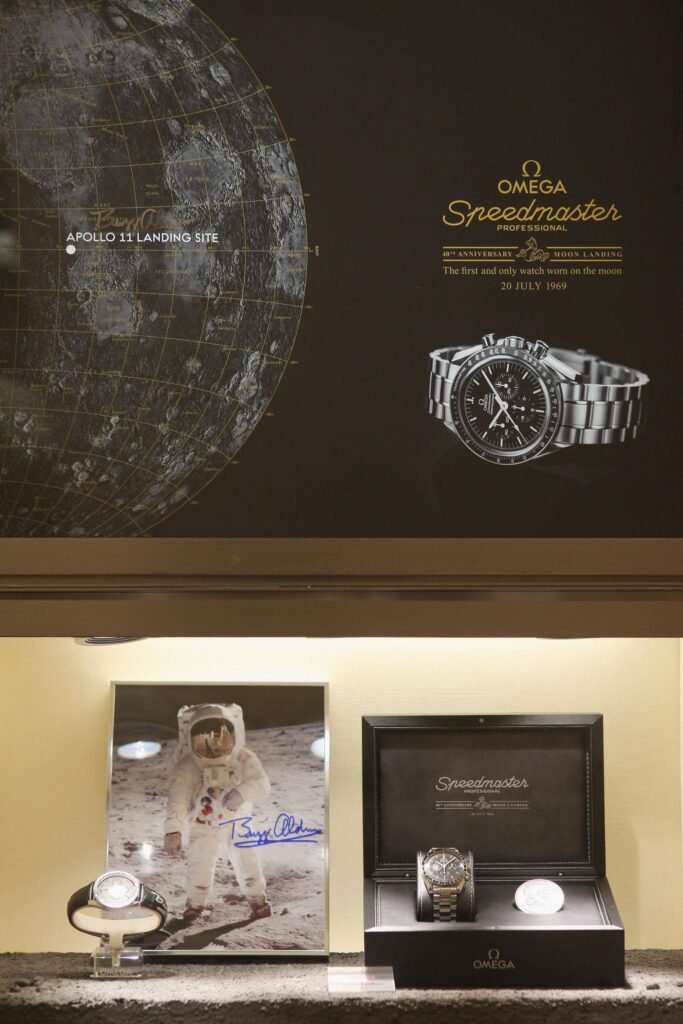
Few watches carry verifiable historical importance. The Speedmaster is one of them.
In 1965, the Speedmaster was officially qualified by NASA for all manned space missions. It later became the first watch worn on the moon during the 1969 Apollo 11 mission.
Unlike marketing-driven heritage claims, this is documented history.
That legacy still defines the modern Moonwatch—but history alone does not justify today’s price.
The question for 2026 buyers is simple:
Is the Omega Speedmaster Moonwatch still worth the investment beyond its NASA story?
Heritage: More Than a Marketing Narrative
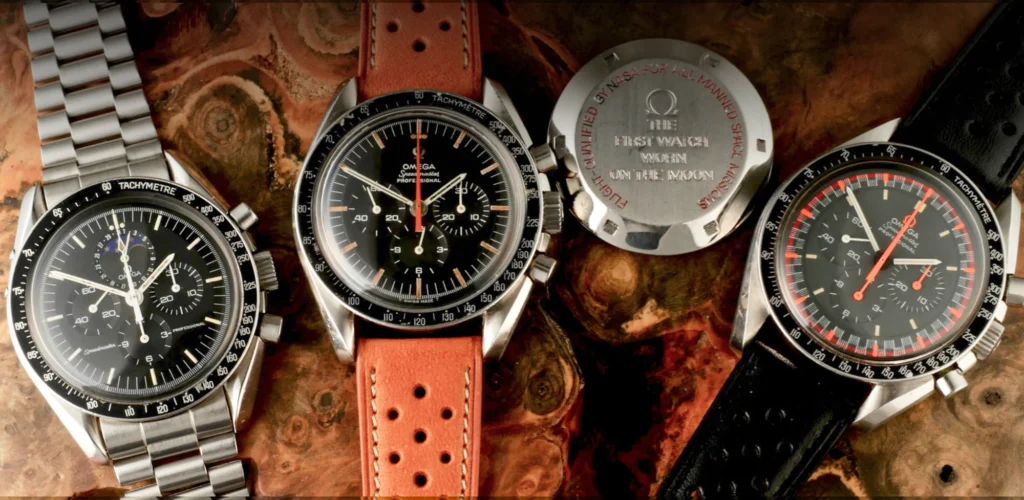
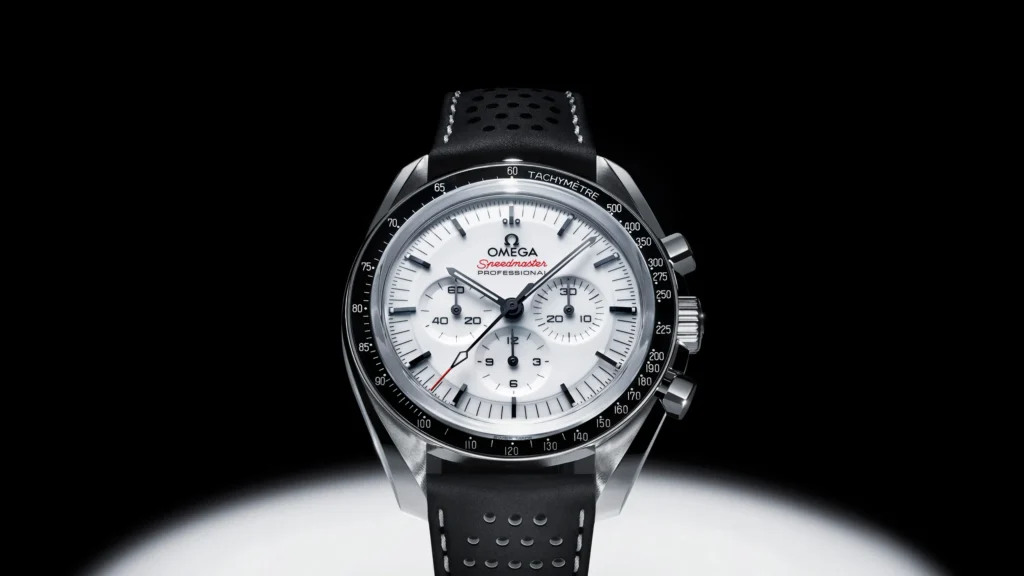
The Speedmaster’s design language remains remarkably consistent:
- Black step dial
- Tachymeter bezel
- Tri-compax chronograph layout
- Twisted lyre lugs
The modern Moonwatch preserves these proportions, ensuring visual continuity with 1960s references.
Unlike many reissues that drift from their originals, the Moonwatch feels historically anchored.
Its caseback engraving—“Flight-Qualified by NASA for All Manned Space Missions”—is not decorative. It is earned.
Craftsmanship & Movement: Caliber 3861 Evolution
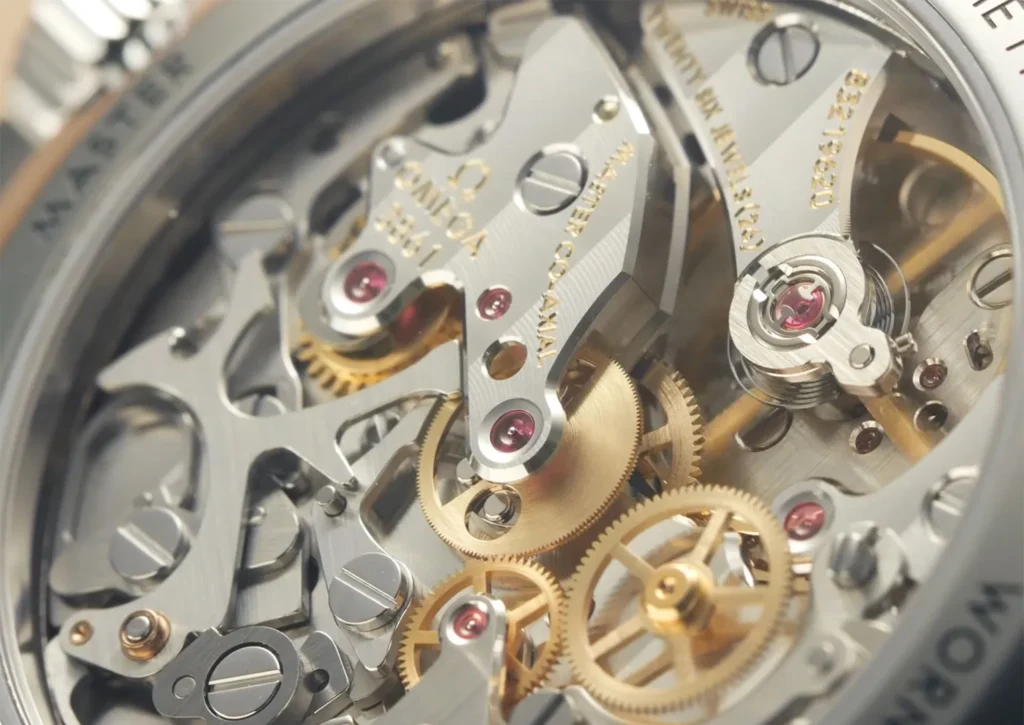
The most significant modern upgrade is the Caliber 3861 movement.
Key features:
- Manual-wind chronograph
- Co-Axial escapement
- Master Chronometer certification
- Magnetic resistance up to 15,000 gauss
- 50-hour power reserve
Unlike older calibers, the 3861 meets METAS certification standards, improving precision and anti-magnetic durability.
Yet Omega preserved manual winding—an intentional nod to tradition.
In a world of automatic convenience, the daily winding ritual connects the wearer to mechanical watchmaking.
It is not the most convenient chronograph.
It is one of the most emotionally engaging.
Hesalite vs Sapphire: The Purist Debate
Buyers choose between:
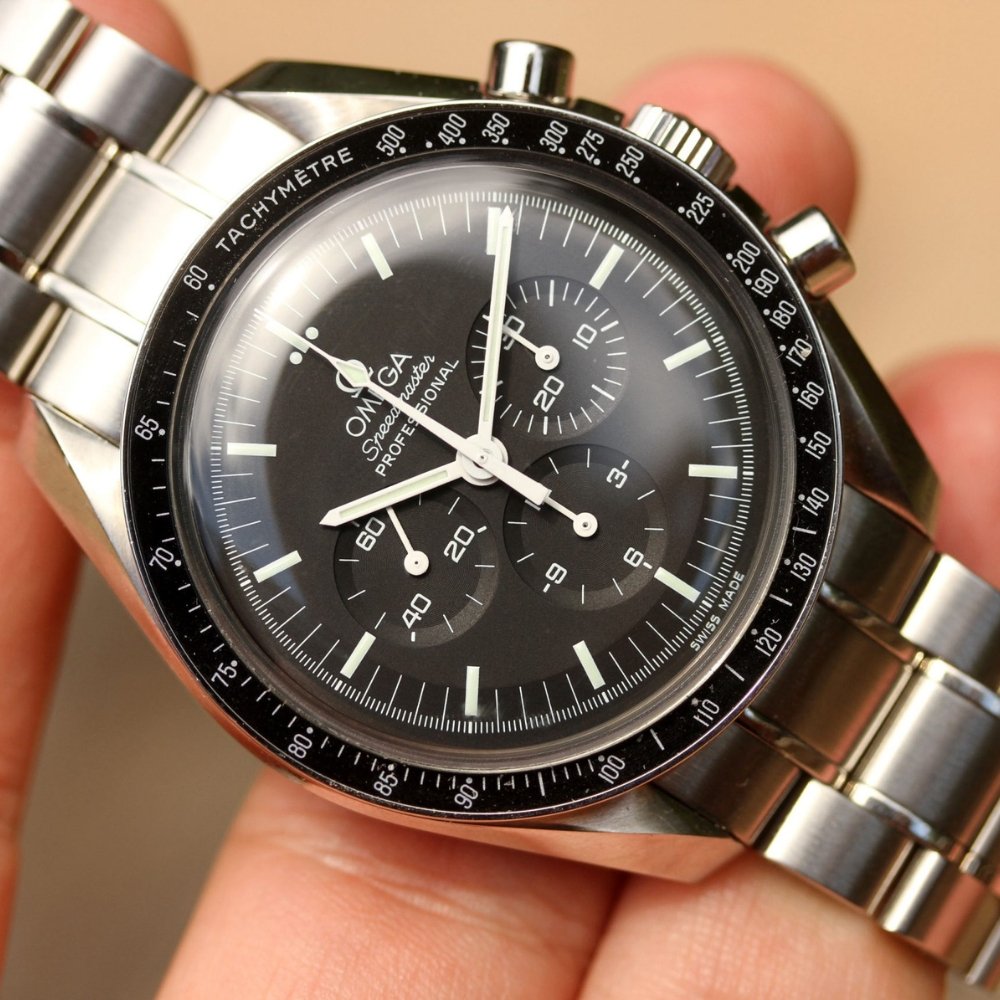
Hesalite Crystal
- Historically accurate
- Warmer dial distortion
- Scratches easier but polishable
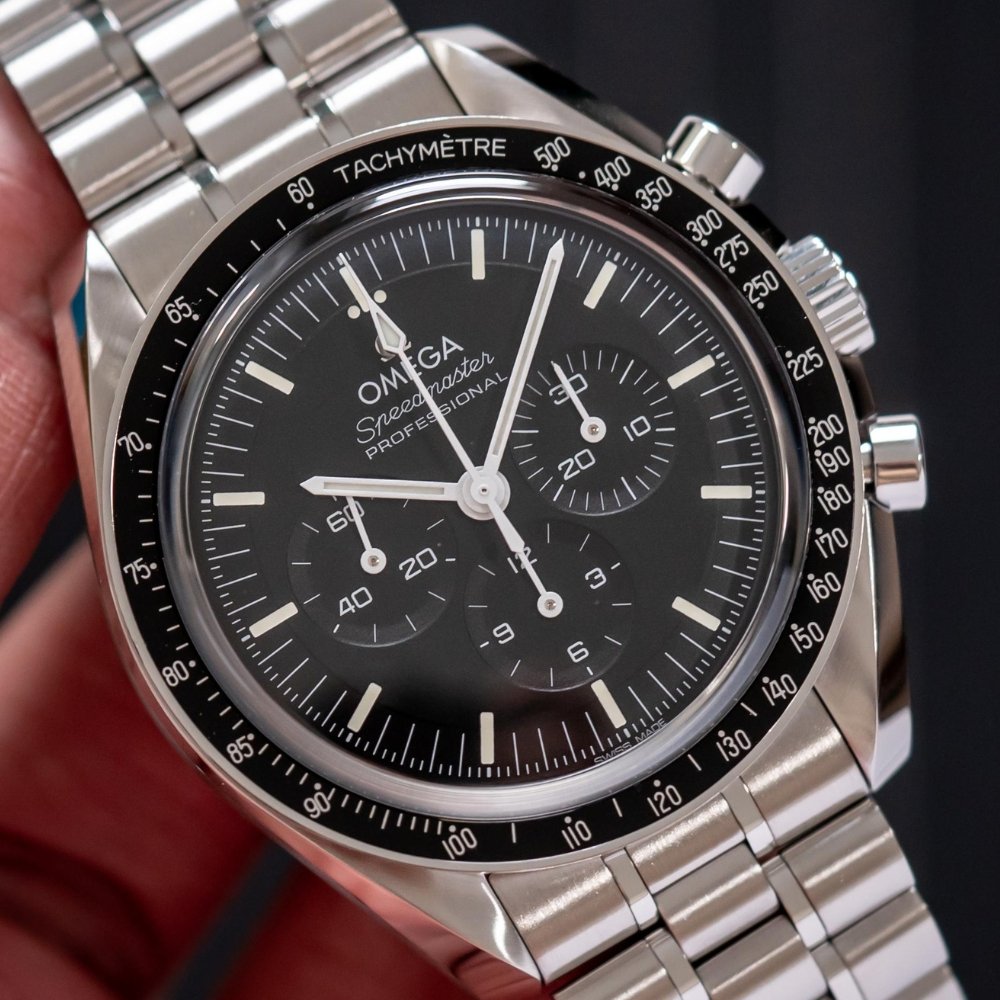
Sapphire “Sandwich”
- Scratch-resistant
- Exhibition caseback
- Slightly more reflective
Purists often prefer Hesalite for authenticity. Modern buyers lean sapphire for durability.
Both versions maintain identical core design. The choice reflects personality more than performance.
Wearability: Tool Watch or Daily Companion?
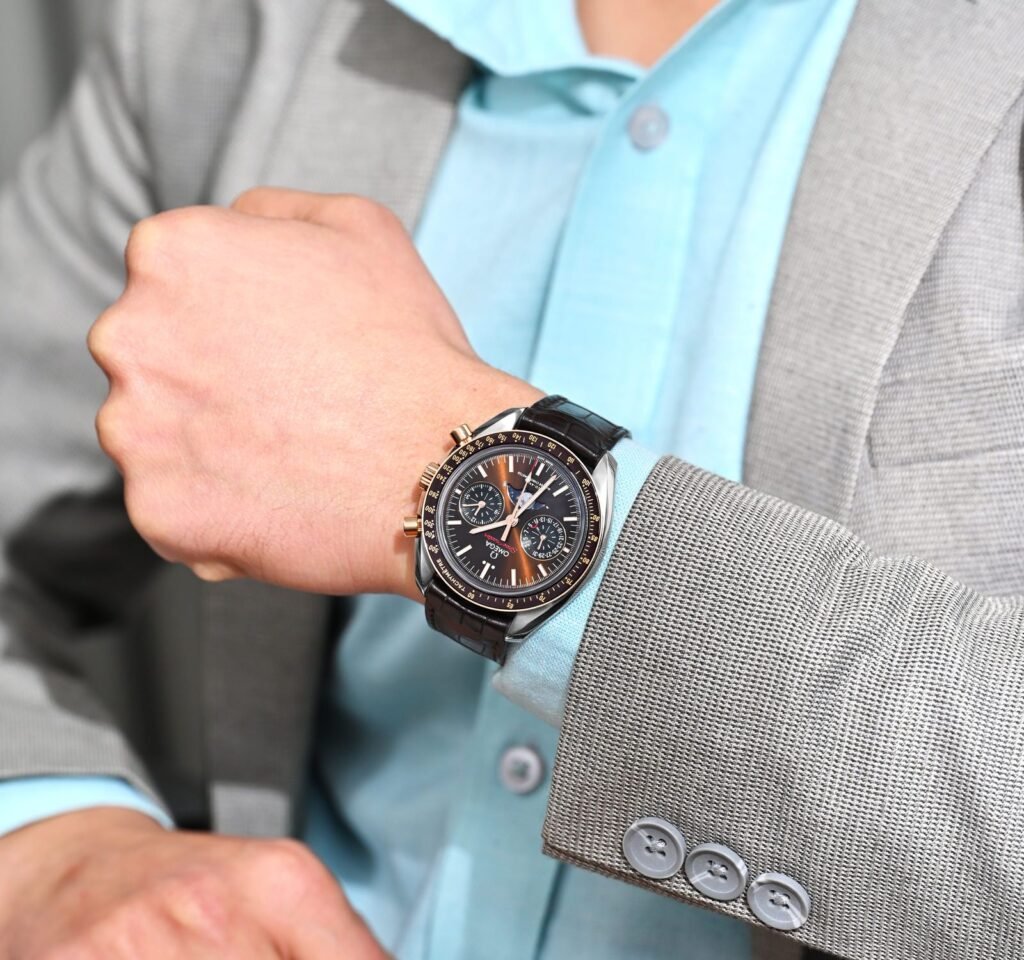
At 42mm, the Moonwatch wears slimmer than its dimensions suggest due to curved lugs.
Strengths:
- Balanced case thickness
- Excellent bracelet articulation
- Strap versatility (NATO, leather, rubber)
Considerations:
- Manual winding may not suit casual owners
- Chronograph pushers are firm
- Not a dive watch (50m water resistance)
The Moonwatch transitions seamlessly from casual to smart attire. It is not flashy—but instantly recognizable to enthusiasts.
Modern Relevance: Competing in 2026
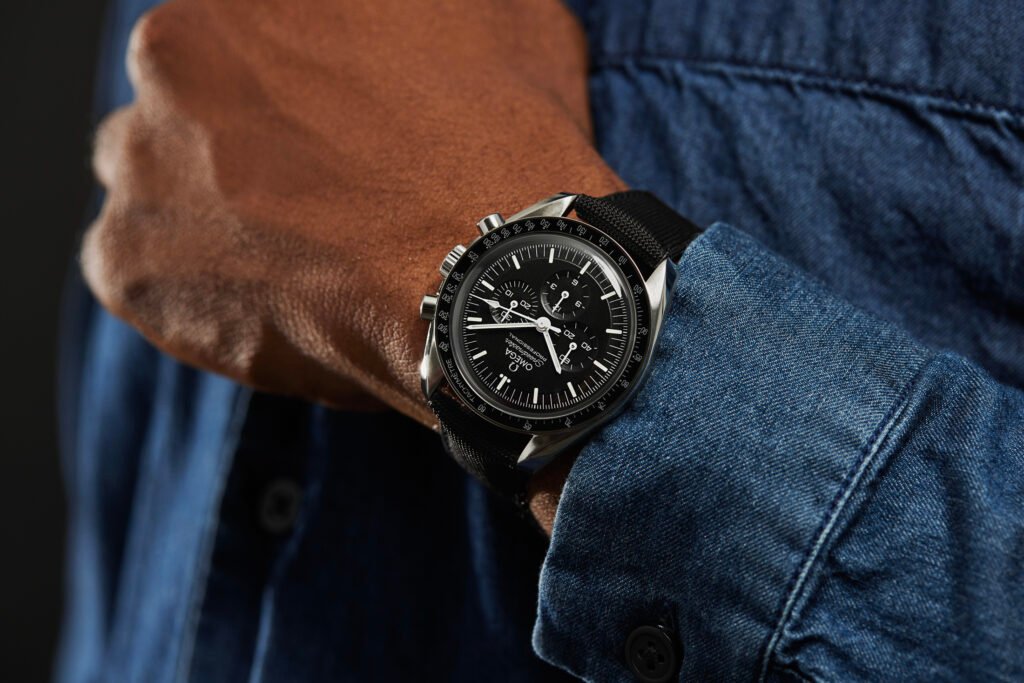
In today’s market, the Moonwatch competes against:
- High-luxury chronographs
- Smartwatches
- Sports steel icons
Yet its value lies in authenticity.
Unlike hype-driven releases, the Moonwatch is permanently in production. It does not rely on scarcity. It relies on narrative and engineering credibility.
Its relevance persists because it never chased trends.
Resale & Investment Perspective
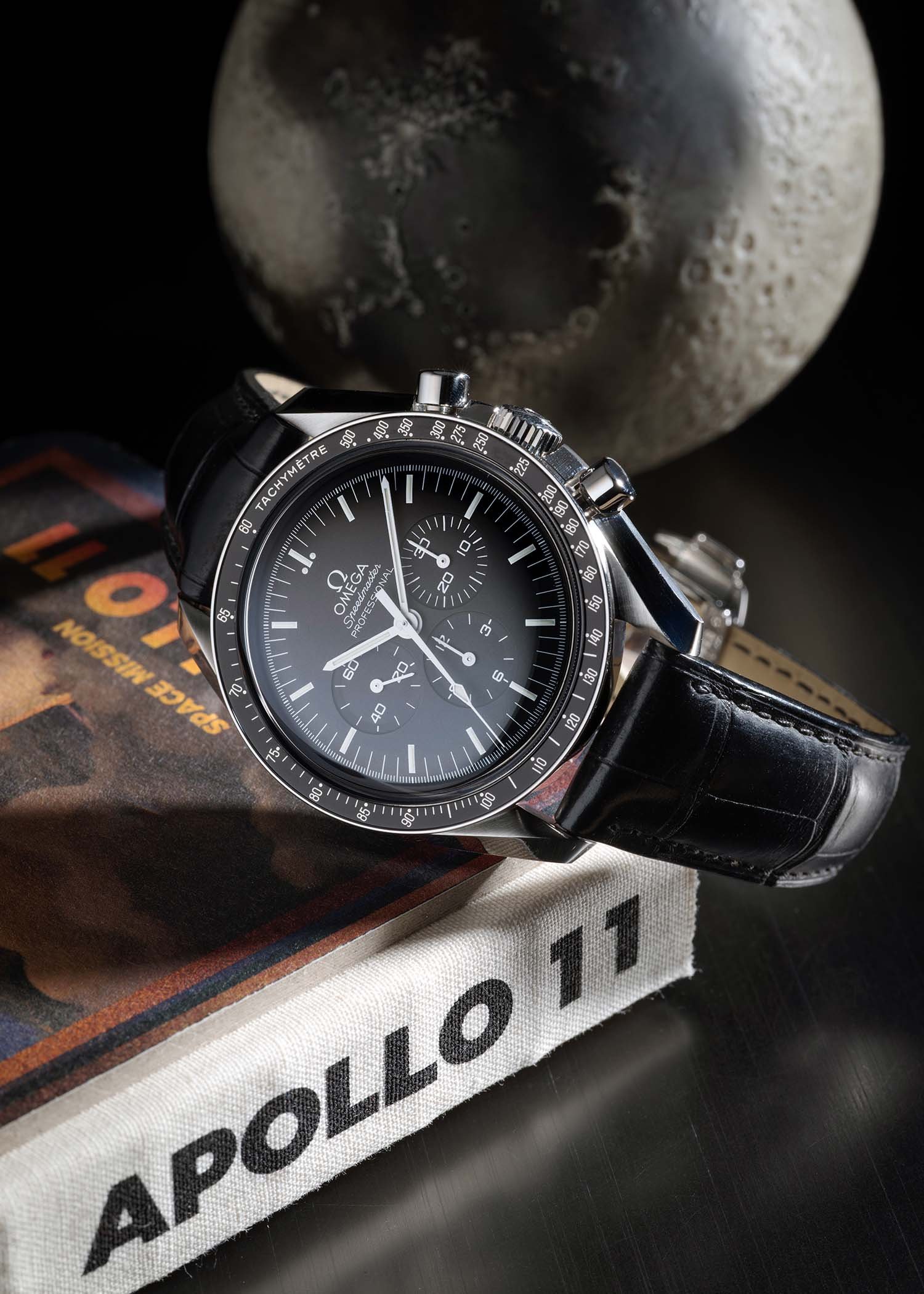
The Moonwatch maintains steady resale demand.
Why:
- Continuous global recognition
- Reasonable retail pricing relative to heritage
- Broad collector base
While it may not appreciate like certain Rolex sports models, it holds value reliably.
Pre-owned models often represent strong buying opportunities, especially full-set examples.
The Moonwatch is a stable acquisition—not a speculative one.
Shop The Edit
Editor’s Picks:
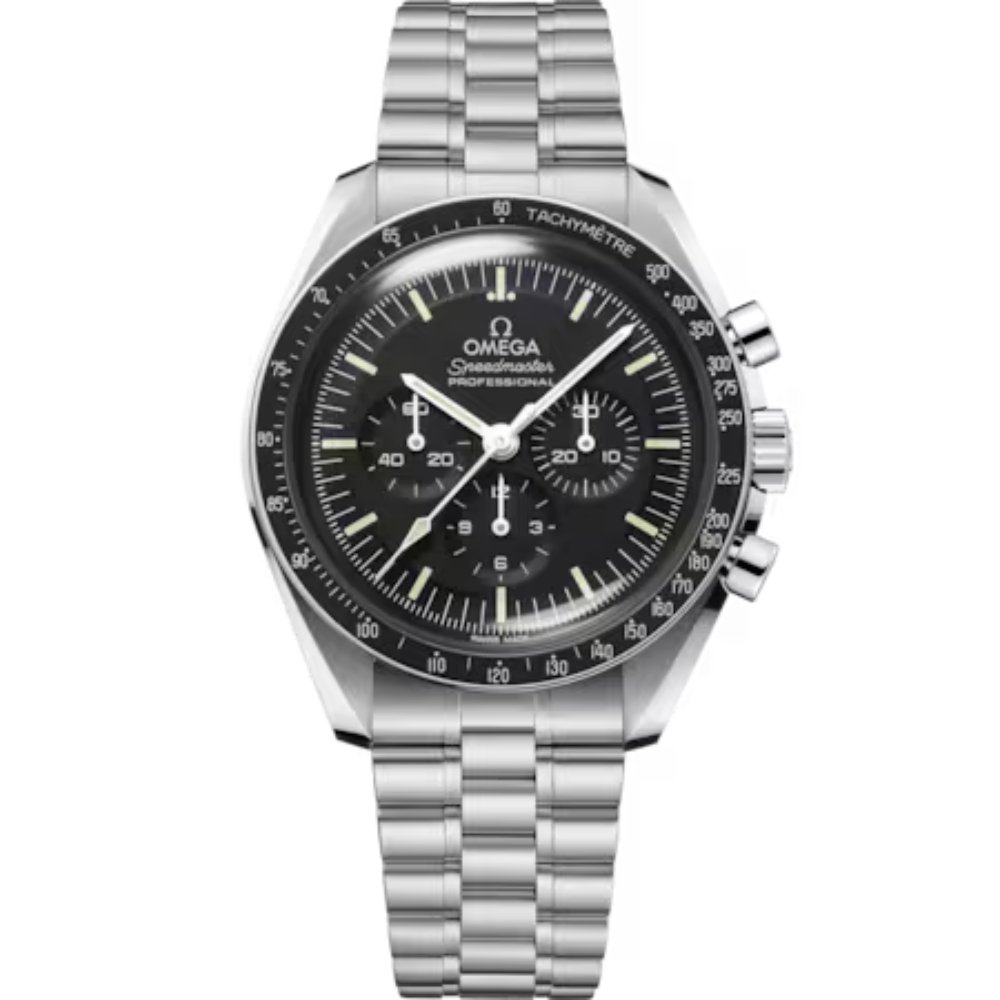
Moonwatch Hesalite (3861)
Closest to the Apollo original
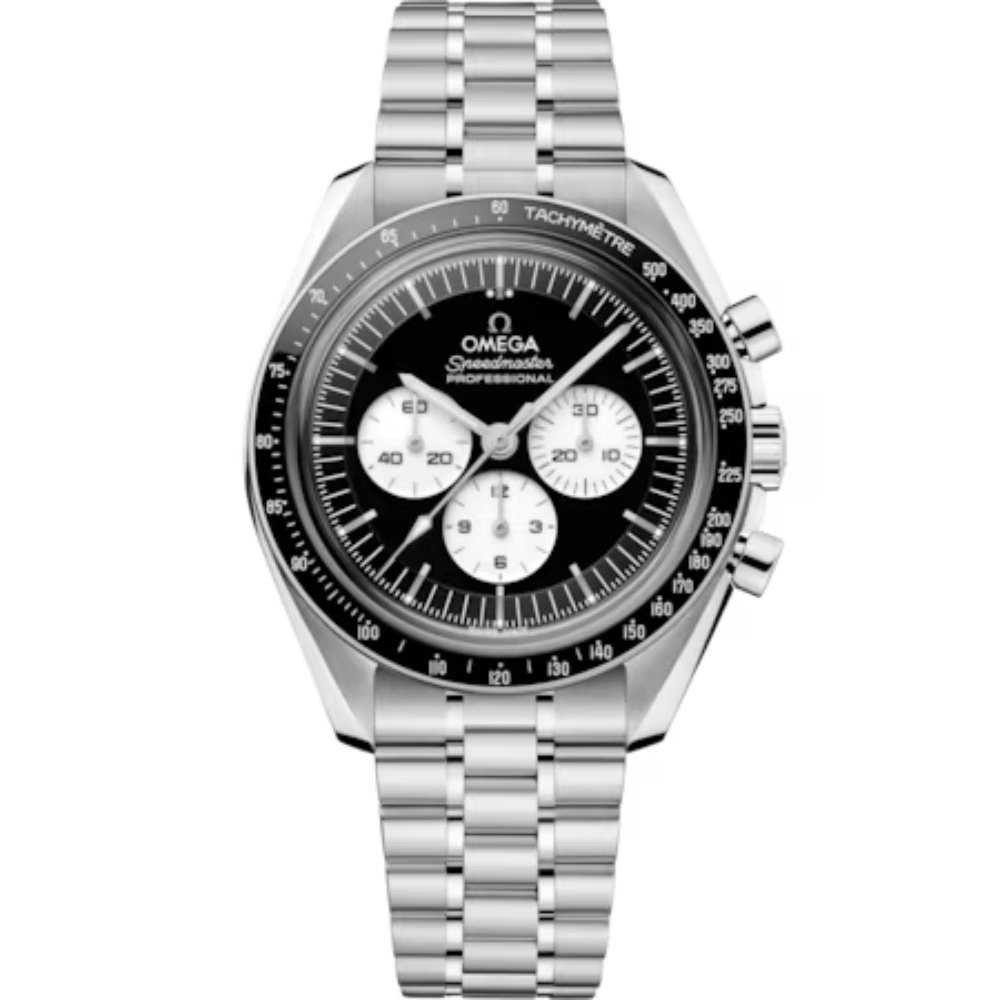
Moonwatch Sapphire Sandwich
Modern durability with display caseback
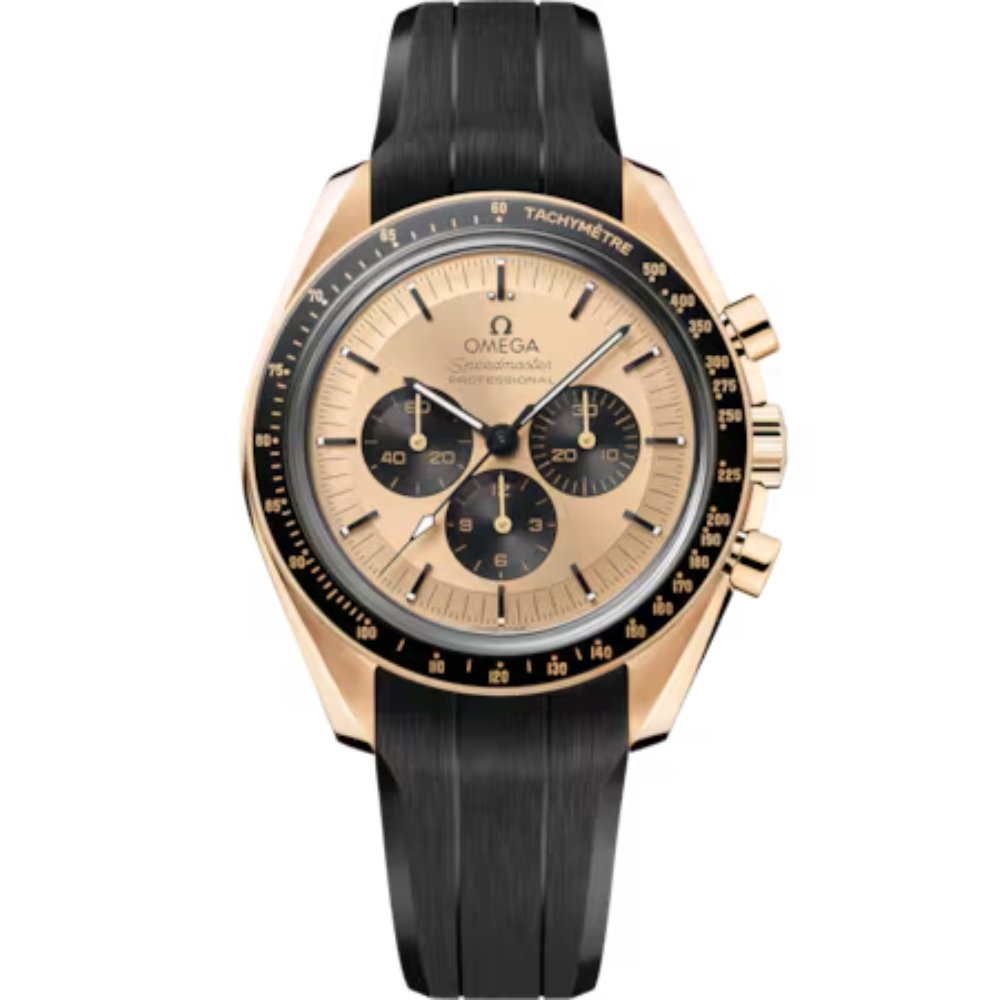
Moonwatch Rubber Strap Version
Sporty everyday comfort
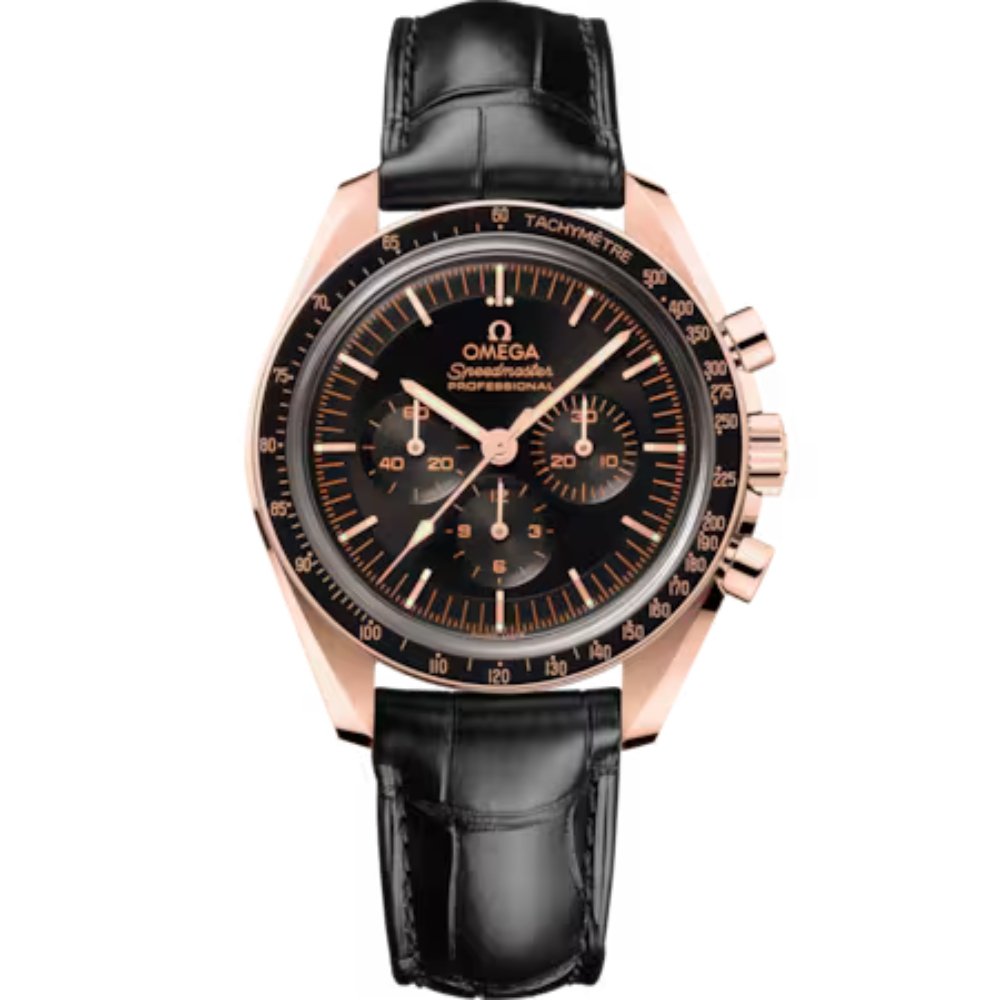
Moonwatch Leather Strap Version
Understated dress-leaning option
Pros & Cons
| Pros | Cons |
|---|---|
| Genuine NASA heritage | Manual winding may not suit everyone |
| Master Chronometer movement | Limited water resistance |
| Timeless design continuity | Not ultra-exclusive |
| Strong resale stability | Slightly premium pricing |
Final Verdict: Is the Omega Speedmaster Moonwatch Worth the Price?
Yes—if you value history and mechanical purity.
The Omega Speedmaster Moonwatch is not the most complicated chronograph. It is not the most luxurious by finishing standards. But it remains one of the few watches whose significance is historically documented and technically evolved.
It combines authentic heritage with modern chronometer certification—without compromising its identity.
It is not hype.
It is not scarcity-driven speculation.
It is a mechanical chronograph with lunar credibility.
