
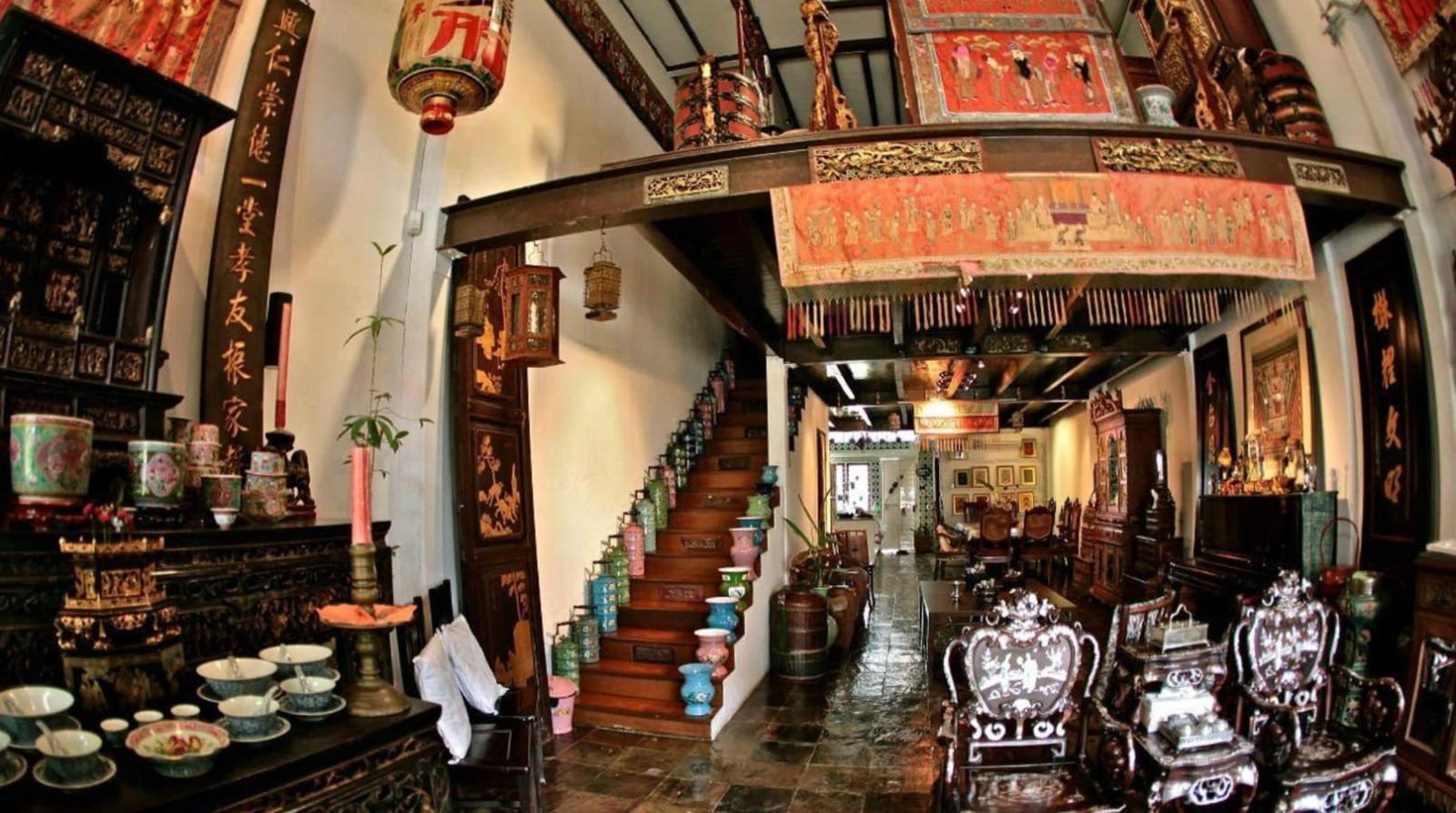
Located in Joo Chiat, the appointment-only museum belongs to collector Alvin Yapp. Its rooms are densely furnished with Peranakan ceramics, beadwork, textiles, furniture, jewelry and domestic objects. Rather than passing silently between glass cases, visitors discover the collection through storytelling, hospitality and, depending on the experience selected, tea or a private meal.
The Intan at a Glance

| Detail | Information |
|---|---|
| Location | 69 Joo Chiat Terrace, Singapore |
| Experience type | Private Peranakan home museum |
| Owner and curator | Alvin Yapp |
| Admission | Advance appointment required |
| Recommended visit | 60–90 minutes |
| Best for | Culture, decorative arts and private experiences |
| Main highlights | Ceramics, beadwork, textiles and storytelling |
| Refreshments | Included with selected experiences |
| Photography | Generally welcomed on the lower level |
| Accessibility | Lower level is the most accessible area |
What Makes The Intan Different?

The Intan does not feel like a conventional museum. There is no public lobby, prescribed gallery route or extensive collection of printed labels. Visitors enter a functioning residence where heritage objects remain integrated into the domestic setting.
This creates an unusually personal atmosphere. Porcelain vessels, embroidered garments and carved furniture are not presented as isolated masterpieces. They are used to explain how Peranakan families entertained guests, celebrated weddings, prepared meals and expressed status.
The limited group size also changes the dynamic. Visitors can ask questions, examine details closely and follow subjects that interest them instead of moving through a fixed presentation.
Understanding Peranakan Culture

Peranakan culture developed through generations of migration and cultural exchange across Southeast Asia. In Singapore, Peranakan Chinese heritage is especially visible through food, architecture, clothing, language, ceremonies and decorative arts.
The Intan approaches this history through material culture. A ceramic container can introduce traditional dining customs, while beaded slippers reveal the skill and patience historically associated with Nyonya craftsmanship.
The museum does not attempt to provide an exhaustive timeline. Its strength is showing how heritage exists inside homes and families rather than only in textbooks or institutional collections.
Inside the Collection

The house contains an extensive assortment of Peranakan ceramics, silverware, jewelry, furniture, clothing, embroidery and beadwork. Colorful porcelain and elaborately decorated domestic objects dominate the visual experience.
Almost every available surface holds something of interest. The density initially feels overwhelming, but it also gives the house its distinctive personality. This is a collection assembled through enthusiasm rather than designed around minimalist museum conventions.
Look for repeating motifs, auspicious symbols and the mixture of Chinese, Malay and European influences. The most rewarding objects are not necessarily the largest; smaller pieces often carry the most revealing family or ceremonial stories.
The Guided Storytelling Experience

The host-led interpretation is central to the visit. Alvin Yapp connects individual objects with wider stories about identity, marriage, hospitality and changing social traditions.
His conversational approach keeps the experience accessible. Instead of delivering a rigid lecture, he moves between historical explanation and personal observation. Questions from visitors can influence which parts of the collection receive greater attention.
Travelers who enjoy meeting collectors and hearing personal stories will find this particularly rewarding. Those who prefer independent exploration may find the structured, discussion-led format less suited to their style.
The Intan Tea Experience

The tea experience is the most practical option for a first visit. It combines a tour of the collection with an introduction to Peranakan history, domestic traditions, wedding customs and craftsmanship.
The visit concludes with The Intan’s signature tea and a selection of Nyonya kueh. These refreshments feel integral rather than decorative because food and hospitality are important parts of Peranakan cultural life.
Approximately one hour is sufficient for a concise introduction. However, enthusiastic visitors may wish the experience allowed more time to study the collection independently.
Private Lunch and Dinner Experiences

Private dining offers a more immersive way to experience the house. These visits pair the collection and storytelling with a Peranakan lunch or dinner hosted in the same richly decorated setting.
The format works especially well for couples, families, small groups and travelers celebrating a special occasion. It feels closer to being invited into a collector’s home than attending a commercial dinner show.
Menus, availability and group arrangements should be confirmed directly. Inform the venue about allergies or dietary restrictions before booking, particularly because Peranakan cuisine can include seafood, eggs, nuts and other common allergens.
Atmosphere and Crowd Levels

Because every visit is scheduled, The Intan avoids the constant visitor traffic found at Singapore’s larger attractions. The experience feels calm, controlled and exclusive.
The house itself is compact and densely furnished. Even a moderately sized group can make certain spaces feel crowded, particularly when everyone gathers around a small object.
Visitors should remember that this remains a private residence. Arrive punctually, follow the host’s guidance and avoid handling antiques unless specifically invited.
Photography and Accessibility

Photography is generally welcomed on the lower level, although visitors should confirm the current policy when they arrive. Flash, tripods and commercial equipment may require separate permission.
Accessibility is more restricted than at a purpose-built museum. The lower floor provides the easiest access, while reaching the upper gallery involves stairs.
Visitors using walking aids may be asked to remain downstairs, with selected objects brought down for closer viewing where possible. Discuss specific mobility requirements before confirming the reservation.
Planning Your Visit

Visits are strictly by appointment. Do not arrive expecting walk-in admission, even if the house appears open. Reserve in advance and wait for confirmation before finalizing the surrounding itinerary.
The simplest way to reach The Intan is by taxi or ride-hailing service. Public transportation is possible, but the final part of the journey may require walking or changing to a bus.
Arrive close to the confirmed time rather than significantly early. As the attraction is located within a residential area, there is no conventional waiting lobby.
Combining The Intan With Joo Chiat

The museum’s Joo Chiat setting adds meaningful context to the visit. The surrounding area is known for colorful shophouses, independent businesses and restaurants serving Peranakan and other Southeast Asian cuisines.
Allow time for a neighborhood walk before or after the appointment. The contrast between domestic architecture, contemporary cafés and traditional food businesses illustrates how the district continues to evolve.
For more private tours, distinctive cultural attractions and elevated dining ideas, explore LxryNow’s guide to luxury things to do in Singapore.
Is The Intan Worth Visiting?

Yes—particularly for visitors who value cultural access, storytelling and decorative arts. The museum offers a depth of personal interaction that is difficult to reproduce in a large public institution.
It may not suit travelers seeking a major landmark, extensive written interpretation or complete freedom to explore alone. Reaching Joo Chiat and coordinating a fixed appointment also requires more effort than visiting a central museum.
For culturally curious travelers, those limitations become part of the appeal. The Intan feels specific, personal and closely connected to the individual who assembled it.
LxryNow Review Scorecard

| Category | Score | Assessment |
|---|---|---|
| Cultural Depth | 9/10 | Rich insight into Peranakan domestic traditions |
| Collection | 9/10 | Extensive, colorful and deeply personal |
| Host-Led Interpretation | 10/10 | The defining feature of the experience |
| Atmosphere | 10/10 | Intimate and unlike a conventional museum |
| Visitor Experience | 9/10 | Warm, engaging and carefully structured |
| Accessibility | 6/10 | Residential architecture limits upper-floor access |
| Location | 8/10 | Rewarding neighborhood outside the central core |
| Photography | 7/10 | Permitted in designated areas with restrictions |
| Value | 8/10 | Strongest for visitors interested in cultural context |
| Exclusivity | 10/10 | Appointment-only access maintains intimacy |
Overall Score: 8.9/10
Which Intan Experience Should You Choose?

| Traveler | Best Choice |
|---|---|
| First-time visitor | The Intan Tea Experience |
| Couple celebrating an occasion | Private lunch or dinner |
| Decorative-arts enthusiast | Customized private visit |
| Family with children | Interactive family experience when available |
| Corporate or VIP group | Connoisseur or tailored experience |
| Remote visitor | Virtual museum experience |
Book the Experience

The Intan Tea Experience
The most accessible introduction, combining a guided museum visit with tea and Nyonya kueh.

The Intan Private Lunch or Dinner
Best for private groups, celebrations and travelers seeking a longer cultural experience.

Singapore Private Disappearing Trades Tour
A complementary tour exploring traditional local businesses and craftsmanship.

Nanyang Sauce Brewery Tour and Tasting
A private culinary heritage experience focused on traditional sauce production.
The Viator tours are separate experiences and do not include entry to The Intan unless explicitly stated. Book the home museum directly when it is the main priority.
Pros and Cons
| Pros | Cons |
|---|---|
| Highly personal, host-led experience | Advance booking is mandatory |
| Exceptional collection of Peranakan objects | Limited upper-floor accessibility |
| Small groups and minimal crowding | Located away from central attractions |
| Tea and dining options add context | Compact rooms can feel crowded |
| Excellent storytelling and interpretation | Limited independent exploration |
| Joo Chiat location enriches the visit | Experience depends heavily on the guided format |
Final Verdict

LxryNow Verdict: The Intan is one of Singapore’s most personal cultural attractions. Its luxury lies not in monumental scale but in private access—to a collector, his home and the stories behind an extraordinary Peranakan collection.
Choose the tea experience for a focused introduction or arrange a private meal for a more immersive occasion. Either option rewards travelers willing to plan beyond Singapore’s conventional sightseeing circuit.
Overall Score: 8.9/10
